Tests de pression des vannes
Afin d'éviter que des vannes non conformes ne soient installées sur site, chaque vanne doit subir un test de pression avant de quitter l'usine.
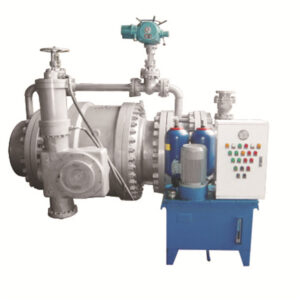
L'appareil de test de pression des vannes peut répondre aux exigences des tests de pression de diverses vannes, notamment :
- Test de coque de vanne
- Test de performance d'étanchéité supérieure
- Test de fuite à haute pression
- Test de fuite à basse pression
- Autres tests.
Méthode d'évaluation du test de pression de la vanne avant son départ d'usine
(1) Installer la vanne
Placer la vanne à tester sur la plaque d'étanchéité sous le banc.
(2) Serrage de la vanne
Méthode de verrouillage de la vanne à brides
I. Installer la plaque d'étanchéité plate.
II. Insérer la bague d'étanchéité dans la plaque d'étanchéité plate.
III. Tester la vanne sur la plaque d'étanchéité inférieure et l'aligner.
IV. Appuyer sur le bouton “ Serrage ” et utiliser le bouton “ Réglage de pression ” pour verrouiller la vanne.
(3) Raccordement du passage d'eau de la machine d'essai de pression de vanne
Connecter l'entrée d'eau de l'appareil à la source d'eau avec le tuyau d'eau fourni, ouvrir l'eau
source et remplir le réservoir d'eau. Lorsque le réservoir est plein, l'eau s'écoule par le trop-plein
la porte et la source d'eau doivent être fermées.
(4) Fonctionnement du circuit d'huile et du circuit de la machine d'essai de pression de la vanne
I. Mettre sous tension.
II. Après fermeture du papillon, le voyant d'alimentation s'allume.
III. Dévissez le bouton “ Réglage de pression ” dans le sens antihoraire et appuyez sur l'interrupteur “ Démarrage pompe ” pour démarrer la pompe à huile. À ce stade, vous pouvez effectuer d'autres actions.
IV. Pour réduire le coup de bélier après chaque action du vérin hydraulique, chaque fois que vous passez à l'avant, vous devez tourner le “bouton «réglage de pression” dans le sens antihoraire, de sorte que la “ lecture du manomètre ” du système “ soit inférieure à 2 MPa. V. Le “ vérin hydraulique étanche ” est équipé d'un clapet anti-retour à commande hydraulique. Après avoir appuyé sur le bouton “ libérer ” bouton il n'est pas possible d'inverser immédiatement le sens, mais il est nécessaire de tourner le “ réglage de pression ” bouton dans le sens des aiguilles d'une montre pour s'assurer que la pression du système de circuit d'huile dépasse une certaine
valeur (généralement 2 -3MPa), l'action commencera.
VI. Tournez le bouton “ réglage de pression ” et l'action doit être douce, sinon cela provoquera un choc et la lecture du manomètre augmentera trop rapidement.
(5) Test d'étanchéité de la vanne
Test d'étanchéité de la vanne
I. Verrouillez la vanne à tester et la valeur de “ pression de maintien ” est calculée selon le “ tableau de comparaison des pressions et formule de calcul ” selon différents diamètres et pressions de vannes.
II. Ouvrez la soupape de décharge, allumez l'interrupteur de la pompe à eau basse pression, jusqu'à ce que l'eau sorte du port de décharge, fermez l'ouverture et la fermeture
des pièces de la vanne sous test jusqu'à ce que l'aiguille du manomètre commence à bouger, puis fermez la pompe à eau basse pression.
III. Appuyez sur le “pression sur” interrupteur, puis tournez le “réglage de pression"” bouton dans le sens des aiguilles d'une montre pour que la lecture de la jauge de pression d'essai atteigne la valeur à tester, allumez le “temporisation de maintien de pression” interrupteur, le relais de temps commence le chronométrage et lorsque le temps défini est atteint, “Buzzer” commence à sonner.
*Selon GB4981 et ISO5208-1982, la pression d'essai doit être 1,1 fois la pression de service maximale admissible à 20 °C. Selon ZBJ16006-90, la pression d'essai doit être 1,1 fois la pression nominale à 38 °C), (les vannes de petit diamètre basse pression doivent coopérer avec le bouton “Vitesse de pression”, le bouton doit être tourné au minimum dans le sens inverse des aiguilles d'une montre avant d'appuyer.
IV. Nous observons et évaluons si la vanne testée est qualifiée ou non par la perte de pression pendant toute la durée du test.
V. À la fin du test, ouvrez le “interrupteur de surpression” pour ramener la jauge de pression d'essai à zéro. Tournez ensuite le “réglage de pression"” bouton dans le sens inverse des aiguilles d'une montre pour que la pression du système soit inférieure à 0,5 MPa.
VI. Appuyez sur le bouton “ libérer ”, tournez le bouton “ réglage de pression ” dans le sens des aiguilles d'une montre pour desserrer la vanne testée, puis tournez “réglage de pression"” bouton dans le sens inverse des aiguilles d'une montre pour que la pression du système soit inférieure à 0,5 MPa.
VII. Retirez la vanne testée. L'inspection de la vanne est terminée.
Tester la résistance de la coque de la vanne et la performance d'étanchéité du joint supérieur
I. Sélectionnez le disque d'étanchéité correspondant au diamètre et à la forme de raccordement de la vanne à tester.
II. Placez la vanne testée sur la plaque d'étanchéité inférieure et alignez-la. Appuyez ensuite sur le bouton “clamp” pour serrer la vanne testée, et la force de serrage est calculée selon le tableau de comparaison et la formule.
III. Dévissez les parties d'ouverture et de fermeture de la vanne ; ouvrez le déchargeur de pression gauche et injectez de l'eau dans la vanne testée jusqu'à ce que l'eau s'écoule du port de décharge de pression. Fermez ensuite la vanne de décharge.
IV. Les étapes de test sont les mêmes que celles de “test d'étanchéité de vanne“bouton «
Test d'étanchéité au gaz de la machine d'essai de vannes
I. Ouvrez la porte arrière du châssis et ouvrez la vanne de commutation eau-air pour connecter le circuit d'air. Remarque : La vanne de commutation eau-air doit être fermée pendant le test de pression d'eau
II. Coupez l'interrupteur de “ décharge de pression ” en marche.
III. Connectez respectivement la source de gaz moyenne (azote) et la source de gaz d'alimentation (air comprimé) à la pompe de surpression de gaz.
IV. Mettez d'abord sous tension l“” interrupteur de gaz moyen “, puis mettez sous tension l”“ interrupteur de gaz d'alimentation ” après que la pression ait augmenté pour effectuer un test de pression. Si elle est inférieure à la pression du cylindre d'azote, ouvrez lentement l'« interrupteur de gaz moyen » pour effectuer le test de pression. Nous jugeons si la vanne testée est qualifiée ou non par la chute de pression pendant la durée du test. (Si le panneau de commande est équipé de deux manomètres de test, haute et basse pression. L'utilisation de manomètres haute et basse pression permet d'améliorer la précision de la mesure à basse pression. ATTENTION ! Lorsque la pression de test est supérieure aux 2/3 de la plage, assurez-vous que l'interrupteur du manomètre basse pression est fermé pour éviter d'endommager le manomètre basse pression.
V. Une fois le test terminé, mettez l'interrupteur de décharge de pression sous tension pour terminer la décharge de pression.
VI. Appuyez sur le bouton “ libérer ”, tournez le bouton “ réglage de pression ” dans le sens des aiguilles d'une montre pour desserrer la vanne testée, puis tournez le bouton “ réglage de pression ” dans le sens inverse des aiguilles d'une montre pour que la pression du système soit inférieure à 0,5 MPa, et retirez la vanne.
(6) Exigences pour les travaux de test de vannes
I. L'opérateur doit être familier avec les compétences d'exploitation de l'équipement et les maîtriser, sinon il ne sera pas autorisé à travailler.
II. Ne démontez pas l'équipement à volonté, si des conditions anormales sont constatées, l'alimentation électrique doit être coupée et le personnel de maintenance doit être informé pour la maintenance.
III. Le banc d'essai hydraulique de vannes à tester doit être placé au centre de la plateforme pour éviter que la pièce ne se déforme sous l'effet de la force et autres accidents.
IV. Mettez le banc d'essai hydraulique de vannes à la pression spécifiée conformément aux données techniques.
V. Après l'essai hydraulique de la vanne, celle-ci doit être déchargée et dépressurisée à temps, et les pièces rotatives remises dans leur état initial.
VI. Lors du chargement, du déchargement et de l'empilage de la vanne, manipuler avec soin pour éviter de meurtrir la surface extérieure.
VII. Les vannes après l'épreuve de pression doivent être positionnées séparément selon les résultats des essais et doivent également être marquées. Nettoyer la surface de la bride et les traces d'eau des trous de passage, puis appliquer de l'huile antirouille. Le personnel ayant effectué l'épreuve de pression livre maintenant les vannes à l'entrepôt pour acceptation par l'inspecteur.
VIII. Remplir le rapport d'épreuve de pression du banc d'essai hydraulique des vannes de manière ponctuelle et véridique.



 French
  English
  German
  Arabic
  Spanish
  Italian
  Portuguese
  Russian