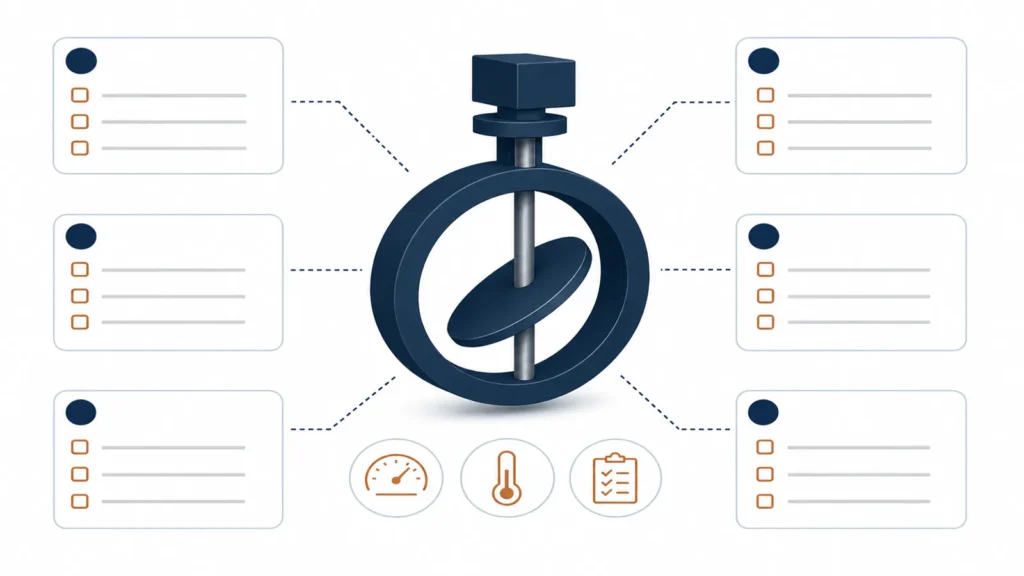
Triple-offset butterfly valve concept surrounded by steam pressure temperature cycling sealing torque and evidence review

Triple-Offset Butterfly Valves for Steam and High Temperature

A triple-offset butterfly valve can be a candidate for steam or elevated-temperature isolation when its exact construction is supported for the complete pressure-temperature envelope, differential pressure, thermal cycling, shutoff direction, allowable leakage and operating load. Triple-offset geometry and a metal-seat label do not by themselves prove steam suitability. Approval should be based on component-level materials, seal architecture, hot-operability and torque evidence, applicable standards, and the project’s test and document requirements.

Границы применения: This article is a screening and RFQ framework. It does not approve a valve configuration or assign a pressure, temperature, leakage, torque or cycle capability.

Preliminary Selection Status

REVIEW

Candidate for engineering review

Use when the steam duty is defined and the supplier can identify a configuration-specific rating, construction, torque and acceptance basis.

CONDITIONAL

Evidence remains open

Use when a credible construction exists but one or more pressure-temperature, seal, cycle, material, actuation, interface or test records are missing.

HOLD

Do not approve from page-level data

Use when the exact service or product identity is missing, the proposed duty is outside documented scope, or required controlled evidence is unavailable.

When Is a Triple-Offset Butterfly Valve a Candidate?

Engineers may evaluate a triple-offset construction when a steam line needs quarter-turn isolation and the duty cannot be screened adequately by a generic resilient-seat butterfly valve description. The design may offer a useful route for compact installation, automation or larger line sizes, but those practical reasons do not complete the technical decision.

The correct question is not, “Is a triple-offset valve suitable for steam?” It is:

Does the proposed valve configuration have a documented pressure boundary, sealing system, operating package and acceptance basis for every applicable steam condition on this tag?

The word candidate matters. A high-temperature butterfly valve should remain under engineering review until the buyer and supplier have closed the following items:

  • steam state and credible operating cases;
  • design pressure and design temperature;
  • maximum shutoff differential pressure;
  • heat-up, cool-down and cycle conditions;
  • sealing direction and allowable leakage;
  • component-level material requirements;
  • model-specific operating torque or load basis;
  • end connection and installed interface; and
  • inspection, testing and document acceptance.

Raymon’s public triple-offset butterfly valve record currently positions the route as metal seated, manually operated or actuated, and intended for high-temperature or severe-service screening. These are preliminary public descriptors, not a numeric temperature range, steam guarantee, leakage class, actuator commitment or order specification. The selected construction must be confirmed against controlled project and product documents.

Define the Steam Duty Before Choosing the Valve

Saturated, Superheated and Condensate-Affected Conditions

“Steam service” is not a complete fluid description. Saturated steam exists at a pressure-dependent saturation condition. Superheated steam is above the saturation temperature at the same pressure. A line may also experience wet steam, condensate carryover, start-up condensate or changing phase conditions.

These distinctions affect the information required for a valve review. For example, a project may need to evaluate:

  • erosion or wire-drawing risk where condensate droplets cross a restricted opening;
  • thermal shock during start-up, drains or rapid state changes;
  • water-hammer or transient loads in the piping system;
  • different operating cases during warm-up, normal operation, trip and shutdown; and
  • whether throttling or partially open operation is expected.

Do not infer these mechanisms merely because the medium is steam. Record the actual process state, operating history and credible upset cases. When steam properties are needed, use project process calculations or a recognized thermodynamic reference rather than a generic temperature label.
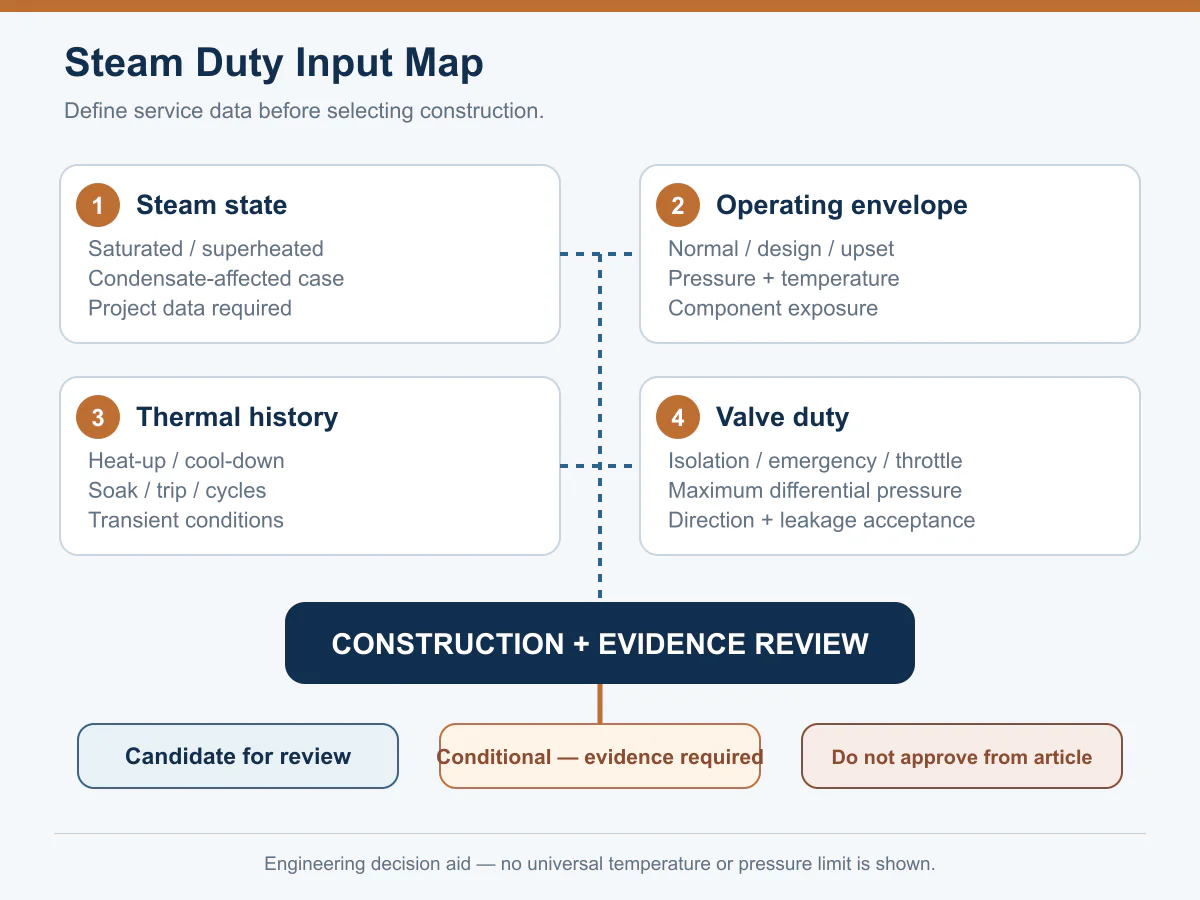
Steam duty input map for state pressure temperature cycles differential pressure and shutoff acceptance
Define the complete steam duty before selecting the valve construction. The map contains required inputs, not universal limits.

Normal, Design, Upset and Metal Temperatures

The normal fluid temperature is only one input. The valve review may also require:

  • maximum design temperature;
  • minimum temperature during start-up or shutdown;
  • upset or trip temperature;
  • expected body, shaft, packing and mounting-area temperatures;
  • radiant or traced heat exposure;
  • insulation boundaries; and
  • heat-up, cool-down, soak and cycle frequency.

The hottest relevant component may not be at the bulk fluid temperature, and an actuator or accessory can face a different exposure from the valve body. Conversely, a design-temperature value alone does not describe repeated thermal transients. These cases should be separated in the datasheet rather than compressed into one “high-temperature” checkbox.

Isolation, Emergency Isolation or Control?

Define the valve function before discussing construction. An on-off isolation valve, an emergency shutdown valve and a modulating valve have different operating and evidence needs.

If the valve will throttle or control steam, the review requires flow cases, upstream and downstream pressures, temperatures, allowable pressure drop, rangeability expectations, noise/vibration constraints and the control objective. Line size and pressure class do not establish Cv/Kv, stable control behavior or the correct valve size. A separate sizing and performance review is required.

What Triple-Offset Geometry Changes—and What It Does Not Prove

A triple-offset butterfly valve changes the relationship among the shaft axis, disc and sealing geometry. In a suitable design, the sealing surfaces can disengage through most of the travel and engage near the closed position. This geometry is relevant when evaluating contact, rubbing and seat loading.

However, the number of offsets does not define the valve’s complete service envelope. Actual performance still depends on the detailed geometry, manufacturing tolerances, seal construction, material pairing, surface condition, bearing system, differential pressure, temperature and operating history.

Triple-offset geometry alone does not prove:

  • a numeric maximum temperature;
  • an allowable pressure at that temperature;
  • zero leakage or a particular leakage rate;
  • bidirectional shutoff at full differential pressure;
  • fire-tested or low-emission qualification;
  • low operating torque;
  • a specific cycle life; or
  • compatibility with the steam chemistry and surrounding environment.

For a broader comparison of concentric, double-offset and triple-offset designs, use the existing offset-design guide. The purpose of this article is narrower: qualifying one proposed triple-offset construction for steam and elevated-temperature duty.

Build the Pressure-Temperature and Construction Envelope

Check Hot Rating, Not Ambient Class Alone

A pressure class is not one pressure value that applies at every temperature. The acceptable pressure-temperature basis depends on the governing design rules, material group, valve construction, size and design temperature. Seat or internal-component limits may also be lower than the pressure boundary’s rating.

The supplier’s submittal should therefore identify:

  1. the applicable design and rating basis;
  2. the selected pressure-boundary material group;
  3. the rating at the project design temperature;
  4. any seat, seal, shaft, packing or accessory limitation; and
  5. the controlled datasheet or drawing that applies to the offered valve.

Do not approve a steam valve from an ambient class marking, a family range or a catalog headline. The rating must belong to the exact configuration under review.

Review Materials by Component

A high-temperature material review should cover the complete construction, not only the body. Depending on design, the component list may include:
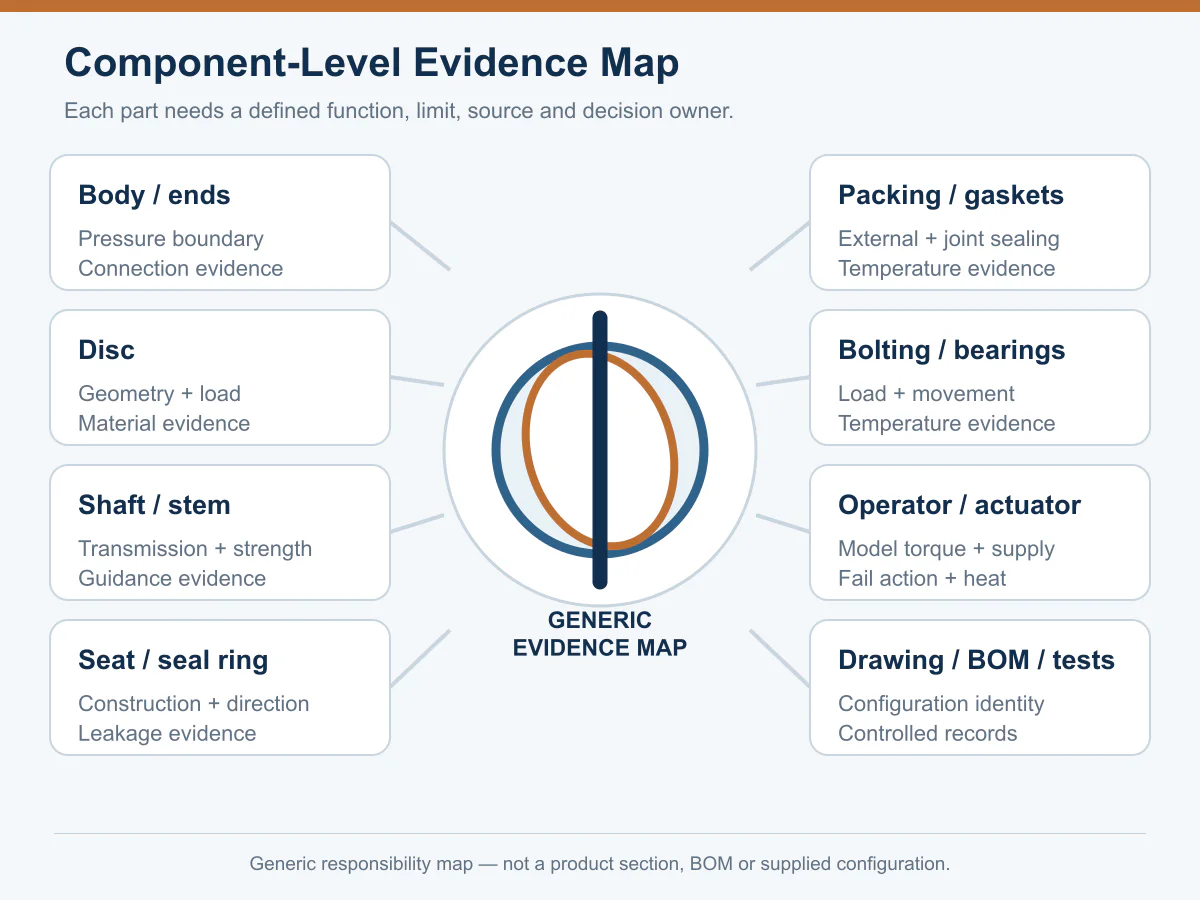
High-temperature butterfly valve component evidence map for body disc shaft seal packing bolting bearings and actuator
Generic responsibility map only. Exact materials, geometry, ratings and supplied scope require a controlled product drawing and component schedule.
  • body and end connection;
  • disc;
  • shaft or stem;
  • seat or seal ring and retainer;
  • packing and gland parts;
  • body joint or retainer gaskets;
  • bolting;
  • bearings, bushings and thrust components; and
  • hardfacing, overlay, coating or lubricant where used.

Material names such as WCB, CF8M, WC6, WC9, graphite, Stellite or Inconel should not be turned into universal steam recommendations. Each material decision requires its component function, governing specification and grade or condition where known, temperature and pressure boundary, environment, manufacturing route, and evidence source. Strength, oxidation, galling, thermal expansion and compatibility may all matter.

Account for Expansion and Hot Operability

Steam-system valves can behave differently after heat-up. Differential expansion may change disc-to-body clearance, seal loading, shaft guidance, bearing load, packing stress or bolting load. Insulation and radiant heat can also alter the temperature at the operator interface.

If hot binding, leakage after cycling or elevated operating load would be consequential, the project should define what analysis, hot-operability evidence or thermal-cycle verification is required. A cold dimensional inspection or cold seat test does not by itself resolve these questions.

Qualify the Seat, Direction and Leakage Requirement

“Metal Seated” Is Not an Acceptance Class

Triple-offset valves may use solid-metal, laminated or other engineered sealing routes. The words metal seated identify only part of the construction. They do not establish the seal’s exact materials, flexibility, retaining method, contact stress, flow direction, leakage rate or temperature limit.

The datasheet and supplier submittal should identify the seat and seal-ring architecture at component level. If flexible graphite, hardfacing or a special alloy is proposed, its role and evidence should be stated. None of these material names should be used as a stand-alone service guarantee.

Define Differential Pressure and Sealing Direction

Shutoff review requires more than line pressure. Record:

  • maximum differential pressure in the closed position;
  • pressure direction for each operating case;
  • whether shutoff is required in one direction or both;
  • preferred installation flow direction, if applicable;
  • whether reverse differential pressure is credible; and
  • whether dead-end service is required.

Do not infer bidirectional sealing from the phrase triple offset. Do not infer dead-end capability from a lug body. Both require ratings and acceptance evidence for the exact construction.

Write the Leakage Acceptance Basis Before Quotation

Terms such as “tight shutoff,” “bubble-tight” and “zero leakage” are not sufficient purchase requirements. Define the applicable leakage rate or class, test medium, test pressure, direction, duration, temperature basis and witness/document requirement.

API 598 or ISO 5208 may be selected as pressure/leak testing references when applicable, but the project must confirm the edition, valve/product scope and exact acceptance criteria. A standard cold shop test does not automatically qualify a valve for hot leakage, repeated thermal cycling or every steam condition.

Size the Operating Package from Verified Duty Inputs

Establish the Valve Torque Basis

The actuator cannot be selected from nominal valve size alone. The supplier should provide a model-specific operating basis that covers applicable seating/unseating, bearing, packing, differential-pressure and dynamic loads. Temperature, cycle history, deposits or corrosion products, manufacturing tolerances and degradation assumptions may affect the required margin.

The project should state whether the torque data represents new, run-in, maximum or end-of-life conditions and which pressure direction and temperature case it covers. If that basis is missing, actuator selection remains OPEN.

Specify the Actuator and Accessories

Where an automated package is required, define at least:

  • pneumatic, electric, hydraulic or other actuator type;
  • sizing factor or project margin rule;
  • minimum available air pressure or electrical supply;
  • required fail action;
  • opening and closing time;
  • on-off or modulating duty;
  • control signal;
  • positioner, solenoid and limit-switch scope;
  • enclosure and environmental requirements; and
  • mounting/interface and accessory responsibility.

A product photograph showing an actuator does not prove that the actuator is included or correctly sized.

Protect the Operating Package from Heat

The valve neck, extension, mounting bracket, insulation boundary, shielding and accessory location should be reviewed together. The selected arrangement must keep the gearbox, actuator, solenoid, switches, wiring and seals within their documented exposure limits while maintaining access to packing and mounting hardware.

Do not specify a stem extension or heat-dissipation feature merely from a marketing image. Require a controlled general-arrangement drawing and the thermal basis for the proposed package.

Steam-Duty Risk and Verification Matrix

This matrix identifies review routes, not predicted failures or universal design limits.

Review concernВходные данные проектаСвидетельство поставщикаDecision ownerKeep OPEN when
Hot binding or elevated operating loadTemperature cases, ramp/soak cycles and shutoff differentialConfiguration-specific hot-operability and torque basis where requiredValve / mechanical engineerOnly cold operation is documented
Leakage after thermal cyclingAllowable leakage, direction, cycles and temperature basisSeal construction plus applicable test or qualification scopeValve engineer / QAA metal-seat label is the only support
Packing or external-seal exposureBody, shaft and ambient heat exposure plus cycle frequencyPacking arrangement, material schedule and applicable evidenceMaterials / mechanicalComponent temperature is not defined
Actuator or accessory overheatingInsulation boundary, ambient/radiant heat and operating frequencyGeneral-arrangement drawing and documented component limitsInstrument / layoutOnly a product photograph is available
Disc or piping interferencePipe bore, flange/weld interface, orientation and maintenance envelopeApproved dimensional or general-arrangement drawingPiping / layoutInterface is inherited from a family description
Uncontrolled test expectationTest medium, pressure, direction, duration, temperature and witness pointApproved ITP, procedure, acceptance criteria and report routeQA / client / TPIA standard number is listed without scope

Check the Installed Interface

The final configuration may be wafer, lug, double-flanged, butt-weld or another controlled end form. Confirm the exact available route for the offered product rather than inheriting a family-level connection option.

The installed-interface review should include:

  • mating flange or weld-end requirements;
  • flange bore, pipe inside diameter and disc clearance;
  • face-to-face or end-to-end requirement;
  • flow arrow and pressure direction;
  • horizontal or vertical shaft orientation where relevant;
  • piping loads and support assumptions;
  • actuator envelope and removal space;
  • insulation boundaries; and
  • access for packing adjustment, inspection and maintenance.

An approved drawing should close these interfaces before manufacture. Generic outline dimensions or a drawing from another model are not sufficient product evidence.

Keep Standards, Tests and Documents in Their Correct Scopes

Standards can organize a specification, but mentioning a standard does not prove that a particular valve has been designed, tested or qualified to it.

СсылкаPossible scopeWhat it may supportЧто это не доказываетТребуемые доказательства
API 609Butterfly-valve construction and ordering basis where applicableCategory, configuration and purchaser requirementsRaymon product compliance or steam suitabilityProject edition, product design basis and controlled submittal
ASME B16.34Pressure-temperature and construction requirements for valves within its scopeApplicable hot rating and material-group frameworkRating of an unevidenced configurationApplicable edition, material group and controlled rating record
API 598Valve inspection and pressure/leak testing referenceDefined production test and acceptance routeThermal-cycle or universal hot-leakage performanceApproved procedure and report tied to product/order
ISO 5208Испытания металлических клапанов под давлениемPressure-boundary and closure-tightness test frameworkSafety of testing or high-temperature qualification by itselfApproved criteria, procedure and report
API 607Fire type-test reference where applicableQualification route for a defined tested designA blanket “fire safe” claimValid design-specific test/qualification scope
ISO 15848-1Fugitive-emission type-test and classification frameworkExternal leakage qualification route for an applicable designLow-emission performance for every configurationValid qualification scope tied to exact valve configuration

The purchase requirement should separate design/construction, pressure rating, face-to-face, connection, pressure/leak testing, fire testing, fugitive emissions and marking. One standard should not be presented as covering another standard’s scope.

The submittal and inspection package may require an approved datasheet, general-arrangement drawing, bill of materials, material certificates, torque data, actuator sizing record, inspection and test plan, approved procedures, test reports, deviation schedule and order-specific document index.

Steam Duty Approval Matrix

Use the matrix below to keep a preliminary product description from becoming an unsupported approval.
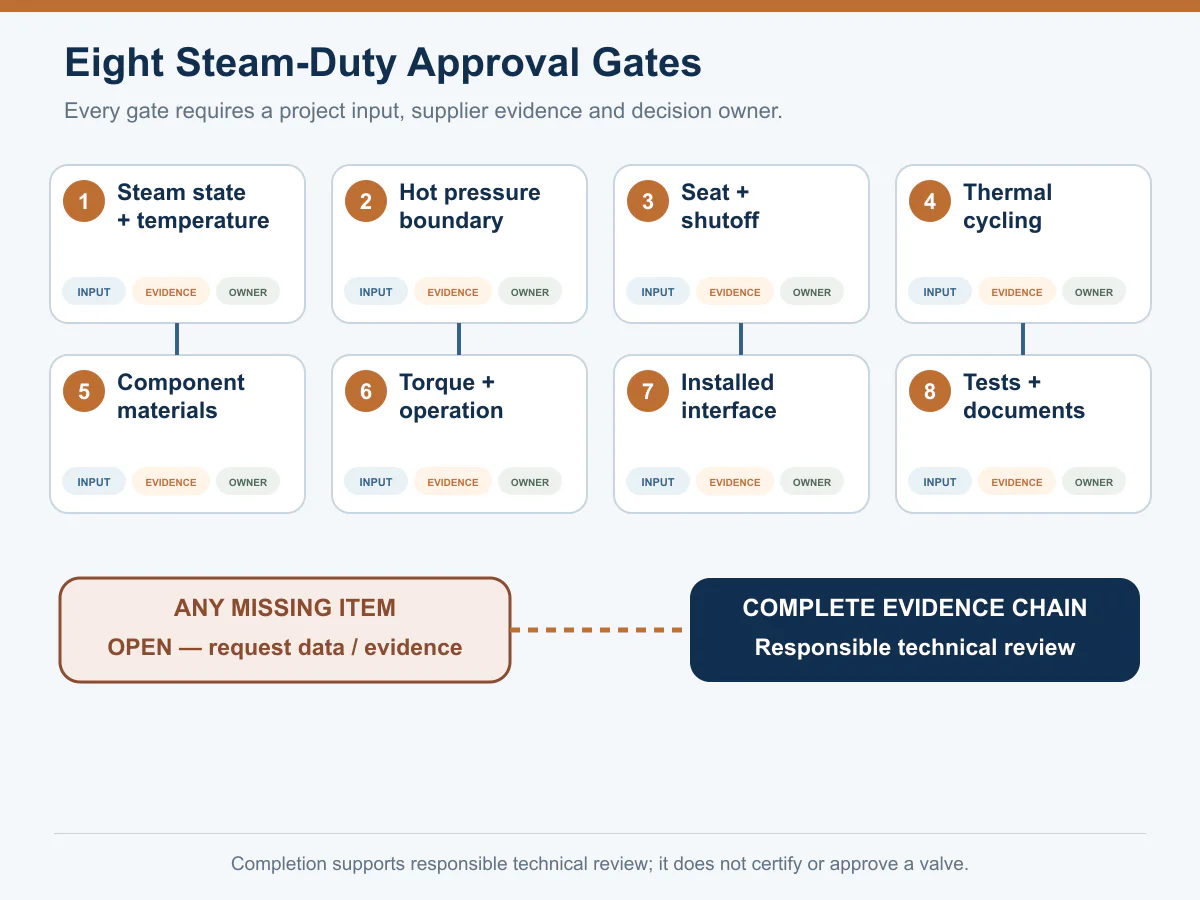
Eight approval gates for a high-temperature steam butterfly valve engineering review
Every applicable gate needs a project input, configuration-specific supplier evidence and a decision owner. An open gate keeps the tag under review.
Decision gateBuyer/project inputСвидетельство поставщикаDecision ownerStop condition
Steam state and temperatureNormal, design and upset states and temperaturesDeclared design envelopeProcess / mechanicalState or temperature not defined
Hot pressure boundaryDesign pressure at design temperatureApplicable rating basis and controlled datasheetPiping / valve engineerAmbient class used as proof
Seat and shutoffDifferential pressure, direction and leakage acceptanceSeal construction and applicable test evidenceValve engineer / QA“Metal seated” used as leakage proof
Термические циклыRamp, soak, trip and cycle dataHot-operability or cycle evidence when requiredReliability / engineeringCycle duty missing
МатериалыComponent-level requirements and environmentBOM, material specifications and traceabilityMaterials / project engineerMaterial name used as service guarantee
Тип приводаDuty, fail action, supply and travel timeModel torque and actuator sizing recordInstrument / mechanicalTorque or fail action OPEN
ИнтерфейсEnds, bore, orientation and spaceApproved general-arrangement drawingPiping / layoutDisc or interface clearance unverified
Tests and documentsAcceptance and witness planApproved procedures, reports and ITPQA / TPI / clientScope or acceptance undefined

A stop condition keeps the tag OPEN. It does not automatically reject every triple-offset design; it means the buyer and supplier do not yet have enough evidence to approve the offered configuration.
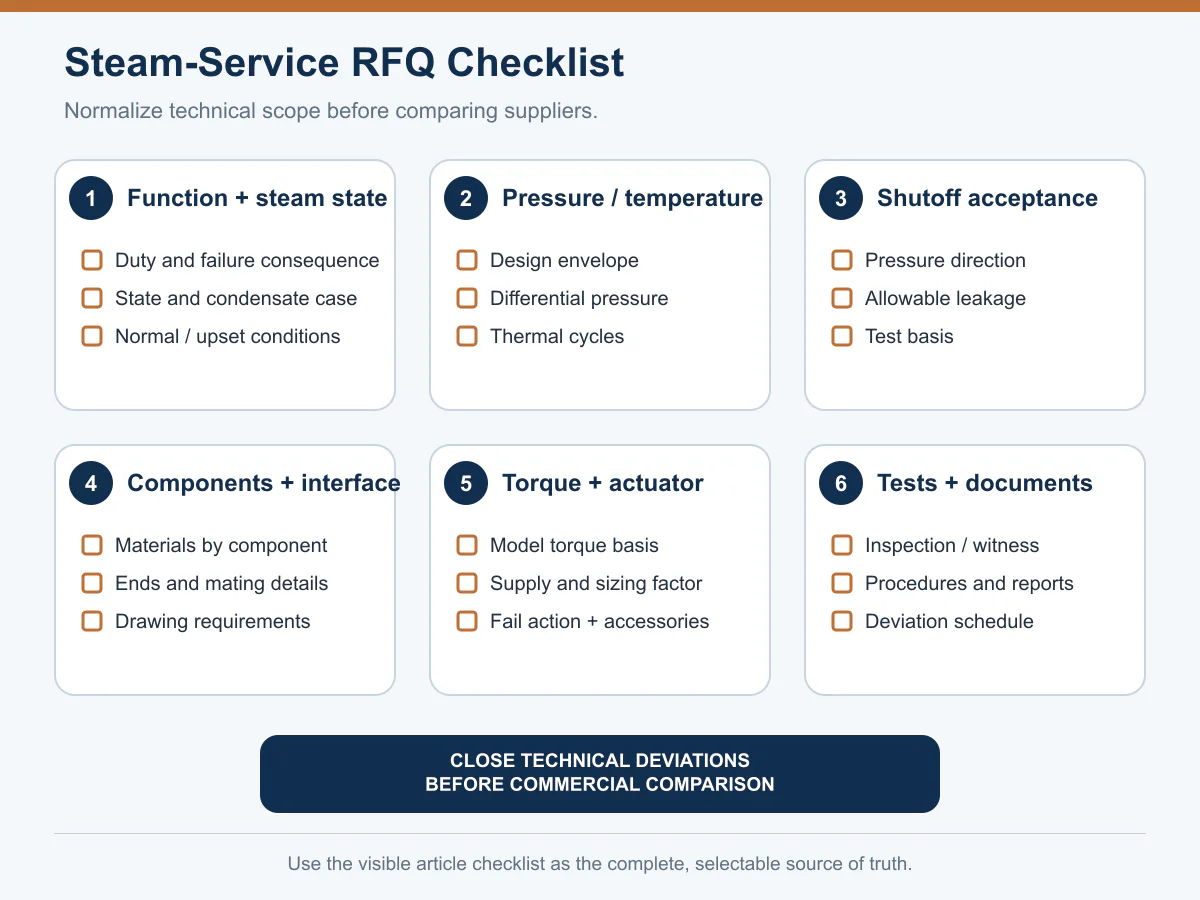
High-temperature steam butterfly valve RFQ checklist for duty construction sealing actuation tests and documents
Use the visible RFQ checklist to define the offered valve and operating package before commercial comparison.

Steam-Service RFQ Checklist

Include the following information in a high-temperature butterfly valve RFQ:

  • valve function and consequence of failure;
  • NPS/DN, class/PN and every applicable pressure-temperature case;
  • steam state, composition or treatment and condensate risk where relevant;
  • normal, design and upset temperatures;
  • heat-up/cool-down rates, trips, soak time and cycle frequency;
  • maximum shutoff differential pressure and pressure direction;
  • allowable leakage plus exact test and acceptance basis;
  • body, disc, shaft, seat/seal ring, packing, gasket and bolting requirements;
  • end connection, mating interface, orientation, flow direction and drawing needs;
  • manual, gear, pneumatic, electric or hydraulic operation;
  • torque basis, sizing factor, minimum supply, fail action, travel time and accessories;
  • fire, fugitive-emission or other special project requirements;
  • inspection, testing, witness/TPI and documentation requirements;
  • technical-deviation schedule; and
  • quantity, destination, project and approved order scope.

This checklist helps suppliers quote the same technical scope. It does not replace responsible-engineer review or an approved project datasheet.

Нормализация технического предложения

Compare suppliers against the same project fields. A blank or marketing-only response stays OPEN rather than being treated as an equivalent offer.

Comparison fieldRequired responseAcceptable evidence routeNormalization warning
Pressure-temperature envelopeRating at the project design temperatureControlled datasheet or rating record for the offered configurationDo not compare ambient pressure class alone
Seat and leakageArchitecture, direction and stated acceptance basisDrawing/BOM plus applicable procedure or report scope“Metal seated” and “tight shutoff” are incomplete
МатериалыComponent-by-component grade/specification where requiredControlled BOM and material-document routeBody material alone does not normalize construction
Valve and actuator loadGoverning torque case, margin and minimum supply/outputModel-specific torque and actuator sizing recordActuator model or nominal torque alone is incomplete
Устанавливаемый интерфейсEnds, bore, flow direction, orientation and envelopeApproved general-arrangement drawingFamily dimensions are not the offered drawing
Инспекция и документацияITP, witness points, procedures, reports and deviationsOrder-specific document index and approved quality planUnpriced or excluded evidence must be visible

Use Three Explicit Selection Outcomes

Candidate for Engineering Review

The steam duty is defined, the triple-offset route has a credible configuration, and the supplier can provide product-specific rating, construction, torque and acceptance evidence. Engineering review may proceed.

Conditional—Evidence Required

The construction may be feasible, but one or more pressure-temperature, seal, material, cycle, torque, interface or testing records remain OPEN. Record the gap, decision owner and required closeout evidence.

Do Not Approve from Article-Level Information

The exact service or product identity is missing, the offered duty is outside the documented configuration, or controlled evidence cannot support a required claim. Do not convert a web page, family range, product photograph or generic standard reference into an approved tag specification.

Send Steam Pressure, Temperature and Cycle Data

For a project-specific review, send the valve function, steam state, normal/design/upset pressure and temperature, maximum shutoff differential pressure, size, pressure class, end connection, flow direction, leakage requirement, cycle duty, material requirements, actuation method, fail action, available supply, required tests and document list.

Raymon Valve can use these inputs to identify OPEN items and review a candidate construction. Final suitability, manufacturing scope, actuator sizing, test acceptance and documentation must be confirmed in controlled project and order records.

Request a steam valve selection review

Часто задаваемые вопросы

Can a triple-offset butterfly valve be used for steam?

It may be considered when the exact valve construction and supporting evidence cover the complete steam pressure-temperature envelope, differential pressure, cycling, sealing direction, leakage acceptance and operating load. The valve type name alone is not approval.

What temperature makes a butterfly valve “high temperature”?

There is no universal cutoff that approves a valve. The project definition should reflect the selected materials, seal system, applicable hot rating, fluid and component temperatures, thermal history and acceptance requirements.

Does a metal seat guarantee zero leakage in steam service?

No. A metal-seat label does not establish a leakage rate or class. Define the acceptable leakage, test medium, pressure, direction, duration and temperature basis, then require evidence for the exact design.

Which pressure class is required for superheated steam?

“Superheated” does not determine a pressure class. Selection requires the design pressure and temperature, material group, applicable rating basis, size and credible upset cases. Internal components may impose additional limits.

How should a steam butterfly-valve actuator be sized?

Use model-specific operating data covering the applicable differential pressure, temperature, seat design and duty. Apply the project sizing factor and confirm minimum supply or electrical conditions, fail action, travel time and accessory loads.

Do API 598 or ISO 5208 prove high-temperature performance?

No. They can provide pressure and leakage testing frameworks when applicable, but they do not independently prove thermal-cycle performance, hot operability or suitability for a particular steam system.

What information should a buyer include in the RFQ?

At minimum, provide the valve function, steam state, size, pressure-temperature cases, maximum shutoff differential pressure, sealing direction, leakage acceptance, component material requirements, connection, actuation, cycle duty, tests, inspection and document requirements.

Оставьте комментарий

Ваш адрес email не будет опубликован. Обязательные поля помечены *

ru_RURussian
Прокрутить вверх