
Gate Valve Pressure Locking vs Thermal Binding: Causes, Operating Symptoms, Prevention and Design Review
Gate valve pressure locking and thermal binding are two different mechanisms that may increase valve operating resistance under certain service conditions. Pressure locking is generally related to trapped pressure conditions that increase the force required for movement, while thermal binding is associated with temperature-driven expansion effects that may influence mechanical interaction between valve components.
For engineers, procurement teams, and maintenance personnel, identifying the difference is important because similar operating symptoms may require different investigation paths. Reviewing valve construction, pressure-temperature conditions, installation arrangement, operating sequence, and available technical data helps determine what information should be checked before corrective action or supplier discussion.
Increased gate valve operating resistance does not automatically confirm pressure locking or thermal binding. Other factors, including mechanical damage, contamination, installation conditions, or service-related changes, may create similar symptoms. Actual evaluation should be based on project-specific valve data and operating conditions.
Pressure Locking vs Thermal Binding: Quick Engineering Difference
| Point d'examen | Pressure Locking | Thermal Binding |
|---|---|---|
| Primary mechanism | Trapped pressure conditions affecting the force required for valve movement | Temperature-related expansion or contraction effects influencing mechanical interaction |
| Typical trigger | Pressure changes, isolation conditions, or trapped fluid scenarios | Heating, cooling, or temperature cycling during service |
| Main review focus | Pressure scenario, valve arrangement, and operating sequence | Temperature history, materials, and component movement conditions |
| Useful review data | Pressure conditions, valve construction, system operation sequence | Temperature range, thermal cycle, installation and mechanical conditions |
What Is Gate Valve Pressure Locking?
Pressure locking refers to a condition where pressure becomes trapped within a valve cavity or pressure-containing area and creates additional resistance during operation. The resulting increase in required operating force depends on the valve design, pressure conditions, installation arrangement, and operating sequence.
The issue should be reviewed as an operating scenario rather than as an automatic defect of a specific valve type. A complete assessment requires understanding how pressure conditions develop during normal operation, shutdown, isolation, or process changes.
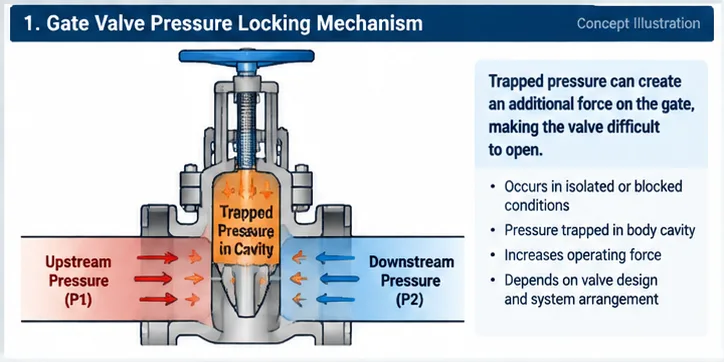 Engineering schematic showing the concept of trapped pressure conditions and their potential influence on gate valve operating resistance.
How Pressure Locking Develops During Operation
Pressure locking evaluation normally requires reviewing the relationship between valve construction and the surrounding piping system. Important considerations may include:
- Pressure conditions before and after isolation;
- Possible trapped fluid areas within the valve arrangement;
- Operating sequence during startup, shutdown, or maintenance activities;
- Valve design details that influence internal pressure behavior.
Because operating conditions vary between applications, pressure locking assessment should be based on actual service information rather than a general assumption.
Typical Operating Symptoms of Pressure Locking
Pressure locking may be considered when a valve shows different operating behavior under different pressure conditions. However, these symptoms should be verified against other possible mechanical or service-related causes.
| Observed Symptom | Possible Review Direction |
|---|---|
| Valve becomes difficult to open after isolation | Review whether pressure conditions may have changed within the valve arrangement |
| Higher operating force appears under specific conditions | Review valve data, operating sequence, and service scenario |
| Valve behavior changes between operating cycles | Compare pressure conditions and system operation history |
What Is Thermal Binding in Gate Valves?
Thermal binding is associated with temperature-related expansion and contraction effects that may influence the interaction between valve components. The actual effect depends on valve design, materials, temperature conditions, and installation environment.
Temperature rating alone does not explain all operating behavior. Engineers should consider the complete temperature cycle, including heating, cooling, startup, shutdown, and process changes that may affect component movement.
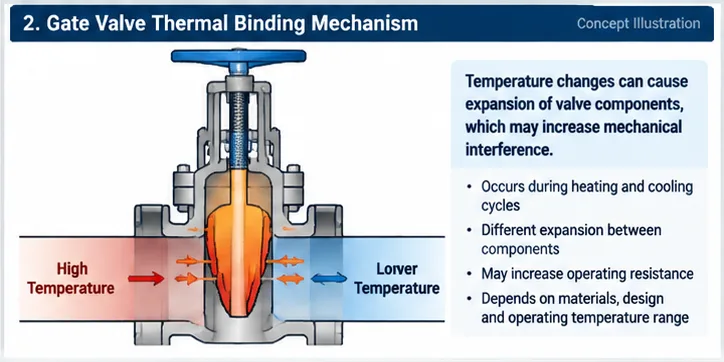 Engineering schematic illustrating how temperature-related expansion effects may influence gate valve mechanical movement.
Temperature-Related Review Considerations
- Operating temperature range and temperature cycling history;
- Material behavior under the intended service conditions;
- Mechanical interaction between valve components;
- Installation conditions that may influence valve movement.
Pressure Locking vs Thermal Binding: Detailed Engineering Comparison
Although pressure locking and thermal binding may create similar operating symptoms, the engineering causes behind them are different. Understanding the difference helps engineers define the correct review direction during troubleshooting, specification preparation, and supplier technical discussions.
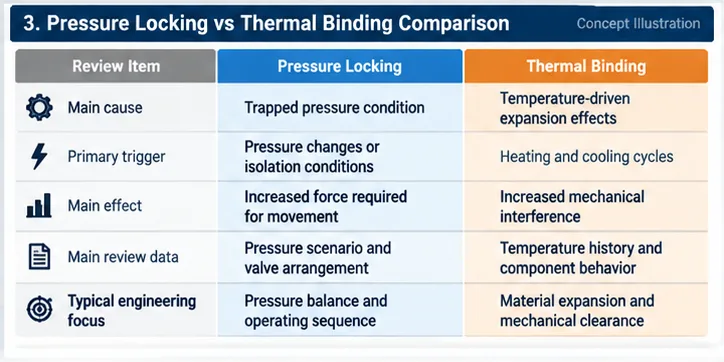 Comparison matrix showing the different engineering considerations for pressure locking and thermal binding evaluation.
| Engineering Review Item | Pressure Locking | Thermal Binding |
|---|---|---|
| Main cause | Pressure trapped within a valve cavity or related pressure area that increases movement resistance | Temperature-related expansion or contraction effects that influence component interaction |
| Typical operating condition | Pressure isolation, pressure changes, or specific system operating sequences | Heating, cooling, startup, shutdown, or temperature cycling conditions |
| Primary investigation path | Review pressure conditions, valve arrangement, and operating sequence | Review temperature history, materials, and mechanical movement conditions |
| Key engineering inputs | Pressure scenario, valve construction, system conditions | Temperature range, thermal cycle, installation conditions |
| Potential mitigation review | Evaluate valve design and operating scenario based on application requirements | Evaluate design suitability considering temperature effects and service conditions |
How Engineers Identify the Root Cause
When a gate valve becomes difficult to operate, engineers should avoid assuming a single cause. Similar symptoms may result from different mechanisms, so a structured review should compare operating history, valve information, and service conditions.
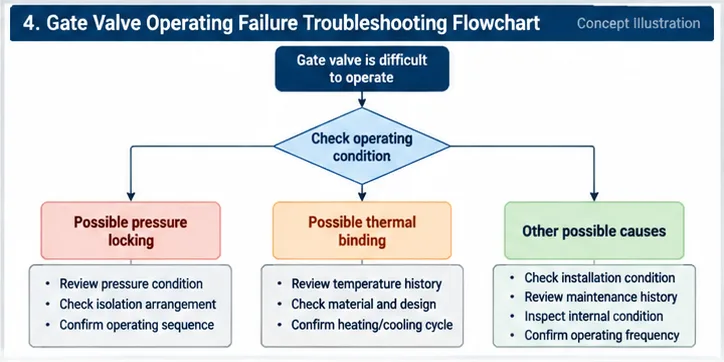 Troubleshooting flowchart providing a structured review path for gate valve operating resistance.
Gate Valve Operating Resistance Review Matrix
| Observed Symptom | Possible Mechanism | Information to Review |
|---|---|---|
| Valve becomes difficult to open after isolation | Possible pressure-related operating condition | Pressure scenario, isolation arrangement, operating sequence |
| Valve becomes difficult to operate after temperature cycling | Possible thermal-related effect | Temperature history, materials, component movement conditions |
| Higher actuator demand than expected | Increased operating resistance | Valve operating data, service condition, actuator information |
| Operating problem appears intermittently | Changing process or operating condition | Startup/shutdown sequence, process changes, maintenance history |
| Cause cannot be identified from pressure or temperature review | Other mechanical or service-related factors | Inspection records, internal condition, installation review |
Prevention and Gate Valve Design Review Considerations
The most effective approach is to review possible operating challenges during specification and design review rather than relying only on corrective action after operation problems occur.
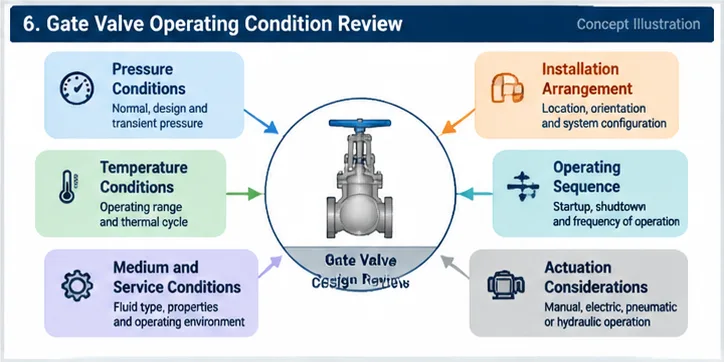 Engineering relationship diagram showing the service factors commonly reviewed during gate valve evaluation.
Key Design Review Items
- Valve construction and configuration;
- Pressure and temperature operating conditions;
- Medium characteristics and service environment;
- Installation arrangement within the piping system;
- Operating sequence during startup, shutdown, and isolation;
- Actuation requirements based on confirmed valve data;
- Testing and documentation requirements.
Gate Valve RFQ and Design Review Checklist
Providing complete application information allows suppliers to review valve suitability more effectively. The following information is commonly useful during RFQ preparation and technical evaluation.
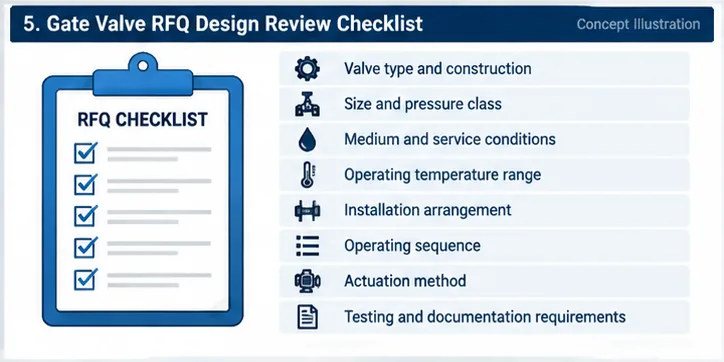 Checklist of engineering information commonly reviewed during gate valve specification and supplier discussions.
| Informations requises | Objectif |
|---|---|
| Type et construction de la vanne | Understand valve design characteristics and application requirements |
| Taille et classe de pression | Define the intended pressure service condition |
| Medium and service conditions | Support material and application review |
| Operating temperature range | Evaluate temperature-related operating considerations |
| Installation arrangement | Understand system influence on operation |
| Operating sequence | Review possible pressure or temperature scenarios |
| Mode d'actionnement | Support operating capability review |
| Testing and documentation requirements | Define supplier technical deliverables |
Questions to Ask During Supplier Design Review
- Has the valve operating scenario been reviewed based on actual service conditions?
- Are pressure and temperature conditions clearly defined?
- Has the installation arrangement been considered during evaluation?
- Are actuator requirements based on confirmed valve operating information?
- Are testing and documentation requirements clearly specified?
Engineering References
Pressure locking and thermal binding have been discussed as engineering considerations in certain gate valve operating scenarios. Industry operating experience documents, including NRC Generic Letter 95-07, highlight the importance of reviewing valve design, operating conditions, and functional requirements when evaluating these mechanisms.
Reference documents should be applied according to the relevant project requirements and service conditions. This article provides general engineering guidance and does not replace project-specific valve analysis or manufacturer technical evaluation.
Conclusion
Gate valve pressure locking and thermal binding may produce similar operating symptoms, but they represent different engineering mechanisms. Pressure locking is mainly associated with pressure-related conditions, while thermal binding is related to temperature-driven effects that may influence valve component interaction.
A structured review of valve construction, pressure-temperature conditions, installation arrangement, operating sequence, and technical documentation helps engineers identify the appropriate evaluation path. For critical applications, the most reliable approach is to review potential operating challenges during specification and design stages rather than relying only on corrective action after operation issues occur.
This article provides general engineering guidance for understanding gate valve pressure locking and thermal binding considerations. Actual valve behavior depends on valve design, service conditions, installation arrangement, operating sequence, and project requirements. Final evaluation should be based on complete technical information and responsible engineering review.
Foire aux questions
What is the difference between pressure locking and thermal binding in gate valves?
Pressure locking is associated with trapped pressure conditions that may increase the force required for valve operation. Thermal binding is related to temperature-driven expansion and contraction effects that may influence mechanical interaction between valve components. The two conditions require different engineering reviews.
Why can a gate valve become difficult to open after shutdown?
A gate valve may become difficult to operate due to different possible factors, including pressure-related conditions, temperature effects, mechanical issues, contamination, installation conditions, or service changes. The actual cause should be identified through review of operating history and valve information.
Can increasing actuator output solve gate valve operating problems?
Not necessarily. Increasing actuator capability does not address every source of operating resistance. The valve condition, operating scenario, required operating force, and confirmed technical data should be reviewed before selecting a solution.
What information should be reviewed before approving a gate valve for critical service?
Important information may include valve construction, size, pressure-temperature conditions, medium, installation arrangement, operating sequence, actuation requirements, and testing or documentation requirements.
How can suppliers support gate valve design review?
Suppliers can support technical evaluation by reviewing valve construction, application conditions, available technical documents, operating requirements, and project-specific specifications.
Request Gate Valve Design Review
Send your valve type, construction, size, pressure class, medium, operating temperature, installation arrangement, operating sequence, actuation method, and required testing scope for a project-specific review.
Request a Valve ReviewFor more information about Solutions de vannes à opercule, review available valve configurations and application information.
For technical documentation and inspection-related considerations, see valve testing and inspection requirements.
Learn more about Raymon Valve supplier information and engineering support capabilities.
 French
  English
  German
  Arabic
  Spanish
  Italian
  Portuguese
  Russian