
Soft Seated vs Metal Seated Ball Valve: Temperature, Solids, Leakage, Torque and Service Selection
Soft seated and metal seated ball valves are selected based on different service priorities. Soft seated ball valves are commonly evaluated when shut-off performance and seat compatibility are the main considerations, while metal seated ball valves are often reviewed when temperature exposure, solids, wear or demanding operating conditions require additional evaluation.
The correct choice is not determined by valve size or pressure class alone. Engineers and buyers should review the complete service condition, including medium, temperature, pressure, solids content, leakage requirement, operating frequency and actuator requirements before finalizing the valve specification.
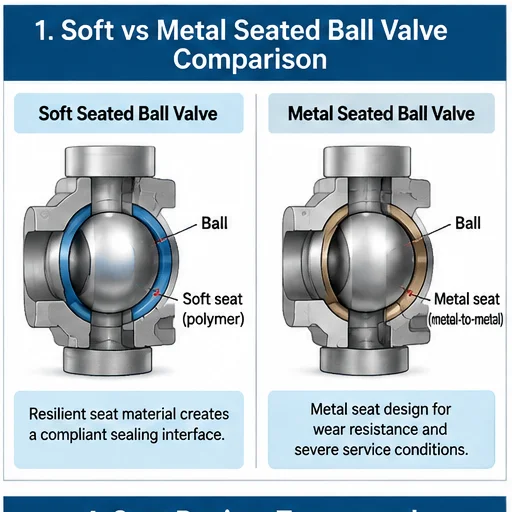
This guide explains the engineering factors behind soft seat and metal seat ball valve selection, including temperature considerations, solids handling, leakage requirements, torque impact and the information required during RFQ review.
Why Ball Valve Seat Selection Matters
The seat is one of the most important components influencing ball valve sealing behavior, operating torque, temperature suitability, wear resistance and maintenance considerations.
Although both soft seated and metal seated ball valves use a ball-and-seat sealing arrangement, their design priorities are different. The selection should focus on the actual process risk rather than assuming one seat type is suitable for every application.
Soft Seat Sealing Concept
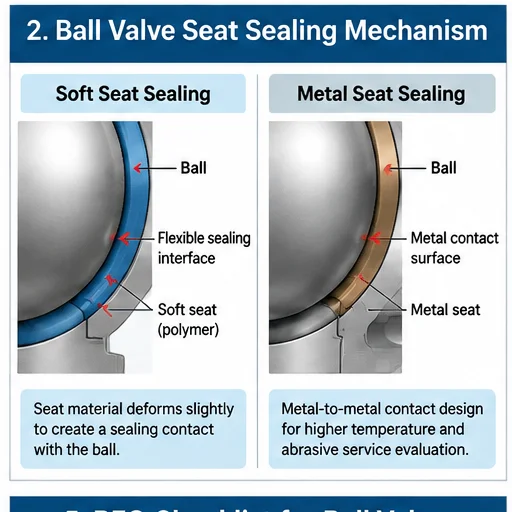
Soft seated ball valves use resilient seat materials that provide a compliant sealing interface between the ball and seat. This design approach is often considered when tight shut-off and seat material compatibility are important requirements.
However, soft seat selection requires confirmation of the actual operating environment. Temperature, chemical exposure, pressure conditions and operating frequency may affect seat performance.
Metal Seat Sealing Concept
Metal seated ball valves use metal contact surfaces between the ball and seat. They are commonly evaluated when service conditions involve higher temperature exposure, abrasive particles, thermal cycling or other demanding operating requirements.
Metal seating does not automatically mean that every high-temperature or abrasive application is suitable. The final design depends on valve construction, materials, surface treatment and confirmed service conditions.
Engineering Factors That Decide Ball Valve Seat Selection
Ball valve seat selection should begin by identifying the dominant service requirement. Different applications may prioritize sealing performance, wear resistance, temperature capability or operating reliability.
| Service Factor | Engineering Question | Focus de sélection |
|---|---|---|
| Température | Can the seat maintain required performance under the operating and design temperature? | Review seat material, valve construction and pressure-temperature conditions. |
| Solids and Abrasion | Could particles damage sealing surfaces during operation? | Evaluate wear risk, particle condition and service environment. |
| Exigence de fuite | What shut-off performance is required for the application? | Confirm leakage requirements and applicable testing criteria. |
| Operating Frequency | How often will the valve cycle during service? | Review seat wear, friction and torque considerations. |
| Actionnement | Is sufficient torque information available for actuator review? | Use confirmed valve torque data rather than valve size assumptions. |
Soft Seated Ball Valve: Tight Shut-Off and Compatibility Review
How Soft Seats Work
Soft seated ball valves normally use polymer-based seat materials to create a sealing interface between the ball and seat. The material selection must be reviewed against the actual medium and operating conditions.
A softer sealing interface may influence operating torque requirements, but actual torque depends on valve design, differential pressure, seat configuration and operating conditions.
When Soft Seated Ball Valves May Be Considered
- Applications where shut-off performance is an important requirement;
- Services where seat material compatibility can be confirmed;
- Clean or controlled media conditions;
- Applications where operating torque requires review.
Soft Seat Selection Limitations
A common selection mistake is focusing only on sealing performance while ignoring service conditions. Soft seat evaluation should include temperature, chemical compatibility, pressure conditions, solids exposure and operating frequency.
Metal Seated Ball Valve: High Temperature and Severe Service Evaluation
How Metal Seats Work
Metal seated ball valves use metal contact surfaces between the ball and seat. This design approach is commonly evaluated when the operating environment requires additional review of wear resistance, temperature exposure and long-term sealing behavior.
Engineering review for metal seated ball valves may include:
- Surface hardness and wear characteristics;
- Temperature exposure and thermal cycling;
- Pressure differential during operation;
- Potential particle erosion;
- Required shut-off and testing requirements.
Metal seating should not be selected only because the service is considered “severe”. The final valve design depends on the actual process conditions, materials, construction details and manufacturer technical information.
When Metal Seated Ball Valves May Be Considered
Metal seated designs are often evaluated when one or more of the following conditions require additional engineering review:
- Higher temperature operating environments;
- Media containing solids or abrasive particles;
- Frequent cycling requirements;
- Applications where seat wear resistance is an important consideration.
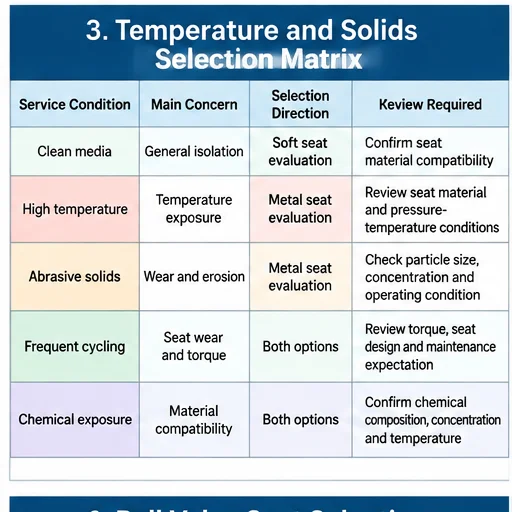
Temperature, Solids and Media Compatibility Review
Temperature Selection Considerations
Temperature is one of the most important factors affecting ball valve seat selection. However, the correct choice depends on the complete valve design rather than seat type alone.
Before selecting a seat design, engineers should review:
- Operating temperature;
- Design temperature;
- Pressure-temperature conditions;
- Seat material compatibility;
- Body and trim material requirements;
- Thermal cycling conditions.
A metal seated ball valve may be considered for demanding temperature conditions, but suitability must be confirmed according to the specific valve design and service requirements.
Solids and Abrasion Review
Solid particles in the process medium can affect sealing surfaces and valve operating reliability. A seat selection review should consider the actual particle condition instead of simply classifying the medium as clean or abrasive.
Important questions include:
- Are solids continuously present or only during certain operating periods?
- What is the particle concentration?
- Could particles damage the sealing area?
- Is erosion or wear a potential concern?
Media Compatibility Review
Seat selection cannot be separated from process chemistry. A material suitable for one application may not perform the same way under different chemical conditions.
Technical review should consider:
- Medium composition;
- Chemical concentration;
- Operating temperature;
- Operating pressure;
- Potential contaminants.
Common Ball Valve Seat Selection Situations
Many valve selection issues occur because one operating factor is considered while other service conditions are ignored. The following situations represent common engineering review points.
Situation 1: Selecting a Soft Seat Only for Shut-Off Performance
A buyer may focus mainly on leakage requirements and choose a soft seated ball valve without reviewing the complete operating environment.
Before final selection, confirm:
- Operating temperature;
- Chemical compatibility;
- Pressure conditions;
- Fréquence de fonctionnement.
A tight shut-off requirement is important, but it should be evaluated together with the actual service conditions.
Situation 2: Selecting a Metal Seat Without Reviewing Torque Requirements
Another common assumption is that a metal seated ball valve automatically solves all demanding service challenges.
However, actuator review still requires confirmed information such as:
- Valve torque data;
- Differential pressure;
- Operating temperature;
- Fréquence de fonctionnement.
Seat design is one factor affecting operating behavior, but actuator selection should always be based on the actual valve requirements.
Situation 3: Providing Incomplete Information During RFQ
A quotation request containing only valve size, quantity and pressure class may not provide enough information for accurate seat selection.
Important service information should include medium details, temperature, solids condition, leakage requirement and actuation requirements.
How Seat Selection Influences Ball Valve Torque and Actuator Review
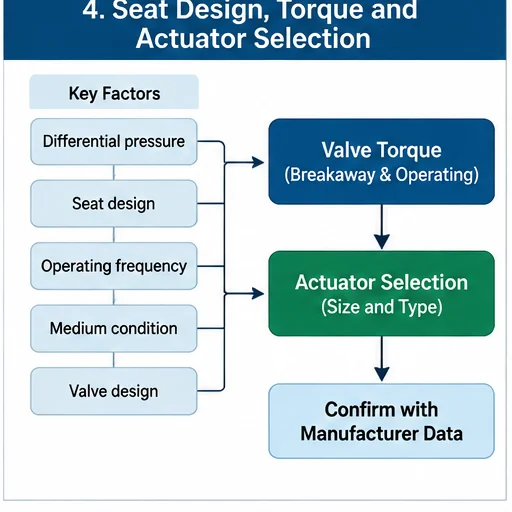
For actuated ball valves, seat design is one factor that may influence operating torque. However, actuator selection should not be based only on valve size, pressure class or general assumptions.
A technical torque review normally considers:
- Valve torque data for the specific design;
- Differential pressure during operation;
- Operating temperature;
- Operating frequency;
- Fail action requirements.
A metal seated design may require additional torque evaluation depending on valve construction and service conditions. The actuator package should be reviewed using confirmed valve data rather than estimated assumptions.
Common Ball Valve Seat Selection Mistakes
Incorrect seat selection often happens when a single factor is considered without reviewing the complete service condition.
- Selecting a seat design only based on valve size.
- Ignoring solids content or particle conditions in the process medium.
- Assuming metal seated valves are suitable for every high-temperature application.
- Selecting an actuator without confirmed torque information.
- Providing incomplete process information during the RFQ stage.
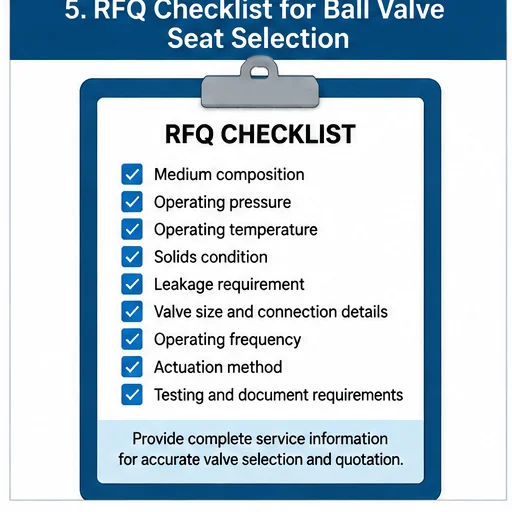
RFQ Checklist for Soft Seat and Metal Seat Ball Valve Selection
Providing complete service information helps engineers review the appropriate valve seat design and avoid unnecessary specification changes during the quotation process.
| Informations requises | Importance |
|---|---|
| Medium composition | Supports material and seat compatibility review. |
| Pression de service | Supports valve design evaluation. |
| Température de fonctionnement et de conception | Influences seat suitability review. |
| Solids condition | Helps evaluate wear and particle-related risks. |
| Exigence d'étanchéité | Defines shut-off expectations. |
| Fréquence de fonctionnement | Supports wear and torque evaluation. |
| Mode d'actionnement | Supports actuator package review. |
| Testing and documentation requirements | Aligns quotation scope and project expectations. |
Minimum Data Required for Technical Review
To review a suitable ball valve seat design, provide:
- Valve size and pressure class;
- Medium composition;
- Température de service et de conception ;
- Pressure differential;
- Solids information;
- Leakage requirement;
- Actuation requirements.
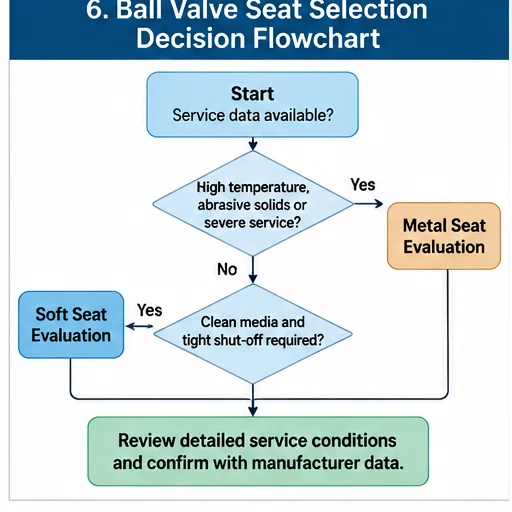
Soft Seat or Metal Seat Ball Valve: Practical Selection Framework
The correct ball valve seat selection depends on identifying the main service requirement and reviewing the complete operating condition. Soft seated and metal seated designs should be evaluated based on application requirements rather than treated as direct replacements for each other.
| Selection Step | Engineering Review | Informations requises |
|---|---|---|
| 1. Define the service | Understand the process medium and operating environment. | Medium, pressure, temperature, solids condition. |
| 2. Identify the main risk | Determine whether sealing, wear, temperature or cycling is the main concern. | Leakage requirement, operating frequency and service conditions. |
| 3. Review seat suitability | Evaluate soft seat or metal seat design against the application. | Material compatibility and valve construction. |
| 4. Confirm actuation requirements | Verify operating torque and actuator package requirements. | Valve torque data, differential pressure and fail action. |
Step 1: Confirm the Service Condition
Before selecting a ball valve seat design, confirm the complete service information:
- Medium composition;
- Pression de service et de conception ;
- Température de service et de conception ;
- Solids or particle condition;
- Corrosion or chemical compatibility concerns.
Step 2: Identify the Main Selection Priority
The key question is not whether soft seats or metal seats are universally better. The selection depends on which service factor requires the most attention.
- Is tight shut-off the primary requirement?
- Is temperature exposure the dominant concern?
- Could solids create wear risks?
- Will frequent operation affect maintenance requirements?
- Is actuator torque information available?
Step 3: Confirm Technical Data Before Specification
Before finalizing the valve specification, confirm:
- Valve construction;
- Seat design;
- Material compatibility;
- Torque requirements;
- Testing and documentation requirements.
For additional valve selection considerations, review our Guide de sélection des vannes à boisseau sphérique for further engineering input requirements.
Final Selection Boundary
Soft seated and metal seated ball valves address different engineering priorities.
A soft seated ball valve may be considered when shut-off performance, seat compatibility and service conditions align with the selected seat material.
A metal seated ball valve may be considered when temperature exposure, solids, wear concerns or demanding operating conditions require additional evaluation.
The final specification should be based on confirmed:
- Medium;
- Pressure;
- Temperature;
- Solids condition;
- Leakage requirement;
- Valve construction;
- Actuation requirements;
- Project specifications.
A comparison guide can help define the selection approach, but final valve selection should always be based on project-specific engineering review and manufacturer technical confirmation.
Foire aux questions
Can a soft seated ball valve be used for abrasive service?
Soft seated ball valves require careful review when abrasive particles are present. The suitability depends on the particle condition, seat material compatibility and actual service requirements.
When should a metal seated ball valve be considered?
Metal seated ball valves may be evaluated when higher temperature exposure, solids, wear concerns or demanding operating conditions require additional review.
Does valve size determine soft seat or metal seat selection?
Valve size alone does not determine seat selection. Engineers should consider medium, temperature, pressure, solids condition, leakage requirements and operating conditions.
Does a metal seated ball valve require higher actuator torque?
Seat design can influence operating torque. Actual actuator requirements should be reviewed using confirmed valve torque data, differential pressure and operating conditions.
What information is required before selecting a ball valve seat?
A technical review normally requires medium information, pressure, temperature, solids condition, leakage requirement, operating frequency, actuation method and documentation requirements.
Request a Ball Valve Seat Selection Review
Share your medium, operating pressure, temperature, solids condition, leakage requirement and actuation requirements. Our engineering team can review the key selection considerations based on your project information.
 French
  English
  German
  Arabic
  Spanish
  Italian
  Portuguese
  Russian