
Válvulas de retención industriales
Check Valve Manufacturer & Supplier
Check valves are used to prevent unintended reverse flow in piping systems. Choosing a suitable construction involves more than matching a valve to nominal line size. Flow conditions, installation orientation, allowable pressure drop, closing behaviour, the process medium and system dynamics can all influence which design should be evaluated.
Raymon provides access to industrial check valve constructions including swing, lift, dual plate, axial flow, nozzle, wafer and non-slam designs. Use this page to compare the main construction differences, identify the information that affects an initial shortlist, and continue to the appropriate product page or technical resource. Final sizing and configuration should be based on the actual operating conditions and the data for the specific valve under consideration.
Explore Raymon Check Valves
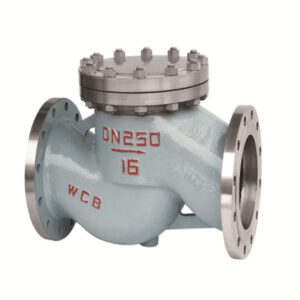
Check Valve Constructions at a Glance
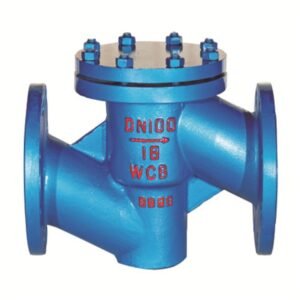
Válvulas de Retención de Oscilación
A swing check valve uses a hinged disc that rotates away from the seat as forward flow increases and returns toward the seat as the flow decreases or reverses.
Buyers may evaluate swing designs for general industrial pipeline duties where this construction fits the required installation and operating conditions. The final decision should still consider flow range, installation orientation, pressure drop, reverse-flow behaviour, closing response and the characteristics of the specific valve.
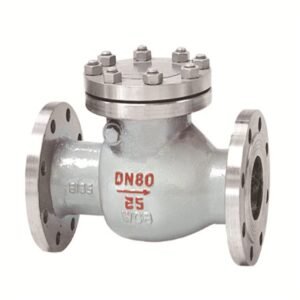
Lift Check Valves
A lift check valve uses a closure member that moves along a guided path rather than rotating on a hinge.
This construction may be evaluated where guided movement, a defined disc travel path or a different installation envelope is relevant to the application. Orientation, minimum and normal flow, allowable pressure drop, operating stability and the actual internal configuration should be reviewed before selecting the valve.
Dual Plate Check Valves
Dual plate check valves use two plates rather than one full swing disc. The plates typically move through a shorter travel distance and are commonly incorporated into compact check valve constructions.
Buyers may evaluate this design where installation length, weight, closing response or available piping space influences the shortlist. Flow stability, spring arrangement where applicable, pressure loss, orientation, line conditions and system dynamics still need to be checked for the specific application.
Axial Flow Check Valves
Axial flow check valves use a closure member that moves generally along the direction of the flow path.
This construction may be evaluated where the engineering review places greater attention on guided movement, flow behaviour or closing response. Selection still depends on actual minimum, normal and maximum flow, allowable pressure loss, line orientation, reverse-flow behaviour and valve-specific operating data.
Nozzle Check Valves
Nozzle check valves use an axially guided closure arrangement within a shaped flow path.
Buyers may include this construction in a shortlist when system response, guided closure or flow-path characteristics are important parts of the engineering evaluation. Actual flow range, pressure conditions, orientation, transient behaviour and valve-specific data remain important.
Non-Slam Check Valves
Non-slam check valves are designed with closing behaviour as an important consideration in the valve construction.
They may be evaluated for systems where reverse-flow deceleration and adverse closing behaviour require closer attention during valve selection. The term “non-slam” should not replace a system review: flow range, piping arrangement, pump or process behaviour, transient conditions and the actual valve characteristics still determine whether a configuration is appropriate.
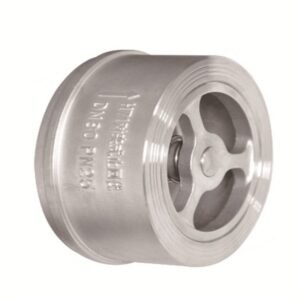
Wafer Check Valves
Wafer check valves use a compact body arrangement installed between compatible pipe flanges.
Buyers may evaluate wafer constructions where installation envelope, piping space or valve weight is an important project consideration. “Wafer” describes the installation form rather than one single internal mechanism, so the actual closure design, pressure loss, flange compatibility, flow behaviour and project conditions should still be reviewed.
Need a Check Valve Review?
If the operating conditions are already defined, send the available service information for a configuration and quotation review.
What Changes the Check Valve Choice?
A useful check valve review starts with the operating conditions rather than a fixed DN-to-valve-type rule. These inputs help determine which constructions should remain on the shortlist.
Medio
Identify the process medium and phase, including viscosity, solids or corrosion-related requirements that may affect the design. Confirm material suitability for the specific configuration.
Flow Range
Provide minimum, normal and maximum flow. A valve that is acceptable at design flow may behave differently at minimum operating flow.
Line Size & Pressure
DN or NPS and the required Class or PN are important inputs, but they do not determine the construction by themselves. Include operating and design pressure where available.
Installation Orientation
Horizontal or vertical installation, normal flow direction and piping arrangement can affect which designs remain suitable for evaluation.
Allowable Pressure Drop
Treat allowable pressure drop as a project input and compare it with actual valve and flow data rather than a universal minimum pressure-drop rule.
Closing Behaviour
Disc travel, closure mechanism, spring assistance where applicable and reverse-flow conditions can influence how a check valve closes.
Pump / System Dynamics
Pump starts and stops, rapidly changing flow, reverse velocity and other transient conditions may require a closer engineering review using actual system data.
Maintenance / Installation Constraints
Space, access, removal clearance, valve weight, flange arrangement and maintenance strategy can also influence the shortlist.
Family-Level Selection Matrix
This matrix is a screening tool. It identifies check valve constructions that may be worth evaluating; it does not replace valve-specific sizing or project engineering.
| Decision Factor | Constructions That May Be Evaluated | Por qué es importante | What Still Needs to Be Checked |
|---|---|---|---|
| General industrial reverse-flow prevention | Swing, Lift and other suitable designs | Several established constructions can perform the basic check-valve function. | Flow range, medium, orientation, pressure loss and closing behaviour. |
| Compact installation envelope | Wafer, Dual Plate and other compact configurations | Piping space and valve length may influence the shortlist. | Exact dimensions, flange compatibility and internal design. |
| Closing-response concern | Axial Flow, Nozzle, Non-Slam, Dual Plate and other relevant designs | Closure travel and mechanism can affect system response. | Reverse-flow behaviour, deceleration, actual transient conditions and valve data. |
| Minimum-flow or unstable-opening concern | Valve-specific evaluation required | Check valves can be sensitive to actual flow conditions. | Minimum flow, fluid properties, orientation and valve operating characteristics. |
| Pump discharge service | Multiple constructions may be evaluated | Pump and piping behaviour can materially affect the choice. | Pump operating cases, piping arrangement, reverse flow and transient concern. |
| Limited allowable pressure drop | Construction must be compared using actual data | Flow path and internal geometry affect pressure loss. | Flow rate, fluid properties and valve-specific loss data. |
| Instalación vertical | Only configurations suitable for the intended orientation should remain in the shortlist | Gravity and closure movement can affect operation. | Flow direction, valve construction and manufacturer installation requirements. |
| Space or weight constraint | Wafer, Dual Plate or other compact products may be considered | Installation envelope can be an important procurement constraint. | Face-to-face dimensions, access and piping compatibility. |
Related Check Valve Routes
Continue from family-level comparison to the relevant child product page for configuration details.
Technical Resources for Check Valve Selection
Technical Resources & RFQ Preparation
What to Include in a Check Valve RFQ
A useful quotation and technical review starts with the actual service information. Where available, include:
- Medio
- Minimum / normal / maximum flow
- Presión de operación y de diseño
- Temperatura
- Line size and orientation
- Conexión final
- Pump or system operating behaviour
- Cantidad
- Especificación del proyecto
- Required inspection and documentation
Providing these inputs does not require the buyer to complete the final valve selection before contacting Raymon. They provide a clearer basis for quotation review.
Guía de selección de válvulas de retención
Use the Guía de selección de válvulas de retención when you need a deeper explanation of how service conditions, flow behaviour, orientation and system requirements affect the choice between check valve constructions.
Check Valve Sizing and Selection
Use Check Valve Sizing and Selection when the question has moved beyond family-level comparison and requires closer attention to operating flow, stable valve behaviour and sizing inputs.
Check Valve Chatter and Slamming
Use Check Valve Chatter and Slamming when the application involves unstable valve movement, adverse closure behaviour or pump/system dynamics that require further investigation.
Product Configuration Details
Use the relevant child product page for configuration-specific information. Exact pressure, temperature, materials, leakage, compliance and other project-critical requirements should be confirmed against the applicable product documentation during quotation review.
Installation and Maintenance Considerations
Detailed installation, maintenance, repair and troubleshooting requirements depend on the selected valve and service. Confirm orientation, piping interface, access and maintenance requirements using the applicable product documentation or technical resource.
Need Help With an RFQ?
Send the available service information, operating conditions, line requirements and project specifications. Raymon can use the inquiry details to identify the relevant product route and the additional information needed for quotation review.
Supporting Check Valve Videos
Why Work With Raymon
Application-Based Quotation Review
A useful check valve quotation starts with the service conditions, piping requirements and project documentation. Provide the known operating information so the quotation can be based on the actual application rather than a generic valve name.
Configuration and Documentation Focus
Where a specific configuration is being evaluated, use the applicable product information and project requirements to define the requested construction, connections, materials, inspection scope and documents.
Clear RFQ Inputs and Open Questions
If some project details are still open, the inquiry can begin with the known operating cases and requirements. Remaining technical questions can then be identified during quotation review instead of being filled with assumptions.
Project Communication & Customer References




 Spanish
  English
  German
  Arabic
  French
  Italian
  Portuguese
  Russian