
Como selecionar válvulas esfera para aplicações de alta pressão
A seleção de uma válvula esfera para serviço de alta pressão não é apenas uma questão de escolher uma classe de pressão mais alta. Uma seleção confiável de válvula esfera de alta pressão deve considerar a estrutura da válvula, a classificação de pressão-temperatura, o projeto da sede, os materiais do corpo e internos, a conexão de extremidade, o alívio de pressão da cavidade, os requisitos de teste e a condição real de operação da tubulação ou sistema de processo.
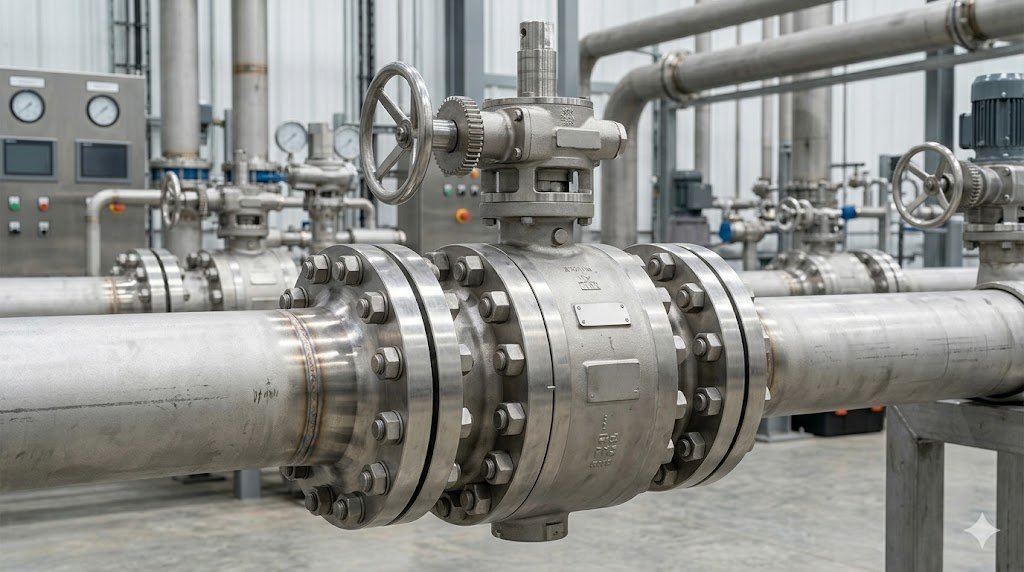
Em dutos de óleo e gás, estações de compressão, linhas de injeção de água, unidades químicas, usinas de energia e sistemas de utilidades de alta pressão, a válvula é frequentemente exigida para manter um fechamento estanque sob alta pressão diferencial. Nessas aplicações, uma válvula esfera trunnion geralmente é preferida porque a esfera é suportada mecanicamente por trunnions superior e inferior. Este projeto reduz a carga direta nas sedes e ajuda a manter o torque de operação mais estável do que um projeto de esfera flutuante em serviço de grande porte ou alta pressão.
Do ponto de vista da engenharia, a válvula correta é aquela que corresponde à pressão, temperatura, meio, classificação da tubulação, método de operação, requisito de estanqueidade e padrão de inspeção. Uma válvula que parece superdimensionada no papel ainda pode falhar em serviço se o material da sede estiver incorreto, se a pressão da cavidade retida for ignorada, ou se o atuador for selecionado pelo torque do catálogo em vez de dados reais de pressão diferencial.
O que significa “Alta Pressão” para Válvulas Esfera?
Na seleção de válvulas, “alta pressão” não deve ser julgada apenas pelo número impresso em uma placa de identificação. A seleção real depende do tamanho da válvula, pressão de projeto, temperatura de projeto, classe de pressão, meio, velocidade do fluxo, flutuação de pressão, desempenho de fechamento exigido e o padrão de válvula aplicável.
Em projetos típicos de válvulas esfera industriais, as Classes 600, 900, 1500 e 2500 são comumente tratadas como faixas de alta pressão. No entanto, a pressão de trabalho permitida não é fixa apenas pelo número da classe. Ela muda com o grupo de material e a temperatura. É por isso que a classificação de pressão-temperatura deve ser verificada de acordo com ASME B16.34 ou o padrão especificado no projeto, em vez de depender apenas do nome da classe de pressão.
Por exemplo, uma válvula esfera de aço carbono Classe 900 em temperatura ambiente e a mesma válvula em temperatura elevada não possuem a mesma pressão permitida. O corpo ainda pode ser aceitável, mas a sede resiliente, a gaxeta de grafite, a vedação de elastômero, os parafusos ou a junta podem se tornar o componente limitante. Em aplicações de alta pressão, cada componente que contém pressão e veda deve ser verificado como um conjunto completo.
Nota de engenharia
A seleção para alta pressão deve começar pela condição de projeto, não pelo catálogo de produtos. Consulte a pressão normal, pressão máxima de projeto, pressão de teste, temperatura de operação, composição do fluido, direção do fluxo e pressão diferencial máxima antes de selecionar a estrutura da válvula.
Válvula esfera flutuante ou Válvula esfera trunnion?
Uma das decisões mais importantes em válvula esfera de alta pressão é se usar um projeto de esfera flutuante ou um projeto trunnion. Ambas são válvulas esfera de quarto de volta, mas seus caminhos de carga são diferentes.
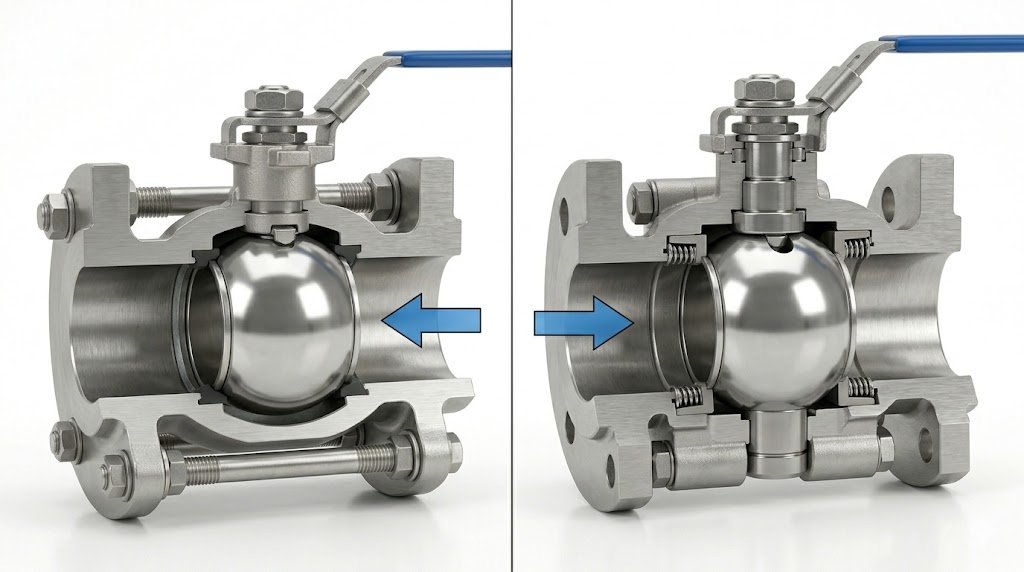
Válvula esfera flutuante
Uma válvula esfera flutuante usa a pressão da linha para empurrar a esfera contra a sede a jusante. Este projeto é simples, compacto e amplamente utilizado para tamanhos pequenos a médios e aplicações de pressão moderada. Pode fornecer fechamento estanque quando o meio é limpo e a faixa de pressão está dentro do limite de projeto da sede.
A limitação aparece quando o tamanho da válvula e a pressão aumentam. A força que atua na esfera aumenta com a pressão e a área da esfera. Como resultado, a carga na sede e o torque de operação aumentam. Em válvulas de alta pressão maiores, isso pode levar a uma operação manual pesada, dimensionamento excessivo do atuador, deformação da sede ou desgaste mais rápido da sede.
Válvula esfera trunnion
Uma válvula esfera trunnion usa suportes mecânicos na parte superior e inferior da esfera. A esfera é suportada pela estrutura do trunnion, enquanto as sedes com mola se movem em direção à esfera para manter o contato de vedação. Este arranjo é especialmente útil quando a válvula deve operar sob alta pressão diferencial.
Para aplicações de alta pressão, uma válvula esfera trunnion oferece várias vantagens de engenharia:
- Menor torque de operação em comparação com válvulas esfera flutuantes de alta pressão de grande porte.
- Melhor estabilidade da esfera em tubulações de grande diâmetro.
- Carga de sede mais controlada sob pressão.
- Melhor adequação para acionamento por engrenagem, pneumático, elétrico ou hidráulico.
- Configuração mais prática para requisitos de bloqueio duplo e sangria (double block and bleed).
- Confiabilidade aprimorada em isolamento de linha e serviço de fechamento de emergência.
Por essa razão, quando a aplicação envolve grande diâmetro, alta classe de pressão, alta pressão diferencial, operação com atuador ou serviço de isolamento de linha, o design trunnion é normalmente a escolha mais adequada.
Fatores Chave de Seleção para Válvulas Esfera de Alta Pressão
1. Confirmar Pressão e Temperatura de Projeto
O primeiro passo é definir a condição real de operação. Não selecione a válvula apenas pelo diâmetro da tubulação ou classe de pressão nominal. Uma consulta adequada deve incluir:
- Pressão normal de operação
- Pressão máxima de projeto
- Pressão de teste hidrostático, se especificado
- Temperatura normal de operação
- Temperatura máxima e mínima de projeto
- Condição de surto de pressão ou partida de compressor
- Pressão diferencial máxima durante a abertura e o fechamento
A temperatura é um fator crítico porque a resistência do material, o comportamento da sede, o desempenho do elastômero e a capacidade de vedação da gaxeta mudam com a temperatura. O corpo da válvula pode ser adequado para a classe de pressão, mas o material da sede pode não ser adequado para a mesma condição de pressão e temperatura.
Estudo de caso de engenharia: linha de injeção de água de alta pressão
Problema: Uma linha de injeção de água utilizou uma válvula esfera com sede resiliente selecionada apenas pela classe de pressão. Após vários meses, a válvula tornou-se difícil de operar e a sede apresentou marcas de extrusão.
Causa: A classe de pressão do corpo da válvula era aceitável, mas o material da sede não foi verificado contra a pressão diferencial máxima e a temperatura. A alta pressão atuando sobre uma sede relativamente macia causou deformação durante a operação repetida.
Prevenção: Confirmar a pressão diferencial máxima, o limite do material da sede e a temperatura real de operação. Para serviços de injeção de água de maior pressão, um projeto com esfera trunnion e material de sede reforçado adequado ou uma opção com sede metálica deve ser revisado.
2. Selecione a Classe de Pressão Correta
As classes de pressão comuns para válvulas esfera de alta pressão incluem Classe 600, Classe 900, Classe 1500 e Classe 2500. A seleção final deve ser baseada na pressão de projeto, temperatura de projeto, grupo de materiais, classificação da flange e especificação do projeto.
Para serviço em dutos em sistemas de petróleo e gás natural, API 6D é comumente especificado porque abrange os requisitos de projeto, fabricação, montagem, teste e documentação de válvulas esfera, retenção, gaveta e plug para sistemas de dutos e tubulações. Para válvulas esfera metálicas usadas em aplicações de petróleo, petroquímica e industriais, API 608 também pode ser relevante dependendo do tamanho da válvula, conexão final e requisito do projeto.
Uma classe de pressão mais alta nem sempre é melhor. Ela aumenta a espessura da parede da válvula, o peso, o torque do atuador, a carga dos parafusos, o custo e a dificuldade de instalação. Na engenharia de suprimentos, a classe de pressão correta deve ser tecnicamente justificada em vez de ser superdimensionada sem cálculo.
Checklist de seleção de classe de pressão
| Item de verificação | Por que Importa |
|---|---|
| Pressão de projeto | Define o requisito mínimo de classe de pressão. |
| Temperatura de projeto | Reduz a pressão admissível dependendo do material e da tabela de classificação padrão. |
| Classe de flange da tubulação | A conexão final da válvula deve corresponder à classificação do sistema de tubulação. |
| Grupo de material | Materiais diferentes têm classificações de pressão e temperatura diferentes. |
| Pressão de surto | Desligamento da bomba, partida do compressor ou fechamento rápido podem exceder a pressão normal de operação. |
| Requisito de teste | Testes hidrostáticos e de sede podem exigir pressão temporária superior à de serviço normal. |
3. Escolha o Design Correto do Corpo da Válvula
Válvulas esfera de alta pressão estão disponíveis em diversas construções de corpo. A escolha correta depende do nível de pressão, requisito de manutenção, risco de vazamento, acessibilidade da tubulação e da filosofia de manutenção do proprietário.
Válvula Esfera Trunnion de Entrada Lateral
Válvulas esfera trunnion de entrada lateral são amplamente utilizadas em linhas de processo e estações de dutos. O corpo é comumente projetado como uma construção aparafusada de duas ou três peças. Este design é prático para grandes tamanhos e classes de alta pressão onde a remoção em campo e a manutenção em oficina são aceitáveis.
É adequada para dutos de óleo e gás, estações de compressores, linhas de utilidades de alta pressão e serviço geral de isolamento de processo.
Válvula Esfera Trunnion de Entrada Superior
Válvulas esfera de entrada superior permitem inspeção e manutenção interna pela parte superior após a despressurização da linha. O corpo da válvula pode permanecer instalado na tubulação. Este design é útil onde a remoção da válvula da tubulação exigiria um trabalho significativo de parada.
É frequentemente considerada para dutos enterrados, pontos de isolamento críticos, grandes unidades de processo e aplicações onde o acesso para manutenção em linha é importante.
Válvula esfera totalmente soldada
Válvulas esfera totalmente soldadas reduzem os caminhos de vazamento externo porque o corpo é soldado em vez de aparafusado. Elas são comumente usadas em dutos de gás de longa distância, serviço enterrado, sistemas de aquecimento distrital e linhas de transmissão onde a longa vida útil e o baixo risco de vazamento externo são importantes.
A limitação é a manutenção. Uma vez instalada, o reparo interno é mais restrito em comparação com designs de corpo aparafusado. Por essa razão, a construção totalmente soldada deve ser selecionada juntamente com uma estratégia clara de vida útil e manutenção.
Estudo de caso de engenharia: válvula para duto de gás enterrado
Problema: Uma válvula esfera com corpo aparafusado foi utilizada em uma linha de gás enterrada de alta pressão. Vários anos depois, a corrosão externa ao redor da junta do corpo e o acesso limitado dificultaram a inspeção.
Causa: O projeto do corpo da válvula foi selecionado por custo e disponibilidade, mas o ambiente de instalação exigia baixos caminhos de vazamento externo e acesso mínimo para manutenção.
Prevenção: Para serviço de transmissão de gás enterrado, avalie válvulas esfera trunnion totalmente soldadas, sistema de revestimento, extensão de haste, arranjo de dreno e ventilação, e proteção contra corrosão externa durante a fase de seleção.
4. Selecione Conexões de Extremidade Adequadas
O tipo de conexão de extremidade afeta a confiabilidade da vedação, o método de instalação, a conveniência de manutenção e o risco de vazamento externo. Em serviço de alta pressão, a conexão de extremidade da válvula deve corresponder à classe da tubulação e ao requisito de instalação.
Extremidades Flangeadas
Válvulas esfera flangeadas de alta pressão são fáceis de instalar e remover. Elas são comumente usadas em plantas de processo, refinarias, unidades químicas, estações de compressores e terminais de dutos. A principal vantagem é a conveniência de manutenção. O principal risco é o vazamento da junta flangeada se a seleção da junta, a condição da face do flange, a classe do parafuso ou o procedimento de aperto não forem controlados.
Para válvulas flangeadas de alta pressão, verifique o padrão do flange, o tipo de faceamento, o tipo de junta, o material do parafuso, a sequência de aperto dos parafusos e o alinhamento do flange. Projetos com face elevada e junta tipo anel podem ser usados dependendo da classe de pressão e da especificação do projeto.
Extremidades com Solda de Topo (Butt Weld)
Válvulas esfera com extremidades de solda de topo (butt weld) são frequentemente usadas em dutos de alta pressão onde são necessários conexão permanente e risco reduzido de vazamento por flange. Elas fornecem uma conexão forte ao duto, mas a remoção é mais difícil e o controle de qualidade da soldagem se torna parte da qualidade da instalação da válvula.
Antes de selecionar extremidades de solda de topo, confirme o schedule da tubulação, a preparação da extremidade da solda, a compatibilidade do material, o procedimento de soldagem, o requisito de tratamento térmico pós-soldagem, se aplicável, e se as sedes resilientes internas precisam de proteção durante a soldagem.
Extremidades Roscadas ou com Encaixe para Solda (Socket Weld)
Válvulas esfera roscadas e com encaixe para solda (socket weld) são usadas principalmente para tamanhos pequenos. Em serviço de pequeno diâmetro de alta pressão, as extremidades com encaixe para solda são frequentemente preferidas às roscadas quando o risco de vazamento e a resistência mecânica são importantes. Conexões roscadas podem ser aceitáveis para algumas aplicações de utilidades ou instrumentação, mas devem ser usadas com cuidado em serviços com vibração, ciclagem térmica ou com fluidos perigosos.
5. Escolha Materiais Adequados para Corpo e Internos
A seleção de material deve considerar pressão, temperatura, corrosão, erosão, serviço com H₂S (sour service), tenacidade a baixas temperaturas e compatibilidade com o fluido. Não selecione material de válvula de alta pressão apenas por “aço carbono” ou “aço inoxidável”. A classe de material ASTM e a condição de tratamento térmico são importantes.
Materiais comuns para corpo incluem:
- Aço carbono forjado ASTM A105 para válvulas forjadas compactas e componentes de alta pressão.
- Aço carbono fundido ASTM A216 WCB para corpos de válvulas de aço fundido em geral.
- Aço carbono para baixa temperatura ASTM A350 LF2 para serviço em baixas temperaturas.
- Aço inoxidável ASTM A182 F304 / F316 para aplicações de serviço corrosivo ou limpo.
- Aço inoxidável duplex para serviço com cloretos ou serviço resistente à corrosão de alta resistência.
- Aço liga para aplicações em temperaturas elevadas.
- Liga de níquel para serviço químico severo ou especial.
Opções comuns de internos (trim) e componentes podem incluir esfera e haste em aço inoxidável, esfera com revestimento de níquel químico (electroless nickel plated), esfera com revestimento de carboneto de tungstênio, esfera com revestimento de carboneto de cromo, sedes em polímero reforçado, sedes metálicas e molas de liga para serviço em temperaturas mais altas ou corrosivo.
Para ambientes com gás ácido (sour gas) ou contendo H₂S, a seleção de material deve ser revisada contra NACE MR0175 / ISO 15156. Isso é especialmente importante para o controle de dureza do aço carbono, risco de trincamento por sulfeto, procedimento de soldagem e seleção de material dos internos.
Estudo de caso de engenharia: incompatibilidade de material em gás ácido
Problema: Uma válvula de alta pressão para gás foi encomendada com internos de aço carbono padrão para uma linha que posteriormente foi confirmada conter H₂S. A válvula teve que ser substituída antes da comissionamento.
Causa: A consulta não mencionou serviço com gás ácido. A seleção do material foi baseada apenas na classe de pressão, sem verificar a pressão parcial de H₂S, controle de dureza ou conformidade com NACE.
Prevenção: Para aplicações de óleo e gás, confirme sempre se o serviço é doce ou ácido. Se H₂S estiver presente, especifique a conformidade com NACE MR0175 / ISO 15156, certificados de material, requisitos de dureza e restrições aplicáveis aos internos antes da compra.
6. Selecione o Projeto de Sede Correto
O projeto da sede afeta diretamente o desempenho de estanqueidade, torque operacional, faixa de temperatura, compatibilidade química e vida útil. Em serviço de alta pressão, a sede é frequentemente o componente limitante, mesmo quando o corpo metálico é forte o suficiente.
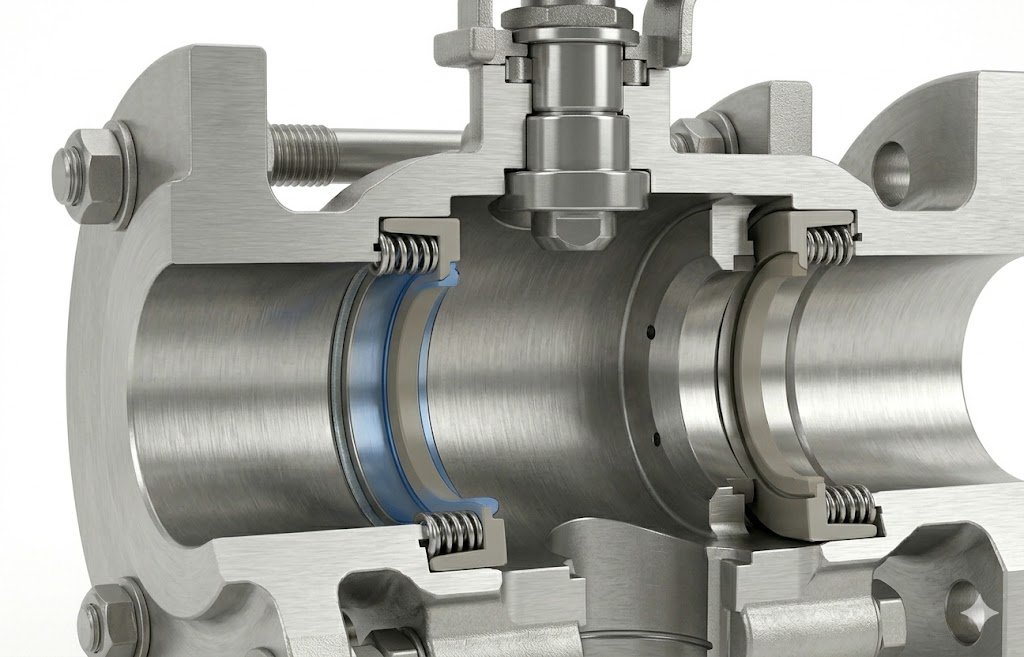
Projeto com Sede Resiliente (Soft Seated)
Válvulas esfera com sede resiliente geralmente usam PTFE, RPTFE, PEEK ou outros materiais de sede à base de polímero. Elas proporcionam fechamento estanque e torque operacional relativamente baixo. São adequadas para gás limpo, líquido limpo, água, óleo e muitos fluidos de processo em geral.
Os limites devem ser verificados cuidadosamente. Sedes resilientes podem ser afetadas por temperatura, pressão, inchaço químico, descompressão explosiva em serviço de gás e contaminação por partículas. Para serviço de alta pressão, PEEK ou materiais de sede reforçados podem ser considerados onde o PTFE padrão não é adequado. A decisão final deve ser baseada na classificação da sede do fabricante e nos requisitos de teste do projeto.
Projeto com Sede Metálica (Metal Seated)
Válvulas esfera com sede metálica são usadas quando sedes resilientes não são adequadas devido a alta temperatura, partículas abrasivas, gás sujo, finos de catalisador, mídia semelhante a lodo ou pressão diferencial severa. Geralmente requerem superfícies de esfera e sede endurecidas, como revestimento de carboneto de tungstênio ou carboneto de cromo.
Válvulas com sede metálica podem oferecer maior vida útil em serviços severos, mas geralmente possuem torque operacional mais alto e podem ter uma classe de estanqueidade diferente em comparação com válvulas com sede resiliente. A aceitação de vazamento deve ser especificada claramente no pedido de compra.
Tabela de Seleção: Sede Resiliente vs. Sede Metálica
| Condição | Válvula esfera com sede resiliente | Válvula esfera com sede metálica |
|---|---|---|
| Gás limpo ou líquido limpo | Geralmente adequado | Geralmente não necessário, a menos que a temperatura seja alta |
| Alta estanqueidade | Boa opção | Depende da classe de estanqueidade e da qualidade do polimento |
| Partículas abrasivas | Risco de dano na sede | Preferível com revestimento duro |
| Alta temperatura | Limitado pelo material polimérico da sede | Preferível quando a temperatura excede o limite da sede resiliente |
| Torque de operação | Geralmente menor | Geralmente maior |
| Uso típico | Isolamento de linha limpa | Serviço severo, fluidos sujos, alta temperatura |
7. Verificar Direção de Vedação da Sede e Alívio de Pressão da Cavidade
Para válvulas esfera trunnion, o arranjo da sede é um detalhe de engenharia chave. Os designs comuns de sede incluem sedes de efeito pistão simples, sedes de efeito pistão duplo, sedes autorrelieving e arranjos de bloqueio duplo e dreno (DBB).
Em serviço líquido, o fluido aprisionado dentro da cavidade do corpo pode expandir quando a temperatura aumenta. Se a pressão da cavidade não for aliviada, a pressão pode danificar as sedes ou vedações. Este risco é maior em linhas de líquido de alta pressão, linhas aquecidas, dutos de longa distância expostos ao sol e sistemas com ciclos de temperatura frequentes.
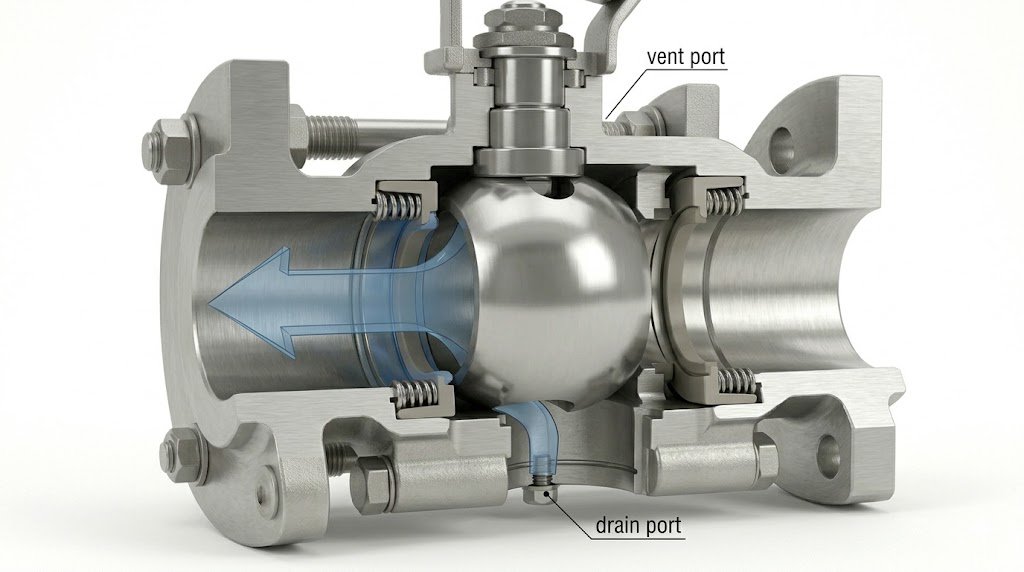
A seleção deve esclarecer:
- Se a função de bloqueio duplo e dreno (DBB) é necessária.
- Se a sede deve ser autorrelieving.
- Se um dispositivo de alívio de cavidade externa é necessário.
- Se a vedação é necessária a montante, a jusante ou em ambas as direções.
- Se a válvula será instalada em serviço de gás, líquido ou duas fases.
Estudo de caso de engenharia: pressão de cavidade retida em serviço líquido
Problema: Uma válvula esfera de linha de líquido de alta pressão vazou através da sede após exposição térmica durante o desligamento.
Causa: O líquido ficou retido na cavidade do corpo. A temperatura aumentou após o isolamento, causando expansão térmica e pressão anormal na cavidade. A sede foi danificada porque o caminho de alívio não era adequado para o serviço.
Prevenção: Revisar o alívio de pressão da cavidade na fase de projeto. Para serviço líquido, confirmar a direção da sede auto-aliviante, a necessidade de efeito de pistão duplo, a válvula de alívio da cavidade do corpo e o procedimento operacional para pontos de dreno e ventilação.
8. Avaliar o Projeto da Haste e a Segurança Anti-Blowout
A área da haste é um ponto crítico de vedação em válvulas esfera de alta pressão. Uma válvula de alta pressão adequada deve incluir projeto de haste anti-blowout, material de haste adequado, gaxeta compatível, dispositivo antiestático onde necessário e projeto fire safe onde especificado pelo projeto.
Para fluidos inflamáveis ou perigosos, o teste fire safe pode ser necessário. Para serviço de compostos orgânicos voláteis, a gaxeta de baixa emissão também pode ser exigida pela especificação do projeto. Esses requisitos devem ser confirmados antes do pedido, pois afetam o projeto da gaxeta, testes, documentação e custo.
Durante a inspeção, a haste deve ser verificada quanto à operação suave, compressão correta da gaxeta, ausência de vazamento visível e ausência de aumento anormal de torque após o teste de pressão.
9. Confirmar Torque de Operação e Método de Acionamento
Válvulas esfera de alta pressão frequentemente exigem torque maior do que válvulas de baixa pressão. O torque é afetado pelo tamanho da válvula, classe de pressão, pressão diferencial, material da sede, projeto da sede, limpeza do fluido, temperatura, condição do revestimento e frequência de operação.
Para operação manual, redutores de engrenagem são comumente usados para grandes tamanhos e classes de alta pressão. Para sistemas automatizados, atuadores pneumáticos, elétricos ou hidráulicos podem ser selecionados. Em serviço de fechamento de emergência, o atuador também deve atender ao tempo de fechamento exigido e à posição de falha segura (fail-safe).
Ao selecionar um atuador, solicite dados de torque ao fabricante da válvula sob a condição de pressão especificada. Não dimensionar o atuador apenas com base em um valor genérico de catálogo. Para válvulas críticas, confirme o torque de quebra para abrir (break-to-open), torque de operação (running torque), torque de fechamento final (end-to-close), pressão diferencial máxima, fator de segurança e requisito de operação de emergência.
Caso de engenharia: atuador subdimensionado
Problema: Um atuador pneumático pôde operar uma válvula esfera de alta pressão durante o teste de bancada, mas falhou em fechar completamente durante a operação em campo.
Causa: O atuador foi dimensionado usando a pressão normal de operação em vez da pressão diferencial máxima. O atrito da sede sob a pressão real foi maior do que o esperado.
Prevenção: Dimensionar o atuador usando dados de torque do fabricante da válvula na pressão diferencial máxima. Incluir fator de segurança adequado, faixa de pressão de suprimento de ar, posição de falha (fail position) e requisito de velocidade de operação.
10. Especificar Requisitos de Teste e Inspeção
Válvulas de alta pressão devem ser testadas de acordo com a norma aplicável e a especificação do projeto. Itens típicos de inspeção incluem teste de pressão do corpo, teste de estanqueidade da sede, teste de sede com ar de baixa pressão, teste de fechamento de alta pressão, inspeção da vedação da haste, inspeção dimensional, revisão do certificado de material, teste PMI, inspeção NDE, certificado fire safe e teste de emissões fugitivas quando exigido.
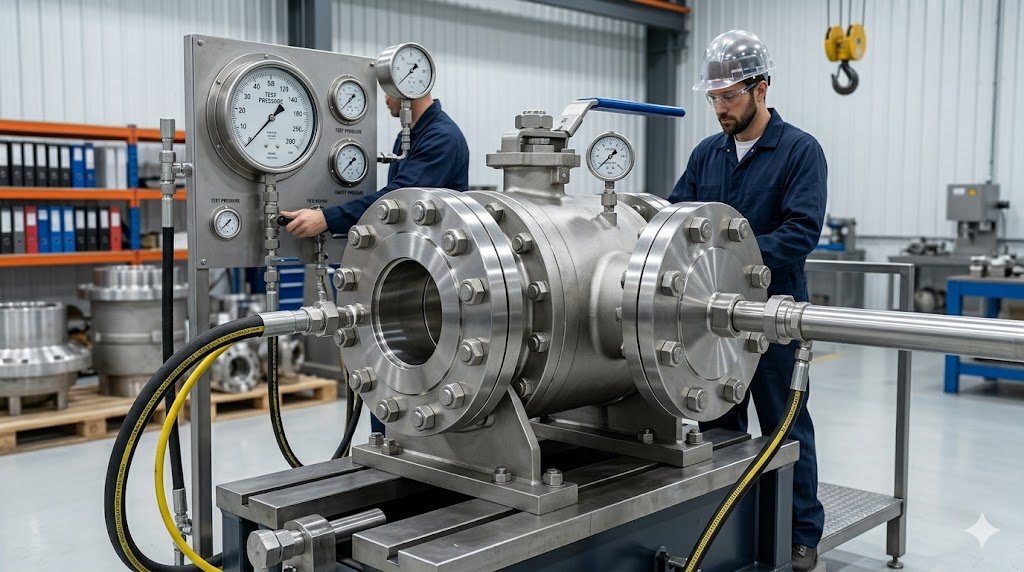
MSS SP-61 estabelece requisitos de teste de pressão e critérios de aceitação para corpos de válvula e fechamentos de sede. Para válvulas de linha, API 6D é comumente especificada. Para válvulas de processo, API 608 e requisitos de inspeção específicos do projeto podem ser aplicados dependendo do projeto e serviço da válvula.
O comprador deve definir o nível de inspeção antes do pedido. Se testes adicionais como PMI, NDE, teste criogênico, teste fire safe, teste de baixa emissão ou teste de gás de alta pressão forem exigidos após a produção, o custo e o prazo de entrega podem aumentar significativamente.
Erros Comuns na Seleção de Válvulas Esfera de Alta Pressão
Erro 1: Selecionar Apenas pela Classe de Pressão
A classe de pressão sozinha não é suficiente. A válvula deve ser verificada quanto à temperatura de projeto, material do corpo, material da sede, norma de flange, tipo de gaxeta e requisito de teste.
Erro 2: Usar Válvulas Esfera Flutuantes em Linhas de Alta Pressão de Grande Porte
Válvulas esfera flutuantes podem funcionar bem em tamanhos pequenos, mas o serviço de alta pressão e grande diâmetro geralmente requer construção trunnion para reduzir o torque e melhorar o suporte da esfera.
Erro 3: Ignorar Limites do Material da Sede
O corpo da válvula pode ser classificado para alta pressão, mas a sede resiliente pode não ser adequada para a mesma condição de pressão e temperatura. Sempre verifique a classificação da sede e a compatibilidade química.
Erro 4: Não Considerar o Alívio de Pressão da Cavidade
O líquido aprisionado pode expandir e criar pressão anormal na cavidade. O projeto da sede e os requisitos de alívio de pressão devem ser revisados, especialmente para serviço com líquidos.
Erro 5: Superdimensionar a Classe de Pressão Sem Revisão de Engenharia
Uma classe de pressão mais alta aumenta o custo, peso, torque e carga de instalação. A seleção correta deve corresponder à condição de projeto real e às normas aplicáveis.
Checklist de Seleção de Válvulas Esfera de Alta Pressão
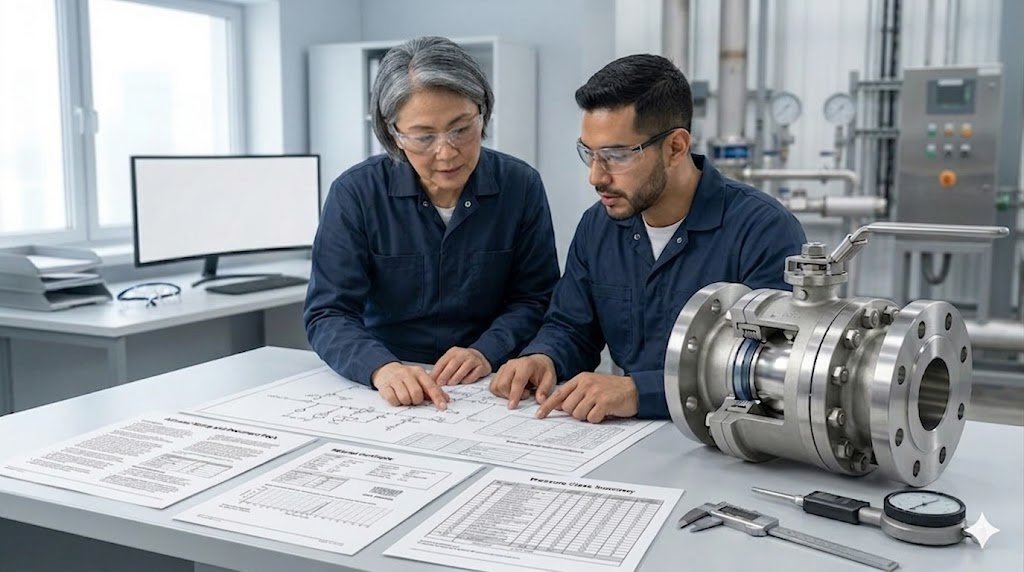
Antes de solicitar uma válvula esfera de alta pressão, confirme as seguintes informações com o fabricante:
| Item de Seleção | Informação Requerida |
|---|---|
| Tamanho da válvula | NPS / DN |
| Classe de pressão | Classe 600, 900, 1500, 2500 ou requisito do projeto |
| Pressão de projeto | Pressão normal, pressão máxima, condição de surto |
| Temperatura de projeto | Temperatura mínima, normal e máxima |
| Médio | Gás, líquido, óleo, água, vapor, químico, gás ácido, lama ou fluxo bifásico |
| Estrutura da válvula | Flutuante ou trunnion mounted |
| Projeto do corpo | Entrada lateral, entrada superior ou totalmente soldada |
| Conexão final | Flangeada, solda de topo, com encaixe para solda ou roscada |
| Tipo de sede | Com sede resiliente ou sede metálica |
| Arranjo da sede | Efeito pistão simples, efeito pistão duplo, auto-aliviante, requisito DBB |
| Material | Corpo, esfera, haste, sede, selo, mola, parafusos, junta |
| Acionamento | Atuador tipo alavanca, redutor, pneumático, elétrico ou hidráulico |
| Normas | ASME B16.34, API 6D, API 608, NACE MR0175 / ISO 15156 ou especificação do projeto |
| Testes | Teste de carcaça, teste de sede, teste fire safe, END, PMI, teste de emissão, teste de gás de alta pressão, se necessário |
| Documentação | MTC, relatório de teste de pressão, desenho, datasheet, relatório de revestimento, certificado de inspeção |
Quando escolher uma válvula esfera trunnion?
Uma válvula esfera trunnion é normalmente recomendada quando a aplicação inclui uma ou mais das seguintes condições:
- Alta classe de pressão
- Tamanho grande da válvula
- Alta pressão diferencial
- Operação frequente
- Serviço de transmissão por dutos
- Baixo requisito de torque de operação
- Operação com atuador
- Requisito de bloqueio duplo e dreno
- Serviço em dutos enterrados ou críticos
- Requisito de longa vida útil
Para estas aplicações, uma válvula esfera trunnion para serviço de alta pressão oferece suporte mais forte à esfera, desempenho de vedação mais estável e melhor adequação para automação do que um projeto de esfera flutuante.
Conclusão
Um correto válvula esfera de alta pressão exige mais do que escolher uma válvula com uma classe de pressão mais alta. O engenheiro deve revisar a classificação de pressão-temperatura, a estrutura da válvula, o material do corpo, o projeto da sede, a conexão final, o alívio de pressão da cavidade, o torque operacional, os requisitos de teste e as normas aplicáveis.
Para tamanhos pequenos e pressão moderada, válvulas de esfera flutuantes podem ser adequadas. Para tamanhos maiores, classes de pressão mais altas, alta pressão diferencial, serviço em linha e operação com atuador, as válvulas de esfera com esfera trunnion são geralmente a solução preferida porque oferecem suporte mais forte à esfera, menor torque operacional e desempenho de vedação mais confiável.
Ao especificar uma válvula de esfera de alta pressão, sempre forneça dados completos de serviço ao fabricante. Isso permite que a válvula seja selecionada, projetada, testada e documentada de acordo com a condição operacional real, em vez de uma descrição geral do catálogo.
FAQ
1. Que tipo de válvula de esfera é melhor para aplicações de alta pressão?
Para aplicações de grande porte, alta classe de pressão ou alta pressão diferencial, uma válvula de esfera com esfera trunnion é geralmente preferida. A estrutura trunnion suporta a esfera mecanicamente, reduz a carga na sede e ajuda a controlar o torque operacional.
2. Uma válvula de esfera flutuante pode ser usada para serviço de alta pressão?
Sim, válvulas de esfera flutuantes podem ser usadas em algumas aplicações de alta pressão de pequeno porte. No entanto, à medida que a pressão e o tamanho da válvula aumentam, a força na esfera e na sede downstream aumenta. Para válvulas maiores ou serviço com atuador, a construção com esfera trunnion é normalmente mais confiável.
3. Quais classes de pressão são comuns para válvulas de esfera de alta pressão?
Classe 600, Classe 900, Classe 1500 e Classe 2500 são comumente usadas em projetos de válvulas de esfera de alta pressão. A seleção final deve ser verificada em relação à temperatura de projeto, grupo de materiais, classificação de flange e a tabela de pressão-temperatura aplicável.
4. Qual material de sede é adequado para válvulas de esfera de alta pressão?
Para serviços limpos, podem ser usadas sedes de PTFE reforçado, PEEK ou outros polímeros de engenharia, dependendo da pressão e temperatura. Para serviços de alta temperatura, abrasivos, sujos ou com partículas, a construção com sede metálica e revestimento duro deve ser considerada.
5. Por que o alívio de pressão da cavidade é importante em válvulas esfera de alta pressão?
Quando o líquido fica retido na cavidade do corpo da válvula, o aumento da temperatura pode causar expansão térmica e acúmulo de pressão. O projeto adequado da sede, a função de autoalívio ou o alívio externo da cavidade podem ajudar a prevenir danos à sede e à vedação.
6. Qual norma é comumente usada para válvulas esfera de tubulação?
A API 6D é comumente especificada para válvulas de tubulação e dutos usadas em aplicações de petróleo e gás natural. Ela abrange os requisitos de projeto, fabricação, montagem, teste e documentação para válvulas de tubulação.
7. Quais informações devem ser fornecidas ao solicitar um orçamento para válvula esfera de alta pressão?
Fornecer tamanho da válvula, classe de pressão, pressão de projeto, temperatura de projeto, fluido, conexão de extremidade, material do corpo, material da sede, método de operação, norma aplicável, requisito de teste e quaisquer condições especiais, como serviço com H2S (sour service), requisito fire safe, função DBB ou instalação enterrada.
 Portuguese
  English
  German
  Arabic
  French
  Spanish
  Italian
  Russian