
Valve Media Compatibility: Process Data and Material Checks
What Is a Valve Medium?
A valve medium is the process fluid that flows through the valve or stays inside it. To assess valve media compatibility, check which fluids reach the body, trim, seats, packing and gaskets during operation, cleaning and shutdown. A body alloy may suit the normal process fluid while a seal faces a different fluid or temperature. List the composition, concentration, phase, solids, pressure and temperature by service case. Then ask the supplier to confirm exposed parts, operating limits and any open deviations for the proposed assembly.
Valve media compatibility review worksheet
Use one row per valve tag and service case. Identify the datasheet revision and ask each bidder to return the offered model or drawing revision, exposed components, accepted limits and any deviations against that same revision. The entries below illustrate how to record the replies.
Scroll the table horizontally to see all columns.
| Tag and service case | Process data supplied by buyer | Supplier response to record | Status da revisão |
|---|---|---|---|
| Normal operation | Composition range, phase, solids, operating pressure and temperature | Proposed model and material schedule, referenced operating limits and any assumptions | Reviewed for normal operation. Record the cases and components covered by the reply |
| Cleaning cycle | Cleaning fluid and concentration supplied. Temperature, exposure time and frequency pending | Bid confirms normal service. Compatibility of the parts exposed during cleaning is pending | Open. Process team to confirm the cleaning conditions. Supplier to provide the material basis for the affected parts |
| Upset case | Record the coincident pressure and temperature, the phase at that condition and its expected duration | Confirm the offered assembly limits for the stated case. Identify any component restriction and cite the supporting document | Record the conclusion, the responsible reviewer and any action required before release |
Preparing a valve datasheet or comparing supplier replies? See what to send for a compatibility review.
Process Data for a Valve Media Compatibility Review
Composition, phase and solids
For valve media compatibility screening, list the constituents and concentration ranges that could change the selection. For water-based service, record pH, chlorides and relevant dissolved gases or treatment additives. Include H₂S when present so the project team can assess the applicable sour-service requirements. For example, an RFQ that says only “treated water” leaves a stainless-steel supplier without the chloride, pH and temperature data needed to screen pitting and crevice corrosion. Request the operating ranges and identify areas, such as a gasket crevice or seat pocket, where the local exposure may differ from the bulk stream.
Identify whether the valve handles liquid, gas, vapor or a mixture at the stated conditions. When solids are present, give the loading and particle-size range, and include particle hardness or settling behavior where relevant. Tie the data to the valve duty.
Where erosion, abrasion or deposits are a concern, record the relevant flow rates and known line velocity, and ask the supplier to identify the offered bore and any restrictions in the flow path. For throttling, list minimum, normal and maximum flow with the upstream and downstream pressures and temperature for each case. Flag possible flashing or cavitation for project-specific sizing and trim review. Nominal valve size identifies the connection size. Ask for the offered flow passage and relevant flow coefficient data for the construction and operating position where sizing is in scope.
For isolation, specify shutoff direction, differential pressure and allowable seat leakage. Where external leakage or fugitive emissions are specified, record the separate requirement for the applicable external leak path and its verification basis.
Operating, cleaning and upset cases
List the normal operating cases and the design pressure and temperature. Record the lowest and highest relevant temperatures, thermal cycling and the pressure that coincides with each startup, shutdown, cleaning or credible upset case. Use normal operating conditions and design conditions as separate datasheet fields.
Evaluate valve media compatibility for cleaning as its own service case. The cleaning solution can reach the same materials as the process fluid at a different temperature and for a different length of time. For each cleaning or flushing step that exposes the valve, record the fluid, concentration, temperature, contact time and frequency. If fluid can remain after shutdown or cleaning, identify the residual process or cleaning fluid and the expected exposure duration. Ask the supplier which seats, seals or cavity surfaces may stay in contact under the proposed valve construction and drain or flush arrangement.
Before releasing the datasheet, confirm whether differential pressure, thermal cycling, solids or deposits need separate review. Include relevant changes in phase through the valve when the process assessment identifies them. The project datasheet should also identify valve function, size, pressure class, end connections and required shutoff so suppliers can review the complete duty. Guias de seleção de válvulas
Which Components Affect Valve Media Compatibility?
Body, lining and trim
Use the proposed construction drawing or component list to identify exposed surfaces. Include the flow path, seat pocket and any cavity that can retain fluid. For lined construction, identify the lining material and the surfaces it covers, then confirm the proposed assembly’s operating limits. For the closure member, seat surfaces and guides, record the material pair and any coating, overlay or surface treatment that the supplier relies on. Válvulas Revestidas e de Obturador
Seats, packing and gaskets
Record the exact proposed grade or compound for each exposed seal where applicable. Some components may see intermittent exposure through cavities or along the stem. Ask for the temperature, pressure, cycling and shutoff limits applicable to each component. A seat compound that swells after contact with a solvent can change shutoff and operating torque. If the proposed seal has that exposure, request compound-specific evidence and the supplier’s assessment of leakage acceptance and operating torque. Record any maintenance or replacement assumptions used in the offer.
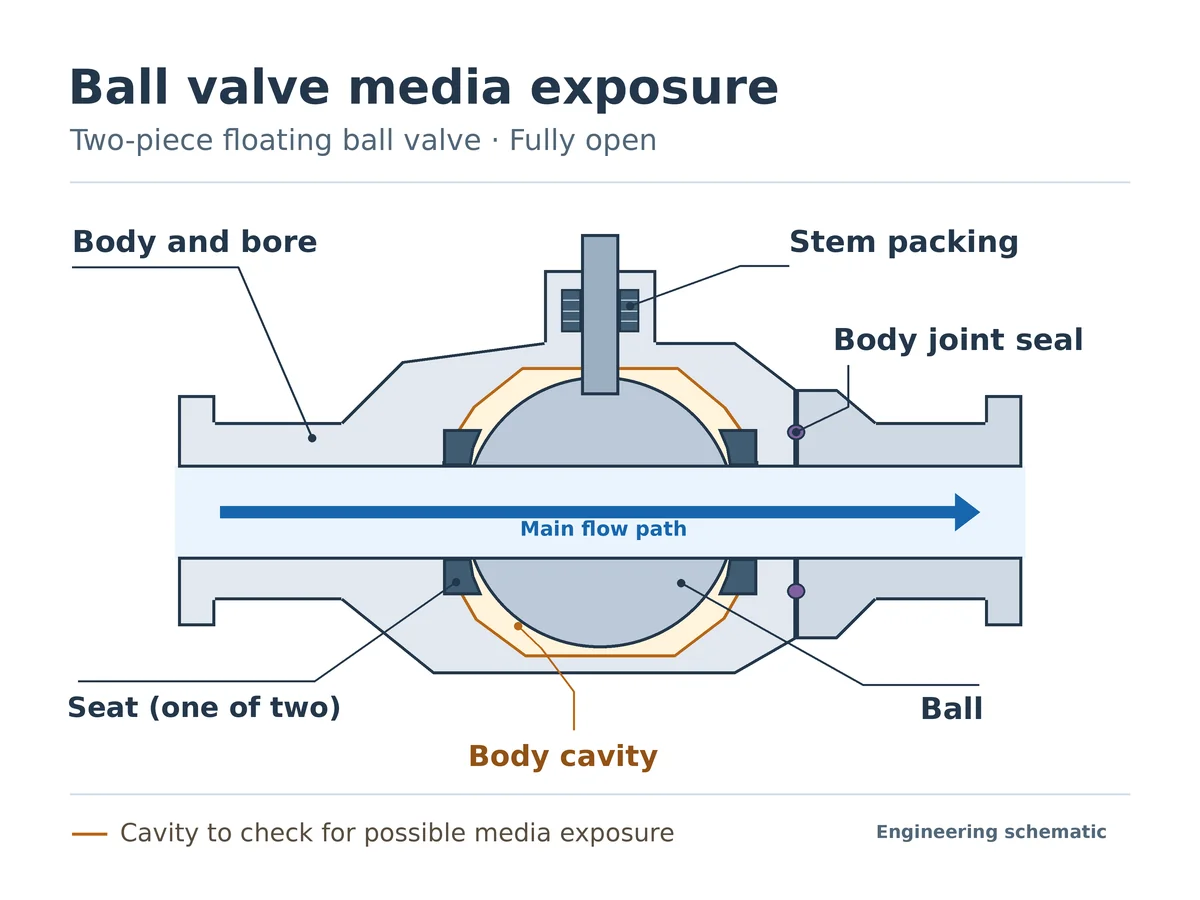
Scroll the table horizontally to see all columns.
| Componente | What to review | Evidências a solicitar |
|---|---|---|
| Body, bonnet or cover, and lining | Pressure-boundary materials, wetted cavities and coverage of any lining | Drawing or material schedule identifying the pressure boundary, wetted surfaces, lining coverage and assembly limits |
| Closure member, trim and seats | Material pair, movement, solids exposure, differential pressure and shutoff duty | Trim and seat identification, limits by operating case, permissible shutoff differential and direction, and the proposed leakage acceptance basis where specified |
| Stem or shaft, guides and packing | Exposure along the stem or shaft, operating temperature and cycling | Stem and guide materials, packing designation and relevant service limits |
| Body gaskets and secondary seals | Fluids that can reach each seal during operation, cleaning or shutdown | Location, grade or compound designation, and compatibility basis for the fluids and temperatures that reach each seal |
| Pressure-boundary bolting | Design temperature range and any process, cleaning or external exposure relevant to the construction | Specified grade, location and traceability records required by the purchase documents |
What Evidence Supports Valve Media Compatibility?
Material references and service history
Use published data to screen candidate materials. Check whether the reference identifies the exact material, fluid concentration, temperature and exposure conditions relevant to the application. Comparable service history can support a decision when it identifies the materials and conditions. Record any differences in chemistry, temperature, solids or operating duty that require further review. For elastomeric O-rings, screen the exact compound against the fluids it can contact and the relevant mechanical and thermal conditions. Parker’s compound-selection guidance and fluid compatibility tables apply to elastomeric O-rings. Parker O-Ring Handbook
For control valves, section 5.19 of the Fisher Control Valve Handbook discusses body material screening using pressure, temperature, corrosion and erosion. Use that framework for screening and record the proposed materials and limits from the supplier’s documents for the actual valve.
Valve-specific limits and qualification
Request the pressure–temperature limits for the offered valve. Where the project invokes ASME B16.34, use the project-specified edition and verify that the valve type is in scope. A class designation such as Class 150 or 300 identifies a rating class. The allowable pressure varies with the applicable material group and temperature. Use the body, bonnet or cover and bolting data to check the pressure boundary, then compare the assembly limits for the seats, packing, gaskets, lining and trim. If qualification is required, document the uncertainty, test conditions and acceptance criteria.
Keep the selection basis and the order evidence traceable to the same offered construction. A material test report, when specified, documents the material properties or test results it covers. Pair it with the relevant drawing or material schedule and the evidence used to assess the specified service cases. A shell test checks the pressure boundary under the stated test conditions. A closure test checks seat leakage under its own conditions and acceptance criteria. For external emissions requirements, request the applicable qualification and check its scope against the offered construction. Use the Valve Inspection & Testing guide to identify the evidence to request.
How Do You Compare Supplier Responses Before Ordering?
Compare each quotation against the same service cases and datasheet revision. For each valve media compatibility claim, record the offered construction, components, accepted conditions, references and deviations.
Example of two quotes with different cleaning coverage
Both bidders confirm normal operation. Bid A leaves the cleaning case open. Bid B states a cleaning temperature limit for the proposed seat, but its reply leaves the body joint seal unaddressed. Record those differences on the cleaning row with the affected parts, the supplier document and revision, and the buyer approval status. If the buyer has yet to confirm cleaning temperature, duration or frequency, the process team closes those inputs first. Each supplier then confirms which components can be exposed during cleaning and provides the relevant limits or identifies a deviation. The project reviewer records the accepted response and any conditions of acceptance.
4 Essential Valve Media Compatibility Checks
- Confirm the service cases. Record the controlled datasheet revision and the conditions for normal operation, cleaning and credible upset cases that apply to the valve tag.
- Identify the offered construction. Match the model or drawing revision to the wetted and potentially exposed parts on the supplier material schedule.
- Check the acceptance basis. Record where each case is covered by the proposed construction, including assembly limits and applicable shutoff requirements.
- Resolve deviations before technical release. Retain the supplier’s response, the project reviewer’s disposition and any agreed inspection or qualification evidence in the purchase record.
Use the complete valve datasheet and purchase specification for final selection. For broader bid requirements, see the Lista de Requisitos para Cotação (RFQ).
Valve Media Compatibility FAQ
What does “valve medium” mean on a datasheet?
It means the process fluid the valve handles. Under Fluido de Processo, include the fluid name, composition range, phase and relevant solids, then reference the associated operating cases. On pilot-operated designs that use a separate pilot fluid, list it in the pilot or control-medium field.
Should I include cleaning and flushing fluids in a valve RFQ?
Yes, where those fluids contact the valve. Include concentration, temperature, contact time and frequency so the supplier can review the parts exposed in that case.
Which valve components need a separate media compatibility check?
Start with the drawing and identify every surface that the fluid can reach. Review the wetted body, bonnet or cover, lining, closure member, trim, seats, stem or shaft, packing and gaskets. Include secondary seals or bolting when their exposure or service conditions warrant it.
What should I ask for when a quote leaves cleaning conditions unconfirmed?
Give the supplier the cleaning fluid, concentration, temperature, contact time and frequency. Ask for the exposed components, their material or compound, the documented limits and any deviation. Keep the cleaning case open until the project reviewer accepts the response.
Send Pressure, Temperature and Medium Data
For a valve media compatibility review, send the valve tag and duty, medium composition or concentration range, phase and solids, and the pressure and temperature for each relevant case. Include size, pressure class, end connection and available flow data where they affect the review. Include cleaning conditions, shutoff requirements and any materials already specified in the message. Use the file-upload field on the technical contact form to attach a datasheet or material schedule. If you are comparing quotations, identify the cases or deviations you want reviewed.Send Pressure, Temperature and Medium Data
Engineering note. The worksheet and bid example illustrate a review method. Project acceptance depends on the confirmed process data, the specific valve construction, the documented component limits and the project’s approval requirements.
 Portuguese
 English
 German
 Arabic
 French
 Spanish
 Italian
 Russian