الصمامات الكروية للخدمة في درجات الحرارة العالية: المواد، المقاعد، واعتبارات التصميم

high temperature ball valve installed in steam pipeline

A high temperature ball valve is not selected in the same way as a general-purpose soft seated ball valve. In elevated temperature service, the valve body, ball, seat rings, stem packing, body gasket, bolting, coating system, and actuator sizing all become part of the sealing decision. A valve that works well in ambient water service may leak, seize, or become difficult to operate when exposed to steam, thermal oil, hot gas, catalyst fines, or repeated heating and cooling cycles.

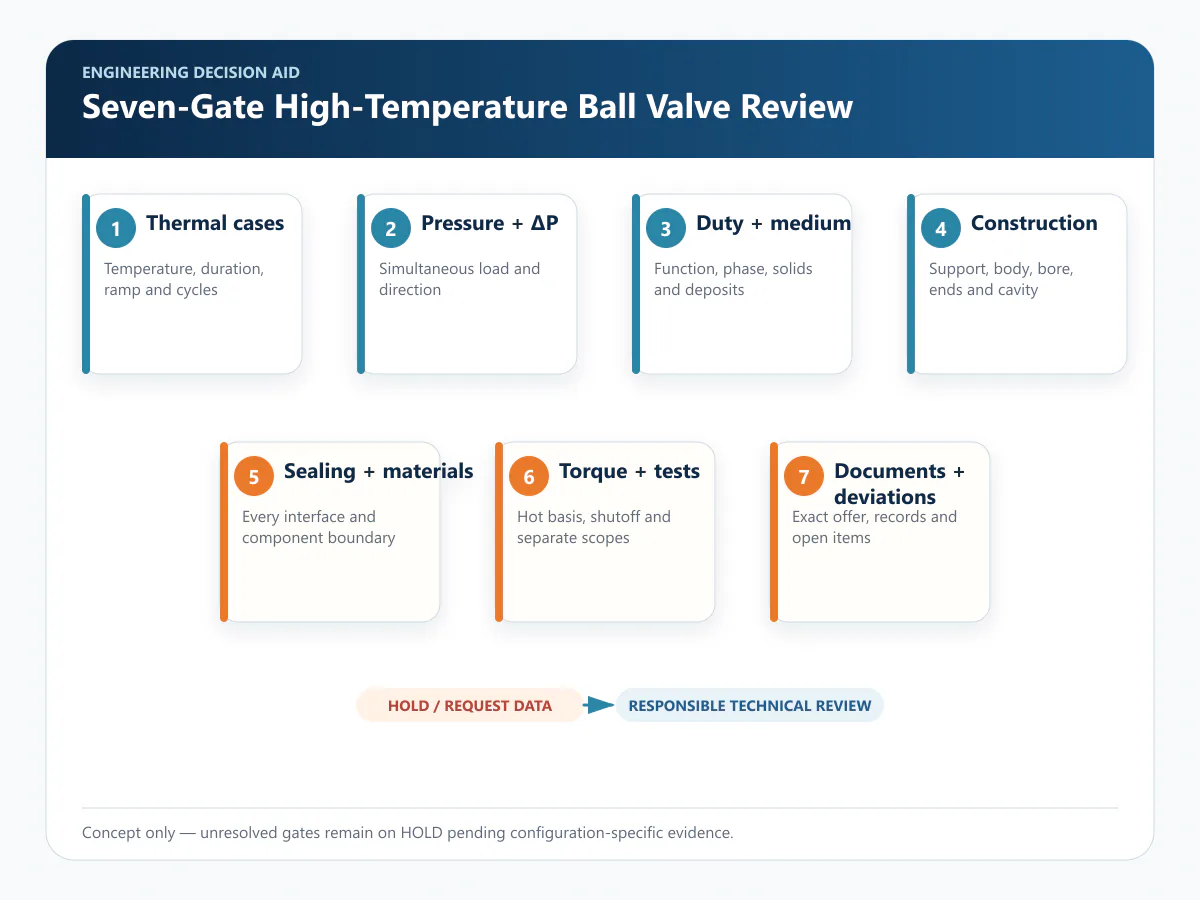
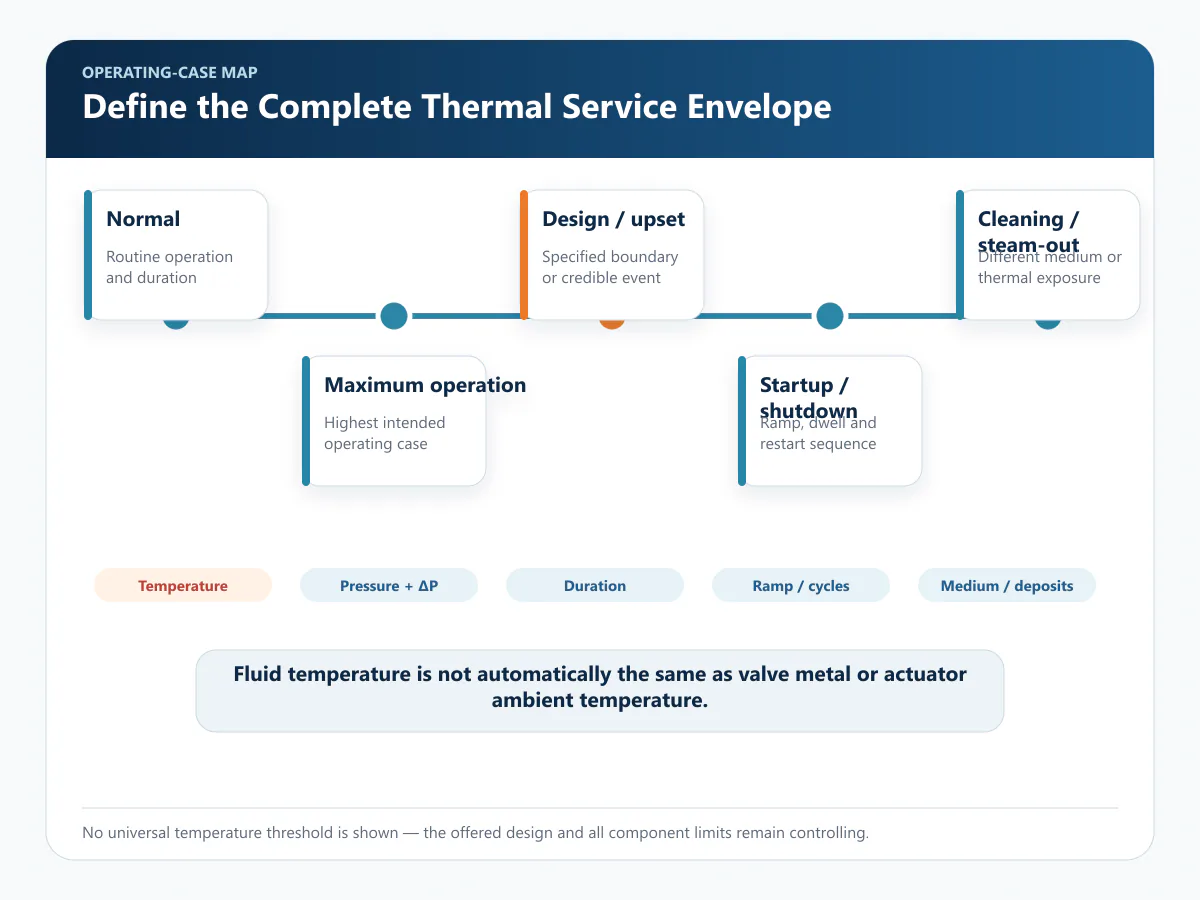
For this reason, high temperature ball valve selection should start with the actual process conditions: maximum operating temperature, design pressure, media condition, solid particle content, cycling frequency, required leakage class, and applicable piping or valve standard. In many severe services, a metal seated ball valve is preferred because the metal-to-metal sealing system is more stable under heat, abrasion, and thermal shock than most soft seated designs.

This guide explains how to evaluate high temperature ball valves from an engineering point of view, including material selection, metal seat design, hard-facing options, pressure-temperature rating, leakage testing, stem sealing, fire-safe requirements, and common field problems.

What Is a High Temperature Ball Valve?

A high temperature ball valve is a quarter-turn shut-off valve designed for service conditions where conventional soft seat materials may soften, creep, age, extrude, or lose sealing load. The valve uses a rotating ball with a through bore. When the bore aligns with the pipeline, the valve is open. When the ball rotates 90 degrees, the flow path is closed.

The basic operating principle is simple, but high temperature service changes the engineering requirements. At elevated temperature, metals expand, polymer seats lose mechanical strength, packing stress changes, and differential thermal expansion can increase operating torque. If the valve is exposed to abrasive particles at the same time, the seat and ball sealing surfaces may also suffer erosion or scoring.

High temperature ball valves are commonly used in:

  • Steam and condensate systems
  • Thermal oil circulation lines
  • Refinery and petrochemical process units
  • Hot gas and process vapor lines
  • Power generation auxiliary systems
  • High temperature chemical processing
  • Abrasive media with elevated temperature
  • Severe service isolation points requiring frequent operation

For these applications, the valve should not be evaluated only by nominal size and pressure class. Standards such as ASME B16.34 are often referenced because pressure-temperature rating, material, testing, and marking requirements directly affect whether the valve can safely operate at the specified temperature.

Why Soft Seated Ball Valves May Not Be Enough

Soft seated ball valves are widely used because they offer low operating torque and very tight shut-off in clean service. PTFE, RPTFE, PEEK, and other engineered polymer seats can perform well when temperature, pressure, and media conditions are within their limits. However, high temperature service often combines heat with pressure cycling, hard particles, vapor flow, or thermal shock. These are the conditions where soft seat performance becomes less predictable.

In actual maintenance records, soft seat failure in hot service usually appears in several ways:

  • The valve passes shop testing but leaks after several heat-up cycles.
  • The seat extrudes or deforms under pressure and temperature.
  • The operating torque increases after shutdown and restart.
  • The ball surface becomes scratched by particles trapped between the ball and seat.
  • The valve closes mechanically, but downstream leakage remains above the project limit.

Soft seated valves are not wrong for every warm service. They are suitable in many clean and moderate-temperature systems. The problem starts when the seat material is selected from a catalog temperature limit without considering pressure, media, cycling, and particle content. For a high temperature ball valve used in steam, thermal oil, hot slurry, catalyst fines, or severe refinery service, a metal seated design is usually the safer choice.

Engineering Example 1: Soft Seat Leakage After Heat Cycling

Problem: A soft seated ball valve installed on a hot oil line passed the initial hydrostatic test but started leaking after several start-stop cycles.

Likely cause: The seat material was selected mainly by maximum catalog temperature. The actual service included pressure fluctuation, continuous thermal expansion, and small carbonized particles in the oil.

Prevention: For hot oil service with particle risk, confirm the real operating temperature, pressure, differential pressure, cycling frequency, and cleanliness. Where seat deformation or scoring is likely, consider a hard-faced metal seated ball valve instead of relying only on a high-temperature polymer seat.

Metal Seated Ball Valve for High Temperature Service

A metal seated ball valve uses metallic seat rings instead of soft polymer seats. The sealing contact is formed between the ball and metal seat surfaces. In severe service designs, both surfaces are precision-machined, lapped, and often hard-faced or coated to improve wear resistance.

metal seated ball valve cutaway showing ball and seat design

This design is suitable for high temperature service because it provides:

  • Better resistance to heat and thermal aging
  • Higher mechanical strength at elevated temperature
  • Improved resistance to erosion and abrasion
  • Reduced risk of seat extrusion
  • Longer service life in particle-containing media
  • Better durability under frequent opening and closing
  • Compatibility with graphite packing and fire-safe construction

For petroleum, petrochemical, natural gas, and related industrial applications, metal ball valves may be specified according to product standards such as ISO 17292 or project-specific valve specifications. For pipeline valve applications, API Specification 6D may also be referenced depending on the project scope.

Raymon Valve supplies metal seated ball valves for high temperature and abrasive service where conventional soft seated ball valves may not provide enough durability.

Key Materials for High Temperature Ball Valves

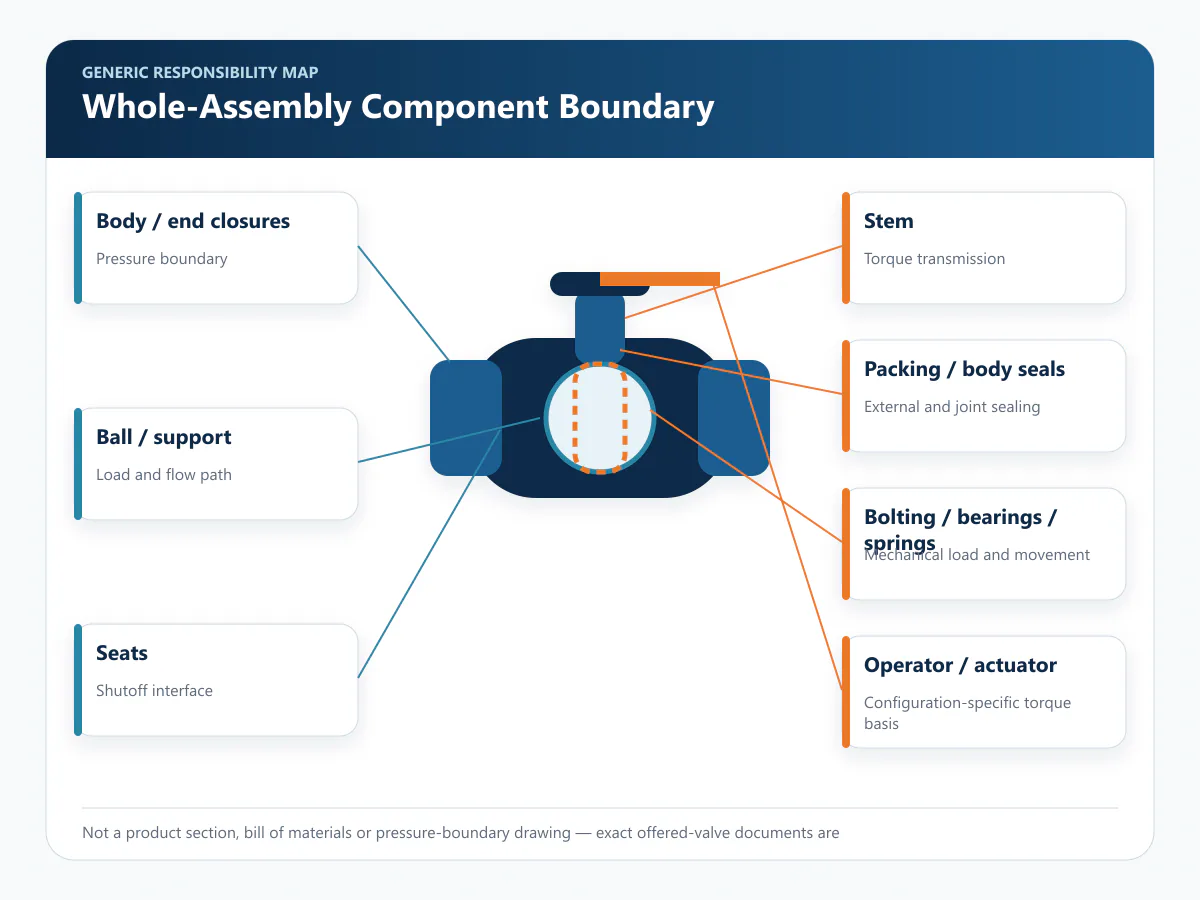
Material selection affects pressure-temperature rating, oxidation resistance, corrosion resistance, weldability, mechanical strength, and long-term dimensional stability. For high temperature service, the body material, trim material, seat material, stem material, gasket, packing, and bolting should be checked as a complete assembly.

Carbon Steel

Carbon steel is commonly used for steam, thermal oil, and general refinery service when the media is not highly corrosive and the pressure-temperature rating is suitable. Cast carbon steel valve bodies such as WCB are often specified under ASTM A216/A216M, which covers carbon steel castings for valves, flanges, fittings, and other pressure-containing parts for high-temperature service.

Carbon steel is economical and widely available, but it should not be treated as a universal high temperature material. At elevated temperatures, allowable pressure rating decreases, oxidation risk increases, and corrosion allowance may become important. In steam or thermal oil systems, engineers should also consider external insulation, drain points, and whether the valve will experience long idle periods followed by rapid heating.

Stainless Steel

Stainless steel is selected when corrosion resistance, cleaner service, or improved oxidation resistance is required. Common valve body grades include CF8, CF8M, 304, and 316, depending on project specifications. Stainless steel can be suitable for hot water, steam with corrosion risk, chemical service, and some oxidizing environments.

The grade should be matched with media chemistry. Chloride content, acidity, oxygen level, and cleaning chemicals can change the corrosion risk significantly. In high temperature service, stainless steel selection should not rely only on the general name “316 stainless steel.” The actual casting or forging specification, heat treatment, pressure rating, and corrosion condition should be reviewed.

Alloy Steel

Alloy steel may be required when the service involves higher temperature strength, creep resistance, or improved resistance to thermal stress. Power generation, high-pressure steam, refinery units, and hot hydrocarbon lines may require alloy materials depending on the design code and piping class.

For process piping systems, ASME B31.3 is often used to define requirements for materials, components, design, fabrication, examination, inspection, and testing in chemical, refinery, power, hydrogen, semiconductor, and related process plants.

Nickel Alloy and Special Alloy Materials

Nickel alloys and other special alloys are used when the service combines high temperature with severe corrosion. Examples include hot corrosive gas, sour service, acidic chemical media, chloride-containing service, or special petrochemical processes.

For H2S-containing sour service in oil and gas production, material selection may need to consider NACE MR0175 / ISO 15156. This is especially important when hardness, sulfide stress cracking resistance, and material qualification are part of the customer specification.

Seat Materials and Sealing Surface Options

The seat system is the core of a high temperature ball valve. It determines shut-off performance, operating torque, service life, and maintenance risk. For high temperature service, engineers should evaluate not only the seat material but also seat loading, spring design, coating, surface finish, leakage requirement, and thermal expansion clearance.

Metal Seats

Metal seats are preferred for high temperature and severe service ball valves. They resist thermal deformation better than most polymer seats and can tolerate abrasive particles when combined with suitable hard-facing. A typical metal seated design may include spring-loaded seats, graphite body seals, anti-static construction, blow-out proof stem design, and precision lapped sealing surfaces.

However, metal seated valves should not be described as automatically “zero leakage” in all conditions. Metal-to-metal sealing can provide reliable shut-off, but the achievable leakage class depends on seat design, coating, lapping quality, test medium, differential pressure, temperature, and service wear. The required leakage class should be stated in the purchase specification.

Hard-Faced Ball and Seat Surfaces

In abrasive or erosive service, the ball and seat contact surfaces are often hard-faced or coated. Common options include tungsten carbide coating, chromium carbide coating, Stellite overlay, or other wear-resistant surface treatments. The correct option depends on media abrasiveness, operating temperature, pressure drop, cycling frequency, and corrosion conditions.

hard faced ball and seat for high temperature ball valve

A hard coating is not selected only by hardness value. Adhesion, coating thickness, thermal compatibility, corrosion behavior, and finishing quality are also important. A coating that performs well in a dry abrasive service may not be the best choice in a high temperature corrosive vapor environment.

Engineering Example 2: Hard Coating Selected Only by Hardness

Problem: A metal seated ball valve used in hot particle-containing gas showed leakage increase after a short service period, even though the ball coating had high hardness.

Likely cause: The coating was chosen mainly by hardness, while thermal cycling and erosive flow direction were not fully considered. Micro-cracking and uneven wear developed on the sealing surface.

Prevention: Confirm media composition, particle hardness, flow velocity, temperature variation, and expected cycling. For severe service, review coating method, coating thickness, surface roughness, and compatibility between ball and seat materials.

Graphite Packing and Gaskets

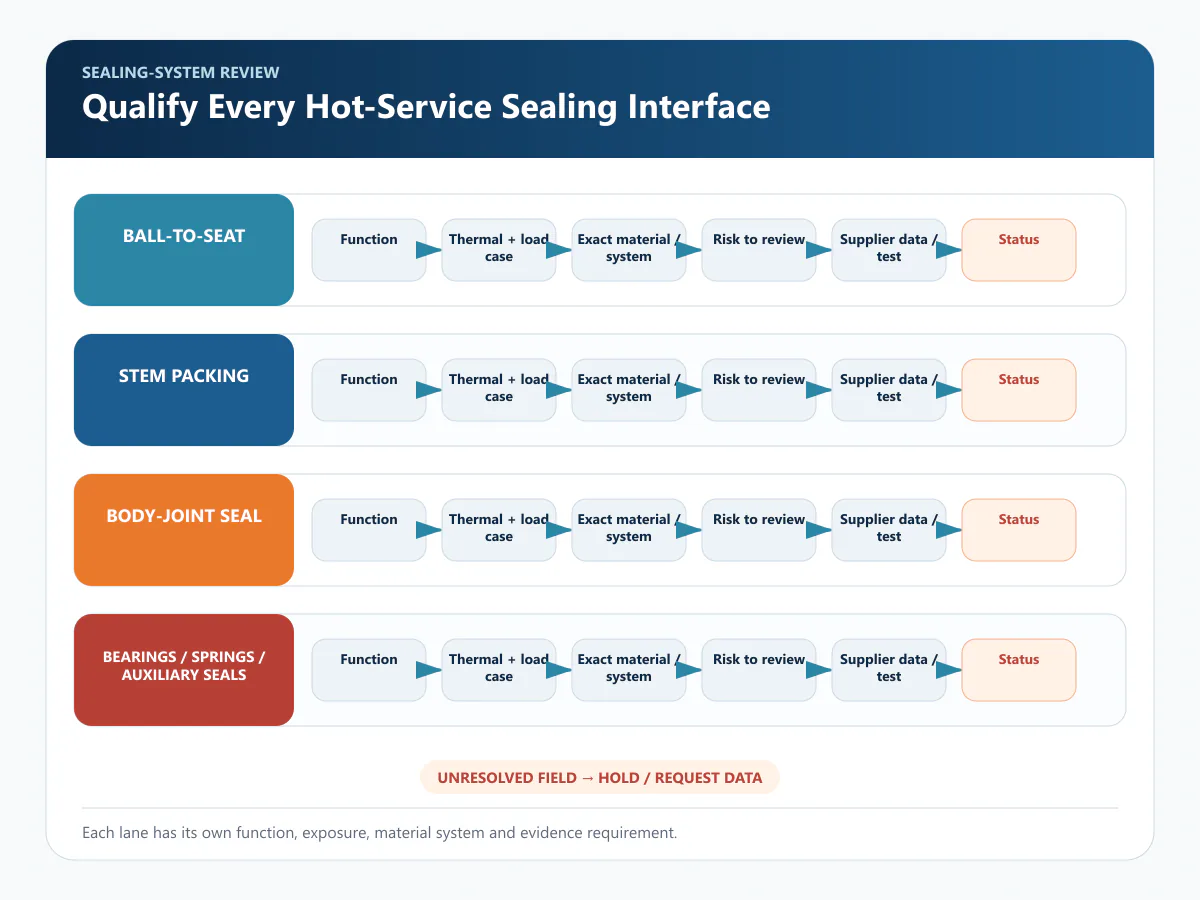
Flexible graphite is commonly used for high temperature valve packing and body gaskets because it remains stable in conditions where many elastomers are unsuitable. In high temperature ball valves, the stem packing and body joint are as important as the seat. A valve with a strong metal seat can still fail in service if the stem packing relaxes after thermal cycling.

For volatile or hazardous fluids, fugitive emission requirements may apply. ISO 15848-1 specifies testing procedures for evaluating external leakage from valve stem seals and body joints of isolating and control valves intended for volatile air pollutants and hazardous fluids.

Floating vs Trunnion Mounted High Temperature Ball Valves

High temperature ball valves may use floating ball or trunnion mounted construction. The correct choice depends on valve size, pressure class, differential pressure, torque limit, seat load, and automation requirement.

صمام كروي عائم

In a floating ball valve, the ball is not fixed by upper and lower trunnions. Under pressure, the ball moves slightly downstream and presses against the seat to create sealing. This design is compact and commonly used for smaller sizes and lower to medium pressure classes.

For high temperature service, floating ball designs must be checked carefully because seat load and operating torque can increase with pressure and thermal expansion. In smaller high temperature lines, a floating metal seated ball valve may be acceptable if the torque, seat leakage, and temperature cycling are within the design range.

صمام كروي مرتكز على ترنيون

A trunnion mounted ball valve supports the ball with fixed trunnions. The seats move toward the ball, usually under spring force and line pressure. This construction reduces operating torque and provides better mechanical stability in larger sizes and higher pressure classes.

For severe high temperature service, trunnion mounted metal seated ball valves are often used when the valve is large, automated, frequently operated, or installed in a high-pressure process line.

When replacing an existing valve, face-to-face or end-to-end dimensions should be checked before purchase. ASME B16.10 covers face-to-face and end-to-end dimensions of straightway valves and is used to support installation interchangeability for valves of a given material, type, size, rating class, and end connection.

Design Considerations for High Temperature Ball Valves

A high temperature ball valve should be reviewed as an engineered pressure-containing assembly. The following design points usually decide whether the valve will work reliably in field service.

Pressure-Temperature Rating

The pressure rating of a valve decreases as temperature increases. This is one of the most common selection mistakes. A valve suitable for a certain pressure at ambient temperature may not be suitable for the same pressure at elevated temperature. The allowable rating must be checked against the body material, pressure class, end connection, and applicable standard.

For flanged high temperature ball valves, flange dimensions and pressure-temperature ratings may be specified according to ASME B16.5, depending on the piping class and project standard. For valve shell rating, ASME B16.34 is commonly referenced in many industrial valve specifications.

Thermal Expansion and Valve Torque

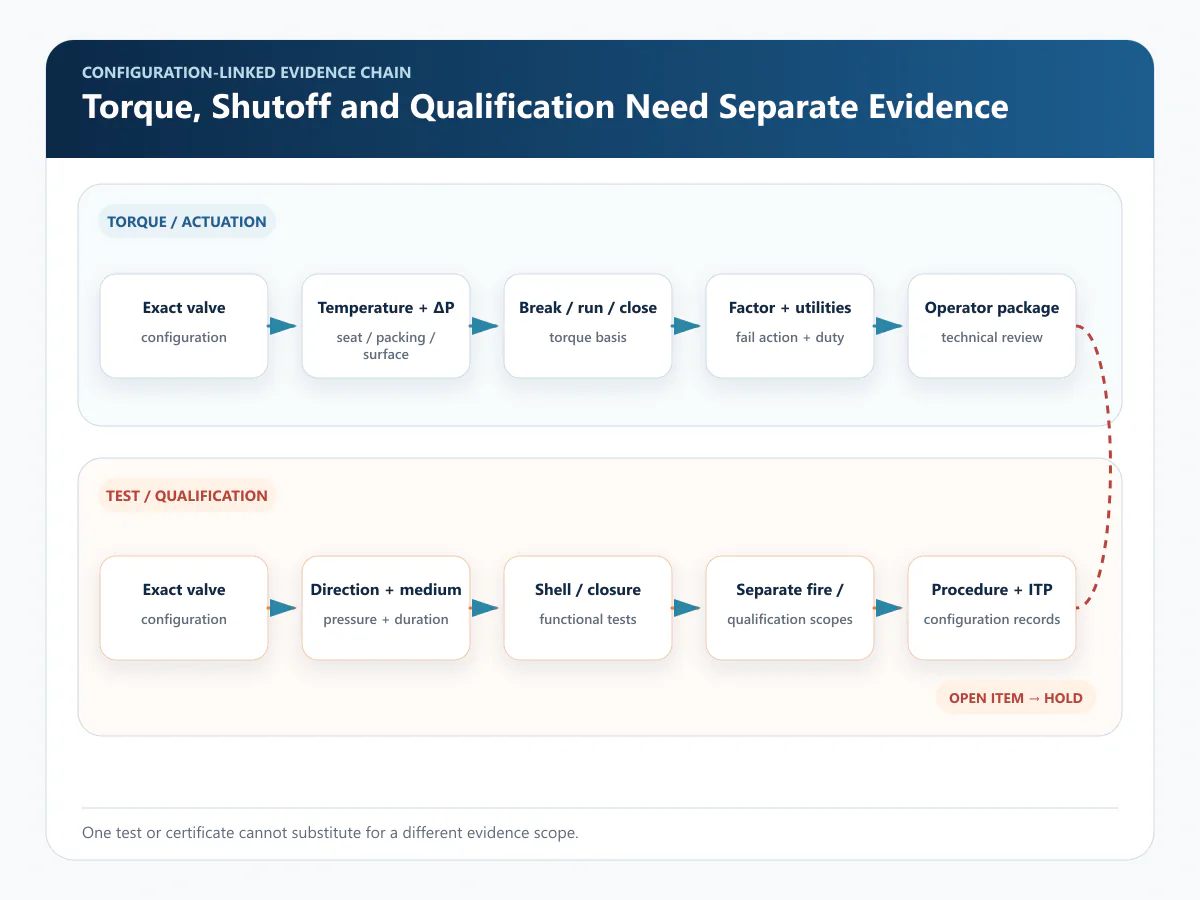
Thermal expansion affects body cavity clearance, seat load, stem alignment, packing stress, and actuator torque. Different components expand at different rates. If the valve design does not allow for this movement, the ball may bind against the seat, the torque may rise sharply, or the valve may leak after cooling.

High temperature testing is commonly used in engineering to evaluate material or component performance under heat exposure, including changes in mechanical properties, creep resistance, and thermal expansion. For background on this testing concept, see TWI’s high temperature testing overview.

Engineering Example 3: Valve Cannot Open After Shutdown

Problem: A high temperature ball valve operated normally during commissioning, but after a hot shutdown and restart, the gearbox could not open the valve smoothly.

Likely cause: Thermal expansion increased seat load and breakaway torque. The actuator or gearbox had been selected based on room-temperature test torque only.

Prevention: For metal seated high temperature service, use valve torque data that considers temperature, differential pressure, seat load, and safety factor. Automated valves should be sized for worst-case breakaway torque, not only normal running torque.

Seat Leakage Requirement

Metal seated high temperature ball valves are selected for durability, not because every metal seated design automatically provides bubble-tight shut-off under all service conditions. The required leakage class should be clearly specified. Test medium, test pressure, temperature condition, and acceptance criteria should be agreed before production.

ISO 5208 specifies examinations and tests used by valve manufacturers to establish pressure boundary integrity and verify valve closure tightness for industrial metallic valves. Some projects may also reference API 598 for valve inspection and pressure testing; when API 598 is required, the exact leakage acceptance criteria should be confirmed in the purchase order or inspection test plan.

تصميم مقاوم للحريق

In refinery, oil and gas, petrochemical, and hazardous fluid applications, fire-safe construction may be required. Fire-safe ball valve design normally includes metal-to-metal secondary sealing, graphite packing, graphite body gasket, anti-static device, and blow-out proof stem construction.

ISO 10497 specifies fire type-testing requirements and a fire type-test method for soft- and metal-seated isolation valves. If the project requires fire-safe qualification, the valve certificate, tested size range, pressure class, seat type, and body material coverage should be reviewed carefully.

Stem Packing and Fugitive Emission Control

Stem leakage is a common field issue in high temperature valves. Packing stress changes during heat-up and cool-down cycles. If the packing system is not designed correctly, the valve may show external leakage even when the seat seal remains acceptable.

For hazardous or volatile fluids, live-loaded packing, low-emission packing sets, improved stem finish, controlled gland loading, and emission testing may be required. The project specification should state whether fugitive emission performance is required and which standard applies.

End Connection and Installation Design

High temperature ball valves may use flanged, butt weld, socket weld, or threaded connections. For high temperature and severe service, flanged and butt weld ends are more common than small threaded connections, especially in process plant and refinery applications.

A flanged ball valve is easier to remove for inspection or maintenance, while a butt weld design reduces potential flange leakage points. The choice should match the piping class, maintenance philosophy, temperature, pressure, and plant safety requirement.

Typical Applications of High Temperature Ball Valves

Steam Service

Steam service creates high temperature, pressure cycling, condensate risk, and possible erosion at throttling or partially open positions. Ball valves are mainly used for isolation rather than continuous throttling. For steam isolation, metal seats, graphite packing, proper pressure-temperature rating, and drain arrangement should be reviewed.

Thermal Oil Systems

Thermal oil systems often operate continuously at elevated temperature. The valve may remain in one position for long periods and then be operated during maintenance. This can increase breakaway torque. Seat material, packing design, and actuator sizing should be selected for long-term heat exposure, not only short-term maximum temperature.

Refinery and Petrochemical Units

Refinery and petrochemical service may involve hot hydrocarbons, catalyst fines, vapor flow, thermal cycling, and fire-safe requirements. Metal seated ball valves are commonly selected where soft seats may wear quickly or where project standards require a more severe-service design.

توليد الطاقة

Power plants use high temperature valves in steam, condensate, auxiliary systems, and thermal processes. Material strength, pressure-temperature rating, and long-term sealing stability are key concerns. The valve should match the piping code, material class, and inspection requirement of the plant.

Abrasive High Temperature Media

When high temperature is combined with particles, the seat and ball sealing surfaces are exposed to both thermal stress and mechanical wear. In these services, a hard-faced metal seated ball valve is usually more suitable than a soft seated design.

Engineering Example 4: Leakage in Hot Abrasive Service

Problem: A valve installed in a hot gas line with fine particles developed downstream leakage after repeated operation.

Likely cause: Particles were trapped between the ball and seat during closing. The sealing surface was scratched, and the seat load could no longer compensate for the damage.

Prevention: Use a metal seated ball valve with suitable hard-facing, review flow direction, avoid using the valve for throttling unless designed for that duty, and confirm whether flushing or upstream filtration is needed.

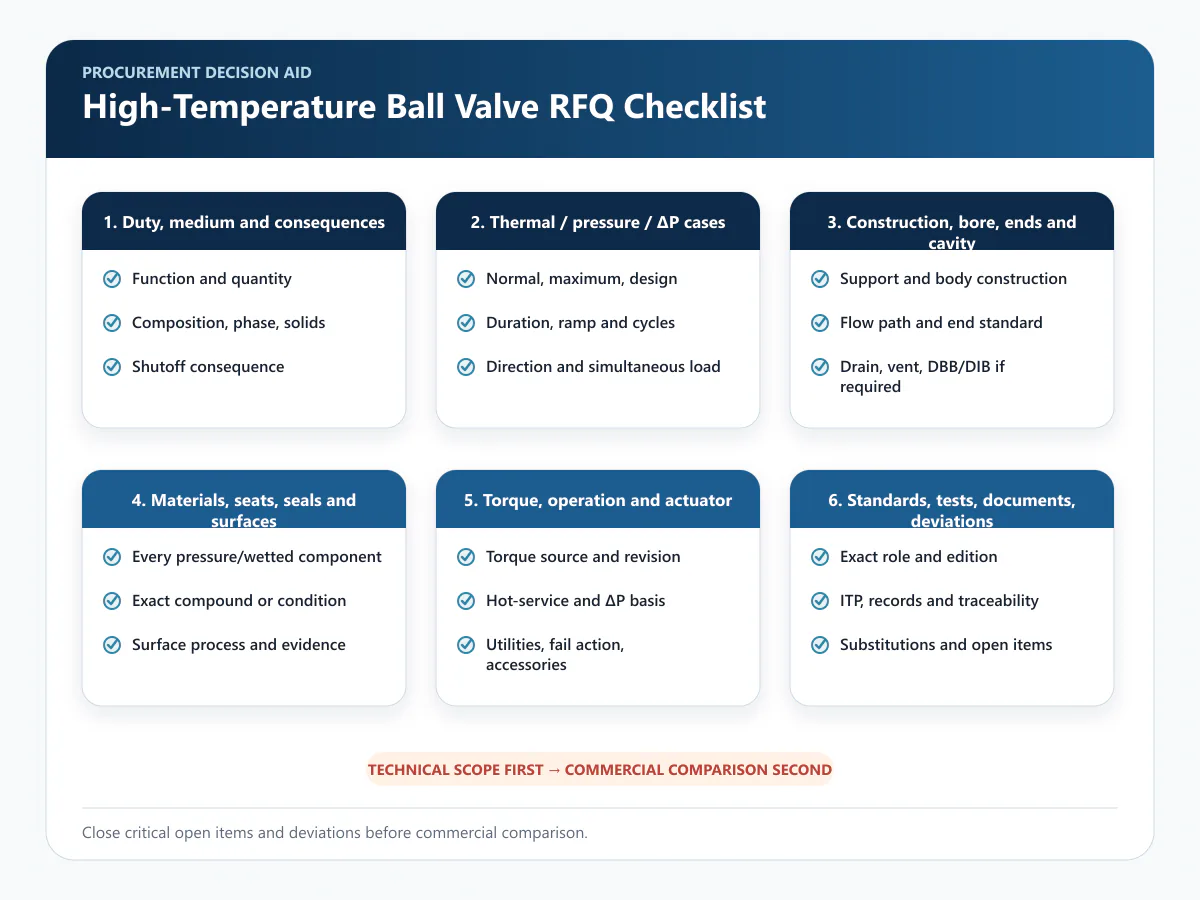
High Temperature Ball Valve Selection Checklist

16

The following checklist can be used before sending an inquiry or purchase specification:

Selection ItemWhat to ConfirmWhy It Matters
Operating temperatureNormal, maximum, upset, and cleaning temperatureDetermines seat material, packing, gasket, body rating, and torque behavior
Pressure conditionDesign pressure, operating pressure, differential pressureAffects pressure-temperature rating, seat load, and actuator sizing
MediaSteam, thermal oil, gas, slurry, hydrocarbon, chemical, solid particlesDetermines material compatibility, coating, erosion risk, and cleaning requirement
Valve structureFloating or trunnion mounted designControls torque, size range, pressure suitability, and mechanical stability
Seat designSoft seat, metal seat, spring-loaded seat, hard-faced seatDirectly affects sealing reliability, temperature capability, and service life
CoatingTungsten carbide, chromium carbide, Stellite, or other coatingImproves wear resistance when selected correctly for temperature and media
Leakage requirementRequired leakage class and test standardPrevents mismatch between project expectation and metal seated valve capability
OperationLever, gear, pneumatic actuator, electric actuatorHigh temperature and metal seats can increase breakaway torque
Special requirementsFire-safe, anti-static, low emission, cavity reliefOften required in refinery, petrochemical, oil and gas, and hazardous service

Common Mistakes When Selecting High Temperature Ball Valves

Selecting Only by Pressure Class

Class 150, Class 300, or Class 600 does not tell the full story. The pressure rating must be checked at the actual operating temperature and with the selected material. A Class 300 valve at ambient temperature is not automatically suitable for the same pressure at high temperature.

Using Catalog Seat Temperature as the Only Criterion

Seat temperature limits are useful, but they do not replace engineering review. Pressure, media, particles, valve size, seat load, and cycling frequency can reduce practical seat life.

Ignoring Stem Packing

Many high temperature valve problems are external leakage problems, not seat leakage problems. Stem packing, gland design, body gasket, bolting, and thermal cycling must be reviewed together.

Overlooking Thermal Expansion

Thermal expansion can increase torque, change seat load, and affect stem alignment. This is especially important for automated metal seated ball valves.

Choosing the Wrong Coating

Hardness alone does not guarantee long service life. Coating selection must consider temperature, corrosion, erosion, adhesion, impact, and finishing quality.

Recommended Design for Severe High Temperature Service

For severe high temperature and abrasive service, the recommended design is usually:

  • Metal seated ball valve construction
  • Carbon steel, stainless steel, alloy steel, or special alloy body material selected by service condition
  • Hard-faced or coated ball and seat sealing surfaces
  • Spring-loaded seat design where required
  • Flexible graphite packing and body gasket
  • Fire-safe and anti-static construction when required
  • Blow-out proof stem design
  • Gearbox or actuator sized according to high temperature torque conditions
  • Pressure-temperature rating review against the applicable standard
  • Documented pressure test and leakage test requirements

This type of design provides better durability than conventional soft seated ball valves in applications involving heat, abrasion, thermal cycling, steam, thermal oil, hot gas, and severe refinery media.

Conclusion

A high temperature ball valve should be selected based on actual service data, not only nominal size, pressure class, or a seat material temperature limit. Temperature affects body rating, seat stability, coating performance, stem packing, operating torque, leakage behavior, and long-term maintenance risk.

For clean and moderate-temperature service, soft seated ball valves may still be a practical solution. For steam, thermal oil, hot gas, abrasive media, and severe service applications, a metal seated ball valve is often the more reliable engineering choice.

Before final selection, confirm the design temperature, pressure-temperature rating, media composition, particle content, leakage requirement, material specification, fire-safe requirement, fugitive emission requirement, and actuator torque margin. A correctly specified high temperature ball valve can reduce leakage, avoid unplanned shutdowns, and extend service life in demanding process conditions.

FAQ: High Temperature Ball Valve Selection

What is a high temperature ball valve?

A high temperature ball valve is a quarter-turn isolation valve designed for elevated temperature service where standard soft seats, elastomer seals, or general-purpose packing may not provide reliable performance. In severe service, it often uses metal seats, hard-faced sealing surfaces, graphite packing, and high temperature body materials.

Why are metal seated ball valves used for high temperature service?

Metal seated ball valves are used because metal seats resist heat, deformation, and abrasion better than many soft seat materials. They are suitable for steam, thermal oil, hot gas, refinery service, and particle-containing media where soft seats may wear, creep, or extrude.

Can a soft seated ball valve be used in high temperature service?

Yes, but only when the actual temperature, pressure, media, cleanliness, and cycling frequency are within the seat material limits. For clean moderate-temperature service, a soft seated valve may work well. For high temperature, abrasive, or thermally cycling service, a metal seated design is usually safer.

What materials are commonly used for high temperature ball valves?

Common body materials include carbon steel, stainless steel, alloy steel, and nickel alloy materials. The correct material depends on pressure-temperature rating, corrosion risk, media composition, external environment, and project piping class.

What should be checked before ordering a high temperature ball valve?

Check the design temperature, operating pressure, differential pressure, media condition, particle content, valve size, end connection, seat design, leakage class, coating requirement, actuator torque, fire-safe requirement, and applicable testing standard.

Are high temperature ball valves suitable for throttling?

Most ball valves are designed mainly for on-off isolation. Throttling can create high velocity, erosion, vibration, and seat damage, especially in hot abrasive service. If throttling is required, confirm the valve design, opening angle, flow velocity, and allowable pressure drop with the manufacturer.

شارك:

اترك تعليقاً

لن يتم نشر عنوان بريدك الإلكتروني. الحقول الإلزامية مشار إليها بـ *

هل تريد التحدث
معنا؟

اترك بياناتك وسيتصل بك أحد خبرائنا!

arArabic
الانتقال إلى الأعلى

اتصل بنا

يرجى ملء هذا النموذج بوصف موجز لمشكلتك وسوف نعود إليك في أقرب وقت ممكن.