A ball valve seat is not a small detail in valve selection. In many projects, the seat design decides whether the valve can maintain shutoff performance after the line is heated, cycled, flushed, contaminated, or exposed to abrasive particles. A valve may pass the workshop pressure test, but still leak early in the field if the seat material is not suitable for the actual service condition.
Quick answer: The most common ball valve materials are carbon steel for general industrial service, stainless steel for corrosion resistance, alloy steel for high temperature or high pressure service, PTFE / RPTFE / PEEK for soft seats, and hard-coated metal seats for abrasive or severe service applications.
Soft Seated vs Metal Seated Ball Valves: How to Choose the Right Seat Design 8
The comparison between a soft seated vs metal seated ball valve is therefore not only a material comparison. It is a service-duty decision. Soft seated ball valves are normally reviewed for clean media, moderate temperature, low operating torque, and tight shutoff. Metal seated ball valves are reviewed when the service becomes too hot, too abrasive, too dirty, or too severe for polymer seats to remain reliable.
This guide explains how engineers, buyers, maintenance teams, and QA personnel should compare soft seated and metal seated ball valves before releasing a purchase order. The goal is not to say one design is always better. The correct question is: which seat design matches the real pressure, temperature, medium, leakage requirement, cycle frequency, and maintenance risk?
Quick Selection Snapshot
Soft Seated vs Metal Seated Ball Valves: How to Choose the Right Seat Design 9
| Service Condition | Typical Starting Point | What Usually Controls the Decision | What Commonly Goes Wrong |
|---|
| Clean water, air, gas, or general industrial liquid | Soft seated ball valve | Tight shutoff, low torque, economical cost | Seat material is assumed suitable without checking temperature, pressure, or chemical exposure |
| Clean chemical service | Soft seated ball valve with compatible seat material | Chemical resistance, temperature, pressure, and leakage requirement | PTFE or RPTFE is selected too generally without reviewing concentration, temperature, and cleaning cycle |
| High-temperature steam, thermal oil, or hot gas | Metal seated ball valve | Seat stability, thermal expansion, packing material, actuator torque | Soft seat is used outside its thermal boundary and loses sealing stress |
| Slurry, catalyst, ash, sand, powder, or dirty media | Metal seated ball valve | Abrasion resistance, hardfacing, coating quality, seat protection, cycling frequency | Soft seat is cut, scratched, or embedded with particles after short operation |
| Fire-risk or severe isolation service | Fire-safe design or metal seated ball valve | Fire test requirement, leakage class, stem sealing, body gasket design | Fire-safe performance is assumed from seat material alone |
| Automated high-pressure service | Seat design plus actuator torque review | Breakaway torque, seating torque, differential pressure, safety factor | Actuator is sized from nominal valve size instead of actual valve torque data |
Field rule: Use soft seats where the service is clean and within the proven material boundary. Review metal seats where heat, solids, erosion, fire exposure, or repeated soft-seat failure controls the decision.
What Is a Soft Seated Ball Valve?
Soft Seated vs Metal Seated Ball Valves: How to Choose the Right Seat Design 10
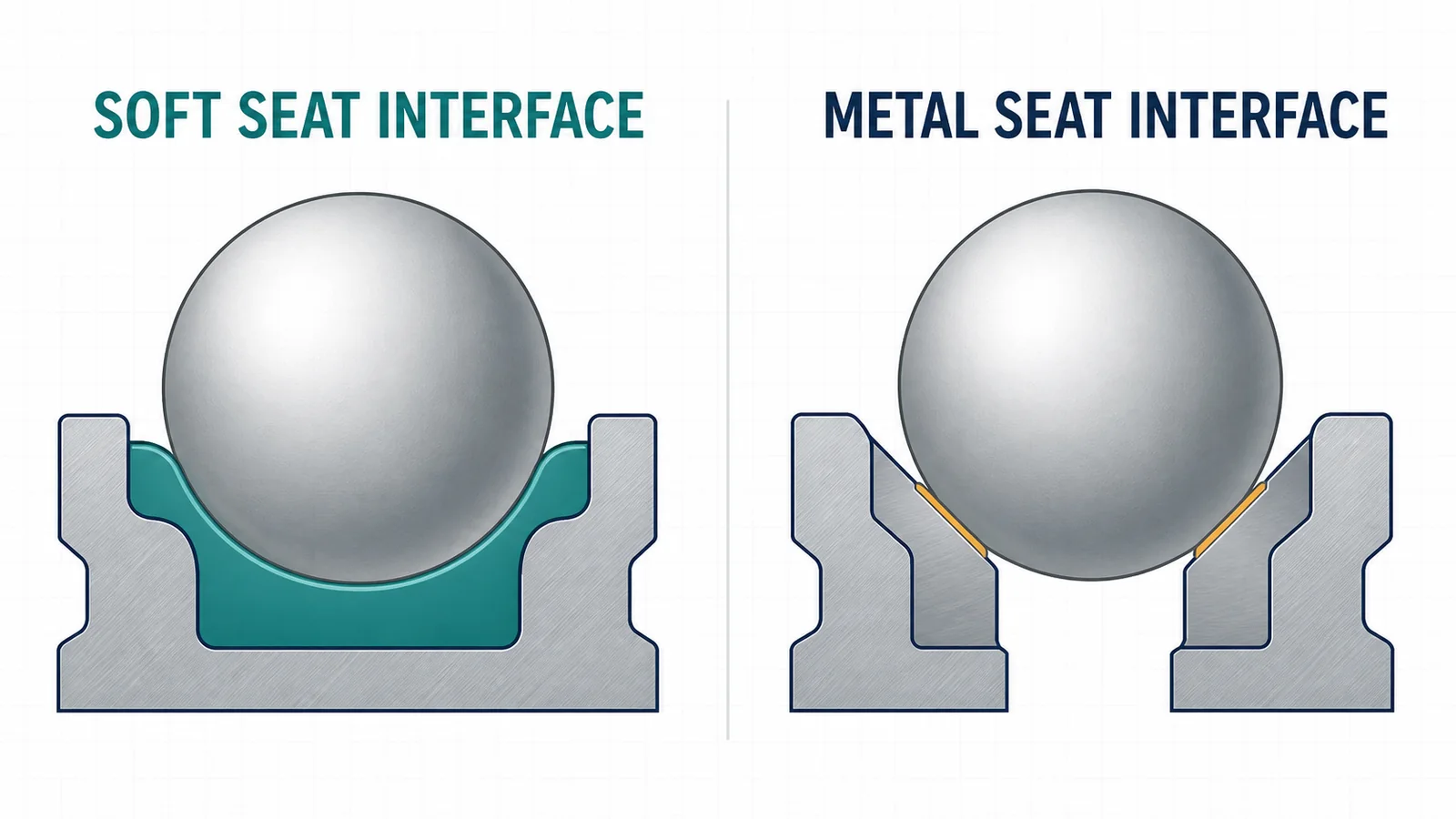
A soft seated ball valve uses a non-metallic seat to create sealing contact against the ball. The seat is normally made from polymer or engineered plastic materials such as PTFE, RPTFE, PEEK, PCTFE, UHMWPE, or other compounds selected according to pressure, temperature, and media compatibility.
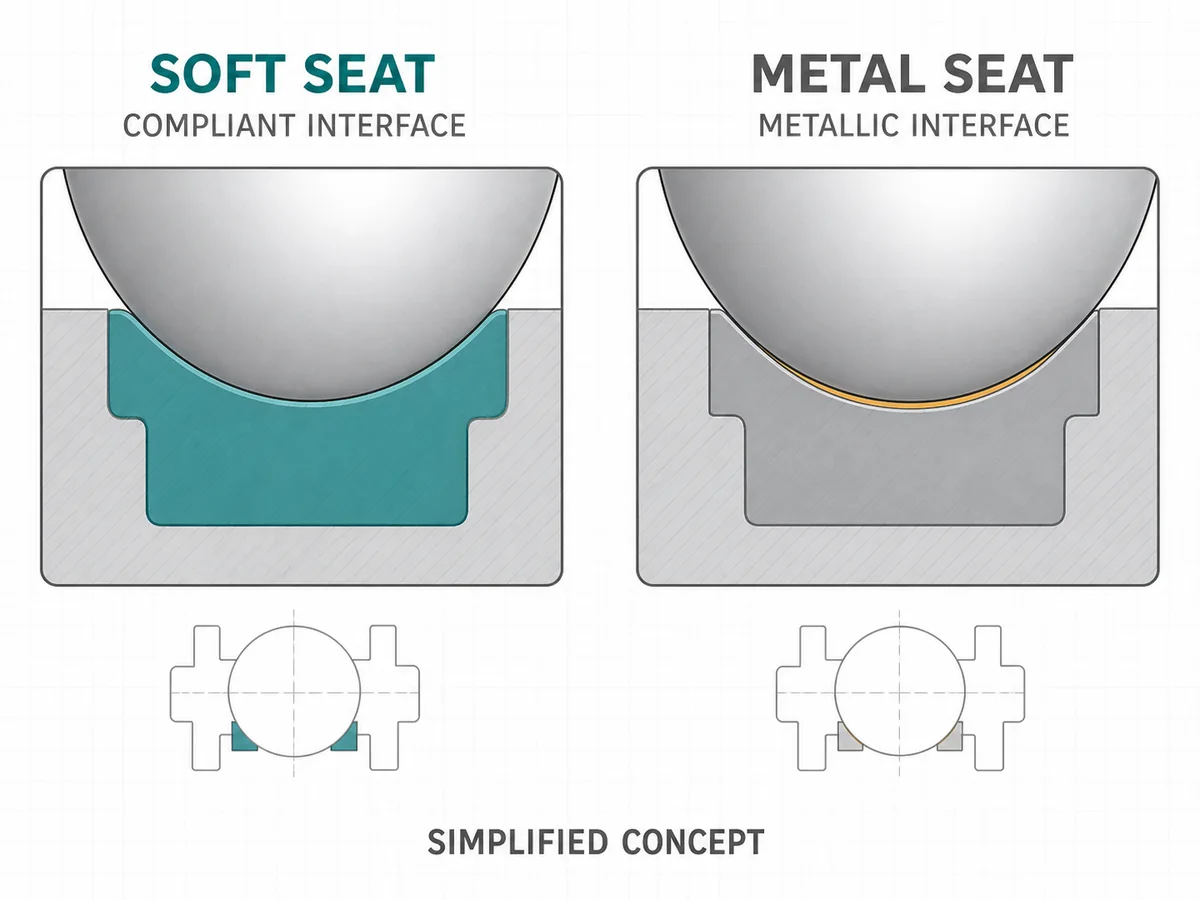
The main engineering advantage of a soft seat is controlled deformation. Under closing force and line pressure, the seat can conform to the ball surface and produce very tight shutoff in clean service. This is why soft seated ball valves are widely used in water treatment, compressed air, clean gas, chemical service, utility lines, and general industrial pipelines.
Soft seated ball valves are usually preferred when the process requires:
- Tight shutoff in clean media
- Lower operating torque
- Manual operation or compact actuator sizing
- Moderate temperature range
- Economical initial cost
- General industrial isolation duty
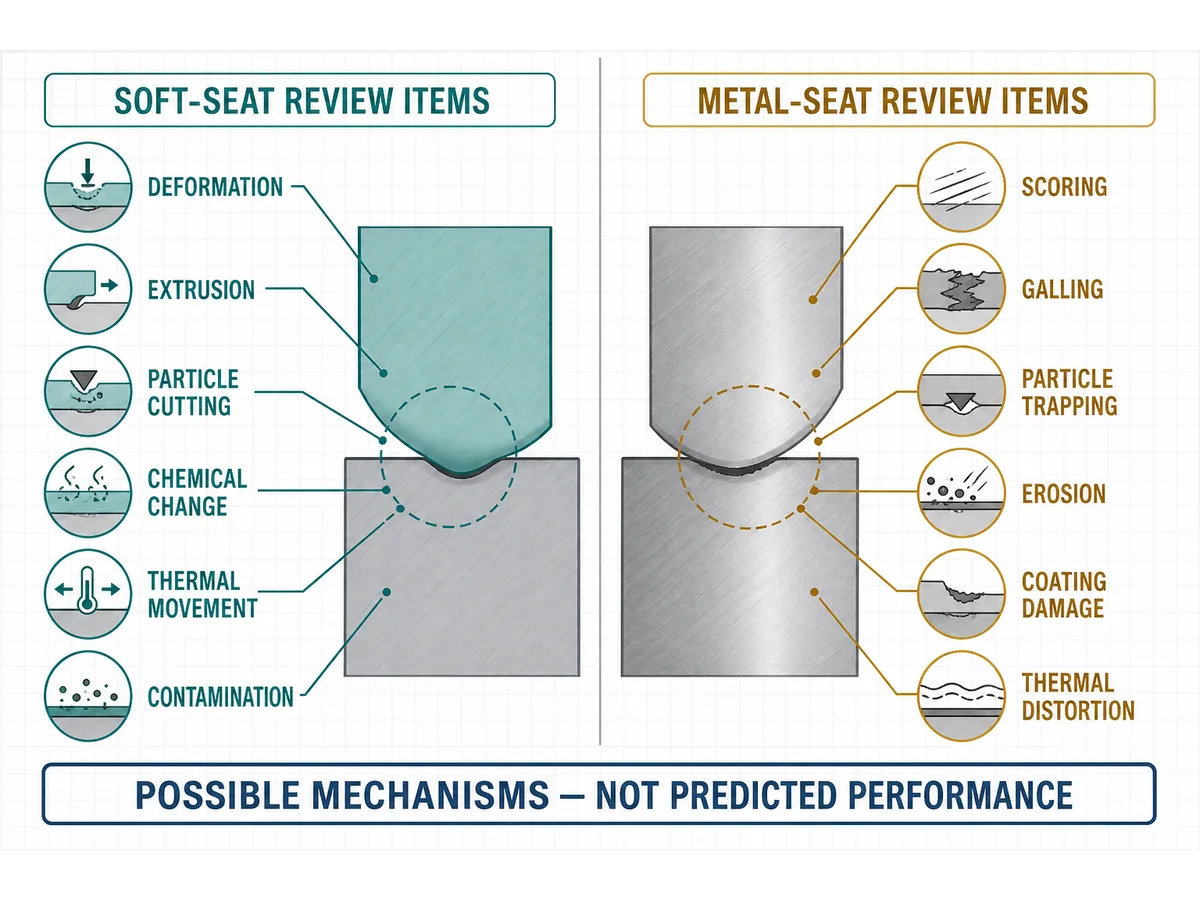
However, a soft seat is still a wear component. It can be damaged by excessive temperature, pressure extrusion, chemical swelling, hard particles, thermal aging, or repeated cycling under unsuitable conditions.
Common Soft Seat Materials
| Seat Material | Main Strength | Typical Limitation | Engineering Comment |
|---|
| PTFE | Broad chemical resistance and low friction | Limited mechanical strength under high temperature, high pressure, or abrasive service | Often used for clean chemical or utility service, but should not be selected by material name alone |
| RPTFE | Better deformation resistance than virgin PTFE | Still limited in abrasive or very high-temperature service | Useful where PTFE needs improved mechanical support |
| PEEK | Higher mechanical strength and temperature capability than PTFE in many valve applications | Higher cost and still requires media compatibility review | Often reviewed when standard PTFE is not mechanically strong enough |
| PCTFE | Good dimensional stability in selected low-temperature service | Used for specific applications rather than general service | Commonly reviewed for low-temperature or cryogenic-related designs |
| UHMWPE | Good wear and low-friction properties in selected services | Temperature and pressure limits must be checked carefully | Can be useful in selected slurry or low-friction applications, but not a universal severe-service seat |
Engineering note: A typical project mistake is writing only “PTFE seat” in the purchase order. That is not enough. The specification should confirm the seat grade, temperature limit, pressure rating, chemical compatibility, seat support design, leakage requirement, and whether any substitution is allowed.
What Is a Metal Seated Ball Valve?
Soft Seated vs Metal Seated Ball Valves: How to Choose the Right Seat Design 11
A metal seated ball valve uses metallic sealing surfaces instead of polymer seats. The ball and seat are usually hardened, hardfaced, coated, or surface-treated to resist wear, temperature, and particle damage. The final design depends on the medium, temperature, pressure differential, corrosion risk, solids content, and required leakage class.
Common ball and seat surface treatments may include:
- Stellite hardfacing
- Tungsten carbide coating
- Chromium carbide coating
- Hard chrome plating
- Nickel-based alloy overlay
- Other engineered hard coatings selected for the service condition
Metal seated ball valves are not selected simply because metal is stronger than plastic. They are selected because the service condition is beyond the safe working range of soft seats.
Typical applications include high-temperature steam, thermal oil, hot gas, slurry, catalyst handling, ash handling, mining service, refinery severe service, sand-containing oil and gas service, abrasive chemical process media, and high-cycle demanding isolation.
A metal seated ball valve depends on accurate machining, seat loading, coating quality, lapping quality, material selection, and correct actuator sizing. The design is more demanding than a standard soft seated ball valve, but it is often the correct choice where soft seats fail too quickly.
Soft Seated vs Metal Seated Ball Valve: Main Differences
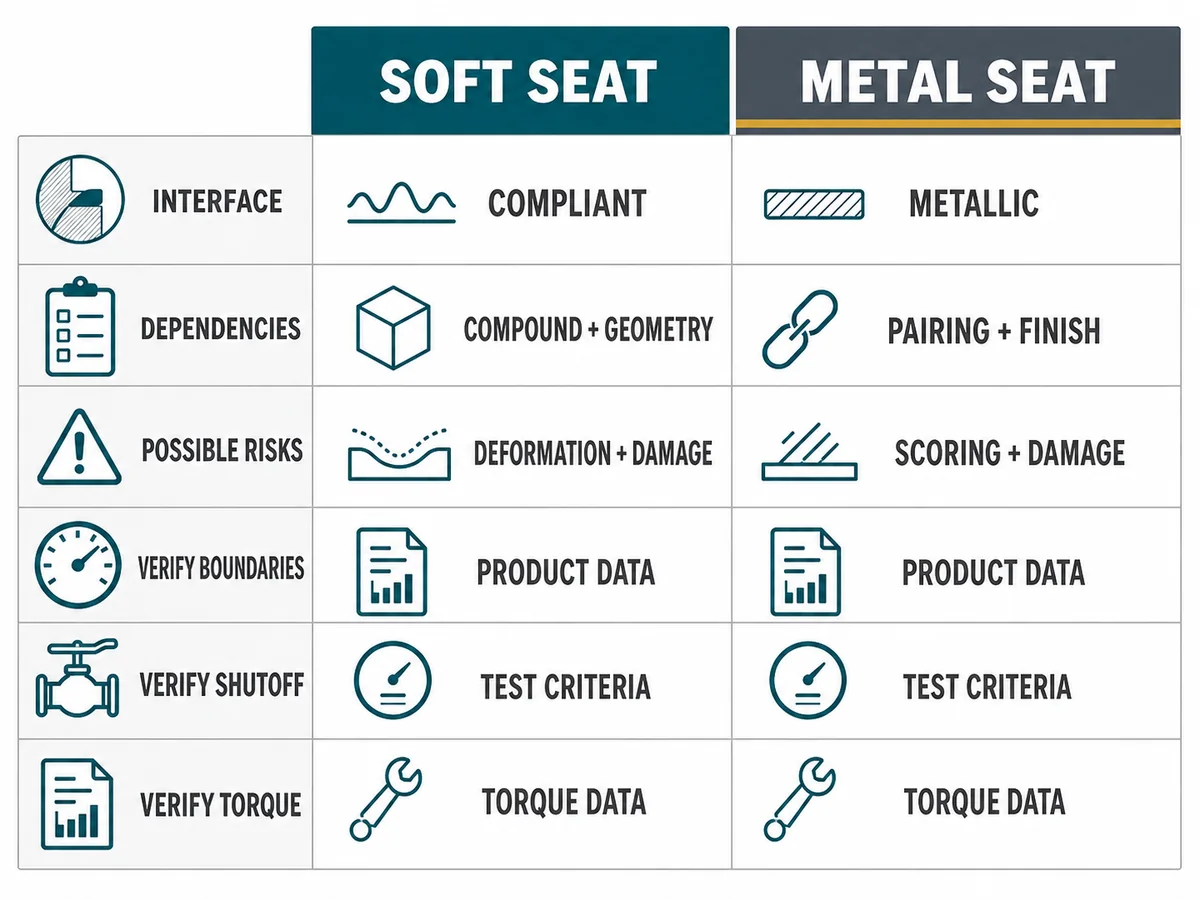
| Comparison Item | Soft Seated Ball Valve | Metal Seated Ball Valve |
|---|
| Seat Material | PTFE, RPTFE, PEEK, PCTFE, UHMWPE, elastomer-based compounds | Metallic seat with hardfacing, coating, or surface treatment |
| Shutoff Performance | Excellent tight shutoff in clean service | Good shutoff, but leakage class must be clearly specified |
| Temperature Capability | Limited by polymer seat material and seat support design | Better suited to high-temperature service |
| Abrasion Resistance | Poor to moderate, depending on material and particle condition | Stronger when coating and hardfacing are correctly selected |
| Operating Torque | Usually lower | Usually higher |
| Media Cleanliness | Best for clean fluids and gases | Better for dirty, abrasive, or particle-containing media |
| Fire Resistance | Requires fire-safe design if used in fire-risk service | Better heat resistance at the seat area, but certification still matters |
| Initial Cost | Lower | Higher |
| Lifecycle Cost in Severe Service | Can become high if seats fail frequently | Often lower when downtime and maintenance cost are considered |
| Typical Use | Water, air, gas, clean chemical, general industrial service | Steam, slurry, catalyst, ash, hot oil, abrasive and severe service |
Seat Design Should Start from Real Service Duty
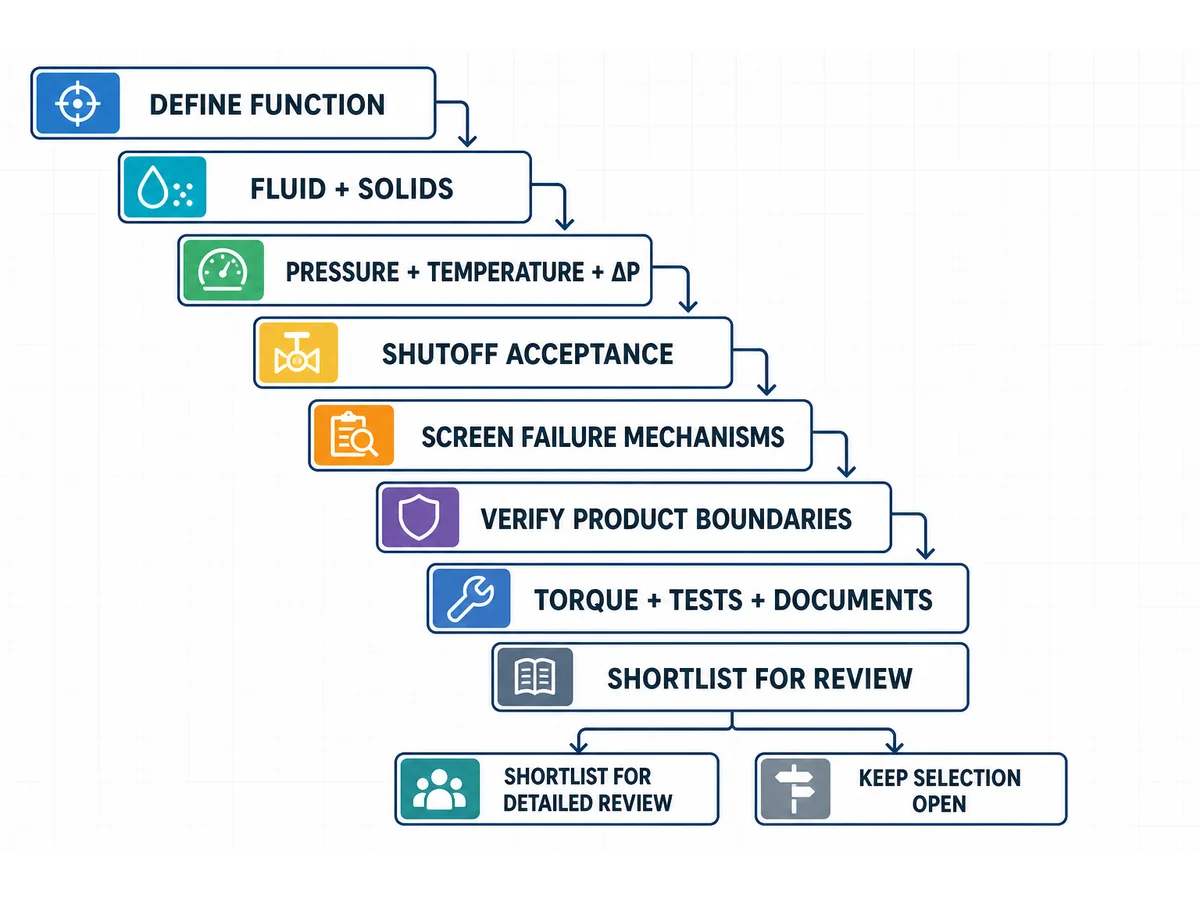
The first selection mistake is choosing the ball valve seat by habit. Some users select soft seats because they want tight shutoff. Others select metal seats because the application sounds severe. Both approaches can be wrong if the actual service data is incomplete.
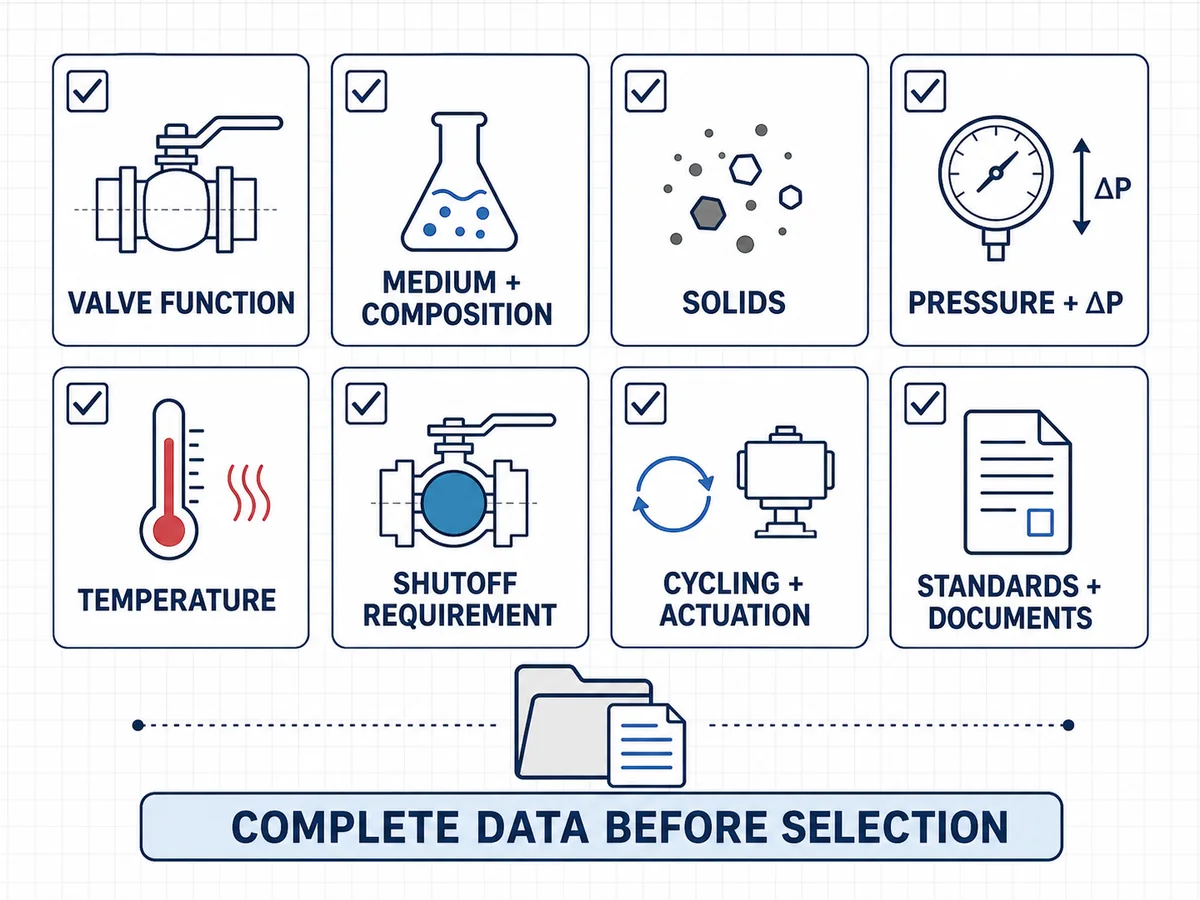
Before comparing soft seated and metal seated ball valves, confirm these conditions:
- What is the actual medium in normal operation?
- What happens during startup, shutdown, flushing, and cleaning?
- Does the medium contain solids, scale, crystals, catalyst, sand, or welding debris?
- What is the normal operating temperature?
- What is the maximum upset temperature?
- What differential pressure can exist at closure?
- Is the valve used for isolation only or frequent cycling?
- Is the valve manually operated or automated?
- Is fire-safe certification required?
- What leakage class is required?
- What standard will be used for pressure and seat testing?
- What happened to previous valves in the same service?
A ball valve that performs well in clean water may fail quickly in slurry. A valve that seals well during ambient shop testing may not maintain the same sealing behavior in hot service. A seat material that is chemically compatible at room temperature may not remain suitable at elevated temperature.
Field rule: Select the seat from the service condition, not from the valve name.
Sealing Performance: Tight Shutoff Does Not Always Mean Longer Service Life
Soft seated ball valves usually provide tighter shutoff in clean service because the seat can conform to the ball surface. This is why soft seated valves are common where bubble-tight shutoff is required.
However, tight shutoff during factory testing does not guarantee long service life in abrasive or high-temperature service. If hard particles cut the seat, or heat causes the seat to creep or deform, leakage can appear soon after commissioning.
Metal seated ball valves can also provide good shutoff, but the leakage expectation must be clearly defined. A metal seated valve should not be specified only with vague wording such as “zero leakage” or “tight shutoff.” The purchase specification should state:
- Leakage standard
- Leakage class or acceptance rate
- Test pressure
- Test medium
- Test duration
- Flow direction
- Test temperature, if relevant
- Whether the requirement applies before or after fire test, cycle test, or high-temperature exposure
In engineering procurement, “zero leakage” is not a complete technical requirement unless the test method and acceptance criteria are defined.
Temperature Resistance
Temperature is one of the clearest boundaries between soft seated and metal seated ball valves.
Soft seat materials have defined temperature limits. When the service temperature approaches the upper limit of the seat material, the seat may soften, creep, deform, extrude, or lose sealing stress. Even if the valve closes properly at first, repeated thermal cycling may reduce seat life.
Metal seated ball valves are better suited to high-temperature service because the sealing elements are metallic and can be designed with suitable hardfacing, coating, packing, and gasket systems.
| Temperature Condition | Preferred Seat Direction | What to Check |
|---|
| Normal temperature, clean media | Soft seated ball valve | Seat compatibility, pressure class, leakage requirement |
| Moderate temperature within seat material limit | Soft seated ball valve may be suitable | Seat grade, pressure-temperature derating, cycle frequency |
| Temperature close to polymer limit | Review upgraded soft seat or metal seat | Thermal aging, extrusion risk, actuator torque |
| High temperature beyond soft seat capability | Metal seated ball valve | Body material, ball and seat hardfacing, packing, gasket, test requirement |
| Thermal cycling with demanding shutoff | Metal seated ball valve should be reviewed | Seat loading, thermal expansion, coating integrity, torque margin |
Typical engineering range note: Polymer seat limits vary by material grade, pressure, valve design, and supplier datasheet. PTFE-based seats are often used in moderate-temperature service, while PEEK and other engineered polymers may extend the usable range. Do not use any temperature number without checking the valve manufacturer’s pressure-temperature chart and the actual medium.
Abrasion and Particle-Containing Media
Abrasive media is one of the most common reasons to select a metal seated ball valve.
Soft Seated vs Metal Seated Ball Valves: How to Choose the Right Seat Design 12
Soft seats can be damaged when the medium contains sand, catalyst, ash, scale, powder, crystals, slurry, welding debris, or corrosion products. Particles may cut the seat, embed into the soft material, scratch the ball, or prevent full closure. Once the seat is damaged, leakage often increases quickly.
Metal seated ball valves are designed to handle these conditions more effectively. The ball and seat can be hardened, coated, or hardfaced to resist wear. Severe-service designs may also use spring-loaded seats, protected seat structures, and precision-lapped sealing surfaces.
However, not every metal seated valve is equal. Coating selection matters. A valve for hot steam is not automatically suitable for abrasive slurry. A hard coating that resists abrasion may still require corrosion review if the medium is chemically aggressive.
For abrasive service, confirm:
- Particle type
- Particle hardness
- Particle size
- Solids concentration
- Flow velocity
- Operating frequency
- Differential pressure at closure
- Coating or hardfacing method
- Seat protection design
- Expected leakage class
Operating Torque and Actuator Sizing
Soft Seated vs Metal Seated Ball Valves: How to Choose the Right Seat Design 13
Soft seated ball valves usually have lower operating torque because polymer seats provide lower friction against the ball. This makes them suitable for manual handles, gear operators, pneumatic actuators, and electric actuators with moderate torque requirements.
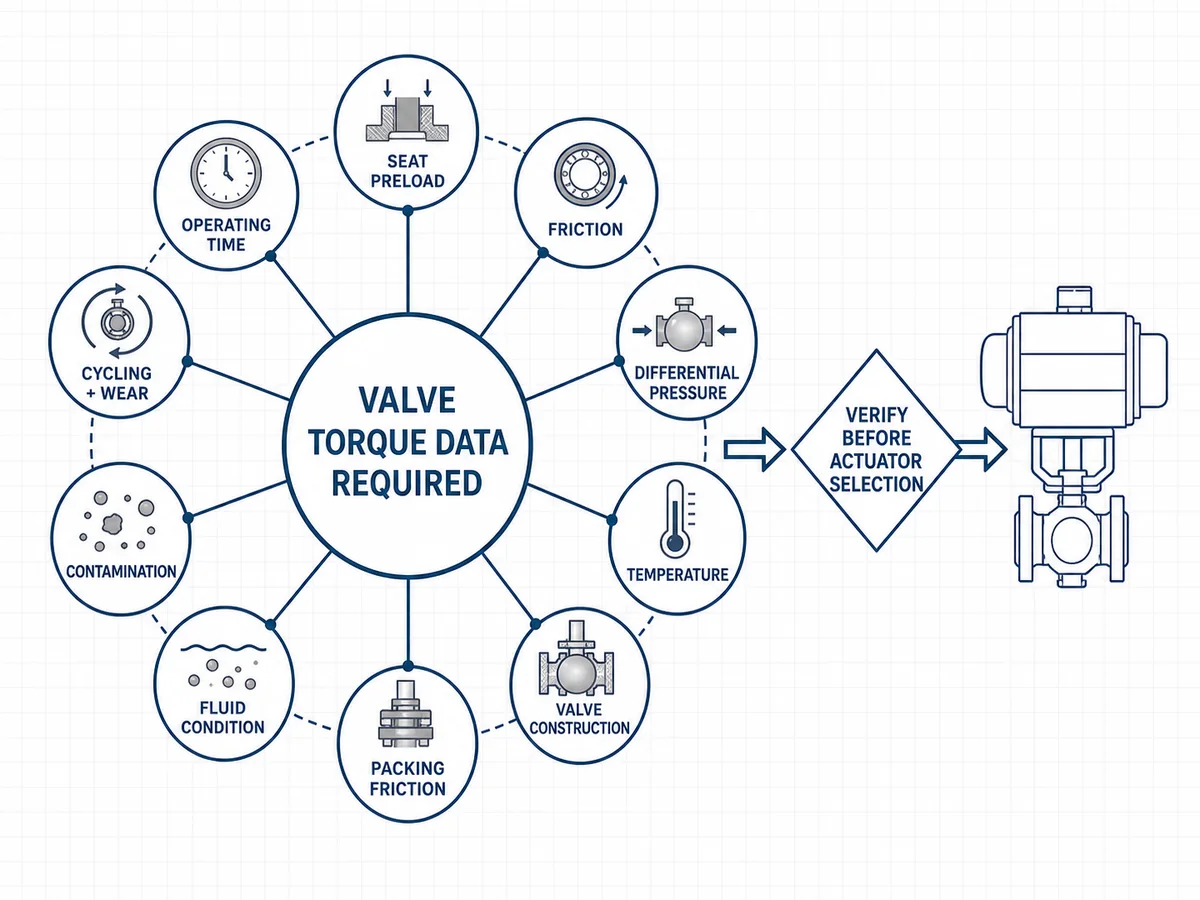
Metal seated ball valves usually have higher torque because metal-to-metal contact creates greater friction. Torque may also increase due to high differential pressure, thermal expansion, seat loading, packing friction, coating surface condition, media deposits, solids build-up, or long idle periods before operation.
A common field problem occurs when a metal seated valve is selected to replace a soft seated valve, but the actuator is not resized. The valve may stroke during shop testing with no pressure, but fail to close under real operating pressure.
| Torque Item | Why It Matters | Common Mistake |
|---|
| Breakaway torque | Determines actuator ability to start valve movement | Using dry-cycle torque only |
| Running torque | Affects actuator load during travel | Ignoring deposits or temperature effect |
| Seating torque | Determines full closure capability | Undersizing actuator for metal seated valve |
| Maximum differential pressure | Controls worst-case closing load | Using line pressure but not closure differential pressure |
| Safety factor | Helps account for real service variation | Applying the same margin used for clean soft seated service |
| Fail-safe requirement | Determines spring-return or emergency closure needs | Adding fail-close requirement after actuator selection |
The actuator should be selected from actual valve torque data, not only from valve size. If the valve is part of an automated package, review the actuator together with the selected seat design before release.
Pressure and Differential Pressure
Both soft seated and metal seated ball valves can be designed for different pressure classes. The key issue is not only line pressure, but also differential pressure at closure.
In soft seated designs, high differential pressure may increase seat stress and create risks of deformation, extrusion, or accelerated wear if the seat material and seat support are not suitable.
In metal seated designs, high differential pressure can increase contact stress between the ball and seat. This may improve sealing in some designs, but it can also increase torque and wear if the surface treatment is not suitable.
For larger sizes, higher pressure, or higher differential pressure, the valve structure should also be reviewed. Floating ball valves and trunnion mounted ball valves behave differently under pressure. In larger sizes or higher-pressure applications, trunnion mounted ball valves are often preferred because the ball is mechanically supported and seat loading can be better controlled.
Fire Safety Considerations
Fire-safe performance should not be assumed from seat material alone.
A standard soft seated ball valve may lose its primary seat during fire exposure. Fire-safe ball valves are designed with secondary sealing features so the valve can maintain controlled sealing performance after the soft seat is damaged. This may involve metal-to-metal contact, suitable stem sealing, body gasket design, packing selection, and fire-tested construction.
Metal seated ball valves naturally have better heat resistance at the seat area, but the complete valve must still be reviewed. Fire-safe performance depends on the seat design, stem seal design, body gasket material, packing material, anti-static design, test standard, valve construction, and certification documentation.
For flammable service, do not specify only “metal seated” or “fire safe” in general language. State the required fire test standard and documentation requirement clearly in the purchase order. Relevant fire testing references may include ISO 10497 and API fire-test requirements where applicable.
Corrosion and Chemical Compatibility
Soft seats can be excellent in chemical service when the seat material is compatible with the medium. PTFE, for example, is widely used because of its broad chemical resistance. But chemical compatibility must still be checked against actual concentration, temperature, pressure, cleaning procedure, and exposure time.
Metal seated ball valves require a wider compatibility review. The base material, hardfacing, coating, springs, retainers, stem, body, gasket system, and packing must all be reviewed. A hard coating may resist abrasion but still be unsuitable for certain corrosive media.
Corrosion and abrasion together are especially difficult. For example, a slurry with corrosive liquid and hard particles may require both corrosion-resistant base material and wear-resistant coating.
Do not review only the valve body. Seat design selection should include:
- Body material
- Ball material
- Seat material
- Stem material
- Seat spring material
- Coating or hardfacing
- Packing and gasket material
- Fasteners if exposed
- Shutdown and cleaning chemicals
Standards That Affect Seat Selection
Standards should be used to define requirements, not just to decorate a datasheet. For soft seated and metal seated ball valves, standards commonly affect design, testing, leakage, fire safety, material selection, and purchasing language.
| Standard | What It Affects | Why It Matters |
|---|
| API 608 | Metal ball valves for refinery, petrochemical, and industrial applications | Often used when specifying flanged, threaded, or welding-end metal ball valves |
| ASME B16.34 | Pressure-temperature ratings, dimensions, materials, testing, and marking | Helps define pressure class and valve construction requirements |
| ISO 5208 | Pressure testing of metallic valves and closure tightness verification | Useful when leakage rate is specified by ISO pressure test practice |
| API 598 | Valve inspection and pressure testing | Commonly used for shell and seat test requirements in industrial valve procurement |
| API 607 | Fire test requirements for quarter-turn valves and valves with nonmetallic seats | Important for fire-safe ball valve requirements |
| ISO 10497 | Fire type-testing requirements for soft- and metal-seated isolation valves | Used in many international fire-safe valve specifications |
| ISO 5211 | Actuator mounting interface | Useful when manual, pneumatic, or electric actuation is required |
| NACE MR0175 / ISO 15156 | Materials for H2S-containing sour service | Relevant when sour service or sulfide stress cracking risk exists |
A purchase order should not simply say “standard industrial valve.” It should state the design standard, test standard, leakage requirement, seat material, fire-safe requirement if applicable, and actuator torque basis.
How to Choose Between Soft Seated and Metal Seated Ball Valves
Step 1: Define the Medium Clearly
Start with the actual medium, not only the line name. “Water service” may mean clean water, seawater, cooling water with chemicals, wastewater, or water containing sand and scale. These are not the same seat selection problem.
Ask:
- Is the medium clean?
- Does it contain solids?
- Is there crystallization?
- Is there scale?
- Is there catalyst or powder?
- Is there chemical cleaning?
- Is there oil contamination?
- Are upset conditions different from normal operation?
If the medium is clean and non-abrasive, soft seats may be suitable. If the medium contains solids or abrasive particles, metal seated valves should be reviewed.
Step 2: Check Temperature Boundary
Temperature should be checked against the actual seat material and valve design, not against a generic valve description.
| Temperature Review | Selection Meaning |
|---|
| Normal and stable temperature | Soft seat may be suitable if chemically compatible |
| Temperature close to seat material limit | Use caution and review deformation, extrusion, and aging risk |
| High temperature | Metal seated design is usually preferred |
| Thermal cycling | Review metal seat or high-performance seat design |
| Fire exposure risk | Confirm fire-safe design and certification |
Step 3: Define Shutoff Requirement
Do not assume every service needs the tightest possible leakage class. Also do not assume every metal seated valve has the same leakage performance.
Define the required leakage class, test standard, test pressure, test medium, acceptance rate, whether shutoff is required at ambient or elevated temperature, and whether leakage after cycling or fire testing matters.
Soft seated valves are usually preferred for tight shutoff in clean service. Metal seated valves are preferred when long-term durability under severe service is more important than the lowest initial leakage in clean shop conditions.
Step 4: Review Cycle Frequency
A valve that operates once per month has different seat demands from a valve that cycles many times per day.
High cycle frequency can increase seat wear, torque variation, packing wear, coating wear, stem load, and actuator demand. For clean service with moderate cycling, soft seated valves may work well. For high-temperature or abrasive high-cycle service, metal seated valves are usually more reliable.
Step 5: Confirm Actuator Torque
Seat selection and actuator sizing must be reviewed together.
A metal seated ball valve may require a larger actuator than a soft seated valve of the same size and pressure class. If the actuator is undersized, the valve may not close fully under live service conditions.
The actuator review should include actual differential pressure, breakaway torque, seating torque, operating temperature, media deposits, safety factor, fail-open or fail-close requirement, operating speed, and manual override requirement.
Practical Selection Table
| Working Condition | Recommended Seat Design | Engineering Reason |
|---|
| Clean water | Soft seated | Tight shutoff and economical cost |
| Compressed air | Soft seated | Low torque and reliable shutoff |
| Clean natural gas | Soft seated or fire-safe soft seated | Depends on fire-safe and project requirements |
| Clean chemical liquid | Soft seated | Suitable if the seat material is chemically compatible |
| High-temperature steam | Metal seated | Polymer seats may deform, age, or lose sealing stress |
| Thermal oil | Metal seated | Better high-temperature stability |
| Slurry | Metal seated | Better resistance to particle damage |
| Catalyst service | Metal seated | Hard coating helps resist abrasion |
| Ash handling | Metal seated | Soft seats can be cut or embedded with particles |
| Sand-containing oil and gas | Metal seated | Better wear resistance |
| Fire-risk process | Fire-safe design or metal seated | Certification must be verified |
| Severe service isolation | Metal seated | Better long-term durability |
| Frequent cycling with particles | Metal seated | Reduces seat damage risk |
| Low-cost clean utility service | Soft seated | Practical and economical |
Procurement Specification Checklist
Many seat-related failures begin in the purchase order. If the order only states size, pressure class, and body material, the supplier may not have enough information to select the correct seat system.
| PO Item | What to State Clearly | Why It Matters |
|---|
| Valve type | Floating ball, trunnion mounted ball, full port, reduced port | Prevents wrong structure selection |
| Seat design | Soft seated or metal seated | Defines service boundary |
| Seat material | PTFE, RPTFE, PEEK, metal seat with coating, etc. | Prevents generic substitution |
| Ball and seat treatment | Coating, hardfacing, lapping requirement | Critical for metal seated valves |
| Body and trim materials | Exact material grades | Avoids corrosion or pressure-temperature mismatch |
| Leakage requirement | Standard, leakage class, test pressure, test medium | Prevents vague “zero leakage” claims |
| Fire-safe requirement | API 607, ISO 10497, or project standard | Required for many flammable services |
| Actuator basis | Manual, gear, pneumatic, electric, torque data | Prevents actuator undersizing |
| Service condition | Medium, temperature, pressure, solids, cycling | Allows correct engineering selection |
| Documentation | MTR, test certificate, coating record, fire-safe certificate if required | Supports QA and receiving inspection |
| Substitution rule | No seat or material substitution without written approval | Prevents look-alike valves being supplied |
Example PO wording: “Ball valve seat design shall be selected according to actual service conditions. Seat material, leakage class, test standard, actuator torque basis, and coating or hardfacing requirements shall be confirmed before release. No substitution of seat material, coating, body material, or actuator package is permitted without written engineering approval.”
Incoming Inspection Checklist
Soft Seated vs Metal Seated Ball Valves: How to Choose the Right Seat Design 14
| Inspection Item | What QC Should Check | Typical Problem Found |
|---|
| Nameplate | Size, class, material, design standard, manufacturer | Correct size but wrong construction |
| Seat material | Confirm against PO and approved datasheet | Generic PTFE supplied instead of specified reinforced seat |
| Ball and seat surface | Scratches, coating defects, lapping quality | Leakage risk before installation |
| Actuator | Model, torque, fail action, mounting interface | Actuator too small for real service |
| Documentation | MTR, pressure test, leakage test, coating record | Missing traceability or incomplete test record |
| Fire-safe certificate | Standard, valve type, size range, validity | Fire-safe claim not supported by documentation |
| Operation test | Full open-close travel and stop setting | Valve not fully closing due to adjustment issue |
| End connection | Flanged, threaded, or welding end dimensions | Replacement mismatch in field |
Receiving inspection should not be treated as paperwork only. For metal seated valves, surface condition, coating integrity, and actuator matching are especially important.
Common Failure Modes
| Failure Mode | Likely Cause | Corrective Action | How to Prevent Repeat |
|---|
| Seat leakage after commissioning | Debris damage, wrong seat material, poor flushing, incomplete closure | Inspect seat and ball, clean pipeline, verify actuator torque | Add flushing and seat inspection to startup procedure |
| Soft seat deformation | Temperature too high or pressure extrusion | Replace with suitable seat material or metal seated design | Check real temperature and pressure before ordering |
| Rapid leakage in slurry | Soft seat cut by particles | Use metal seated valve with suitable coating | Define solids content and particle hardness |
| Actuator stall | Torque underestimated | Resize actuator based on actual valve torque | Require torque sheet and safety factor |
| High operating torque | Metal seat friction, deposits, thermal expansion | Review coating, seat load, actuator margin | Treat torque as part of valve selection |
| Coating damage | Wrong coating for media or poor handling | Repair or replace sealing parts | Specify coating type and inspection requirements |
| Corrosion at seat area | Material system incompatible with medium | Review body, ball, seat, spring, and trim materials | Check full media and shutdown exposure |
| Fire-safe failure | Fire-safe design assumed but not certified | Use certified fire-safe valve | Require fire test certificate in PO |
Composite Field Scenarios for Engineering Training
Scenario 1: Soft Seated Ball Valve Failed in Slurry Service
What happened: A soft seated ball valve was installed in a slurry line because the project required tight shutoff and low purchase cost. The valve passed the initial pressure test, but leakage appeared within a short operating period.
Why it happened: The seat was suitable for clean liquid service, but not for particle-containing media.
The real system cause: Hard particles damaged the soft seat during operation. Some particles also embedded into the seat surface, preventing full sealing contact.
How it was corrected: The valve was replaced with a metal seated ball valve using a more suitable hard-coated ball and seat.
How to prevent recurrence: Do not select soft seats for slurry or abrasive service only because factory shutoff performance is good. Review solids content, particle hardness, and operating frequency before ordering.
Scenario 2: Soft Seat Used Beyond Temperature Limit
What happened: A soft seated ball valve was selected for a hot oil system. It operated normally during early commissioning, but leakage increased after repeated heating and cooling cycles.
Why it happened: The actual service temperature was close to or above the safe working range of the seat material.
The real system cause: The seat lost dimensional stability and sealing stress due to thermal exposure.
How it was corrected: The valve was replaced with a metal seated design suitable for the temperature range.
How to prevent recurrence: Always check normal temperature, maximum upset temperature, and thermal cycling before selecting the seat.
Scenario 3: Metal Seated Valve Supplied Without Clear Leakage Class
What happened: A metal seated ball valve was purchased for severe service. After testing, the buyer expected bubble-tight shutoff, while the supplier claimed the valve met its standard leakage requirement.
Why it happened: The purchase order did not define leakage class, test method, or acceptance rate.
The real system cause: “Zero leakage” was discussed verbally but not written as a measurable technical requirement.
How it was corrected: The leakage standard and acceptance criteria were clarified for future orders.
How to prevent recurrence: State leakage standard, class, test pressure, test medium, and acceptance rate in the purchase order.
Scenario 4: Actuator Undersized After Seat Design Upgrade
What happened: A plant replaced a soft seated ball valve with a metal seated ball valve in a high-temperature line. The actuator from the previous valve package was reused. During live operation, the valve failed to close fully.
Why it happened: The actuator was sized for the lower torque of the soft seated valve.
The real system cause: Metal-to-metal seating increased torque demand, especially under temperature and differential pressure.
How it was corrected: The actuator was resized based on the metal seated valve torque sheet and actual process conditions.
How to prevent recurrence: Whenever seat design changes, actuator torque review must be repeated.
When to Choose Soft Seated Ball Valves
Choose a soft seated ball valve when the service condition is clean, moderate, and within the proven limits of the seat material.
Soft seated ball valves are usually suitable for:
- Clean water
- Air
- Inert gas
- Clean natural gas
- General industrial liquid
- Clean chemical service
- Utility pipelines
- Low-to-medium temperature service
- Applications requiring tight shutoff and low torque
Soft seated valves are not a lower-quality option. They are the correct choice for many clean and moderate services. The problem occurs when they are applied to temperature, abrasion, or severe service conditions beyond their design boundary.
When to Choose Metal Seated Ball Valves
Choose a metal seated ball valve when the service condition is too demanding for polymer seats.
Metal seated ball valves should be reviewed when the application involves:
- High temperature
- Abrasive particles
- Slurry
- Catalyst
- Ash
- Powder
- Sand
- Dirty media
- Thermal cycling
- Severe service
- Fire-risk process
- Frequent operation under high load
- Previous soft seat failure
Metal seated ball valves have higher initial cost, but they can reduce shutdown risk, replacement frequency, and maintenance cost in severe service.
Related Valve Checks Engineers Usually Review Next
After comparing soft seated and metal seated ball valves, engineers usually need to review several related decisions:
This article should sit close to your ball valve category structure. Readers who are comparing seat design should be guided naturally toward metal seated ball valves, trunnion mounted ball valves, flanged ball valves, and related valve selection resources.
Need a Metal Seated Ball Valve for High Temperature or Abrasive Service?
Raymon Valve supplies metal seated ball valves for demanding industrial applications, including high-temperature, abrasive, slurry, catalyst, ash handling, and severe service conditions.
Our engineering team can help review your medium, temperature, pressure, leakage requirement, coating selection, and actuator torque before finalizing the valve package.
View Metal Seated Ball Valves Contact Us for Valve Selection
FAQ
What is the main difference between a soft seated and metal seated ball valve?
The main difference is the seat design. A soft seated ball valve uses polymer or engineered plastic seats such as PTFE, RPTFE, PEEK, PCTFE, or UHMWPE. A metal seated ball valve uses metallic seating surfaces with hardfacing, coating, or surface treatment for higher temperature, abrasion, and severe service.
Which is better, soft seated or metal seated ball valve?
Neither design is always better. A soft seated ball valve is better for clean media, tight shutoff, and lower torque. A metal seated ball valve is better for high temperature, abrasive media, dirty service, fire-risk applications, and severe operating conditions.
Do soft seated ball valves provide better sealing?
Soft seated ball valves usually provide very tight shutoff in clean service because the seat can conform to the ball surface. However, the seat can be damaged by particles, heat, pressure extrusion, or unsuitable chemicals. Tight shutoff in a workshop test does not guarantee long service life in severe service.
When should I choose a metal seated ball valve?
Choose a metal seated ball valve when the service involves high temperature, slurry, catalyst, ash, sand, abrasive particles, dirty media, fire-risk conditions, frequent cycling under high load, or previous soft seat failure. The coating, hardfacing, leakage class, and actuator torque should be reviewed together.
Are metal seated ball valves suitable for slurry?
Yes, metal seated ball valves are commonly reviewed for slurry and particle-containing media when the ball and seat are properly coated or hardfaced. The exact coating should be selected according to particle hardness, flow velocity, solids concentration, corrosion risk, and required leakage class.
Are metal seated ball valves zero leakage?
Not automatically. Metal seated ball valves can provide good shutoff, but the required leakage rate must be specified by a recognized test standard and leakage class. Do not rely only on the phrase “zero leakage.” Define the test pressure, test medium, test direction, duration, and acceptance rate.
Why do metal seated ball valves require higher torque?
Metal seated ball valves usually have higher torque because metal-to-metal contact creates more friction than soft seat contact. Temperature, differential pressure, coating condition, seat load, packing friction, and media deposits can also increase torque. Actuator sizing should be based on actual valve torque data.
Can soft seated ball valves be fire safe?
Yes, some soft seated ball valves are designed and tested as fire-safe valves. Fire-safe performance depends on the complete valve design, including seat structure, secondary sealing contact, stem sealing, body gasket, packing, anti-static design, and test certification.
Which seat is better for high temperature service?
Metal seated ball valves are generally better for high temperature service because polymer seats may soften, deform, creep, or lose sealing stress when temperature exceeds their safe operating range. The final selection should also check packing, gasket, body material, trim material, and actuator torque.
What information should I provide before selecting a ball valve seat?
Provide the medium, temperature, pressure, differential pressure at closure, solids content, operating frequency, shutoff requirement, leakage standard, actuation method, fire-safe requirement, material certification requirement, and any previous valve failure history in the same service.