
Metal Seated Ball Valve Selection Guide for High Temperature and Abrasive Service
Choosing a metal seated ball valve is not the same as choosing a standard soft seated ball valve. In high temperature, abrasive, erosive, or severe service applications, the valve seat is exposed to conditions that can quickly damage PTFE, RPTFE, PEEK, or other soft sealing materials. A metal seated design is selected when the valve must maintain mechanical strength, sealing contact, and operating reliability under demanding working conditions.
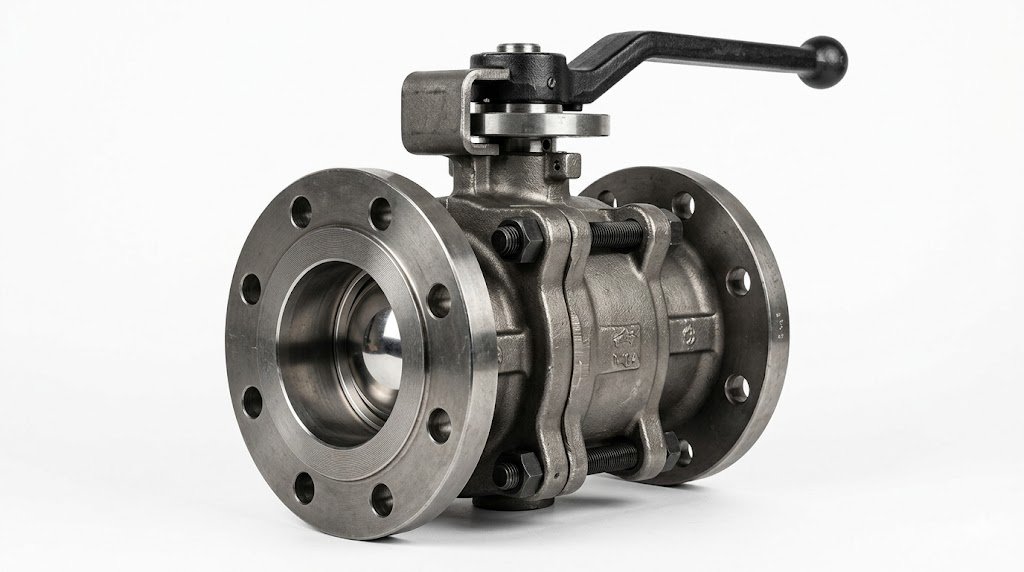
This metal seated ball valve selection guide explains how to evaluate service temperature, abrasive media, pressure class, seat design, coating selection, leakage expectations, operation torque, and testing requirements before specifying a valve for severe service.
For engineers, buyers, and project teams, the main question is not simply “Do we need a metal seated ball valve?” The better question is: “What seat material, coating, structure, and testing requirement are suitable for this specific operating condition?”
What Is a Metal Seated Ball Valve?
A metal seated ball valve is a quarter-turn isolation valve in which the sealing contact is made between a metal ball surface and metal seat rings. Unlike soft seated ball valves, which rely on polymer or elastomer seats for bubble-tight shutoff, metal seated ball valves use precision-machined and surface-treated metal sealing components.
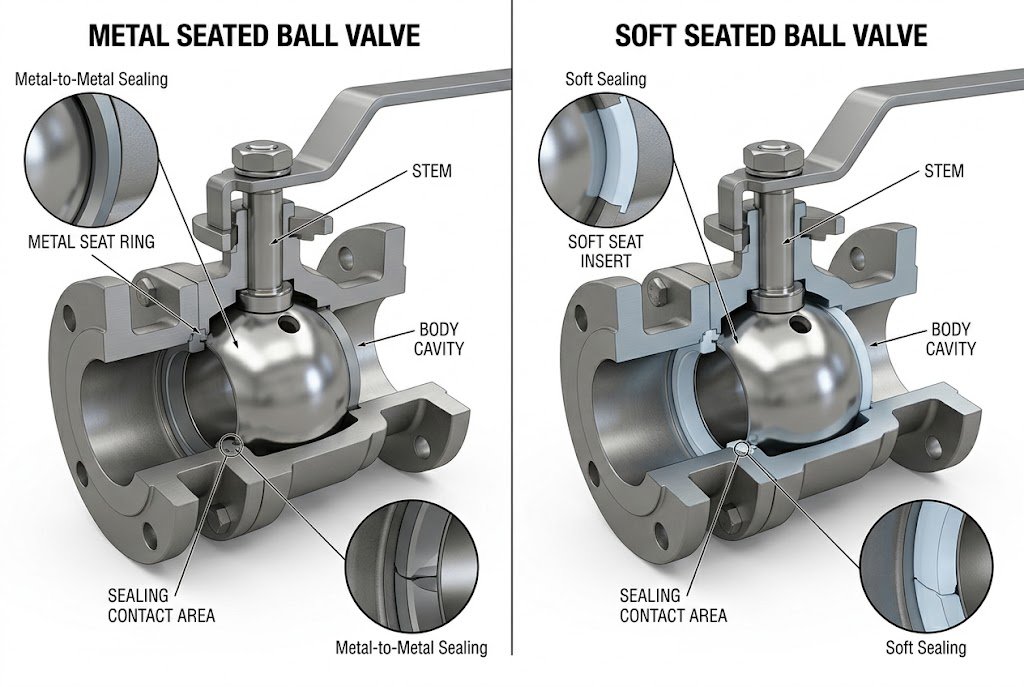
The ball and seat surfaces are commonly hardened by hard facing, carbide coating, nitriding, or other surface treatment methods. The purpose is to improve resistance to high temperature, erosion, abrasion, particle impact, and seat deformation.
In practical industrial service, metal seated ball valves are typically used for:
- High temperature steam or thermal oil systems
- Abrasive slurry or powder-containing media
- Catalyst, ash, coal powder, or solid particle service
- Severe service isolation in petrochemical and refinery units
- Applications where soft seats may creep, burn, swell, or wear rapidly
When Should You Select a Metal Seated Ball Valve?
A metal seated ball valve should be considered when the working condition exceeds the safe operating limits of soft sealing materials. In many projects, valve failure is not caused by the valve body pressure rating, but by seat damage, coating wear, thermal deformation, or incorrect leakage expectation.
Typical selection signals include:
- The service temperature is too high for PTFE, RPTFE, or elastomer seats.
- The medium contains hard particles, catalyst fines, ash, sand, scale, or crystallized solids.
- The valve must resist seat erosion during frequent opening and closing.
- The application requires fire-safe performance or metal-to-metal secondary sealing.
- The plant accepts controlled leakage but requires longer service life under severe conditions.
- The valve is installed in a process where seat replacement is difficult or shutdown cost is high.
If the process medium is clean water, clean air, low-temperature oil, or general non-abrasive service, a soft seated ball valve may still be the better choice because it usually provides lower operating torque and tighter shutoff at a lower cost.
High Temperature Service: Key Selection Factors
High temperature service is one of the most common reasons for selecting a metal seated ball valve. At elevated temperature, soft seats can lose mechanical strength, creep under load, deform at the sealing edge, or become unstable after thermal cycling.
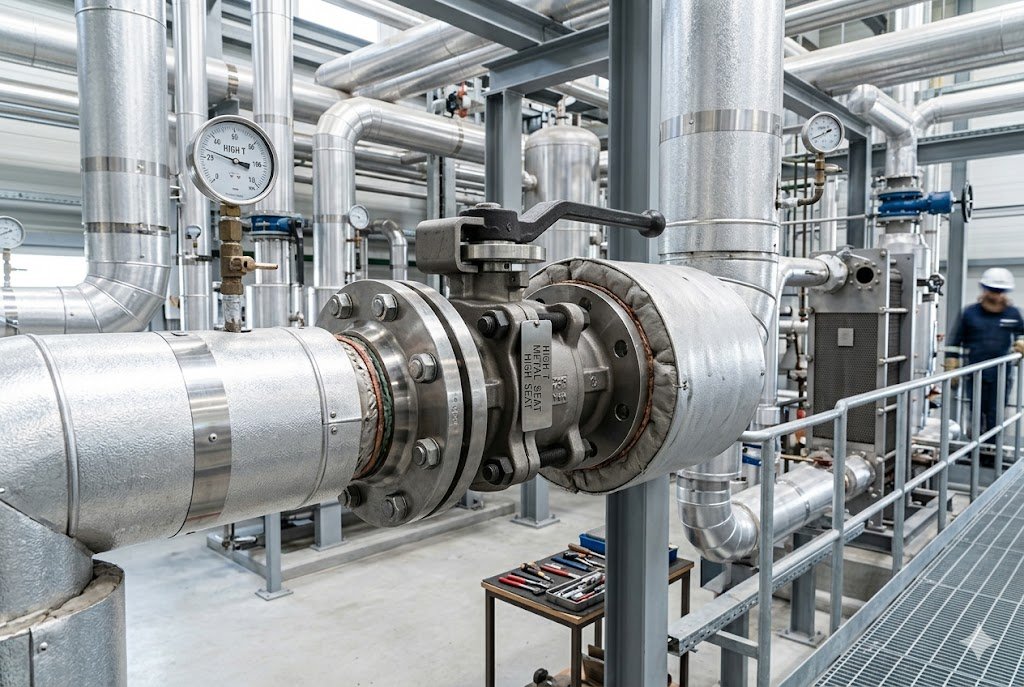
1. Confirm the Maximum Design Temperature, Not Only Normal Temperature
Valve selection should be based on the maximum design temperature, not only the normal operating temperature. For example, a process line may normally operate at 280°C, but during startup, regeneration, cleaning, or upset conditions, the valve may see a much higher temperature.
Before selecting the valve, confirm:
- Normal operating temperature
- Maximum design temperature
- Startup and shutdown temperature changes
- Thermal cycling frequency
- External insulation or heat tracing conditions
Thermal cycling is especially important. Repeated heating and cooling can change the contact condition between the ball and seat. A good metal seated ball valve design must allow stable sealing contact while avoiding excessive friction or seat jamming.
2. Select Body and Trim Materials According to Pressure-Temperature Rating
The valve body material must be selected according to the applicable pressure-temperature rating. Common body materials include carbon steel, stainless steel, alloy steel, and high nickel alloy materials depending on temperature, pressure, corrosion, and project specification.
For high temperature service, it is not enough to specify only “WCB body” or “stainless steel body.” The engineer should verify whether the material, pressure class, wall thickness, bolting, gasket, packing, and trim materials are suitable for the full design temperature range.
3. Check Packing and Gasket Compatibility
In high temperature service, leakage from the stem packing or body gasket can be more critical than seat leakage. Graphite packing and graphite gasket materials are commonly used for elevated temperature applications, but the final choice should follow the project specification, medium compatibility, fugitive emission requirement, and fire-safe requirement.
Important points include:
- Stem packing material
- Gasket material
- Bonnet or body joint design
- Live-loaded packing requirement
- Fugitive emission requirement, if applicable
Abrasive Service: Key Selection Factors
Abrasive service is more complex than high temperature service because the valve must handle both sealing and wear. A valve may pass the pressure test before shipment, but fail quickly in service if the particles cut the seat surface, damage the coating, or accumulate in the body cavity.
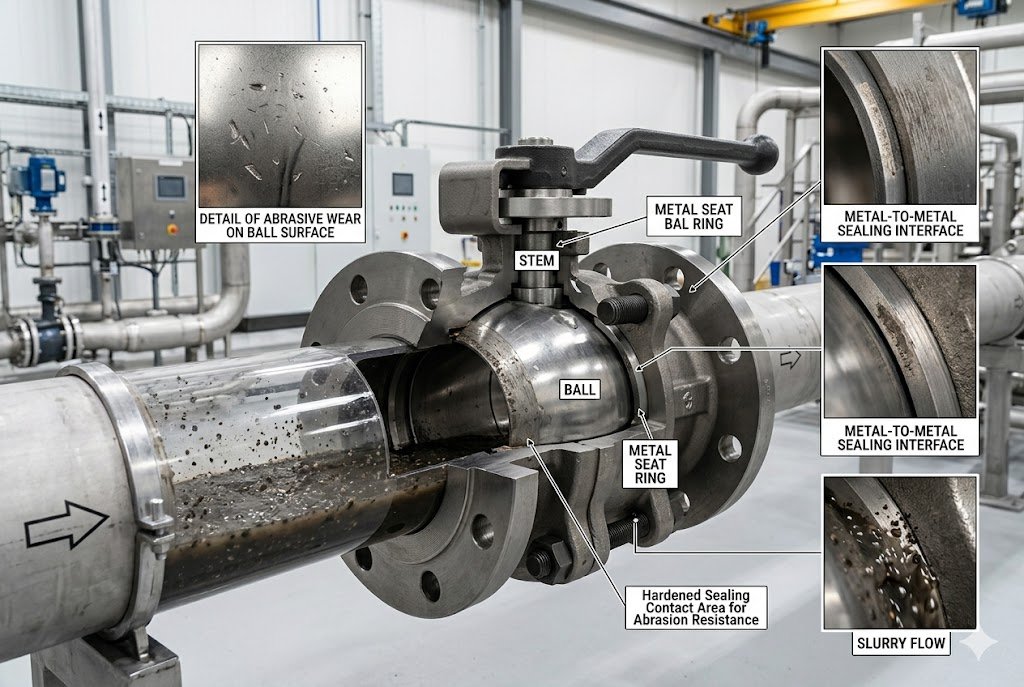
1. Identify the Type of Abrasive Media
Not all abrasive media behave the same way. Fine catalyst powder, coal ash, sand slurry, crystallized chemical solids, and metal scale all create different wear patterns.
Before selecting the valve, confirm:
- Particle type
- Particle hardness
- Particle size distribution
- Solid concentration
- Flow velocity
- Whether the medium is dry, wet, slurry-like, or gas-solid mixed
High velocity flow with hard particles can erode the upstream seat edge and ball surface. Slurry service may also create sediment buildup inside the valve cavity. For this reason, the valve structure and installation position should be reviewed together with the piping layout.
2. Pay Attention to Coating Selection
For abrasive service, the sealing surfaces are often hard coated or hard faced. Common options include tungsten carbide coating, chromium carbide coating, Stellite hard facing, nitriding, or other engineered surface treatments.
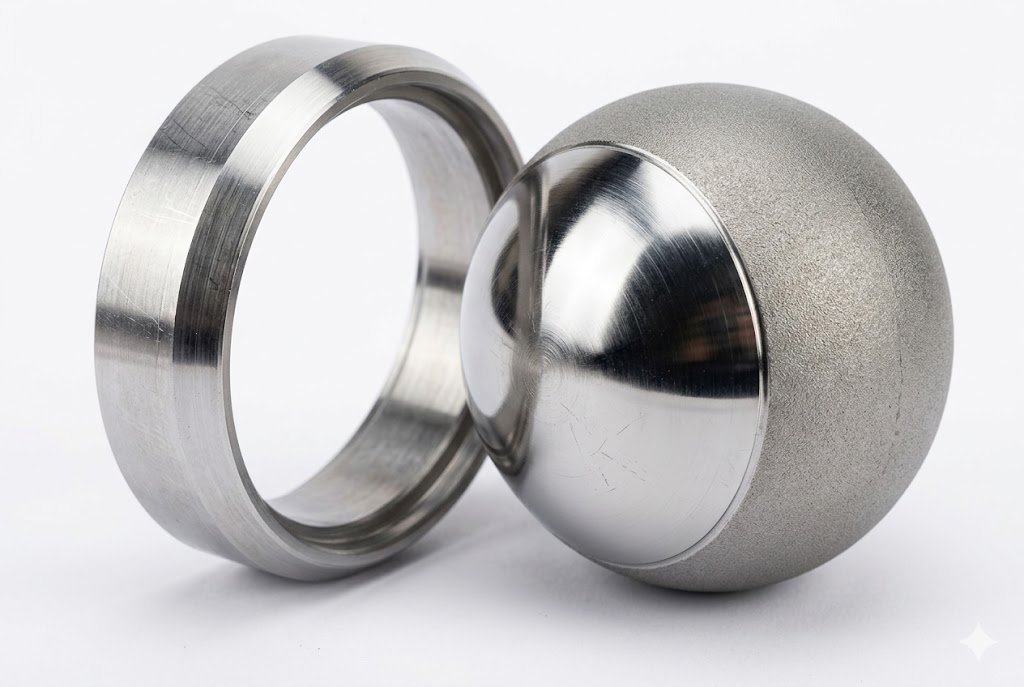
The coating should be selected based on both wear resistance and temperature resistance. For example, a coating suitable for abrasion at moderate temperature may not be the best choice for high temperature cycling. Similarly, a hard facing material that performs well in dry powder service may not be ideal for corrosive slurry.
Key coating questions include:
- What is the coating or hard facing material?
- What is the coating thickness?
- What is the hardness range?
- Is the coating suitable for the design temperature?
- Is the coating suitable for the medium chemistry?
- How is adhesion or bonding quality controlled?
3. Review Cavity Protection and Seat Spring Design
In abrasive service, particles may enter the valve cavity. If particles collect behind the seat, the seat may lose movement or fail to maintain proper contact with the ball. This can cause leakage, high torque, or seat damage.
For severe abrasive applications, engineers should review:
- Spring-loaded seat design
- Seat movement clearance
- Cavity relief requirement
- Drain or flushing design, if required
- Body cavity shape and particle accumulation risk
Floating or Trunnion Mounted Design?
Metal seated ball valves can be designed as floating ball valves or trunnion mounted ball valves. The correct structure depends on size, pressure, temperature, torque, and service severity.
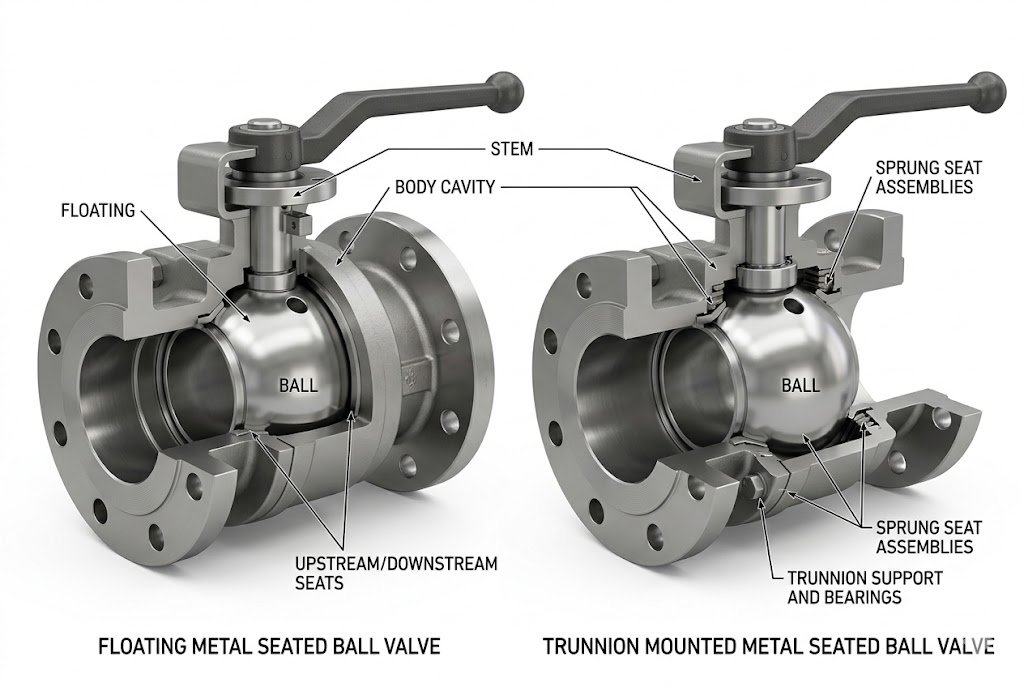
Floating Metal Seated Ball Valve
A floating metal seated ball valve is usually used for smaller sizes and moderate pressure classes. The ball is not fixed by trunnions; it moves slightly under pressure and presses against the downstream seat.
This design is compact and relatively simple, but operating torque can increase significantly under high pressure or high temperature. For severe abrasive service, careful coating and seat design are required.
Trunnion Mounted Metal Seated Ball Valve
A trunnion mounted metal seated ball valve supports the ball with upper and lower trunnions. The seat rings are usually spring-loaded and move toward the ball to maintain sealing contact.
This structure is commonly preferred for larger sizes, higher pressure classes, higher torque conditions, and severe service applications. It also allows better control of ball position and seat loading.
For high temperature and abrasive service, trunnion mounted construction is often the more stable choice when the valve size is large or the pressure differential is high.
Seat and Ball Material Selection
The seat and ball are the most important components in a metal seated ball valve. In many severe service applications, the body material is not the limiting factor; the actual service life depends on the sealing surface material, coating quality, and contact geometry.
Common Ball and Seat Options
- Stainless steel base material: Used for corrosion resistance and general high temperature service.
- Alloy steel base material: Used where higher strength or temperature resistance is required.
- Stellite hard facing: Common for high temperature and wear-resistant sealing surfaces.
- Tungsten carbide coating: Often used for severe abrasion and particle erosion resistance.
- Chromium carbide coating: Often considered where both high temperature and wear resistance are required.
- Nitrided surface: Used to improve surface hardness in selected applications.
The final selection should always be based on actual medium, temperature, pressure, particle condition, cycling frequency, and leakage requirement.
Leakage Expectation: Metal Seated Does Not Always Mean Bubble-Tight
One of the most common selection mistakes is expecting a metal seated ball valve to behave exactly like a soft seated ball valve in terms of shutoff tightness.
Soft seated ball valves can often provide bubble-tight sealing because the soft seat can deform against the ball surface. Metal seated ball valves rely on precision metal-to-metal contact. This design provides better resistance to temperature and wear, but the allowable seat leakage may be different depending on the applicable standard and project requirement.
When specifying a metal seated ball valve, the purchaser should clearly define:
- Applicable inspection and test standard
- Seat leakage acceptance criteria
- Test medium
- Test pressure
- Test direction
- Whether zero leakage, low leakage, or standard metal-seat leakage is required
If the project requires extremely tight shutoff, this requirement must be stated clearly at the inquiry stage. It may affect coating selection, lapping process, seat load, torque, actuator sizing, and cost.
Pressure Class and End Connection Selection
Metal seated ball valves are commonly supplied with flanged ends, butt weld ends, socket weld ends, or threaded ends depending on size and service condition.
Flanged Metal Seated Ball Valve
Flanged ends are common in refinery, petrochemical, power plant, and general industrial piping systems. They allow easier installation and removal during maintenance. For high temperature service, flange gasket selection and bolt material should be reviewed carefully.
Butt Weld Metal Seated Ball Valve
Butt weld ends are often used in high pressure, high temperature, or critical process piping where flange leakage risk must be reduced. This connection provides a permanent welded joint, but maintenance and replacement require cutting or field welding work.
Socket Weld and Threaded Metal Seated Ball Valve
Socket weld and threaded ends are generally used for smaller sizes. For severe high temperature or vibration service, threaded connections should be reviewed carefully because sealing reliability may be lower than welded or flanged designs.
Actuation and Torque Considerations
Metal seated ball valves usually require higher operating torque than soft seated ball valves. Torque can increase due to seat load, coating roughness, pressure differential, thermal expansion, particle accumulation, or long-term service deposits.
When selecting manual gear operation, pneumatic actuator, electric actuator, or hydraulic actuator, torque calculation should include realistic service factors.
Important torque factors include:
- Maximum pressure differential
- Maximum operating temperature
- Seat material and coating
- Frequency of operation
- Dry or lubricated service condition
- Particle buildup risk
- Required safety factor for actuator sizing
For automated valves, the actuator should not be sized only according to clean-water test torque. Severe service torque can be higher after the valve has been exposed to heat, deposits, or abrasive particles.
Fire-Safe and Anti-Static Design
Many metal seated ball valves are used in refinery, chemical, oil and gas, and high temperature applications where fire-safe design is required. A metal seated valve is naturally more resistant to heat than a soft seated valve, but fire-safe performance still depends on body sealing, stem sealing, gasket selection, packing material, and test qualification.
Common design requirements may include:
- Fire-safe tested design
- Anti-static device
- Blow-out proof stem
- Graphite packing
- Metal-to-metal secondary sealing
- Pressure relief design for valve cavity
For critical service, the project specification should clearly define whether API, ISO, or other fire-safe testing standards are required.
Typical Applications of Metal Seated Ball Valves
Metal seated ball valves are not general-purpose valves. They are selected for applications where ordinary soft seated ball valves may fail due to temperature, wear, erosion, or fire risk.
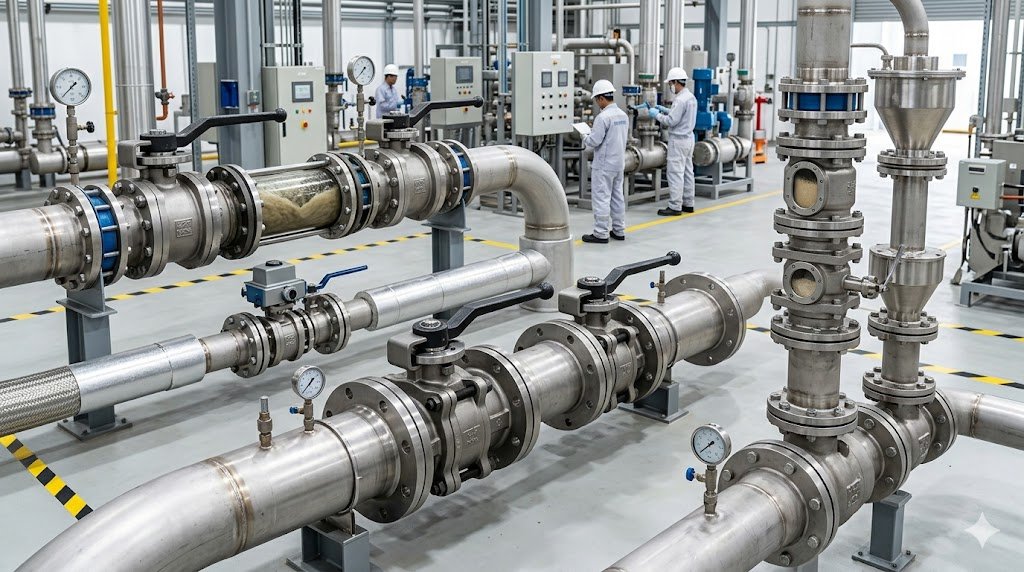
Power Plant
Used for high temperature steam, boiler drain, ash handling, and thermal systems where seat material must withstand elevated temperature and solid particles.
Refinery and Petrochemical
Used in severe isolation service, catalyst handling, delayed coking, sulfur service, and high temperature process lines.
Mining and Slurry Systems
Used where the medium contains abrasive solids, slurry particles, or mineral content that can damage soft seats.
Cement and Powder Handling
Used in dry powder, ash, and particulate conveying systems where erosion resistance is more important than soft-seat bubble-tight sealing.
Chemical Processing
Used in high temperature or crystallizing media where soft sealing materials may swell, degrade, or suffer mechanical damage.
Metal Seated Ball Valve Selection Checklist
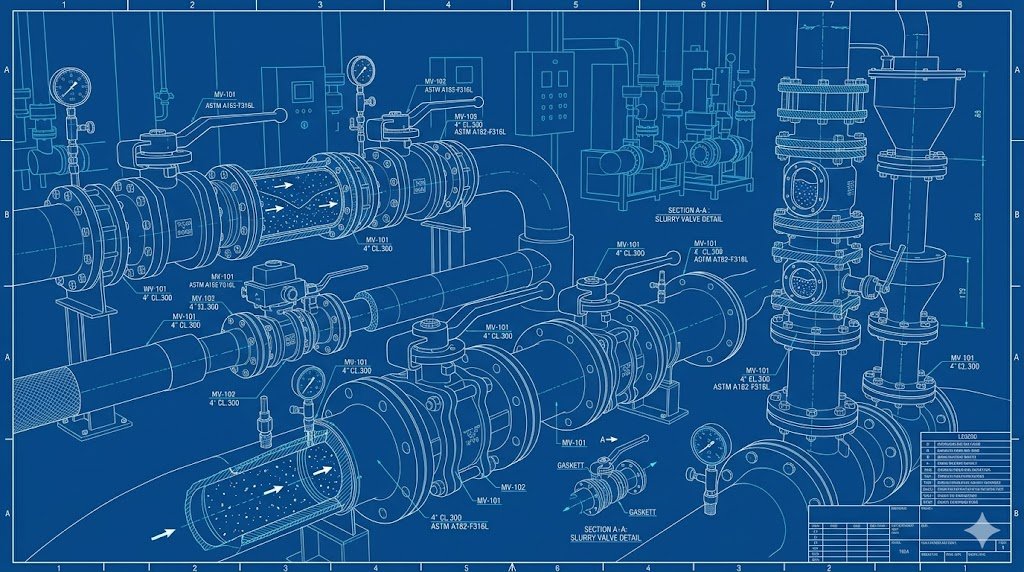
Before sending an inquiry or placing an order, prepare the following data. This will help the manufacturer select the correct valve structure, material, coating, and test requirement.
- Valve size and pressure class
- End connection type
- Design standard
- Body material requirement
- Ball and seat material requirement
- Coating or hard facing requirement
- Medium name and composition
- Particle type, size, hardness, and concentration
- Operating temperature and maximum design temperature
- Operating pressure and maximum pressure differential
- Flow direction and installation position
- Operation method: lever, gear, pneumatic, electric, or hydraulic
- Required leakage class or seat test acceptance criteria
- Fire-safe, anti-static, or fugitive emission requirement
- Special inspection, NDE, material certificate, or test report requirement
Common Selection Mistakes to Avoid
1. Selecting Only by Temperature
High temperature resistance does not automatically mean abrasive resistance. A valve suitable for clean high temperature gas may not be suitable for catalyst powder or slurry service.
2. Ignoring Particle Velocity
Particle velocity can be more damaging than particle concentration. High-speed particles can cut the seat edge and coating surface even when the solid content is relatively low.
3. Requesting Zero Leakage Without Defining the Test Method
If zero leakage or very low leakage is required, the test standard, test medium, pressure, duration, and acceptance criteria must be clearly stated. Otherwise, the manufacturer and purchaser may have different expectations.
4. Undersizing the Actuator
Metal seated ball valves require higher torque than soft seated valves. In severe service, torque may increase after exposure to heat, deposits, or particles. Actuator sizing must include a suitable safety factor.
5. Treating Metal Seated Ball Valves as Control Valves
Standard metal seated ball valves are mainly designed for isolation. If continuous throttling or precise flow control is required, a special control ball valve, V-port ball valve, or other control valve solution should be evaluated.
How Raymon Valve Supports Metal Seated Ball Valve Selection
Raymon Valve supplies metal seated ball valves for high temperature, abrasive, and severe service applications. Our engineering selection process focuses on actual working conditions instead of only nominal size and pressure class.
For each project, we review service temperature, pressure differential, medium characteristics, particle condition, seat design, coating requirement, actuation method, and test specification. This helps customers avoid common problems such as seat wear, high torque, leakage misunderstanding, and incorrect material selection.
Available options may include:
- Floating or trunnion mounted design
- Flanged, butt weld, socket weld, or threaded ends
- Carbon steel, stainless steel, alloy steel, or special alloy materials
- Hard faced or coated ball and seat surfaces
- Gear, pneumatic, electric, or hydraulic actuation
- Fire-safe, anti-static, and blow-out proof stem design
- Project-specific inspection and testing documentation
Conclusion
A metal seated ball valve should be selected when the application requires better resistance to high temperature, abrasion, erosion, fire exposure, or severe operating conditions. However, correct selection depends on more than choosing “metal seat” as a general option.
Engineers should review temperature, pressure, media composition, particle behavior, coating selection, seat design, leakage requirement, torque, actuation, and testing standards together. A well-selected metal seated ball valve can provide reliable isolation and longer service life in applications where soft seated valves may fail prematurely.
If you are selecting valves for high temperature, abrasive, or severe service conditions, Raymon Valve can help review your operating data and recommend a suitable metal seated ball valve configuration for your project.
Recommended internal link: View Metal Seated Ball Valves
FAQ: Metal Seated Ball Valve Selection
What is the main advantage of a metal seated ball valve?
The main advantage is resistance to high temperature, abrasion, erosion, and severe service conditions. Metal seated ball valves are used where soft seat materials may deform, wear, burn, or fail.
Can a metal seated ball valve achieve bubble-tight shutoff?
Some specially designed and precision-lapped metal seated ball valves can achieve very low leakage, but metal seated valves should not automatically be assumed to provide the same bubble-tight shutoff as soft seated ball valves. Leakage requirements must be clearly defined by standard and test condition.
What coating is best for abrasive service?
The best coating depends on particle hardness, temperature, flow velocity, corrosion, and cycling frequency. Tungsten carbide, chromium carbide, Stellite hard facing, and other hard surface treatments may be used depending on the application.
Are metal seated ball valves suitable for throttling?
Standard metal seated ball valves are mainly used for on-off isolation. For continuous throttling or control service, a special control ball valve or V-port design should be evaluated.
Should I choose floating or trunnion mounted metal seated ball valve?
Floating designs are often used for smaller sizes and moderate pressure. Trunnion mounted designs are usually preferred for larger sizes, higher pressure differential, higher torque, and severe service conditions.
What information should I provide when requesting a quotation?
You should provide size, pressure class, end connection, body material, medium, temperature, pressure, particle details, leakage requirement, operation method, applicable standard, and any special testing or documentation requirement.
 English
  German
  Arabic
  French
  Spanish
  Italian
  Portuguese
  Russian