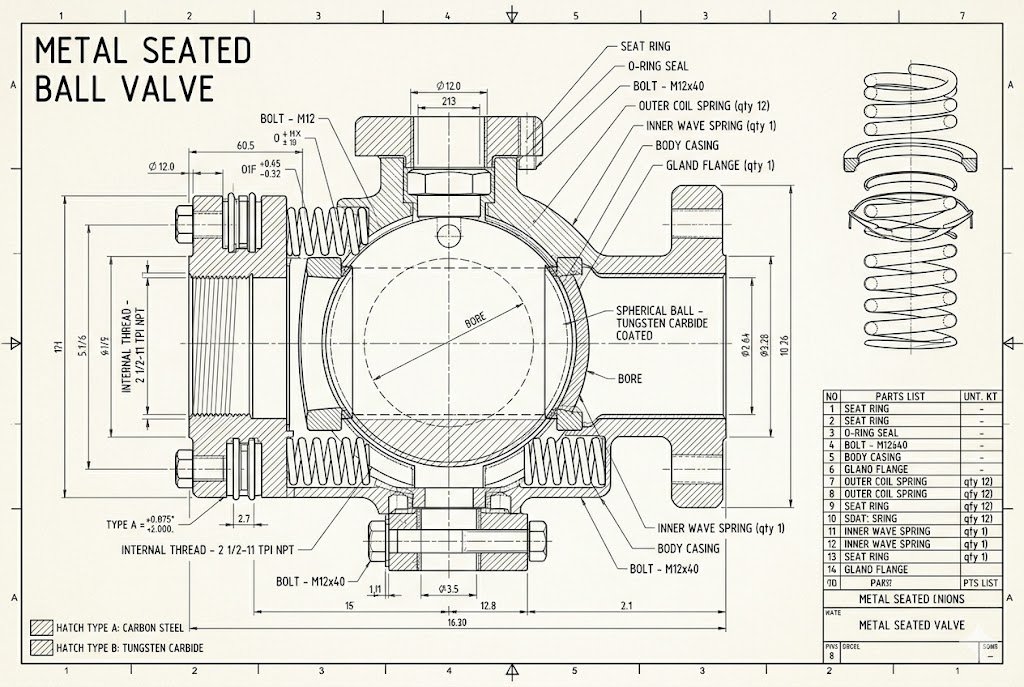

Metal Seated Ball Valve

Quick Advantages

Why Choose Metal Seated Ball Valves

Designed for severe service applications requiring high temperature resistance, abrasion resistance, and longer operating life in demanding media conditions.

High Temperature Resistance

Metal-to-metal sealing is more suitable for elevated temperature service where soft seats may degrade, deform, or lose sealing stability.

Abrasion Resistance

A hard-faced sealing surface helps improve resistance to wear caused by solids, particles, and abrasive media.

Severe Service Capability

A practical solution for applications involving demanding media, unstable conditions, or long operating cycles.

Longer Service Life

Designed to improve durability and extend valve life in working conditions where conventional seated valves may wear rapidly.

steel hardness testing
Overview

What Is a Metal Seated Ball Valve?

A metal seated ball valve is a quarter-turn shut-off valve designed with metal-to-metal sealing surfaces between the ball and seat. It is commonly used in severe service applications where high temperature, abrasive particles, erosion, or demanding media make soft seated valves less suitable.


Compared with soft seated ball valves, metal seated designs offer better wear resistance, higher temperature tolerance, and improved durability in harsh operating conditions.


Metal seated ball valves are widely used in power plants, mining systems, ash handling, petrochemical service, slurry lines, and other demanding industrial applications where long-term performance is critical.

Compact Structure

Designed for demanding service where stronger sealing surfaces and wear resistance are required.

Harsh Condition Ready

Suitable for severe service involving temperature, particles, erosion, or unstable operating environments.

Extended Durability

A practical choice where longer service life is important under difficult working conditions.

Configurations

Available Metal Seated Ball Valve Configurations

We supply metal seated ball valves in different body constructions, bore designs, and operation options to match severe service requirements and project conditions.

placeholder 64

Floating Metal Seated Ball Valve

Suitable for selected severe service applications in smaller and medium sizes requiring compact structure and hard sealing performance.

placeholder 65

Trunnion Mounted Metal Seated Ball Valve

Preferred for higher pressure, larger sizes, and demanding operating conditions requiring better ball support and lower torque.

placeholder 66

Full Port Metal Seated Ball Valve

Recommended where full bore flow, reduced pressure loss, or passage of solids is important.

placeholder 67

Actuated Metal Seated Ball Valve

Available with pneumatic or electric operation for automated shut-off in severe service process systems.
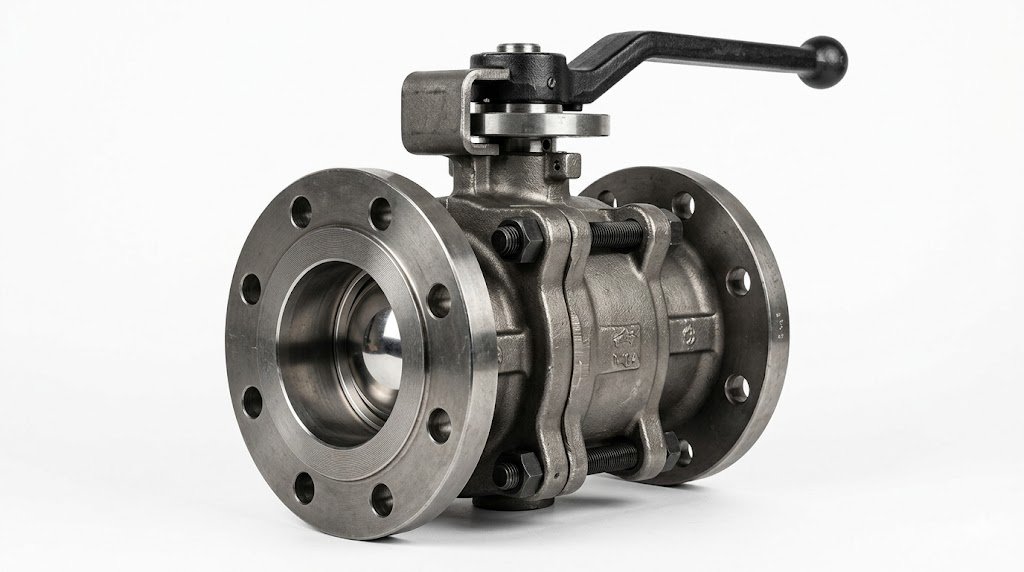

steel hardness testing
Key Features

Engineered for High Temperature and Abrasive Service

Metal seated ball valves are designed to handle severe service conditions where temperature, solids, wear, and demanding media require more durable sealing performance and stronger internal surfaces.

High Temperature Performance

Suitable for elevated temperature applications where soft sealing materials may not remain stable or reliable.

Hard-Faced Sealing Surface

Surface treatment and hard-facing help improve resistance to wear, erosion, and long-term sealing damage.

Abrasion Resistance

Designed for media containing particles, ash, powder, or abrasive solids that can rapidly wear conventional valve seats.

Severe Media Capability

A practical solution for demanding fluids, unstable process conditions, and difficult service environments.

Long Service Life

Built to improve durability and reduce shutdown frequency in harsh working conditions.

Automation Compatible

Available with manual, pneumatic, or electric operation for severe service process systems and control requirements.

Technical Specifications

Technical Specifications

Standard ranges can be adjusted according to temperature level, media characteristics, pressure class, wear condition, and project specification.

Selection Overview

Metal seated ball valves are typically selected for severe service involving high temperature, abrasive particles, erosion, ash handling, slurry, and other demanding media where longer service life is required.

Power plant systems, mining, ash handling, slurry service, petrochemical lines, and severe industrial process applications.

Floating, trunnion mounted, full port, reduced port, manual, pneumatic, and electric operation.

Body material, hard-facing specification, pressure class, bore design, and actuator package can be matched to project requirements.

Item

Specification

Valve Type

Metal Seated Ball Valve

Size Range

DN15–DN1200

Pressure Rating

PN16–PN420 / Class 150–2500

Body Material

WCB, WC6, CF8, CF8M, Duplex Stainless Steel

Ball Material

Stainless Steel / Alloy Steel with Hard Facing

Seat Material

Metal Seat / Hard-Faced Seat

Stem Material

Stainless Steel / High Strength Alloy Steel

Operation

Lever, Gear, Pneumatic, Electric

End Connection

Flanged, Butt Weld, Threaded, Custom Ends

Applicable Media

High Temperature Fluids, Particulate Media, Slurry, Ash, Powder, Severe Industrial Media

Temperature Range

According to material grade, seat structure, and service condition

Standards

API, ANSI, ASME, DIN, ISO

Custom sizes, hard-facing specifications, pressure classes, materials, and actuator packages are available upon request. Final specifications should be confirmed according to actual severe service conditions and project requirements.

Materials & Hard Facing Options

Material and Surface Solutions for Severe Service

Material grade, seat structure, and hard-facing treatment directly affect wear resistance, temperature capability, sealing stability, and service life in severe operating conditions.

Seat and Sealing System

Metal seated sealing performance depends not only on seat design, but also on surface hardness, matching accuracy, thermal stability, and media characteristics.

Hard-Faced Metal Seat

Designed for high temperature and abrasive service where stronger wear resistance is required.

Ball Surface Treatment

Special hard-facing and coating processes help improve erosion resistance and sealing durability.

Severe Service Matching

Seat structure and material combination should be selected according to solids content, temperature, pressure, and cycling frequency.

Customized Engineering

Hardness range, surface treatment, and material pairing can be customized according to actual service condition.

Body Materials

Body materials are selected according to temperature level, corrosion allowance, pressure class, and mechanical strength requirement. Carbon steel, alloy steel, stainless steel, and duplex grades are commonly used.

Ball Materials

Ball materials and surface hardness directly affect wear resistance, erosion performance, and sealing life. Hard-faced stainless steel and alloy steel options are commonly applied in severe service valves.

Applications

Typical Severe Service Applications

Metal seated ball valves are widely used in applications where temperature, solids, wear, or demanding media make conventional soft seated valves less suitable.

High Temperature and Abrasive Process Service

Metal seated ball valves are commonly used in severe service systems because they offer stronger wear resistance, better temperature tolerance, and longer operating life in difficult process environments.

Power Plant Systems

Used in ash handling, steam-related auxiliary systems, and other demanding services involving temperature and particle wear.

Mining and Slurry Service

Suitable for abrasive process lines where solids, slurry, or erosive media can rapidly damage conventional soft seats.

Petrochemical Applications

Applied in demanding process systems requiring stronger internal surfaces and more durable shut-off performance.

Powder, Ash, and Particle Media

A practical solution for media containing hard particles, powder, or other wear-causing solids.

Application suitability depends on solids content, media properties, temperature, pressure, cycle frequency, and material matching. Project-based recommendations can be provided upon request.

Actuation Options

Operation and Actuation Options

Metal seated ball valves can be supplied with manual or automated operation to match severe service control requirements, cycle frequency, torque demand, and project specifications.


The right actuation method depends on valve size, pressure level, operating torque, installation condition, and whether local or remote operation is required.

Available for severe shut-off duty, process isolation, and integrated plant control systems.

Actuation can be matched according to valve size, sealing load, pressure level, and service condition.

Complete valve and actuator assemblies can be supplied for easier installation, commissioning, and project coordination.

Gear Operated

Recommended for larger sizes or severe service conditions requiring smoother manual control and reduced operating effort.

Pneumatic Actuated

Suitable for automated severe service shut-off where fast response and frequent operation are required.

Electric Actuated

Ideal for remote operation, automated process systems, and applications requiring stable motorized control.

Customized Actuation Package

Accessories and control packages can be matched according to process requirements and operating conditions.

Actuation options can be configured according to valve size, torque requirement, control method, installation condition, and project specification.

Why Choose Raymon Valve

Severe Service Configuration

Body material, hard-facing specification, seat structure, and actuation options can be matched to demanding project requirements.

Technical Selection Support

Suitable for projects requiring more technical evaluation of temperature, wear condition, solids content, and media characteristics.

Documentation Support

Basic technical files, inspection documents, and product-related records can be provided upon request.

Fast Response

Quick follow-up for RFQ, technical discussion, severe service selection questions, and project inquiry requirements.

Featured Products

Featured Metal Seated Ball Valve Products

Explore selected metal seated ball valve models for different severe service conditions, body constructions, and process requirements.

placeholder 68

Floating Metal Seated Ball Valve

A compact severe service solution for selected high temperature and abrasive applications.

placeholder 69

Trunnion Mounted Metal Seated Ball Valve

Preferred for larger sizes, higher pressure, and demanding operating conditions requiring better structural support.

placeholder 70

Actuated Metal Seated Ball Valve

Available with pneumatic or electric operation for automated severe service shut-off applications.

placeholder 71

Full Port Metal Seated Ball Valve

Recommended for process systems requiring reduced flow restriction and better passage of difficult media.

FAQ

Frequently Asked Questions

Common questions about metal seated ball valve design, severe service capability, hard-facing options, and application.

What is the difference between a metal seated ball valve and a soft seated ball valve?

A metal seated ball valve uses metal-to-metal sealing surfaces, while a soft seated valve uses polymer sealing materials such as PTFE. Metal seated designs are generally preferred for high temperature, abrasive media, and severe service conditions.

Because metal sealing surfaces are more stable at elevated temperatures where soft sealing materials may deform, degrade, or lose sealing reliability.

Yes. They are commonly used in applications involving solids, ash, powder, slurry, or abrasive particles where stronger wear resistance is required.

Hard facing is a surface treatment or overlay process applied to the ball and seat sealing surfaces to improve hardness, wear resistance, erosion resistance, and sealing life.

Yes. They can be supplied with gear, pneumatic, or electric operation depending on torque requirement, operating frequency, and project specification.

Selection should be based on temperature, solids content, media properties, pressure class, valve size, cycle frequency, end connection, and the required surface treatment or hard-facing specification.

Scroll to Top

Contact us

Please fill out this form with a brief description of your issue and we will get back to you as soon as possible.