
Actuated Valve Packages for Industrial Isolation and Flow Control
Raymon Valve coordinates the valve, actuator, mounting hardware and control accessories as one project package. Selection begins with the process conditions and required operating function—not with the actuator alone.
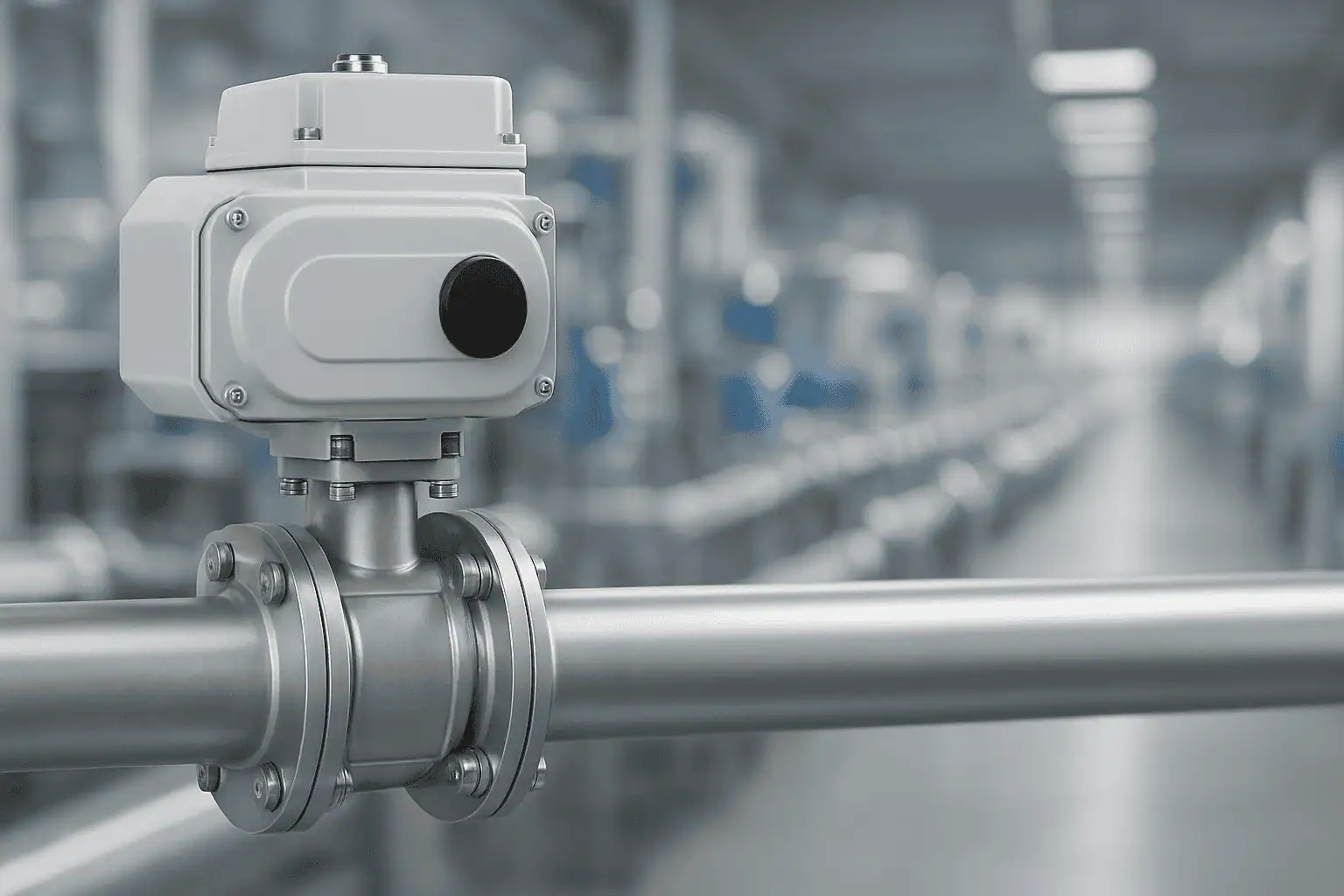 Valve + actuator + accessories + documentation
One operating assembly, selected around the service conditions
An actuated package may include the valve, electric or pneumatic actuator, mounting bracket, coupling, solenoid valve, limit switch, positioner, air filter regulator, manual override and project-specific documentation.
Actuation options covered by this category
Individual product specification pages will be added only after their technical data and images are verified.
Electric Ball Valve
Quarter-turn isolation or modulating packages where electrical power and remote control are preferred.
Pneumatic Ball Valve
Fast-cycling packages with spring-return or double-acting actuator arrangements.
Electric Butterfly Valve
Compact automation for larger line sizes, selected against seating and dynamic torque.
Pneumatic Butterfly Valve
On/off and modulating packages for utilities and process services.
Electric Gate Valve
Multi-turn actuation selected by stem thrust, travel, speed and limit/torque control.
Valve Actuator Package
Integrated valve, mounting and control-accessory scope for project procurement.
Scotch Yoke Actuator
Quarter-turn pneumatic or hydraulic actuation where the torque profile suits the valve duty.
Pneumatic Control Valve
Linear control-valve assemblies coordinated with actuator, positioner and air-set requirements.
How an actuated valve package should be selected
The required valve function, differential pressure and failure response determine the package. Actuator sizing should be traceable to the valve torque or thrust basis.
| Decision factor | Electric actuation | Pneumatic actuation |
|---|---|---|
| Utility | Electrical power; voltage and control signal must be defined | Instrument air; pressure, quality and capacity must be defined |
| Fail-safe action | Requires suitable stored-energy or backup arrangement when specified | Spring-return configurations commonly support fail-open or fail-close duty |
| Operating speed | Typically selected for controlled travel and multi-turn applications | Often selected where faster cycling is required |
| Environment | Specify enclosure, ingress protection, temperature and hazardous-area requirements | Specify corrosion protection, air preparation and hazardous-area accessories |
| Control duty | On/off or modulating, subject to duty cycle and motor/control selection | On/off or modulating with appropriate positioner and air capacity |
This comparison is an engineering starting point, not an actuator sizing calculation. Final selection requires the valve torque/thrust data and project conditions.
Information to include with your request
Supplying complete operating data reduces sizing assumptions and revision cycles.
Actuated package FAQ
What information is needed to size a valve actuator?
Provide the valve type and size, operating and maximum differential pressure, valve torque or thrust data, required safety factor, supply conditions, operating time, fail position and cycling duty.
Should the actuator be selected before the valve?
No. The valve design, seat, pressure differential, service conditions and required function establish the torque or thrust basis used for actuator selection.
What is included in an actuated valve package?
The scope may include the valve, actuator, bracket, coupling, solenoid, limit switches, positioner, air filter regulator, manual override, tubing and agreed test or documentation package.
Can one actuator size be used for every valve of the same nominal size?
No. Required torque or thrust can vary with valve design, seat material, pressure differential, temperature and service conditions. Use verified manufacturer data for the actual configuration.
Send the valve and actuator requirements together
Submit your datasheet or operating conditions for a package-level engineering and quotation review.
Specify one functional package instead of buying disconnected components
The valve, actuator, mounting, coupling, solenoids, switches, positioner and controls must share one approved load basis and interface definition.
Automation engineers, EPC package owners and procurement teams.
Actuated-valve package selection and procurement. Search-volume data is not asserted without connected GSC or keyword-tool evidence.
| Decision | Why it changes the offer | Recommended review route | Evidence to request |
|---|---|---|---|
| Required movement | Isolation and modulation impose different duty cycles and control accuracy. | Define stroke time, frequency and positioning behavior. | Functional description and duty cycle |
| Load basis | Break, run, end and seating loads vary with process and aging. | Use verified valve torque/thrust with project margins. | Load curve and actuator calculation |
| Fail action and utilities | Air, power or hydraulic loss determines the safe state. | State fail position, stored energy and minimum utility conditions. | Cause-and-effect and utility datasheet |
| Interfaces | Mounting, stem, controls and hazardous-area requirements create package risk. | Freeze mechanical and electrical interfaces before assembly. | GA, wiring and accessory schedule |
Three realistic contexts to test the specification
These are illustrative engineering decision scenarios—not named customer projects, installed-performance claims or promises of suitability.
Decision pressure: Closure time must balance emergency isolation and surge.
Engineering route: Coordinate ball valve torque, actuator sizing and shutdown logic.
Decision pressure: Limited power and harsh environment affect actuator and feedback choices.
Engineering route: Review duty, enclosure, communication and manual override.
Decision pressure: Positioner, air supply and valve friction control response.
Engineering route: Size the actuator and tune accessories as one assembly.
Evidence that should exist before technical approval
Provide fail action, utilities, stroke time and control interfaces
Mark confirmed inputs, preliminary assumptions and open questions separately so the first review can focus on risk.
 English
  German
  Arabic
  French
  Spanish
  Italian
  Portuguese
  Russian