
Threaded Ball Valve Selection Guide: When to Use NPT, BSP, and Compact Ball Valves
A threaded ball valve is usually selected when the piping size is small, the installation space is limited, and a compact shut-off valve is required for equipment connections, utility lines, air systems, water service, oil lines, or skid-mounted packages. Compared with a flanged ball valve, a threaded ball valve reduces installation weight, saves space, and can be assembled without flange bolts, gaskets, or welding work.
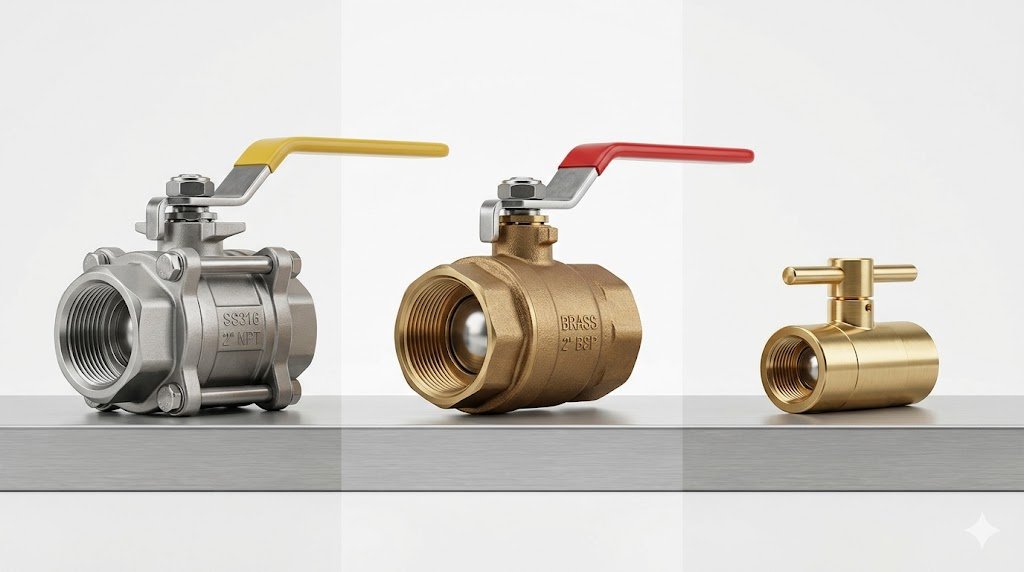
That does not mean every threaded ball valve is interchangeable. In real projects, most threaded valve problems are caused by details that look small at the purchasing stage: the thread standard is wrong, NPT and BSP are mixed, BSPP is installed without the correct sealing face, the valve is over-tightened during installation, or a compact valve is used in a piping system with vibration or external load.
This threaded ball valve selection guide explains how to choose between NPT, BSPT, BSPP, compact ball valves, one-piece, two-piece, and three-piece threaded ball valves. It is written for engineers, buyers, maintenance teams, and OEM equipment builders who need a practical selection method rather than a general product introduction.
If you are comparing small-bore valves for industrial utility lines, equipment connections, compressed air, water, oil, or general shut-off service, you can also review Raymon Valve’s threaded ball valves for available body materials, thread options, and compact configurations.
Quick Selection Snapshot
| Service Condition | Recommended Starting Point | What Controls the Selection | Common Failure Risk |
|---|---|---|---|
| Small-bore piping based on American standards | NPT threaded ball valve | Thread compatibility, pressure rating, sealant method, body material | NPT and BSP threads are mixed because the nominal size appears similar |
| International piping systems using British pipe threads | BSP threaded ball valve | Confirm whether the connection is BSPT or BSPP | BSPP parallel thread is treated like a tapered pressure-sealing thread |
| Compact equipment, OEM panels, air or water lines | Compact threaded ball valve | Space, handle clearance, moderate pressure, simple shut-off duty | Compact valve body is exposed to pipe stress or vibration |
| General industrial utility service | Two-piece threaded ball valve | Body strength, seat reliability, replaceability, operating frequency | Valve is selected only by price and size, not by service condition |
| Lines requiring cleaning, inspection, or seat replacement | Three-piece threaded ball valve | Maintenance access, internal cleaning, seat replacement | A non-serviceable one-piece valve is used in a maintenance-sensitive line |
| Corrosive or clean industrial fluids | Stainless steel threaded ball valve | Body, ball, stem, seat, and seal compatibility | Only the body material is reviewed while seats and seals are ignored |
What Is a Threaded Ball Valve?
Definition and Key Features
A threaded ball valve is a quarter-turn shut-off valve with threaded end connections. The valve uses a drilled ball inside the body to control flow. When the bore of the ball is aligned with the pipe, the valve is open. When the handle rotates the ball 90 degrees, the solid side of the ball blocks the flow path.
Threaded ball valves are commonly used in small pipe sizes where threaded connections are permitted by the project specification. Typical industrial sizes include 1/4 inch, 3/8 inch, 1/2 inch, 3/4 inch, 1 inch, 1-1/2 inch, and 2 inch. Some standards and manufacturers cover larger threaded ball valves, but as pipe size and pipe load increase, flanged or welded connections usually become more practical for installation strength and maintenance access.
The engineering value of a threaded ball valve is not only compact size. It also provides fast installation, simple operation, low pressure drop in full-port designs, and reliable shut-off for many clean-fluid applications.
- Compact connection: Suitable for small-bore piping, panels, skids, and equipment nozzles.
- Quarter-turn operation: Easy open-close operation with a lever handle or compact handle.
- Good shut-off performance: Soft-seated designs provide tight shut-off in many clean air, water, oil, and utility services.
- Multiple thread standards: NPT, BSPT, BSPP, and project-specific thread options may be required depending on market and equipment design.
- Different body constructions: One-piece, two-piece, and three-piece designs support different cost, strength, and maintenance requirements.
Engineering note: Before comparing valve prices, confirm the thread standard. A 1/2 inch NPT valve and a 1/2 inch BSP valve are not the same connection. Nominal size alone is not enough for threaded valve selection.
Working Principle
The operating principle is simple, but the sealing reliability depends on the entire valve and connection system. The handle rotates the stem, the stem rotates the ball, the ball seals against the seats, and the stem packing prevents leakage through the operating stem area. At the pipe ends, the thread form and sealing method determine whether the valve-to-pipe joint can remain pressure-tight.
- Open position: The ball bore aligns with the pipeline and allows flow through the valve.
- Closed position: The ball rotates 90 degrees and blocks the flow path.
- Seat sealing: PTFE, reinforced PTFE, or other soft seats are common in general-service threaded ball valves.
- Stem sealing: Stem packing or stem seals prevent leakage around the operating stem.
- Thread sealing: The pipe thread, sealant, gasket, O-ring, or sealing face must match the thread type.
In field service, many threaded ball valve leaks do not come from the ball-seat area. They come from thread mismatch, insufficient thread sealant, excessive tightening, damaged threads, poor pipe alignment, or using the valve body as a pipe support point.
Where Are Threaded Ball Valves Commonly Used?
Threaded ball valves are suitable for small-bore systems where the piping load is controlled and where threaded connections are allowed. They are especially common in utility and equipment-related services.
- Compressed air lines
- Water supply and drainage systems
- Industrial utility piping
- Oil and lubrication lines
- Equipment inlet and outlet connections
- Skid-mounted systems
- Instrument air and auxiliary piping
- HVAC and building service systems
- Water treatment equipment
- Small-bore clean fluid service
Threaded ball valves are usually not the first choice for large pipe sizes, strong vibration, critical hazardous media, heavy external pipe load, or lines that require frequent disassembly. In those cases, flanged ball valves, welded ball valves, trunnion mounted ball valves, or specially engineered designs may provide better mechanical reliability.
Why Thread Type Matters in Threaded Ball Valve Selection
The thread standard is the first item to confirm before selecting a threaded ball valve. The most common confusion is between NPT and BSP. They may look similar in small sizes, but the thread form, angle, pitch, taper, and sealing method are different. A connection that “almost fits” is not acceptable in pressure piping.
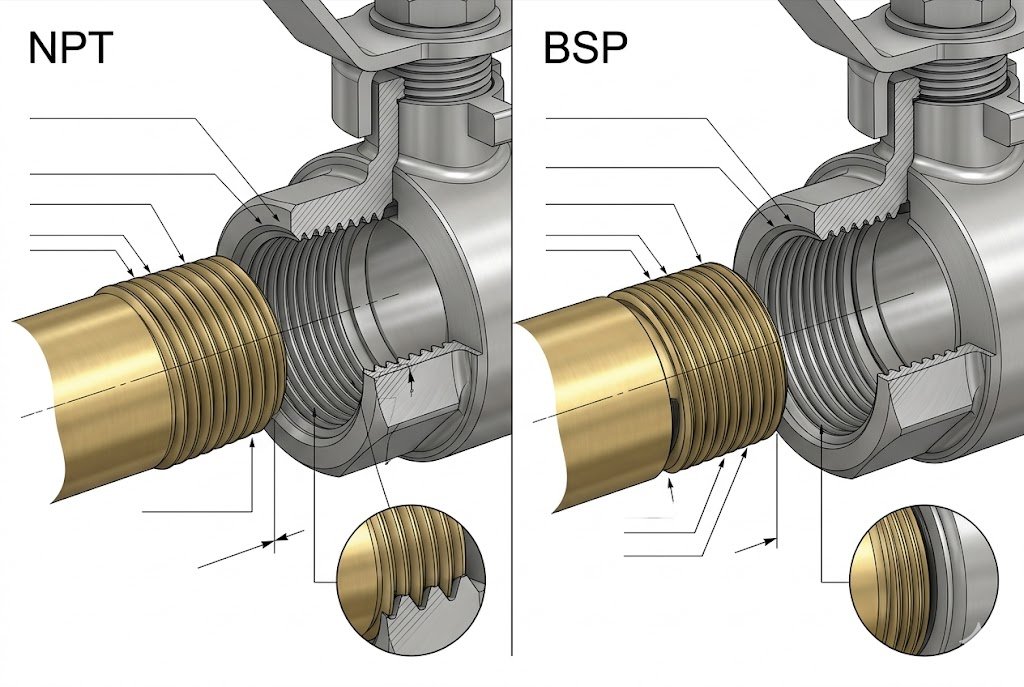
For NPT pipe threads, ASME B1.20.1 is the key reference for general-purpose inch pipe threads such as NPT. For BSP-type pipe threads, ISO 7-1 covers pipe threads where pressure-tight joints are made on the threads, while ISO 228-1 covers pipe threads where pressure-tight joints are not made on the threads.
In practical terms, the valve thread must match the pipe thread or equipment port. If the pipeline uses NPT, select an NPT threaded ball valve. If the connection is BSP, confirm whether it is BSPT or BSPP before ordering.
Engineering Example 1: NPT Valve Installed on a BSP Port
Problem: A maintenance team installed a 1/2 inch NPT threaded ball valve into a BSP female port on imported equipment. The first few turns felt acceptable, but the joint leaked during air pressure testing.
Cause: The nominal size was the same, but the thread forms were not compatible. The connection had poor thread engagement and uneven sealing pressure.
Prevention: Confirm the thread standard from the equipment drawing or use a thread gauge before purchase. If transition is required, use a properly specified NPT-to-BSP adapter rather than forcing the valve into the port.
What Is an NPT Threaded Ball Valve?
An NPT threaded ball valve uses National Pipe Thread connections. NPT is widely used in the United States, Canada, and projects based on American piping standards. NPT threads are tapered. As the male and female threads are tightened, the taper creates increasing mechanical engagement.
In most installations, NPT threaded joints require PTFE tape, pipe sealant, or another suitable jointing compound. The sealant helps fill the helical leakage path between the threads and supports a pressure-tight joint. The correct amount of sealant matters: too little may leak, while excessive tape or sealant can contaminate the system or overstress the valve body.
When Should You Use an NPT Threaded Ball Valve?
Use an NPT threaded ball valve when the pipework, fittings, equipment ports, or project specification requires NPT threads. This is common for North American industrial systems and many OEM equipment packages exported to NPT-based markets.
- US and Canadian industrial piping systems
- Compressed air systems
- Small-bore water lines
- Oil and lubrication service
- Fuel and utility lines where threaded valves are permitted
- OEM equipment exported to NPT-based markets
- Instrumentation and auxiliary process connections
Installation note: If the valve stops after only one or two turns, do not force it. Early resistance can indicate thread damage, dirt, wrong thread type, or poor alignment. Forcing the connection may crack a compact valve body or damage the equipment port.
What Is a BSP Threaded Ball Valve?
A BSP threaded ball valve uses British Standard Pipe threads. BSP connections are common in Europe, the UK, Asia, the Middle East, Australia, and many international equipment packages. The important point is that BSP does not always mean the same sealing method. BSPT and BSPP must be separated during selection.
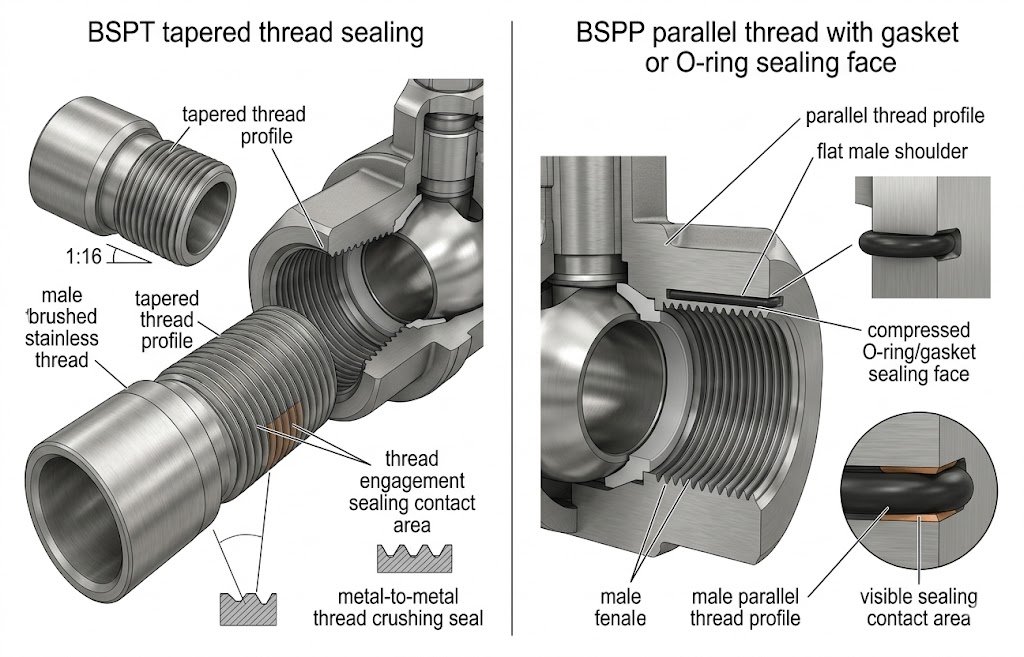
BSPT Threaded Ball Valve
BSPT is a tapered pipe thread. In many drawings, it may be associated with designations such as R or Rc. With BSPT connections, the thread engagement contributes to sealing, and a suitable sealing medium is normally used. BSPT threaded ball valves are selected when the pressure-tight joint is intended to be made through the mating threads.
BSPP Threaded Ball Valve
BSPP is a parallel pipe thread, often associated with the G thread designation. In BSPP connections, the thread normally provides mechanical assembly rather than the primary pressure seal. Sealing is usually achieved by a gasket, bonded seal, O-ring, washer, or sealing face outside the thread.
This difference is critical. A BSPP threaded ball valve should not be treated like a tapered thread valve unless the connection design includes the correct sealing surface and sealing element.
Engineering Example 2: BSPP Connection Leaking After Sealant Application
Problem: A BSPP threaded valve was installed with PTFE tape only. The connection passed hand inspection but leaked during water testing.
Cause: BSPP parallel threads were used as if they were tapered sealing threads. The joint did not have the required sealing washer or face seal.
Prevention: Confirm whether the BSP connection is BSPT or BSPP. For BSPP, check the sealing face, washer, O-ring, or bonded seal arrangement before installation.
When Should You Use a BSP Threaded Ball Valve?
Use a BSP threaded ball valve when the pipe fittings, equipment connections, or project standard specifies BSP. Before ordering, confirm whether the connection is BSPT or BSPP.
- European and Asian piping systems
- International water treatment equipment
- HVAC and building service systems
- Small industrial skid systems
- Equipment packages using BSP ports
- General utility piping outside NPT-based markets
NPT vs BSP Threaded Ball Valve: Practical Comparison
| Item | NPT Threaded Ball Valve | BSP Threaded Ball Valve |
|---|---|---|
| Common Market | United States, Canada, American-standard projects | Europe, UK, Asia, Middle East, Australia, international projects |
| Thread Type | Tapered pipe thread | BSPT tapered or BSPP parallel |
| Typical Sealing Method | Thread engagement with PTFE tape or pipe sealant | BSPT seals at thread engagement; BSPP usually requires a gasket, O-ring, washer, or sealing face |
| Common Use | Small-bore utility lines, air, water, oil, equipment connections | Water treatment, HVAC, international equipment, general industrial utility lines |
| Main Selection Warning | Do not connect directly to BSP threads | Confirm BSPT or BSPP before ordering |
| Typical Mistake | Assuming nominal size is enough for thread matching | Using BSPP without the correct external sealing method |
What Is a Compact Threaded Ball Valve?
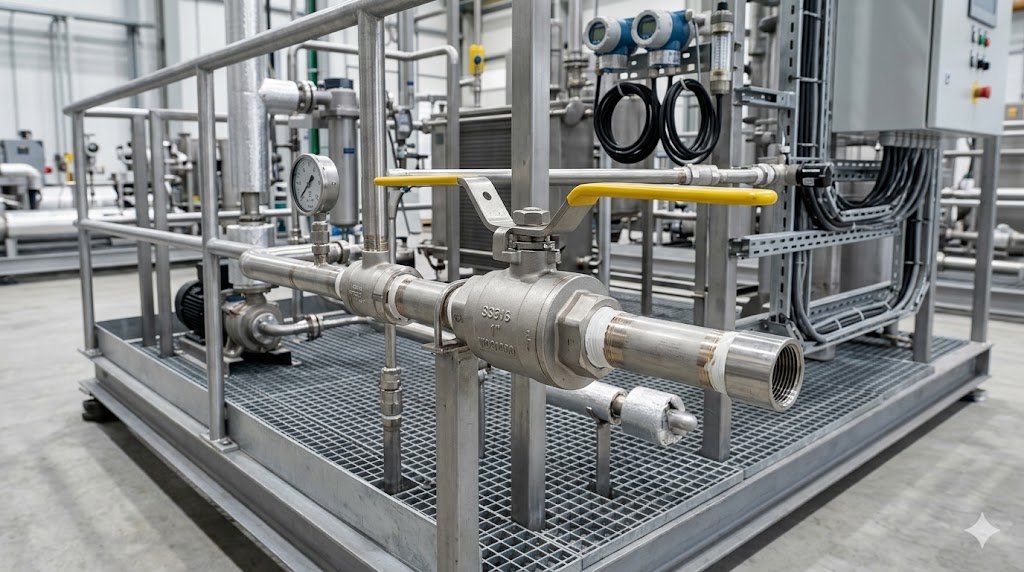
A compact threaded ball valve is a small, lightweight ball valve designed for installations where space and weight are important. Compact valves are commonly used in air systems, small water lines, OEM machinery, equipment panels, laboratory equipment, and non-critical utility lines.
The main advantage is the short face-to-face length and small body envelope. This makes the valve easy to install in tight layouts. The limitation is mechanical robustness. A compact valve may have less body mass, less wrenching area, and less tolerance for external pipe stress than a heavier two-piece or three-piece industrial valve.
When Should You Use a Compact Threaded Ball Valve?
Use a compact threaded ball valve when the system requires simple shut-off, limited space, small pipe size, and low to medium service severity. It is a good choice when the medium is clean, the pressure and temperature are within the valve rating, and the piping does not impose heavy load on the valve body.
- Small equipment connections
- Compressed air and clean water service
- OEM machinery
- Utility panels
- Compact skid systems
- General non-critical shut-off service
When Should You Avoid a Compact Threaded Ball Valve?
A compact valve should be avoided when the piping system has strong vibration, high temperature cycling, heavy external bending load, frequent disassembly, or severe medium conditions. In these cases, a stronger two-piece or three-piece threaded ball valve, or even a flanged or welded ball valve, may be more reliable.
Engineering Example 3: Compact Valve Cracked During Installation
Problem: A compact brass threaded ball valve cracked near the end connection during installation on a small water line.
Cause: The installer applied excessive torque and used the valve body as the wrenching point. The compact body had limited wall thickness around the threaded area.
Prevention: Use the correct wrench flats, avoid over-tightening, apply suitable thread sealant, and support the pipe so that the valve is not carrying installation load.
One-Piece, Two-Piece, and Three-Piece Threaded Ball Valves
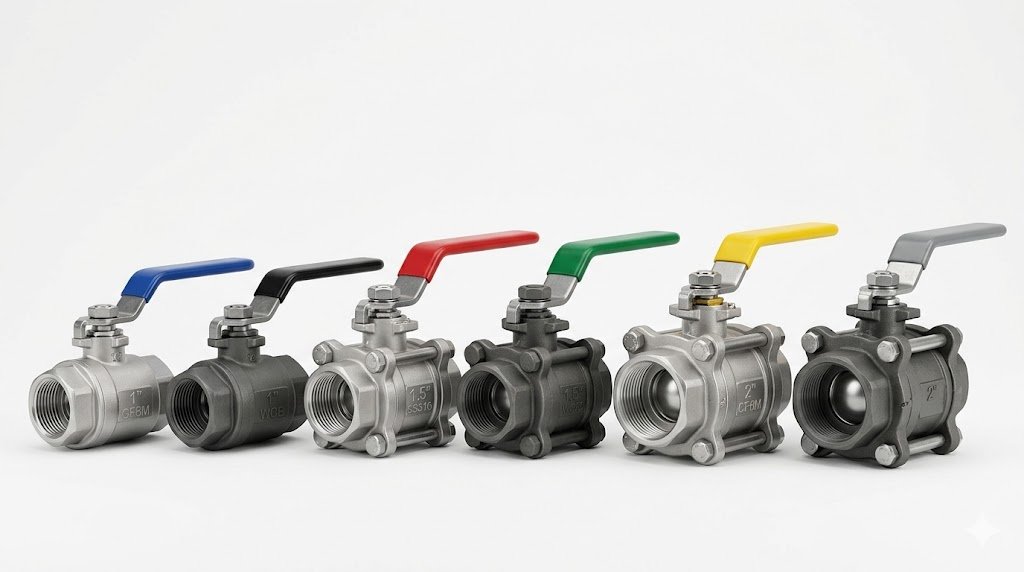
Body construction affects strength, cost, maintenance access, and long-term serviceability. This is important when threaded valves are used in industrial service rather than simple plumbing duty.
One-Piece Threaded Ball Valve
A one-piece threaded ball valve has a simple body structure and is usually compact and economical. It is suitable for basic shut-off service in air, water, and light-duty utility lines. The limitation is maintenance access. If the seat or internal parts are damaged, the valve is usually replaced rather than repaired.
Two-Piece Threaded Ball Valve
A two-piece threaded ball valve is one of the most common industrial designs. It provides a better balance of strength, price, and service reliability than many one-piece compact valves. For general industrial utility systems, a two-piece threaded ball valve is often the practical starting point.
Three-Piece Threaded Ball Valve
A three-piece threaded ball valve is designed for better maintenance access. Depending on the installation arrangement, the center body can often be removed for inspection, cleaning, or seat replacement without fully removing the pipe ends. This design is useful where downtime is costly or internal cleaning is required.
| Body Type | Best Use | Main Advantage | Selection Caution |
|---|---|---|---|
| One-Piece | Basic air, water, and light utility shut-off | Compact and economical | Limited maintenance access |
| Two-Piece | General industrial service | Good balance of reliability, cost, and strength | Still requires correct thread matching and installation support |
| Three-Piece | Maintenance, cleaning, or process service | Easier access to internal parts | Higher cost and larger installation envelope |
Material Selection for Threaded Ball Valves
The valve material should be selected according to medium, corrosion risk, pressure, temperature, and project requirements. A threaded ball valve may be small, but if the material is wrong, it can still become a leakage point, corrosion point, or shutdown risk.
Brass Threaded Ball Valves
Brass threaded ball valves are often used in water, air, and light-duty utility systems. They are economical and easy to install. However, they should not be used blindly for industrial chemicals, high-temperature service, aggressive water chemistry, or severe service conditions.
Carbon Steel Threaded Ball Valves
Carbon steel threaded ball valves are used where higher mechanical strength is required and where the medium is compatible with carbon steel. They are common in oil, fuel, gas, and general industrial systems. Corrosion allowance, coating, and fluid compatibility should be checked before selection.
Stainless Steel Threaded Ball Valves
Stainless steel threaded ball valves are selected where corrosion resistance, cleanliness, or chemical compatibility is important. SS304 and SS316 are common choices. SS316 is usually preferred where chloride exposure or more corrosive media may be present, but final material selection should always be based on actual medium concentration, temperature, and service conditions.
For corrosive service, do not review only the body material. The ball, stem, seat, seal, packing, handle, and external fasteners should also be checked against the working environment.
Seat and Seal Selection
Seat and seal materials determine shut-off performance, temperature capability, chemical compatibility, and operating torque. Many threaded ball valves use PTFE seats because PTFE provides low friction and good sealing performance in many clean-fluid services. Material data for PTFE commonly lists continuous service temperature up to about 260°C, but valve seat performance also depends on pressure, load, cycling frequency, media, and valve design.
For high temperature, abrasive particles, crystallizing media, frequent operation, or aggressive chemicals, standard soft seats may not be sufficient. Reinforced PTFE, special polymer seats, metal seats, or a different valve type may be required.
| Service Requirement | Seat / Seal Review | Common Risk |
|---|---|---|
| Clean water or air | Standard soft seats are often acceptable if pressure and temperature are suitable | Low-cost valve is used outside its pressure or temperature rating |
| Oil or fuel service | Check compatibility of seat, stem packing, and body material | Only the body material is considered |
| Chemical service | Review body, ball, stem, seat, and seal compatibility | Assuming stainless steel body alone solves all corrosion risk |
| High temperature | Confirm seat and packing temperature limits under pressure | Soft seat deformation or loss of sealing load |
| Abrasive medium | Standard soft-seated threaded valves may not be suitable | Seat wear causes internal leakage after short service |
Engineering Example 4: Valve Passed Pressure Rating but Failed at the Seat
Problem: A stainless steel threaded ball valve was selected for a hot oil auxiliary line because the body pressure rating looked sufficient. After several operating cycles, the valve developed internal leakage.
Cause: The selection focused on the metal body rating, but the seat material was close to its practical temperature and pressure limit. Thermal cycling reduced seat recovery and sealing force.
Prevention: Check the seat and packing temperature limits, not only the valve body rating. For high-temperature or frequent cycling service, request seat material confirmation from the manufacturer.
How to Select the Right Threaded Ball Valve
1. Confirm the Thread Standard
Start with the thread standard: NPT, BSPT, BSPP, or another project-specific thread. Confirm it from drawings, equipment port markings, project specifications, or a thread gauge. Do not rely on nominal size alone.
2. Confirm the Sealing Method
For tapered threads, suitable thread sealant or PTFE tape is normally required. For BSPP parallel threads, sealing usually depends on a gasket, washer, O-ring, or sealing face outside the thread. If the sealing method is unclear, clarify it before purchasing the valve.
3. Check Valve Size and Flow Requirement
Threaded ball valves are most common in small sizes. For larger lines or systems with significant pipe load, flanged or welded valves may be more suitable. Confirm whether the system requires a full-port or reduced-port design, because the bore size affects flow capacity and pressure loss.
4. Check Pressure Rating
The valve pressure rating must be suitable for the maximum working pressure of the system. For steel industrial valves, ASME B16.34 is commonly referenced for pressure-temperature ratings, materials, testing, and marking. For smaller threaded ball valves, MSS SP-110 is also commonly associated with threaded and socket-welding ball valve requirements.
5. Check Working Temperature
Temperature affects seat material, stem packing, body material, and operating torque. A valve that works well at ambient temperature may not be suitable for hot oil, steam-related auxiliary service, or frequent thermal cycling.
6. Check the Medium
Water, air, oil, gas, chemicals, and corrosive fluids require different material and seal considerations. For chemical service, check all wetted and sealing parts, not only the body.
7. Check Installation Space
If the installation area is small, a compact threaded ball valve may be useful. However, handle clearance, wrenching space, and maintenance access must still be considered. A valve that fits physically but cannot be operated is not a good selection.
8. Check Pipe Stress and Vibration
Threaded valves should not be used as pipe supports. Poor alignment, vibration, and external bending load can damage the threaded joint or valve body. Add proper pipe supports if the line places stress on the valve.
9. Check Operation Frequency
For occasional shut-off, a compact or one-piece valve may be acceptable. For frequent operation, a two-piece or three-piece design with better stem sealing and seat durability is usually a better choice.
10. Check Maintenance Philosophy
If the valve will be replaced when it fails, a compact or one-piece design may be acceptable. If the line requires cleaning, inspection, or seat replacement, consider a three-piece threaded ball valve.
Common Mistakes When Selecting Threaded Ball Valves
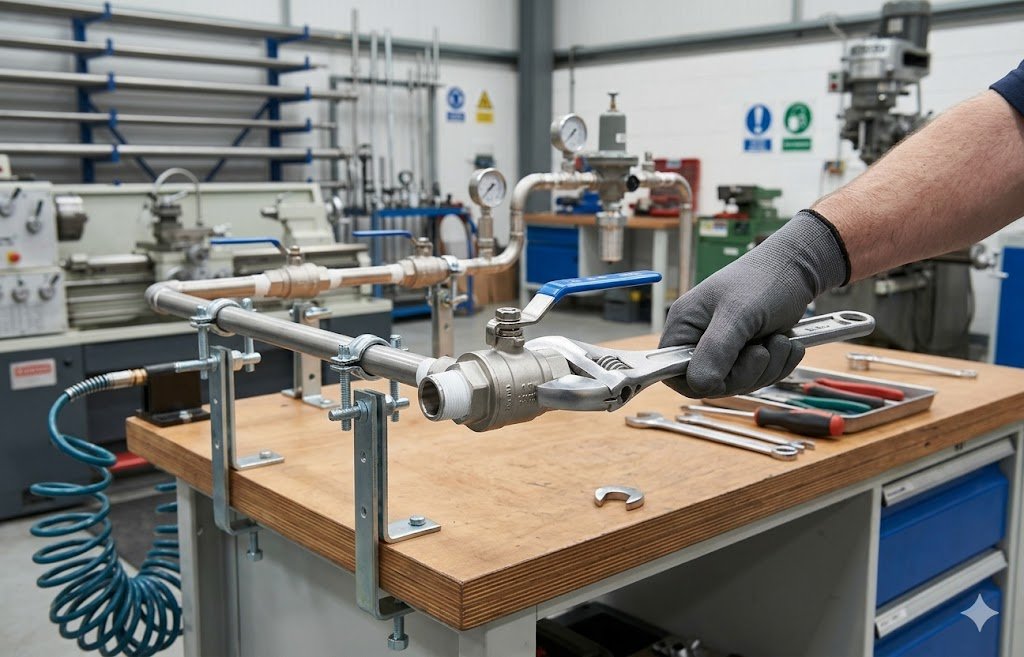
Most threaded ball valve failures are predictable. They usually come from unclear thread standards, poor installation practice, or selecting a valve without reviewing the actual service condition.
- Mixing NPT and BSP threads because the nominal size looks the same
- Ordering BSP threaded valves without confirming BSPT or BSPP
- Using BSPP connections without the correct gasket, O-ring, washer, or sealing face
- Over-tightening the threaded connection and damaging the valve body
- Applying pipe wrench force to the wrong part of the valve
- Selecting a compact valve for high-vibration or high-load piping
- Ignoring seat and seal temperature limits
- Using standard soft-seated valves in abrasive or dirty media
- Selecting only by price instead of pressure, material, and service condition
- Forgetting handle clearance in compact equipment layouts
Practical purchasing note: The valve itself may not be the most expensive part of a small equipment package. But if the wrong thread type is installed, the correction cost can include damaged equipment ports, replacement fittings, leak testing, downtime, and rework labor.
When Not to Use a Standard Threaded Ball Valve
Threaded ball valves are practical and economical, but they are not suitable for every application. A standard threaded ball valve may not be the best choice when the system has:
- Large pipe sizes with heavy pipe load
- Strong vibration or dynamic stress
- Critical hazardous media
- High temperature cycling
- Frequent removal and reinstallation
- Severe abrasive or slurry service
- High-pressure severe service beyond the valve design
- Strong external bending load on the valve body
- Project requirements for flanged or welded connections
For these conditions, consider flanged ball valves, welded ball valves, trunnion mounted ball valves, or metal seated ball valves depending on pipe size, pressure, temperature, medium, and service severity.
Buying Factors for Threaded Ball Valves
When purchasing threaded ball valves, do not compare only price and nominal size. A technically complete inquiry should include connection type, material, pressure, temperature, medium, body construction, and installation condition.
| Buying Factor | What to Confirm | Why It Matters |
|---|---|---|
| Thread Standard | NPT, BSPT, BSPP, or other thread type | Prevents thread mismatch and leakage |
| Valve Size | Nominal size and bore requirement | Affects flow capacity and installation fit |
| Body Material | Brass, carbon steel, stainless steel, or special alloy | Determines strength and corrosion resistance |
| Seat Material | PTFE, reinforced PTFE, special polymer, or metal seat | Controls sealing performance and temperature limit |
| Pressure Rating | Maximum working pressure and test requirement | Ensures safe operation under system pressure |
| Temperature Range | Minimum and maximum operating temperature | Prevents seat damage and packing leakage |
| Medium | Water, air, oil, gas, chemical, or corrosive fluid | Determines material and seal compatibility |
| Body Construction | One-piece, two-piece, or three-piece | Affects maintenance and durability |
| Installation Space | Handle clearance and wrenching space | Prevents operation and maintenance difficulty |
Threaded Ball Valve Selection Checklist
Before ordering a threaded ball valve, confirm the following information:
- Required thread type: NPT, BSPT, BSPP, or other
- Nominal valve size
- Full-port or reduced-port requirement
- Working pressure
- Working temperature
- Fluid medium
- Body material
- Ball and stem material
- Seat and seal material
- One-piece, two-piece, or three-piece body design
- Compact or heavy-duty body requirement
- Handle type and operating clearance
- Operation frequency
- Pipe stress, vibration, and support condition
- Applicable standard or target market requirement
- Inspection or testing requirement if specified by the project
This checklist helps avoid thread mismatch, leakage risk, unsuitable compact valve selection, and incorrect material choice.
FAQ: Threaded Ball Valve Selection
Can NPT and BSP threaded ball valves be connected together?
No. NPT and BSP should not be connected directly as if they were the same thread. They have different thread forms and sealing behavior. If transition is required, use a properly specified adapter and confirm the sealing method before pressure testing.
How do I know whether I need BSPT or BSPP?
Check the project specification, equipment port marking, fitting drawing, or thread gauge result. BSPT is tapered and normally seals through thread engagement with a suitable jointing medium. BSPP is parallel and usually requires a gasket, O-ring, washer, bonded seal, or sealing face outside the thread.
Are compact threaded ball valves suitable for industrial use?
Yes, but only within the correct service boundary. Compact threaded ball valves are suitable for small-bore, low to medium severity service where space is limited and pipe load is controlled. They should not be used as a default choice for high vibration, high pipe stress, severe media, or frequent maintenance service.
Which is better: one-piece or two-piece threaded ball valve?
A one-piece threaded ball valve is compact and economical for simple shut-off service. A two-piece threaded ball valve usually provides a better balance of industrial reliability, strength, and service capability. For general industrial utility systems, two-piece designs are often the safer starting point.
When should I choose a three-piece threaded ball valve?
Choose a three-piece threaded ball valve when maintenance, cleaning, inspection, or seat replacement is expected. It is also useful when downtime is costly and the valve needs better service access than a one-piece or two-piece design.
Can threaded ball valves be used for steam?
Some threaded ball valves may be used in certain steam-related auxiliary services if the valve design, pressure rating, temperature rating, seat material, and seal material are suitable. Do not assume steam compatibility from body material alone. Confirm the full valve rating with the manufacturer.
What information should I provide when requesting a quotation?
Provide valve size, thread type, pressure, temperature, medium, body material, seat material, body construction, quantity, and any applicable project standard. If the thread type is uncertain, provide photos, drawings, or fitting specifications before ordering.
Conclusion: Select Threaded Ball Valves by Thread Type, Sealing Method, and Service Condition
A threaded ball valve is a practical shut-off solution for small-bore industrial piping, equipment connections, utility systems, compressed air, water, oil, and general service. But proper selection requires more than matching the nominal pipe size.
NPT threaded ball valves are commonly used in American-standard piping systems. BSP threaded ball valves are widely used in international markets, but BSPT and BSPP require different sealing considerations. Compact threaded ball valves are useful where space is limited, but they must be selected carefully according to pressure, temperature, medium, pipe load, and operation frequency.
For reliable service, confirm the thread standard, sealing method, body construction, material, seat design, pressure rating, and installation condition before placing an order.
If you need small-bore shut-off valves for industrial utility lines, equipment connections, compressed air, water, oil, or general service, Raymon Valve can provide threaded ball valves in different materials, thread standards, and compact body designs for your project requirements.
View our threaded ball valves or contact Raymon Valve for valve selection support.
 English
  German
  Arabic
  French
  Spanish
  Italian
  Portuguese
  Russian