
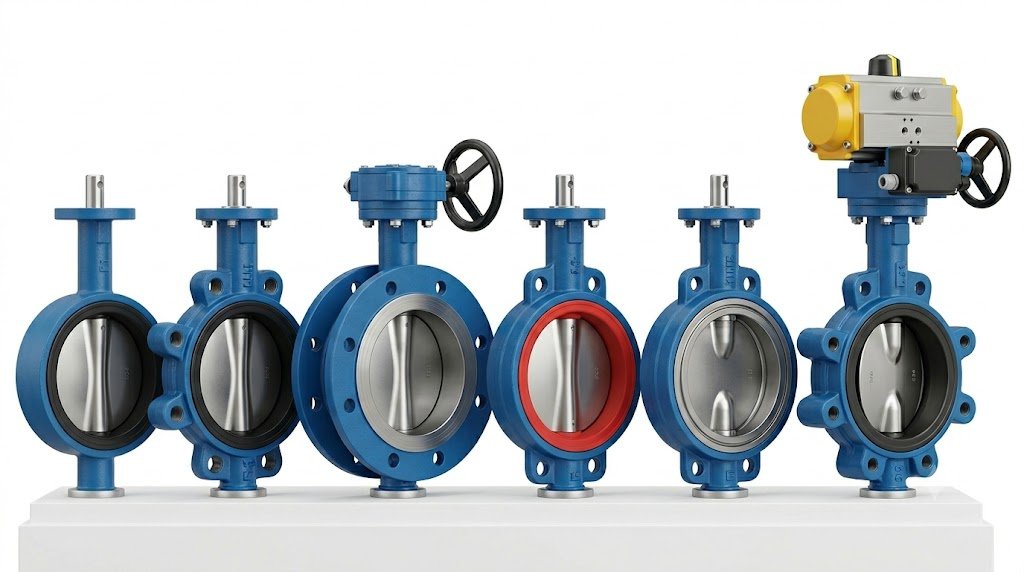
A butterfly valve selection guide should help engineers and buyers decide which valve can survive the actual service condition, not only explain what a butterfly valve is. In real projects, the correct choice depends on the medium, pressure, temperature, valve size, end connection, seat material, body and disc material, operating torque, leakage requirement, actuator type, flange standard, testing documents, and maintenance access. For clean water or HVAC, a soft seated wafer or lug butterfly valve may be enough. For large water pipelines, a flanged butterfly valve gives better installation stability. For chemical service, seat and liner compatibility must be checked carefully. For steam, high temperature, fire-safe, or severe shutoff service, a metal seated or triple offset butterfly valve is usually a safer starting point. This guide explains how to select a butterfly valve from an engineering and procurement point of view.
If you are comparing general product options, you can also review our Butterfly Valves category page for available valve types and configurations.
Quick Butterfly Valve Selection Guide by Working Condition
Use this table as the first selection path before checking detailed pressure, temperature, material and testing requirements.
| Working Condition | Recommended Starting Point | Main Risk to Check |
|---|---|---|
| Clean water | Soft seated wafer or lug butterfly valve with EPDM seat | Seat compatibility, coating quality, flange alignment |
| HVAC chilled water | Wafer butterfly valve or lug butterfly valve with EPDM seat | Low torque, compact installation, actuator clearance |
| Large diameter water pipeline | Flanged butterfly valve with worm gear or electric actuator | Operating torque, pipe support, face-to-face dimension |
| Wastewater | Lug or flanged butterfly valve with EPDM or suitable rubber seat | Suspended solids, seat wear, coating damage |
| Oil-containing medium | NBR seated butterfly valve or suitable oil-resistant seat | Seat swelling, temperature limit, oil compatibility |
| Chemical service | PTFE seated or lined butterfly valve | Chemical concentration, temperature, liner support |
| Steam or hot gas | Metal seated or triple offset butterfly valve | Seat leakage class, packing temperature, actuator torque |
| Abrasive slurry | Severe-service metal seated or specially lined valve | Disc edge erosion, seat cutting, flow velocity |
| Seawater | Coated ductile iron, stainless steel, duplex or bronze options | Chloride corrosion, coating pinholes, galvanic corrosion |
| Automated on/off service | Pneumatic actuated butterfly valve | Fail-safe position, cycle speed, air supply pressure |
| Remote slow operation | Electric actuated butterfly valve | Power supply, control signal, enclosure protection |
How to Select a Butterfly Valve Step by Step
Step 1: Confirm the Medium Before Selecting the Valve Type
The medium decides the seat material, disc material, stem material, body material, coating, lining and sealing design. Do not select a butterfly valve only by pipe size. A DN200 valve for clean water and a DN200 valve for chemical slurry may look similar, but the seat, disc, stem, coating and actuator requirement can be completely different.
Confirm whether the medium is clean water, wastewater, seawater, air, oil, gas, steam, chemical, slurry, powder or mixed fluid. Also confirm whether it contains oil, particles, fiber, scale, sand, salt, acid, alkali, solvent or cleaning chemicals.
Step 2: Confirm Pressure and Temperature Together
Pressure and temperature must be checked together. A soft seated butterfly valve may hold pressure during room-temperature testing, but the same seat may lose sealing stability at higher temperature. Differential pressure is also important because it affects operating torque and actuator sizing.
- Normal working pressure
- Maximum pressure
- Differential pressure during opening and closing
- Normal working temperature
- Maximum temperature
- Temperature cycling frequency
- Possible thermal shock condition
Step 3: Choose the Correct Butterfly Valve Structure
Valve structure depends on installation layout, maintenance requirement, pipe support, size, pressure and shutoff expectation.
- For compact water or HVAC systems, start with a Wafer Butterfly Valve.
- For one-side maintenance or downstream pipe removal, review a Lug Butterfly Valve.
- For large diameter pipelines or more stable installation, choose a Flanged Butterfly Valve.
- For high temperature, steam, metal seated shutoff or severe service, review a Triple Offset Butterfly Valve.
Step 4: Select Soft Seat or Metal Seat
A Soft Seated Butterfly Valve is usually selected for clean water, wastewater, HVAC, cooling water, clean air and many general utility services. It offers tight shutoff and lower operating torque.
A Metal Seated Butterfly Valve is selected when temperature, fire-safe requirement, pressure, media attack or severe service conditions make elastomer or polymer seats unreliable.
Step 5: Confirm Body, Disc, Stem and Seat Materials Together
Many field failures happen because only the body material was checked. The disc and seat are often more exposed to the fluid. The stem transmits torque and may also face corrosion or packing wear. For seawater, chemical or abrasive service, these parts must be reviewed as a complete material combination.
Step 6: Choose Manual Operation or Actuation
Small low-torque valves may use a lever. Larger valves usually need worm gear operation. Automated systems may need pneumatic or electric actuators. For metal seated or triple offset valves, actuator torque should not be selected only by valve size; it should be based on actual valve torque, differential pressure, seat type and safety factor.
Step 7: Confirm Standards, Testing and Documents Before Ordering
For project orders, standards and documents should be confirmed before production. This includes flange standard, face-to-face dimension, pressure test, seat leakage test, material certificates, coating inspection, actuator function test and packing requirement.
Main Butterfly Valve Types and When to Use Them
Wafer Butterfly Valve
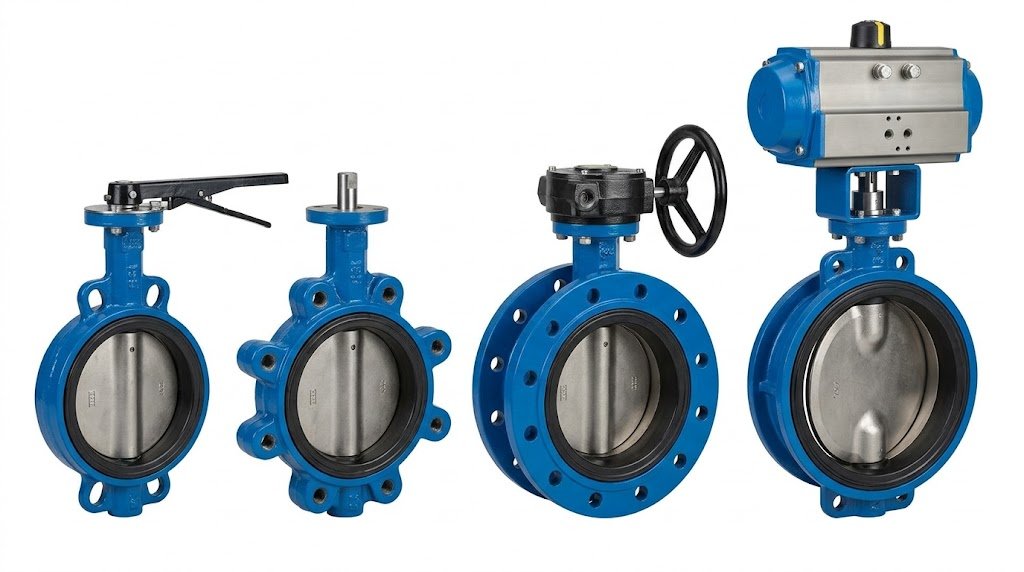
A wafer butterfly valve is installed between two pipe flanges. It is compact, lightweight and widely used in water treatment, HVAC, cooling water, compressed air and general industrial pipelines.
Best used for:
- Clean water
- Cooling water
- HVAC systems
- Compressed air
- Low to medium pressure utility lines
- Compact piping layouts
Engineering note: A wafer butterfly valve depends on the surrounding flanges for installation support. It is not always suitable for dead-end service unless the manufacturer confirms the design and pressure rating for that condition.
Do not use it when: the line requires one-side pipe removal under pressure, the installation has heavy vibration, or the project requires confirmed dead-end shutoff without a lug or flanged design.
Lug Butterfly Valve
A lug butterfly valve has lugs around the valve body. It can be bolted from both sides and is often selected where maintenance flexibility is required.
Best used for:
- Industrial water systems
- Utility pipelines
- Systems requiring downstream pipe removal
- Maintenance isolation points
- Applications where wafer design is not enough
Engineering note: Lug design improves installation flexibility, but not every lug butterfly valve is automatically full-pressure dead-end rated. If dead-end service is required, confirm allowable pressure, installation direction and bolting requirement before ordering.
Flanged Butterfly Valve
A flanged butterfly valve has integral flanged ends and is bolted directly to mating pipe flanges. It is commonly used for larger sizes and more stable industrial piping systems.
Best used for:
- Large diameter water pipelines
- Water treatment plants
- Pump stations
- Industrial cooling water
- Power plant auxiliary systems
- Applications requiring stronger alignment
Engineering note: Flanged butterfly valves are heavier and require more space than wafer valves, but they provide better installation stability. For large sizes, lever operation is usually not practical. Worm gear, pneumatic actuator or electric actuator should be selected according to valve torque and operation frequency.
Double Offset Butterfly Valve
A double offset butterfly valve uses offset geometry to reduce friction between the disc and seat during opening and closing. It is commonly selected where better seat life, lower wear and improved sealing performance are needed compared with basic concentric designs.
Best used for:
- Industrial process lines
- Frequent operation
- Higher pressure than basic resilient seated service
- Applications where reduced seat rubbing is important
- Some steam or thermal service, depending on seat design
Engineering note: Double offset design reduces seat rubbing, but it does not automatically make the valve suitable for every high-temperature or chemical service. Seat and material compatibility still control the final selection.
Triple Offset Butterfly Valve
A triple offset butterfly valve uses three offsets to create a cam-like sealing movement. It is usually paired with a metal seat and is selected for high temperature, steam, gas, oil, fire-safe and severe industrial service.
Best used for:
- Steam
- High-temperature gas
- Thermal oil
- Oil and gas service
- Fire-safe service
- Metal seated shutoff
- High pressure and high temperature combinations
Engineering note: Triple offset butterfly valves should not be selected just because they sound stronger. They are selected when soft seated butterfly valves cannot meet the temperature, leakage, fire-safe or long-term sealing requirement. For clean water or HVAC, a soft seated wafer or lug butterfly valve is often more practical.
Soft Seated vs Metal Seated Butterfly Valve
| Item | Soft Seated Butterfly Valve | Metal Seated Butterfly Valve |
|---|---|---|
| Typical seat | EPDM, NBR, PTFE or other elastomer/polymer | Metal-to-metal or laminated metal seat |
| Typical service | Water, HVAC, clean air, utility service | Steam, high temperature, fire-safe, severe service |
| Shutoff | Usually very tight in suitable service | Leakage class must be confirmed |
| Operating torque | Lower | Higher |
| Temperature capability | Limited by seat material | Better for high temperature |
| Cost | Lower for general service | Higher, but necessary for severe conditions |
| Main risk | Seat swelling, cracking, deformation or cutting | Incorrect leakage expectation or undersized actuator |
Butterfly Valve Seat Material Selection
EPDM Seat
EPDM is commonly selected for clean water, wastewater, cooling water, HVAC and many general utility services.
Suitable for:
- Clean water
- Wastewater
- Cooling water
- HVAC chilled water
- Some mild acids and alkalis, depending on concentration
Not suitable for:
- Mineral oil
- Fuel
- Hydrocarbon service
- High-temperature oil
- Many solvent-based fluids
Field judgment: EPDM is often the default choice for water service, but it should not be used if the system contains oil, grease or hydrocarbon contamination. Seat swelling can cause leakage or high operating torque.
NBR Seat
NBR is often selected where oil resistance is required.
Suitable for:
- Oil-containing media
- Fuel-related service
- Compressed air with oil mist
- Some gas applications
- General industrial service requiring oil resistance
Not suitable for:
- Strong oxidizing chemicals
- Some outdoor ozone exposure conditions
- Service above its temperature capability
Field judgment: NBR can solve oil swelling problems that EPDM cannot handle, but it is not a universal chemical-resistant seat. Temperature and chemical compatibility must still be checked.
PTFE Seat
PTFE is selected for many corrosive chemical applications because of its chemical resistance.
Suitable for:
- Many acids
- Many alkalis
- Solvent service, depending on concentration and temperature
- Clean chemical process lines
- Applications requiring low friction
Not suitable for:
- Abrasive slurry without special design
- High mechanical deformation conditions
- Applications beyond PTFE pressure-temperature capability
- Poorly supported seat designs under vacuum or temperature cycling
Field judgment: PTFE has strong chemical resistance, but it is not mechanically strong in every condition. In vacuum, temperature cycling or abrasive service, the seat support structure must be reviewed.
Metal Seat
Metal seats are used where elastomer or polymer seats cannot survive.
Suitable for:
- Steam
- High-temperature gas
- Thermal oil
- Fire-safe service
- Severe industrial service
- Some abrasive service with suitable hardfacing
Not suitable for:
- Low-cost clean water systems
- Applications requiring very low manual torque
- Projects where leakage class is not reviewed
- Severe abrasive slurry without hardfacing or special design
Field judgment: Metal seat does not automatically mean zero leakage. Leakage class, sealing surface hardness, machining accuracy, actuator torque and testing requirement must be confirmed.
Butterfly Valve Material Selection
The body carries pressure. The disc contacts the medium directly. The stem transmits torque. The seat provides sealing. These parts should be selected as one system.
| Component | Common Options | Selection Logic |
|---|---|---|
| Body | Cast iron, ductile iron, carbon steel, stainless steel, duplex, alloy steel | Select by pressure, temperature, corrosion and project standard |
| Disc | Coated ductile iron, stainless steel, aluminum bronze, duplex, hardfaced alloy | Select by corrosion, erosion and direct medium contact |
| Stem | Stainless steel, duplex, alloy steel | Select by torque, corrosion and temperature |
| Seat | EPDM, NBR, PTFE, metal seat | Select by medium compatibility, temperature and leakage requirement |
| Coating or lining | Epoxy, rubber lining, PTFE lining, special coating | Select by internal corrosion, external corrosion and service environment |
Ductile Iron Body
Ductile iron is widely used for water, HVAC, wastewater and general utility service. It is commonly used with epoxy coating. The coating should be inspected carefully when the valve is used in wastewater, seawater or outdoor service.
Carbon Steel Body
Carbon steel is selected for industrial process service, oil, gas, steam and higher temperature applications where cast iron or ductile iron is not suitable.
Stainless Steel Body
Stainless steel is selected for corrosive service, chemical applications, clean process lines and some seawater-related systems. The specific grade must match chloride level, temperature and chemical composition.
Duplex Stainless Steel
Duplex stainless steel may be selected for seawater, chloride-containing fluids and applications requiring higher strength and better chloride resistance.
Alloy Steel
Alloy steel is selected for high-temperature or special industrial service where normal carbon steel or stainless steel cannot meet the project requirement.
Butterfly Valve Selection by Application
Water Treatment
Butterfly valves are widely used in raw water, clean water, wastewater, pump discharge, sludge handling and general water treatment pipelines.
Recommended selection:
- Wafer butterfly valve for compact low to medium pressure service
- Lug butterfly valve where maintenance flexibility is required
- Flanged butterfly valve for large diameter pipelines
- EPDM seat for most clean water and wastewater service
- Ductile iron body with epoxy coating
- Worm gear for larger sizes
- Pneumatic or electric actuator for automated systems
Engineering judgment: For large water pipelines, do not select only by DN size. Check differential pressure, closing speed, pump surge, actuator torque and pipe support. Large butterfly valves are more sensitive to misalignment and torque calculation.
HVAC and Building Services
HVAC butterfly valves are used in chilled water, cooling water, condenser water and building utility systems.
Recommended selection:
- Wafer butterfly valve for compact installation
- Lug butterfly valve where maintenance isolation is needed
- EPDM seat
- Ductile iron body
- Lever operation for small sizes
- Worm gear for larger sizes
- Electric actuator for building automation systems
Engineering judgment: HVAC systems usually do not require severe-service butterfly valves, but they do require reliable shutoff, low torque, good installation clearance and actuator compatibility. Condensation and external coating protection should also be considered.
Chemical Service
Chemical service requires more careful review than water or HVAC service. The chemical name alone is not enough.
Recommended selection:
- PTFE seated or lined butterfly valve for many corrosive media
- Stainless steel, lined or alloy body depending on corrosion level
- PTFE, modified PTFE or suitable fluoropolymer seat
- Pneumatic actuator for frequent process automation
- Special stem sealing where leakage risk is critical
Engineering judgment: Confirm chemical concentration, temperature, impurities, cleaning process and operating frequency. A material that works for low-concentration chemical at room temperature may fail at higher concentration or higher temperature.
Steam and High Temperature Service
For steam, hot gas and thermal oil, a standard soft seated butterfly valve is usually not the right starting point.
Recommended selection:
- Metal seated butterfly valve
- Triple offset butterfly valve for tighter shutoff
- Carbon steel, stainless steel or alloy steel body
- Metal laminated seat or solid metal seat
- Worm gear, pneumatic actuator or electric actuator sized for higher torque
Engineering judgment: High temperature affects the seat, packing, gasket, actuator mounting and bolting. A valve may pass cold testing but leak after the line reaches operating temperature if the seat material was not suitable.
Abrasive and Wear Service
Abrasive media may include slurry, ash, sand-containing water, catalyst fines, powder or mineral processing fluid.
Recommended selection:
- Severe-service metal seated butterfly valve
- Special lined butterfly valve if compatible
- Hardfaced disc and seat where required
- Replaceable wear parts for severe service
- Controlled flow velocity where possible
Engineering judgment: A butterfly valve disc remains in the flow path. In abrasive service, the disc edge and seat are exposed to erosion. Standard rubber seats can be cut by hard particles, especially during repeated cycling or throttling.
Seawater and Corrosive Water
Seawater service requires attention to chloride corrosion, coating defects, material pairing and galvanic corrosion.
Recommended selection:
- Coated ductile iron body for non-critical seawater service
- Stainless steel, duplex stainless steel or aluminum bronze disc depending on project requirement
- EPDM or suitable rubber seat
- Stainless steel or duplex stem
- Coating inspection before shipment and installation
Engineering judgment: In seawater service, coating quality is not a cosmetic issue. A small coating defect can become a corrosion starting point. Bolt material, flange material and valve material should be reviewed together.
Operation and Actuator Selection
Lever Operated Butterfly Valve
Lever operation is suitable for small sizes, low pressure and low torque service.
Use it for:
- Small diameter water lines
- Low pressure air or utility service
- Occasional manual operation
- HVAC small-size valves
Avoid it when:
- The valve size is large
- Differential pressure is high
- Frequent operation is required
- Manual operation may be unsafe
Worm Gear Butterfly Valve
Worm gear operation is used when lever operation is not practical. It reduces handwheel force and provides slower, more controlled opening and closing.
Use it for:
- Medium and large size valves
- Water treatment systems
- Industrial pipelines
- Applications where slow manual operation is safer
Pneumatic Actuated Butterfly Valve
Pneumatic actuation is used for automated on/off service and frequent operation.
Use it for:
- Process automation
- Water treatment automation
- Chemical plants
- Remote open/close control
- Fast cycling service
Check before ordering:
- Double acting or spring return actuator
- Fail open or fail close position
- Air supply pressure
- Solenoid valve requirement
- Limit switch box
- Positioner for modulating control
Electric Actuated Butterfly Valve
Electric actuation is used where compressed air is not available or where slower remote operation is preferred.
Use it for:
- HVAC automation
- Water treatment plants
- Remote operation
- Slow opening and closing service
- Modulating control when specified
Check before ordering:
- Power supply
- Control signal
- Torque output
- Opening and closing time
- Manual override
- Position feedback
- Weatherproof or explosion-proof enclosure if required
Standards and Testing Points to Check Before Ordering
Not every butterfly valve project requires the same standard package. A general HVAC valve order may only need basic pressure testing and dimension check. A chemical, oil and gas, power plant or EPC project may require detailed inspection, certificates and third-party witness testing.
| Item | Common Reference | Why It Matters for Buyers |
|---|---|---|
| Butterfly valve design | API 609, when specified | Helps define valve design, configuration and project compliance for industrial butterfly valves |
| Face-to-face dimension | ISO 5752, EN 558 or project requirement | Prevents installation problems in replacement or retrofit projects |
| Pressure and leakage test | API 598, EN 12266 or project requirement | Defines shell test, closure test and acceptable leakage requirements |
| Flange compatibility | ASME, EN, DIN, JIS, GB or project flange standard | Prevents bolt hole, gasket face and flange drilling mismatch |
| Material certificate | EN 10204 3.1 or project requirement | Supports material traceability for body, disc, stem and pressure parts |
| Coating inspection | Project coating specification | Important for water, wastewater, seawater and buried service |
| Actuator test | Project control specification | Confirms open/close operation, signal feedback and fail-safe function |
Flange Compatibility Checklist
- Nominal size: DN or NPS
- Pressure class or PN rating
- Flange standard: ASME, EN, DIN, JIS, GB or project-specific
- Flange face type
- Bolt hole number and diameter
- Gasket contact area
- Valve face-to-face dimension
- Disc clearance inside the pipe or flange
Inspection Checklist Before Shipment
- Visual inspection of body, disc, seat and coating
- Dimension check
- Flange drilling check
- Body pressure test
- Seat leakage test
- Operation test
- Actuator function test, if actuated
- Material certificate review
- Nameplate and marking check
- Packing and protection check
Common Field Failures Caused by Wrong Butterfly Valve Selection
Composite Field Scenario for Engineering Training: EPDM Seat Used in Oil-Containing Service
What happened: A butterfly valve installed in a utility line started leaking after the medium became contaminated with oil.
Why it happened: The valve used an EPDM seat. EPDM is common for water service, but it is not suitable for oil-containing media.
System cause: The inquiry only mentioned “water line” and did not mention oil contamination or cleaning fluid exposure.
Correction: Replace the seat or valve with an oil-resistant option such as NBR or another suitable material based on actual temperature and medium composition.
Prevention: Always ask whether the medium contains oil, grease, hydrocarbons, solvent or cleaning chemicals before selecting the seat.
Composite Field Scenario for Engineering Training: Soft Seat Used in High Temperature Service
What happened: A soft seated butterfly valve passed initial installation but leaked after the system reached operating temperature.
Why it happened: The seat material exceeded its temperature capability and lost sealing stability.
System cause: The valve was selected by nominal pressure and size, but the actual maximum temperature was not reviewed.
Correction: Use a metal seated or triple offset butterfly valve suitable for the pressure-temperature condition.
Prevention: Confirm normal temperature, maximum temperature and temperature cycling before selecting any soft seated valve.
Composite Field Scenario for Engineering Training: Lever Operated Valve Installed on Large Pipeline
What happened: A large butterfly valve was supplied with a lever. During commissioning, the operator could not open or close it safely under differential pressure.
Why it happened: Operating torque was not considered during valve selection.
System cause: The buyer selected manual lever operation to reduce cost, but did not confirm valve torque, pressure condition or site operation safety.
Correction: Replace the lever with worm gear operation or use a properly sized actuator.
Prevention: For medium and large butterfly valves, check torque and differential pressure before deciding the operation method.
Composite Field Scenario for Engineering Training: Standard Rubber Seat Used in Abrasive Slurry
What happened: A soft seated butterfly valve leaked after repeated cycling in slurry service.
Why it happened: Hard particles cut the rubber seat and eroded the disc edge.
System cause: The service was treated as normal wastewater, but the solids content and particle hardness were not reviewed.
Correction: Review a severe-service metal seated design, special liner, hardfaced disc or another valve type depending on solids content and flow velocity.
Prevention: For slurry or particle-containing media, confirm solids content, particle size, flow velocity and throttling condition before selecting a butterfly valve.
Composite Field Scenario for Engineering Training: Undersized Electric Actuator on Metal Seated Valve
What happened: An electric actuator could open the valve but could not fully close it against pressure.
Why it happened: The actuator was selected by valve size only, not by actual valve torque.
System cause: Metal seated valve torque and safety factor were not included in actuator sizing.
Correction: Use an actuator with sufficient torque output and confirm seating torque under maximum differential pressure.
Prevention: For metal seated, triple offset or large diameter butterfly valves, request torque data and apply a suitable safety factor before actuator selection.
Butterfly Valve Buying Factors That Should Not Be Ignored
Do Not Select Only by Price
A low purchase price can become expensive if the valve leaks, damages the actuator, causes commissioning delay or requires replacement after installation. Compare valve price together with material suitability, testing requirement, actuator sizing and expected maintenance cost.
Confirm Medium Details
For chemical, slurry, seawater, oil and wastewater service, the medium name alone is not enough. Confirm concentration, temperature, solids content, oil content, pH, chloride level and cleaning conditions.
Check Pressure, Temperature and Differential Pressure
Pressure rating alone does not guarantee successful service. Temperature affects seat and packing materials. Differential pressure affects operating torque and actuator selection.
Confirm Leakage Requirement
Soft seated butterfly valves may provide tight shutoff in suitable service. Metal seated valves need leakage class confirmation. Do not assume every butterfly valve has the same shutoff performance.
Confirm Installation Space
The valve body may fit the pipeline, but the actuator, gearbox, handwheel, insulation and maintenance access may not fit the site. This is especially important for large valves and automated systems.
Confirm Documents Before Production
For project orders, confirm testing documents, material certificates, coating reports, actuator wiring diagrams and inspection requirements before production, not after shipment.
Butterfly Valve Inquiry Template
Use the following template when sending a butterfly valve inquiry. A complete inquiry reduces the risk of wrong material, wrong flange drilling, wrong actuator and wrong testing requirement.
Butterfly Valve Inquiry Template

1. Valve Type:
Wafer / Lug / Flanged / Double Offset / Triple Offset / Not Sure

2. Valve Size:
DN / NPS:

3. Quantity:
pcs:

4. Pressure Rating:
PN / Class / Working pressure:

5. Flange Standard:
ASME / EN / DIN / JIS / GB / Other:

6. Face-to-Face Standard:
API 609 / ISO 5752 / EN 558 / Project requirement / Not specified:

7. Medium:
Water / Wastewater / Air / Oil / Gas / Steam / Chemical / Slurry / Seawater / Other:

8. Medium Details:
Concentration:
Solids content:
Oil content:
Corrosive components:
Abrasive particles:

9. Temperature:
Normal working temperature:
Maximum temperature:

10. Pressure:
Normal working pressure:
Maximum pressure:
Differential pressure:

11. Material Requirement:
Body:
Disc:
Stem:
Seat:
Coating / Lining:

12. Operation:
Lever / Worm gear / Pneumatic actuator / Electric actuator / Hydraulic actuator:

13. Actuator Requirement:
On-off / Modulating:
Fail open / Fail close:
Air supply:
Power supply:
Control signal:
Limit switch:
Solenoid valve:
Positioner:
Manual override:

14. Leakage Requirement:
Bubble-tight / API 598 / EN 12266 / Project requirement / Not specified:

15. Testing and Documents:
Pressure test:
Seat leakage test:
Material certificate:
Coating report:
Dimension inspection:
Third-party inspection:

16. Application:
Water treatment / HVAC / Chemical plant / Power plant / Marine / Oil and gas / General industry / Other:

17. Installation Condition:
Indoor / Outdoor / Buried / Marine / High vibration / Limited space:

18. Additional Notes:
Final Butterfly Valve Selection Checklist
- Medium name and real operating condition
- Normal and maximum pressure
- Normal and maximum temperature
- Differential pressure
- Valve size
- Valve type: wafer, lug, flanged, double offset or triple offset
- Flange standard and drilling
- Face-to-face dimension
- Body material
- Disc material
- Stem material
- Seat material
- Coating or lining
- Manual or actuated operation
- Actuator torque and control requirement
- Leakage requirement
- Testing standard
- Material certificate
- Installation condition
- Maintenance requirement
- Quantity and delivery requirement
FAQ: Butterfly Valve Selection Guide
What is the most important factor in butterfly valve selection?
The most important factor is the actual working condition, including medium, pressure, temperature, differential pressure, seat compatibility and operation method. Valve size alone is not enough for correct selection.
Which butterfly valve is best for water service?
For clean water, cooling water, wastewater and HVAC service, a soft seated wafer, lug or flanged butterfly valve with EPDM seat is commonly selected. For large diameter water pipelines, flanged body and worm gear or electric actuator should be reviewed.
What is the difference between wafer and lug butterfly valves?
A wafer butterfly valve is clamped between two pipe flanges. A lug butterfly valve has lugs around the body and provides better maintenance flexibility. If dead-end service is required, the dead-end pressure rating must be confirmed.
When should I choose a flanged butterfly valve?
Choose a flanged butterfly valve for large diameter pipelines, stronger installation stability, better flange alignment and industrial water or utility systems where pipe support and long-term installation strength are important.
When should I choose a triple offset butterfly valve?
Choose a triple offset butterfly valve for steam, high temperature gas, thermal oil, fire-safe service, metal seated shutoff or severe industrial applications where soft seated butterfly valves are not suitable.
Which seat material should I choose for water?
EPDM is commonly selected for clean water, wastewater, cooling water and HVAC systems. However, it should not be used for oil-containing media.
Which seat material should I choose for oil-containing media?
NBR or another oil-resistant seat should be reviewed for oil-containing media. The final choice should still consider temperature, chemical composition and service pressure.
Is PTFE seat suitable for all chemicals?
No. PTFE has strong chemical resistance, but pressure, temperature, abrasion, vacuum condition and seat support structure must still be checked.
Can butterfly valves be used for throttling?
Butterfly valves can be used for basic flow regulation, but they are not always suitable for precise control or long-term throttling at small openings. Flow velocity, cavitation, seat erosion and actuator control accuracy should be reviewed.
What information is needed for a butterfly valve quotation?
A complete inquiry should include valve size, pressure rating, flange standard, medium, temperature, body material, disc material, stem material, seat material, operation method, actuator requirement, leakage requirement, testing requirement and quantity.
Conclusion
A butterfly valve should not be selected only by size and price. The correct selection depends on medium, pressure, temperature, valve structure, seat material, body and disc material, flange standard, actuator requirement, leakage expectation and testing documents.
For clean water and HVAC, soft seated wafer or lug butterfly valves are often practical. For large diameter water systems, flanged butterfly valves provide better installation stability. For chemical service, seat and lining compatibility must be reviewed carefully. For steam, high temperature, fire-safe or severe service, metal seated or triple offset butterfly valves may be required.
Need help selecting the right butterfly valve for your working condition? Send your medium, pressure, temperature, valve size, flange standard, seat requirement and operation method. Our engineering team can help recommend a suitable wafer, lug, flanged, soft seated, metal seated or triple offset butterfly valve for your project.
 English
  German
  Arabic
  French
  Spanish
  Italian
  Portuguese
  Russian