Industrial Ball Valve Applications: Selection Guide for Oil & Gas, Chemical, Water Treatment, and Power Plants

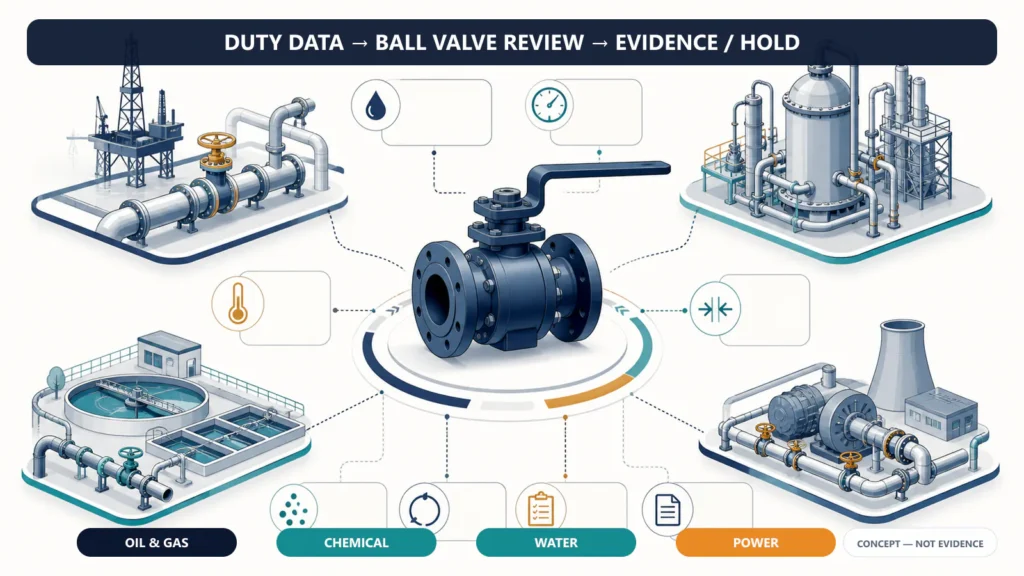
Industrial ball valve applications in oil and gas chemical water treatment and power plant piping systems

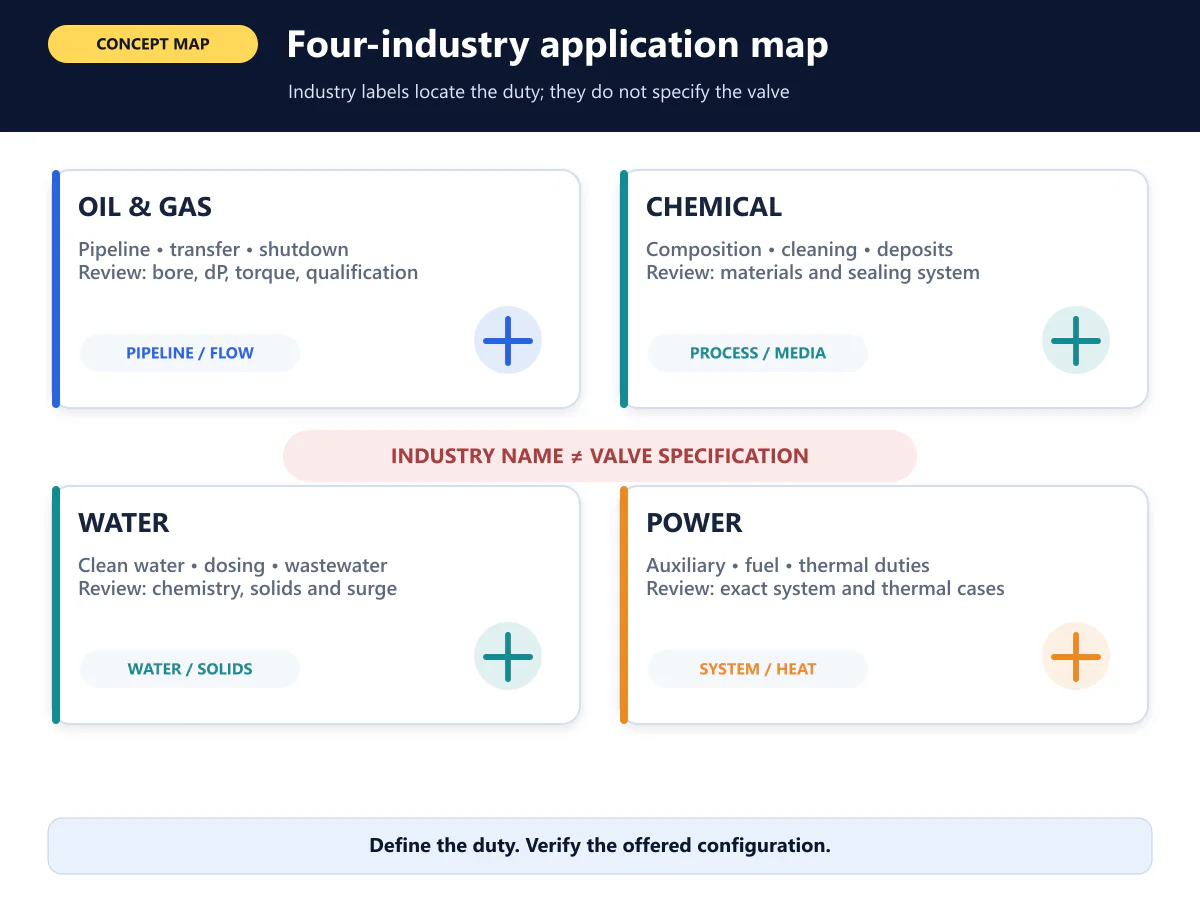
Industrial ball valve applications are mainly found in piping systems that need tight shut-off, low flow resistance, fast quarter-turn operation, and dependable isolation during maintenance, emergency shutdown, or routine operation. In oil and gas, ball valves are used for pipeline isolation, gas transmission, fuel systems, tank farms, and refinery units. In chemical plants, they are selected for process isolation, solvent transfer, dosing lines, and corrosive media when the body, trim, seat, packing, and gasket materials are compatible with the fluid. In water treatment, ball valves support pump isolation, clean water lines, chemical dosing skids, filtration systems, and utility piping. In power plants, they are used in fuel gas, fuel oil, cooling water, compressed air, chemical treatment, drain, vent, and auxiliary systems. The correct valve is not selected by size alone. Media, pressure, temperature, solids content, corrosion risk, seat material, end connection, actuation method, testing requirement, and maintenance access all affect the final selection.

Industrial Ball Valve Applications at a Glance

Application AreaCommon Valve ChoiceMain Engineering ConcernTypical Selection Risk
Oil & gas pipelinesFull bore trunnion mounted ball valvePressure, pigging, fire-safe design, emergency shut-offUsing reduced bore where pigging is required
Refinery and tank farm serviceFlanged or actuated ball valveHydrocarbon leakage, fire exposure, stem sealingIgnoring fire-safe and anti-static requirements
Chemical processingStainless steel, alloy, lined, or compatible soft seated ball valveCorrosion, solvent resistance, seat and packing compatibilityOnly checking body material and ignoring soft parts
Water treatmentFlanged or threaded soft seated ball valveChemical dosing, chloride corrosion, solids, maintenance accessUsing a standard valve in dosing or dirty water service without compatibility review
Power plantsFlanged, forged steel, actuated, or metal seated ball valveFuel safety, temperature, pressure-temperature ratingUsing soft seats near their practical temperature limit
Abrasive or high-temperature serviceMetal seated ball valve or severe-service designSeat wear, torque, leakage class, thermal cyclingTreating a metal seated valve like a standard soft seated valve

Why Industrial Ball Valve Applications Require Engineering Review

A ball valve looks simple from the outside: a quarter-turn stem rotates a drilled ball to open or close the flow path. In real industrial service, the selection is not simple. A DN50 ball valve used for clean water is very different from a DN50 ball valve used for natural gas, sodium hypochlorite, solvent transfer, high-temperature oil, abrasive wastewater, or fuel gas emergency shutdown.

Most ball valve problems do not come from the idea of using a ball valve. They come from weak specification. Common examples include:

  • A soft seated ball valve used where the operating temperature exceeds the seat material limit
  • A carbon steel valve selected for corrosive chemical service
  • A reduced bore valve installed on a pipeline where pigging or full-line cleaning is required
  • A threaded valve used in a location where vibration, leakage risk, or maintenance access requires flanged or welded ends
  • A standard on-off ball valve used for continuous throttling
  • A manually operated valve installed where remote shutdown or interlock operation is required
  • A valve purchased without checking material certificates, pressure test reports, seat material, end connection standard, or actuator torque

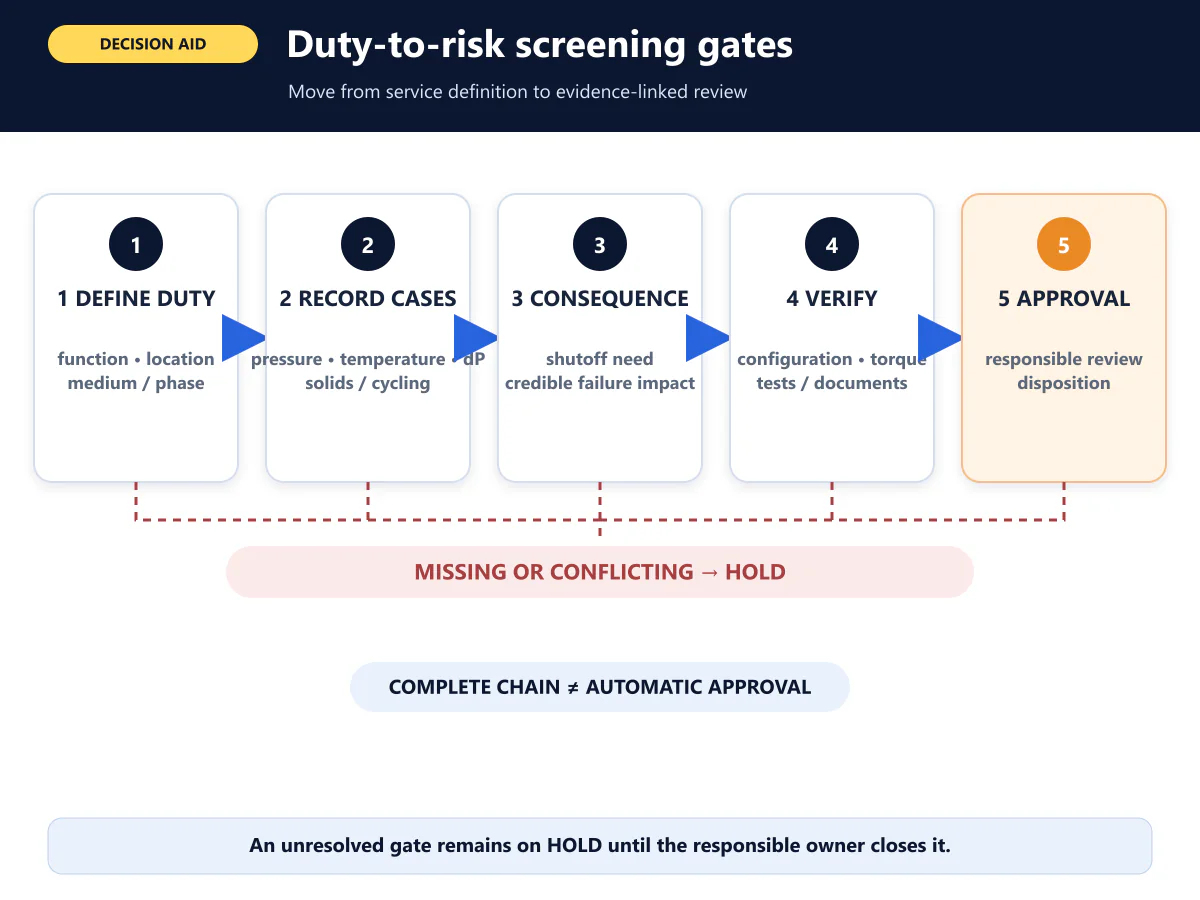
For this reason, industrial ball valve selection should start from the valve function in the system. Is the valve used for isolation, emergency shutdown, maintenance block, drain, vent, bypass, chemical dosing, product transfer, fuel cut-off, or automated process operation? Once the function is clear, the engineer can select the correct valve type, materials, connection, seat design, and testing requirement.

Where Ball Valves Are Normally Used — and Where They Need Caution

Ball valves are mainly used for on-off service. They are suitable when the system needs a clear open/closed position, low pressure drop, fast operation, and tight shut-off.

Good Applications for Ball Valves

Ball valves are commonly suitable for:

  • Clean liquid isolation
  • Gas isolation
  • Hydrocarbon transfer
  • Fuel gas and fuel oil lines
  • Chemical transfer when materials are compatible
  • Pump inlet and outlet isolation
  • Tank inlet and outlet lines
  • Utility water and compressed air
  • Chemical dosing skids
  • Drain and vent service
  • Automated shut-off service
  • Full bore pipeline service where low pressure drop is required

Applications That Need Caution

A standard ball valve should be reviewed carefully when the service includes:

  • Continuous throttling
  • High differential pressure across a partially open valve
  • Heavy slurry or abrasive solids
  • Crystallizing media
  • Sticky or polymerizing fluids
  • High-temperature steam
  • Strong oxidizing chemicals
  • Frequent thermal cycling
  • Dirty media that may collect in the valve cavity
  • Water systems where rapid closure may create hydraulic shock

This does not mean a ball valve can never be used in these conditions. It means a general soft seated ball valve should not be selected without checking seat design, cavity behavior, operating torque, leakage requirement, material compatibility, and maintenance plan.

How to Match Ball Valve Type to Service Condition

Industrial ball valve selection by service condition pressure temperature media and end connection

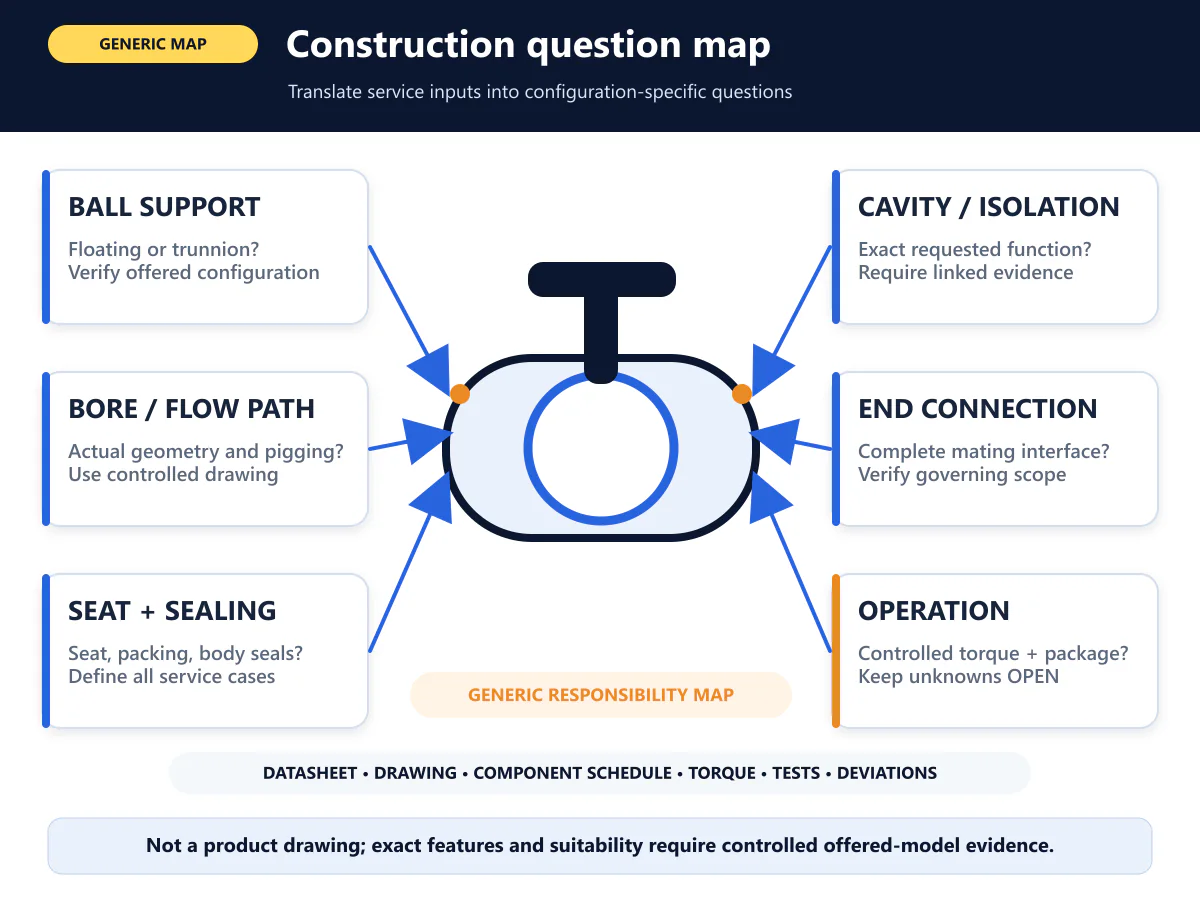
The fastest way to reduce selection mistakes is to match the valve type to the actual service condition, not only to the pipe size.

Service ConditionFirst Valve Type to ReviewAvoid This MistakeEngineering Note
Clean water, moderate pressureSoft seated floating ball valve or flanged ball valveOver-specifying a pipeline valve where a standard industrial valve is enoughCheck water quality, coating, flange compatibility, and maintenance access
Small-bore utility air or waterThreaded ball valve or socket weld ball valveUsing threaded ends in critical or high-vibration service without reviewThread sealant, accessibility, and future replacement should be considered
Large gas pipelineFull bore trunnion mounted ball valveUsing reduced bore where pigging or inspection tools are requiredBore type, torque, actuator sizing, and emergency sealing may control the selection
Refinery hydrocarbon serviceFire-safe flanged ball valve or actuated ball valveIgnoring anti-static design and stem sealingFire exposure, fugitive leakage, and shutdown philosophy should be checked
Corrosive chemical serviceStainless steel, duplex, alloy, or lined ball valveOnly checking body material and ignoring seat, packing, and gasketSoft parts often fail before the body in chemical service
Solvent transferCompatible soft seated ball valve with proper stem sealingAssuming all PTFE-based seats behave the same in all solventsSwelling, extraction, and fugitive emission risk should be reviewed
High-temperature oilMetal seated or high-temperature seated ball valveUsing PTFE seat near or beyond its practical limitCheck normal, maximum, startup, shutdown, and upset temperature
Abrasive mediaMetal seated ball valve or severe-service valveUsing standard soft seats where particles can cut the seatTorque, leakage class, coating, and hardfacing should be reviewed
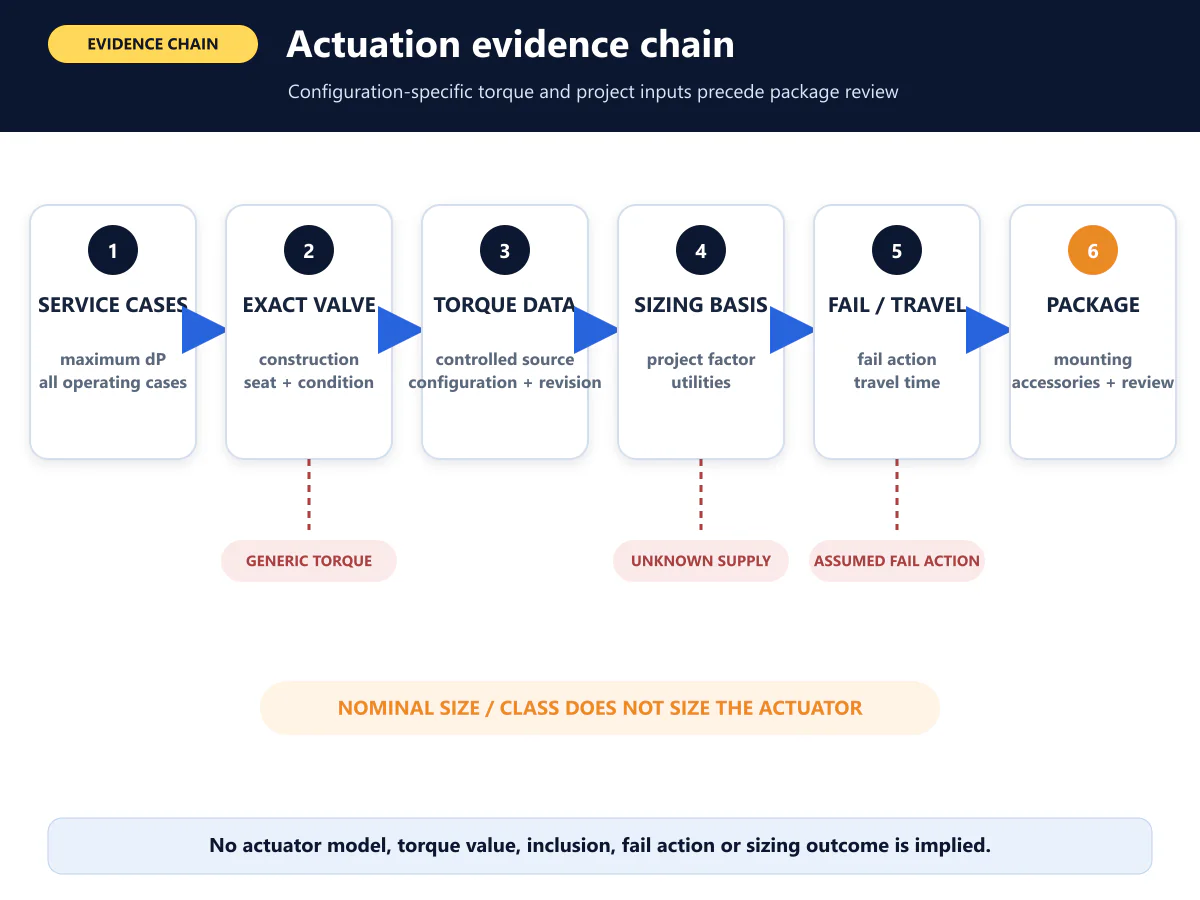
Automated shutdownActuated ball valve with defined fail positionBuying valve and actuator separately without torque reviewActuator sizing should use valve torque data under actual differential pressure
Heavy sludge or fibrous wastewaterReview plug valve, knife gate valve, or severe-service ball valveTreating wastewater as clean waterSolids, cavity deposits, flushing, and maintenance interval control the decision

Oil & Gas Ball Valve Applications

Oil and gas systems use ball valves because they provide tight shut-off, low pressure loss, and fast operation. These systems often involve flammable media, high pressure, long pipeline distances, and strict isolation requirements.

Pipeline Isolation

Pipeline isolation is one of the most important oil and gas ball valve applications. In transmission pipelines, full bore ball valves are commonly selected because they reduce flow resistance and may allow pigs or inspection tools to pass through the line.

For large-size or high-pressure pipeline service, trunnion mounted ball valves are normally preferred. The trunnion support reduces load on the seats and lowers operating torque compared with many floating ball designs. This matters when the valve diameter is large, the pressure is high, or the valve is operated by pneumatic, electric, or hydraulic actuator.

Key checks for oil and gas pipeline ball valves:

Check ItemWhy It Matters
Full bore or reduced boreFull bore may be needed for pigging, cleaning, or inspection tools
Trunnion or floating designTrunnion design is normally better for large size and high pressure
Fire-safe requirementFlammable service may require fire-tested valve design
Anti-static designHelps reduce ignition risk caused by static charge in gas or hydrocarbon service
Seat sealing designAffects leakage performance and emergency sealing options
Stem sealingImportant for fugitive emission control and long-term sealing
Actuation methodRequired for remote operation, emergency shutdown, or hard-to-access locations
Material compatibilitySour gas, wet gas, CO₂, H₂S, chlorides, and low temperature may affect material choice

Natural Gas and Fuel Gas Service

Natural gas and fuel gas systems require tight shut-off and safe operation. Leakage is not only product loss; it may become a fire or explosion risk. For gas service, the engineer should review seat leakage, stem sealing, anti-static design, fire-safe design, actuator fail position, and whether the valve is part of a safety shutdown system.

For emergency shutdown valves, closing time and actuator reliability should be checked against the process safety requirement. A valve that seals well but cannot close under the required differential pressure is not suitable for shutdown service.

Refinery and Tank Farm Service

In refineries and tank farms, ball valves are used for hydrocarbons, fuel gas, utility lines, loading lines, tank inlet and outlet lines, and process isolation. Soft seated ball valves are suitable for many clean hydrocarbon services. High-temperature oil, dirty service, abrasive particles, or frequent cycling may require a metal seated valve or a more specific severe-service design.

Common refinery selection errors include using a standard seat material near its temperature limit, ignoring thermal expansion, or selecting a valve without checking fire-safe requirements for flammable service.

Chemical Processing Ball Valve Applications

Chemical plants use ball valves in process isolation, transfer, dosing, batch operation, and cleaning systems. In these applications, pressure rating is only one part of the selection. Chemical compatibility is often the main factor.

Corrosive Chemical Service

For acids, alkalis, oxidizers, solvents, and specialty chemicals, the valve body, ball, stem, seat, packing, gasket, and bolting environment should be reviewed. A stainless steel body does not automatically make a valve suitable for every chemical. Concentration, temperature, contamination, flow velocity, cleaning chemicals, and shutdown conditions can change corrosion behavior.

Chemical service selection checklist:

ParameterEngineering Reason
Chemical name and concentrationCorrosion resistance depends strongly on actual concentration
Operating temperatureMany chemicals become more aggressive at higher temperature
Body materialCarbon steel, stainless steel, duplex, alloy, or lined construction must match the media
Ball and stem materialThese parts contact the media and affect torque, corrosion resistance, and service life
Seat materialPTFE, reinforced PTFE, PEEK, or metal seat must match chemical and temperature conditions
Packing materialStem leakage often starts at packing, not at the body
Gasket materialBody joint leakage can occur if gasket material is incompatible
Cleaning or flushing mediaThe valve must resist both process media and cleaning media
Dead space and cavitySome chemicals crystallize, polymerize, or deposit inside the valve cavity

Solvent Transfer and Flammable Chemical Lines

For solvent transfer lines, fire risk and static electricity should be reviewed. Ball valves used in flammable chemical service may require anti-static design and fire-safe construction. In automated systems, limit switches and control feedback may also be needed to confirm valve position.

A common mistake is selecting a valve only by pressure class and size while ignoring seat and packing compatibility. Solvents can swell, harden, or extract components from unsuitable sealing materials. This can increase operating torque, cause stem leakage, or damage the seat.

Batch Operation and Frequent Cycling

Ball valves are useful in batch chemical production because they open and close quickly and give clear position feedback. However, frequent cycling increases wear on seats, stem packing, and actuator components. For frequent operation, the engineer should check cycle frequency, torque margin, actuator sizing, valve cleanliness, and planned maintenance interval.

For automated chemical dosing, a small actuated ball valve may be acceptable for on-off dosing. If the system requires accurate proportional flow control, a standard on-off ball valve is usually not the correct choice. A control valve, V-port ball valve, or segmented ball valve should be reviewed instead.

Water Treatment Ball Valve Applications

Water treatment systems include raw water, clean water, wastewater, filtration, reverse osmosis, desalination, chemical dosing, and utility piping. Ball valves are common in these systems because they are compact, easy to operate, and provide tight shut-off.

Clean Water and Pump Isolation

For clean water and utility water, soft seated ball valves are commonly used for pump isolation, equipment isolation, bypass lines, and maintenance points. Small sizes may use threaded ends, while larger plant piping often uses flanged ends for easier removal and maintenance.

Selection points for water service:

  • Working pressure and test pressure
  • Pipe size and end connection
  • Water quality and suspended solids
  • Chloride level if stainless steel is used
  • Whether the valve is indoors, outdoors, or buried
  • Manual or automated operation
  • Maintenance access
  • Flange standard and gasket compatibility
  • Whether fast closing may cause pressure surge or water hammer

Chemical Dosing Lines

Water treatment plants often use sodium hypochlorite, acids, alkalis, coagulants, anti-scalants, and disinfectants. These chemicals can damage unsuitable valve materials. For dosing lines, both metallic parts and soft sealing parts must be checked.

Dosing Service FactorWhat to Check
Chemical compatibilityBody, ball, stem, seat, packing, gasket
Low flow operationWhether the valve is only for isolation or also used to adjust flow
Crystallization riskSome dosing chemicals leave deposits after shutdown
Small bore blockageSmall valves are sensitive to deposits and particles
Outdoor exposureUV, temperature, rain, and chemical vapor may affect handles and actuators
Maintenance accessDosing systems often require regular inspection and replacement

Wastewater and Sludge Lines

Wastewater may contain suspended solids, fibers, sand, or sludge. A standard soft seated ball valve can be used in some dirty water systems, but it is not always the best valve type. Solids may collect in the cavity, scratch the seat, or prevent full closure.

For heavy sludge, slurry, or fibrous wastewater, the engineer should review whether a plug valve, knife gate valve, or another valve type is more suitable. If a ball valve is used, check whether flushing is available, whether the valve will remain fully open or fully closed, and whether the cavity may trap solids.

Power Plant Ball Valve Applications

Power plants contain many piping systems with different pressure, temperature, and safety requirements. Ball valves are used where quick isolation and tight shut-off are required, especially in fuel systems, cooling water, compressed air, chemical treatment, drains, vents, and auxiliary systems.

Fuel Gas and Fuel Oil Systems

Fuel gas and fuel oil lines often use ball valves because of their fast shut-off and low pressure drop. Fire-safe design, anti-static structure, actuator reliability, stem sealing, and seat leakage should be reviewed for these services.

For automated fuel shut-off, the actuator fail position must match the plant safety philosophy. In many shutdown applications, fail-close operation is required, but the final selection should follow the process safety requirement of the project.

Cooling Water and Auxiliary Water

Cooling water systems may use flanged ball valves for isolation and maintenance. If the system uses seawater or high-chloride water, material selection becomes more important. Ordinary stainless steel may not be enough in some chloride-rich environments. Coating, duplex stainless steel, or other corrosion-resistant materials may need to be reviewed depending on the actual water chemistry and temperature.

Drains, Vents, Instrument Air, and Utility Lines

Ball valves are often used for small-bore drains, vents, instrument air, and utility lines. These valves may look minor, but they can cause leakage, unsafe discharge, or maintenance problems if poorly selected.

For drain and vent service, confirm the fluid, pressure, temperature, discharge direction, accessibility, and whether a lockable handle, extended stem, or position indication is required.

High-Temperature Service

Standard soft seated ball valves are not normally the first choice for high-temperature steam or severe hot service. Seat material limits, pressure-temperature rating, thermal expansion, and packing performance must be checked. In high-temperature isolation service, metal seated ball valves or another valve type may be more suitable.

Ball Valve Type Selection for Industrial Applications

Ball Valve TypeSuitable ApplicationsNot Ideal ForKey Selection Notes
Floating Ball ValveSmall to medium size, moderate pressure, clean liquids and gasesVery large size, very high pressure, high torque serviceSimple structure and tight shut-off for many general industrial systems
Trunnion Mounted Ball ValveLarge size, high pressure, oil and gas pipelines, gas transmissionSmall low-pressure utility systems where the design is unnecessaryLower operating torque and better support for large size and high pressure
Flanged Ball ValveIndustrial piping, pump isolation, maintenance-access pointsVery compact small-bore systems where threaded or socket weld is preferredEasy to remove and inspect; widely used in plant piping
Threaded Ball ValveSmall-bore utility lines, compressed air, low-pressure water, equipment connectionsHigh vibration, large size, hazardous critical serviceEasy installation, but thread sealing and accessibility must be controlled
Socket Weld Ball ValveSmall forged steel piping, compact high-pressure serviceSystems needing easy valve removalStrong welded connection but harder to replace
Butt Weld Ball ValvePipeline systems, high-integrity welded pipingSystems needing frequent valve removalReduces flange leakage points but makes maintenance more difficult
Soft Seated Ball ValveClean liquid and gas isolation requiring tight shut-offHigh temperature, abrasive solids, severe throttlingSeat material limit is the main selection boundary
Metal Seated Ball ValveHigh temperature, abrasive service, dirty fluids, severe conditionsSimple clean service where soft seat sealing is more economicalLeakage class, torque, coating, and seat hardness should be checked
Actuated Ball ValveRemote operation, frequent cycling, emergency shut-off, automated skidsSimple local manual isolation where automation is unnecessaryActuator torque, fail position, signal feedback, and environment must be specified

Material and Seat Selection by Service Condition

Material selection should be based on actual media data, not only the industry name. “Chemical service” is too broad. “Water service” is also too broad. Clean city water, seawater, wastewater, sodium hypochlorite, and demineralized water can require different valve materials.

Service ConditionCommon Material DirectionSeat DirectionEngineering Caution
Clean waterCarbon steel, ductile iron, or stainless steel depending on pressure and corrosionPTFE, RPTFE, or elastomer depending on designCheck coating, corrosion, and end connection
Natural gasCarbon steel or low-temperature carbon steel depending on serviceSoft seat or special seat designReview fire-safe, anti-static, leakage, and actuator requirements
Hydrocarbon liquidCarbon steel, stainless steel, or alloy depending on temperature and compositionPTFE, RPTFE, PEEK, or metal seatCheck fire risk, temperature, and seal compatibility
Acid or alkaliStainless steel, duplex, alloy, or lined constructionPTFE or chemically resistant seat materialsCheck concentration and temperature before material approval
SolventStainless steel or compatible alloyPTFE, RPTFE, PEEK, or other compatible seatCheck swelling, extraction, and stem leakage risk
High temperatureAlloy steel, stainless steel, or suitable material by ratingMetal seat or high-temperature seat materialVerify pressure-temperature rating and packing design
Abrasive mediaHardened trim or metal seated designMetal seat or severe-service designAvoid standard soft seats where particles can cut the seat
Seawater or high-chloride waterDuplex or corrosion-resistant material may be requiredCompatible soft seatCheck chloride level, temperature, crevice corrosion, and galvanic corrosion

Relevant Standards for Industrial Ball Valve Applications

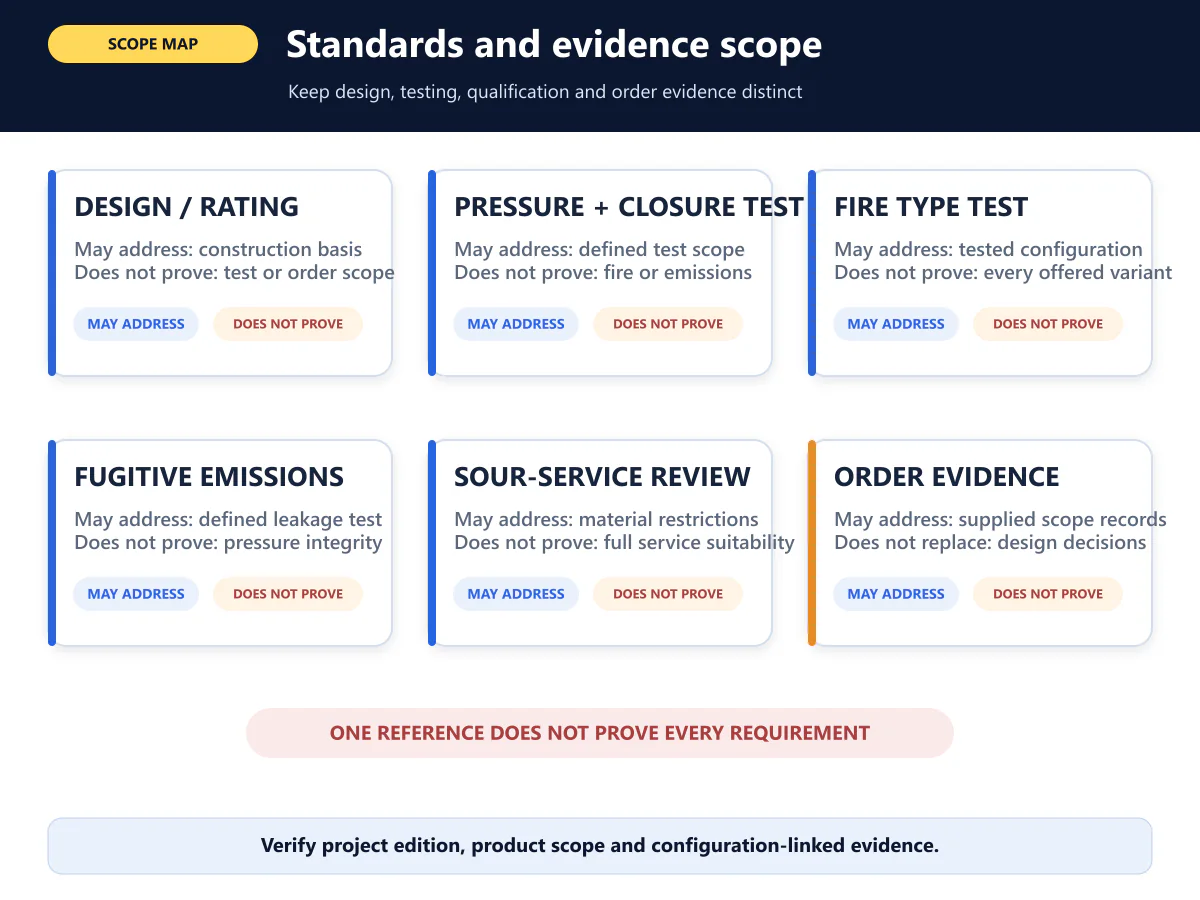
Standards should support engineering decisions. They should not be used as decoration in a specification. The applicable standard depends on the valve type, service media, size, pressure class, end connection, industry, and purchaser specification.

StandardWhen It Is RelevantWhy It Affects User Decision
ASME B16.34Industrial valves with flanged, threaded, and welding endsHelps define pressure-temperature ratings, materials, testing, marking, and construction requirements
ISO 17292Metal ball valves for petroleum, petrochemical, natural gas, and related industrial applicationsUseful when specifying metal ball valves by size range, pressure class, end connection, inspection, and testing expectations
API 608Metal ball valves with flanged, threaded, and welding ends for refinery and related serviceMore directly related to metal ball valves than a general valve statement
API 6DPipeline and piping valves for petroleum and natural gas industriesImportant for pipeline isolation valves, especially oil and gas transmission and process pipeline service
API 607Fire testing for quarter-turn valves and valves with non-metallic seatsRelevant when the valve is used in flammable service and fire-safe performance is required
API 598Valve inspection and pressure testingUseful when defining inspection and leakage testing requirements for industrial valves

A standard name alone does not prove that a ball valve is suitable for the service. The project pipe class, medium, temperature, pressure, end connection, leakage requirement, actuator requirement, and inspection documents still need to be checked. Over-specification increases cost and may confuse procurement. Under-specification increases leakage, safety, and maintenance risk.

Procurement Checklist for Industrial Ball Valves

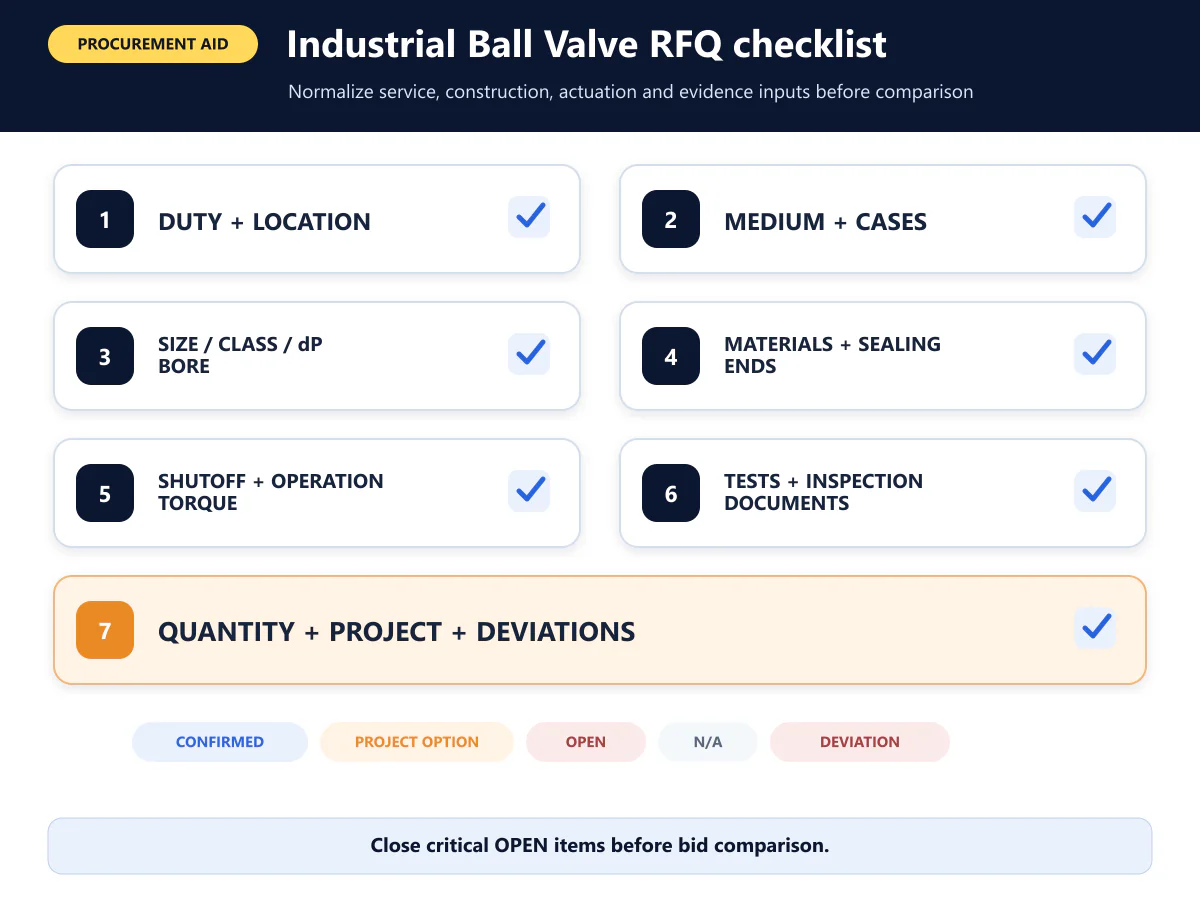
A purchase inquiry should include more than valve size and pressure class. The following checklist helps reduce wrong quotations, mismatched valves, and site rework.

Item to ConfirmWhy It Is Needed
Valve size and quantityDefines production scope and dimensional requirements
Full bore or reduced boreFull bore may be required for pigging or low pressure drop
Pressure class or PN ratingMust match pipe class and service pressure
Design standardPrevents mismatch in construction and testing expectations
End connection standardEnsures flange, thread, socket weld, or butt weld compatibility
Body materialMust match pressure, temperature, corrosion, and project pipe class
Ball and stem materialAffects corrosion resistance and mechanical strength
Seat materialControls temperature limit, chemical resistance, leakage, and torque
Gasket and packing materialImportant for stem leakage and chemical compatibility
Operation methodManual lever, gear, pneumatic, electric, or hydraulic actuator
Fire-safe requirementNeeded for many flammable services
Anti-static requirementImportant for gas, solvent, and hydrocarbon service
Testing requirementHydrostatic test, seat test, low-pressure air test, or project-specific test
DocumentationMTC, test report, dimensional drawing, certificate, coating report if required
Tagging and markingNeeded for project traceability and site installation control

Information to Provide When Requesting an Industrial Ball Valve Quotation

Before requesting a quotation, prepare the following data. This helps the supplier quote the correct valve instead of offering a general catalog item that may not match the service.

  • Valve size and quantity
  • Pressure class, PN rating, or pipe class
  • Pipeline standard and end connection
  • Medium name, concentration, and solids content
  • Normal working pressure and maximum pressure
  • Normal working temperature and maximum temperature
  • Body, ball, stem, seat, packing, and gasket material requirements
  • Full bore or reduced bore requirement
  • Manual lever, gear operator, pneumatic actuator, electric actuator, or hydraulic actuator
  • Required actuator fail position if automated
  • Fire-safe, anti-static, sour service, oxygen cleaning, or special service requirement
  • Inspection and testing requirement
  • Required certificates, material traceability documents, pressure test reports, and delivery documents
  • Painting, coating, tagging, and packing requirements

This information is especially important for oil and gas, chemical processing, power plant, and export projects where the difference between a general valve and a project-suitable valve can affect installation, commissioning, safety, and service life.

Installation and QA Checks Before Commissioning

Ball valve installation inspection checklist for flange alignment gasket bolting actuator and leakage testing

Even a correctly selected valve can fail early if installation is poor. Many leakage issues are caused by flange misalignment, wrong gasket installation, welding heat damage, contamination, or incorrect actuator setup.

Pre-Installation Checks

  • Verify valve tag, size, pressure class, material, and end connection
  • Check flow direction if the valve has a preferred direction or special seat design
  • Inspect the valve bore and sealing surfaces for debris or transport damage
  • Confirm seat and seal material against the purchase order
  • Check flange face type and gasket compatibility
  • Confirm bolt length, bolt grade, gasket type, and tightening procedure
  • For actuated valves, check voltage, air pressure, signal type, fail position, and limit switch feedback
  • Do not use the valve as a pipe alignment tool
  • Keep welding heat away from soft seats and sealing parts when welding nearby piping
  • Flush the pipeline before operation to reduce seat damage from debris

Commissioning Checks

  • Operate the valve fully open and fully closed before service
  • Confirm smooth operation and reasonable torque
  • Check stem packing and body joints for leakage
  • Verify actuator open/close direction and signal feedback
  • Confirm emergency shutdown logic if used in safety service
  • Check that the valve is not left partially open unless designed for that duty
  • Record inspection and test documents for traceability
  • Keep commissioning records for later maintenance and warranty review

Common Failure Modes in Industrial Ball Valve Applications

Failure ModeLikely CauseCorrective ActionPrevention
Seat leakageSeat damage, solids, wrong seat material, thermal damageReplace seat or valve, clean line, review service conditionSelect suitable seat, flush pipeline, avoid throttling with standard ball valve
Stem leakagePacking wear, chemical attack, poor adjustment, thermal cyclingAdjust or replace packingSpecify compatible packing and inspect during maintenance
High operating torqueSeat swelling, solids in cavity, actuator undersizing, corrosionClean valve, replace damaged parts, resize actuatorCheck media compatibility and torque margin
Body corrosionWrong body material, coating damage, chloride attack, chemical mismatchReplace valve with suitable materialVerify media, concentration, temperature, and corrosion allowance
Flange leakageMisalignment, wrong gasket, uneven bolt tightening, damaged flange faceReinstall gasket, inspect flange faces, retighten properlyUse correct gasket and bolting procedure
Actuator failureInsufficient torque, wrong air pressure, electrical fault, limit switch errorRepair actuator or resize actuatorConfirm torque, power supply, fail position, and control signal before startup
Valve cannot fully closeDebris, seat damage, ball scoring, cavity depositsClean line, repair or replace valveFlush before commissioning and avoid dirty media in standard soft seated valves
Early coating damagePoor handling, site impact, unsuitable coating for environmentRepair coating or replace valve if corrosion has startedDefine coating, packing, and transport protection requirements

Composite Field Scenarios for Engineering Training

Scenario 1: Seat Leakage in a Chemical Dosing Line

What happened:
A small ball valve installed on a chemical dosing line started leaking through the seat after several months of service. The valve was selected by size and pressure only.

Why it happened:
The chemical concentration and operating temperature were not clearly stated in the purchase request. The selected seat material was not compatible with the dosing chemical under actual conditions.

True system cause:
The failure was not only a valve quality problem. The procurement specification did not include complete media data, and the review focused on pressure rating instead of chemical compatibility.

How to correct it:
Replace the valve with compatible body, ball, seat, packing, and gasket materials. Review the dosing chemical concentration, temperature, cleaning media, and shutdown condition.

How to prevent recurrence:
Add chemical compatibility review to the valve procurement checklist. Do not approve dosing line valves without confirming soft part materials.

Scenario 2: High Torque on a Trunnion Ball Valve in Gas Service

What happened:
A large gas pipeline ball valve required much higher operating torque than expected during site testing. The actuator struggled to complete closing.

Why it happened:
The actuator was selected with insufficient torque margin. The actual pressure differential and seat load were not fully considered during actuator sizing.

True system cause:
The valve and actuator were purchased as separate items without a complete torque review under maximum differential pressure.

How to correct it:
Recalculate required torque using valve manufacturer data under project pressure conditions. Replace or resize the actuator and verify operation before commissioning.

How to prevent recurrence:
For large or high-pressure ball valves, require valve torque data, actuator sizing sheet, safety factor, air supply condition, and fail-position confirmation before purchase approval.

Scenario 3: Flange Leakage After Water Treatment Plant Installation

What happened:
A flanged ball valve on a water treatment pump discharge line showed leakage at the flange joint during pressure testing.

Why it happened:
The valve was used to pull misaligned piping into position. The gasket was compressed unevenly, and bolt tightening was not controlled.

True system cause:
The installation issue was caused by pipe alignment and bolting practice, not by valve body leakage.

How to correct it:
Remove the valve, correct pipe alignment, inspect flange faces, replace the gasket, and reinstall using a controlled tightening sequence.

How to prevent recurrence:
Include flange alignment, gasket verification, bolt inspection, and tightening sequence in the pre-commissioning checklist.

Scenario 4: Soft Seated Ball Valve Damaged in Hot Utility Service

What happened:
A soft seated ball valve installed in a hot utility line became difficult to operate and later failed to seal tightly.

Why it happened:
The seat material was close to or beyond its practical temperature limit during certain operating conditions.

True system cause:
The project specification used normal operating temperature but did not include maximum upset temperature or thermal cycling condition.

How to correct it:
Replace the valve with a design suitable for the actual maximum temperature. Review whether a metal seated ball valve or another valve type is more appropriate.

How to prevent recurrence:
Always specify normal temperature, maximum temperature, startup condition, cleaning condition, and upset condition when selecting soft seated valves.

Related Ball Valve Pages for Further Selection

This article supports the main Ball Valves category page and helps users move from general application research to specific product selection.

Selection NeedRecommended Internal Link
General ball valve overview and product rangeBall Valves
Small to medium size isolation serviceFloating Ball Valve
Large size or high-pressure pipeline serviceTrunnion Mounted Ball Valve
Flanged industrial piping with maintenance accessFlanged Ball Valve
Small-bore utility and equipment pipingThreaded Ball Valve
High-temperature or abrasive mediaMetal Seated Ball Valve

Suggested internal link targets:

Use these links naturally in the body text. Do not force all links into the first screen. The best positions are the valve type selection table, the oil and gas section, the water treatment section, the high-temperature section, and the final selection guide.

Technical Review Note

This guide is written for preliminary engineering selection and procurement communication. Final valve specification should be checked against the project pipe class, process data sheet, media composition, pressure-temperature conditions, purchaser requirements, applicable standards, inspection plan, and local safety rules. For hazardous, high-pressure, high-temperature, sour, oxygen, or corrosive service, do not approve a ball valve based only on catalog size and pressure class.

Conclusion

Industrial ball valve applications cover oil and gas, chemical processing, water treatment, power plants, and general industrial piping. Ball valves are widely used because they provide fast operation, low pressure drop, and tight shut-off when selected correctly. But correct selection requires more than choosing the same nominal size as the pipeline.

For oil and gas, pressure class, fire-safe design, anti-static design, full bore requirement, actuator reliability, and documentation may control the final valve choice. For chemical processing, material compatibility and seat resistance are often the main issues. For water treatment, chemical dosing, chloride corrosion, solids, pressure surge, and maintenance access should be reviewed. For power plants, temperature, fuel safety, cooling water conditions, and auxiliary system reliability must be considered.

A good industrial ball valve specification should define media, pressure, temperature, material, end connection, bore type, seat design, operation method, testing requirements, and documentation. This reduces leakage risk, wrong material selection, actuator problems, installation rework, early valve failure, and unnecessary shutdown.

FAQ

What are the main industrial ball valve applications?

Industrial ball valves are mainly used for on-off isolation, emergency shut-off, pump isolation, tank inlet and outlet lines, fuel systems, chemical transfer, dosing skids, water treatment systems, compressed air, drains, vents, and automated process piping. They are selected where tight shut-off, low pressure drop, and fast quarter-turn operation are required.

Are ball valves suitable for oil and gas pipelines?

Yes. Ball valves are widely used in oil and gas pipelines, especially for isolation and full bore pipeline service. For large size or high-pressure pipelines, trunnion mounted ball valves are commonly selected because they provide lower operating torque and more stable support under pressure.

Can ball valves be used for chemical processing?

Yes, but material compatibility must be checked carefully. The valve body, ball, stem, seat, packing, and gasket must resist the actual chemical, concentration, temperature, and cleaning media. Chemical service should not be selected by pressure rating alone.

What type of ball valve is used in water treatment?

Water treatment systems commonly use flanged ball valves, threaded ball valves, stainless steel ball valves, and actuated ball valves. Clean water service is usually less demanding, but chemical dosing, seawater, wastewater, and sludge service require closer review of corrosion, deposits, and solids.

Are ball valves suitable for power plants?

Yes. Ball valves are used in power plants for fuel gas, fuel oil, cooling water, compressed air, chemical treatment, drains, vents, and auxiliary piping. For high-temperature or fuel-related service, seat material, fire-safe design, pressure-temperature rating, and actuator reliability should be checked.

Can a standard ball valve be used for throttling?

A standard ball valve is mainly designed for fully open or fully closed service. Continuous throttling can damage the seat and ball surface, especially under high differential pressure. If flow control is required, a control valve, V-port ball valve, or segmented ball valve should be reviewed.

What information should be provided when buying industrial ball valves?

A good inquiry should include valve size, quantity, pressure class, media, operating temperature, body material, seat material, end connection, bore type, operation method, fire-safe or anti-static requirements, testing requirements, and required documents such as material certificates and pressure test reports.

When should a metal seated ball valve be selected?

A metal seated ball valve should be reviewed for high-temperature service, abrasive media, dirty fluids, thermal cycling, or severe operating conditions where standard soft seats may fail. Leakage class, torque, coating, hardfacing, and actuator sizing should be checked before purchase.

What is the most common mistake in industrial ball valve selection?

The most common mistake is selecting a ball valve by size and pressure class only. Real selection should also check media, temperature, corrosion risk, solids, seat material, packing, gasket, end connection, actuator torque, testing requirements, and maintenance access.

Share:

Leave a Comment

Your email address will not be published. Required fields are marked *

want totalk
with us?

Leave your details and one of our experts will contact you!

en_USEnglish
Scroll to Top

Contact us

Please fill out this form with a brief description of your issue and we will get back to you as soon as possible.