
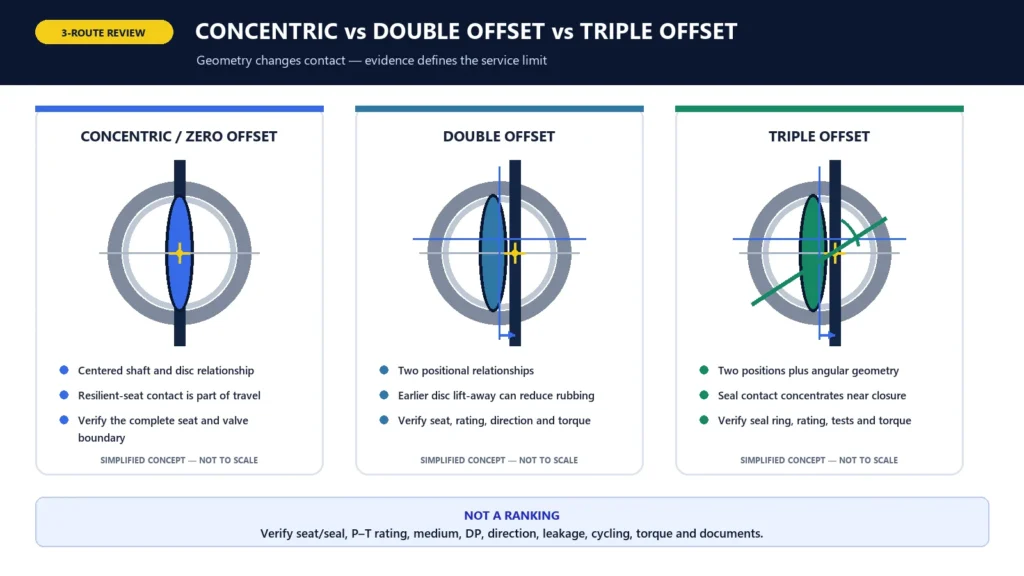
Service Limits Come From Eight Approval Gates
The service limit of a butterfly valve is the combined boundary of the valve assembly, process conditions, operating method and acceptance requirements. A useful review treats each of the following as a gate. If a critical input or supporting document is absent, the status remains open.
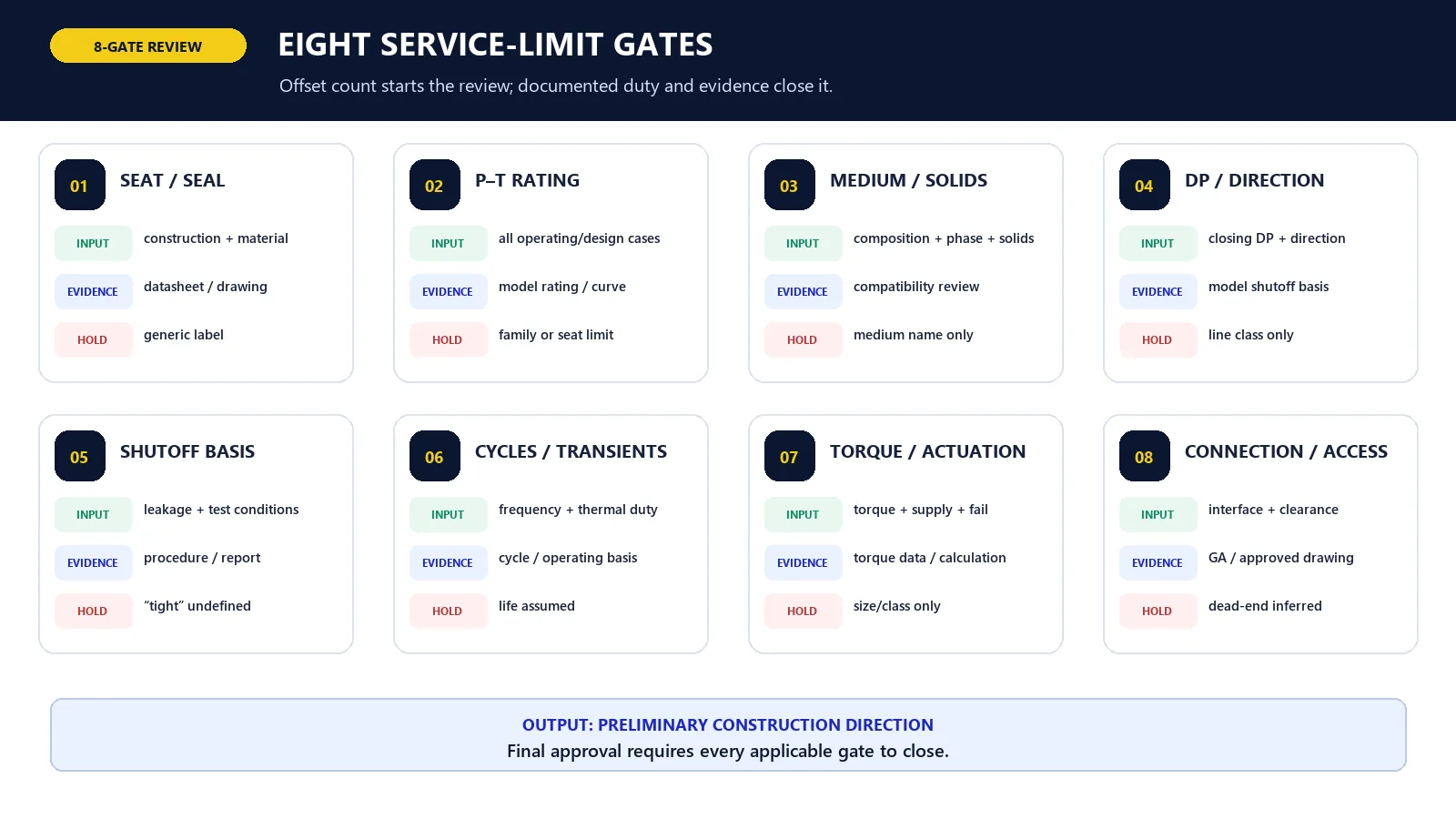
| Gate | Required input | Supplier evidence | Hold condition | Decision owner |
|---|---|---|---|---|
| Seat and seal construction | Exact component, grade/compound, arrangement and replaceability | Controlled datasheet, drawing or BOM description | Generic label only | Engineering / materials |
| Pressure-temperature rating | Model, size, pressure designation, body and seat configuration | Applicable rating table or controlled datasheet | Family range or seat-only limit | Engineering |
| Medium and solids | Composition, concentration, phase, contaminants, solids and velocity where relevant | Compatibility review and defined material system | Medium named without composition or risk review | Process / materials |
| Differential pressure and direction | Maximum closing differential pressure and required directionality | Model-specific shutoff direction and rating | Line class used as a substitute for closing duty | Piping / mechanical |
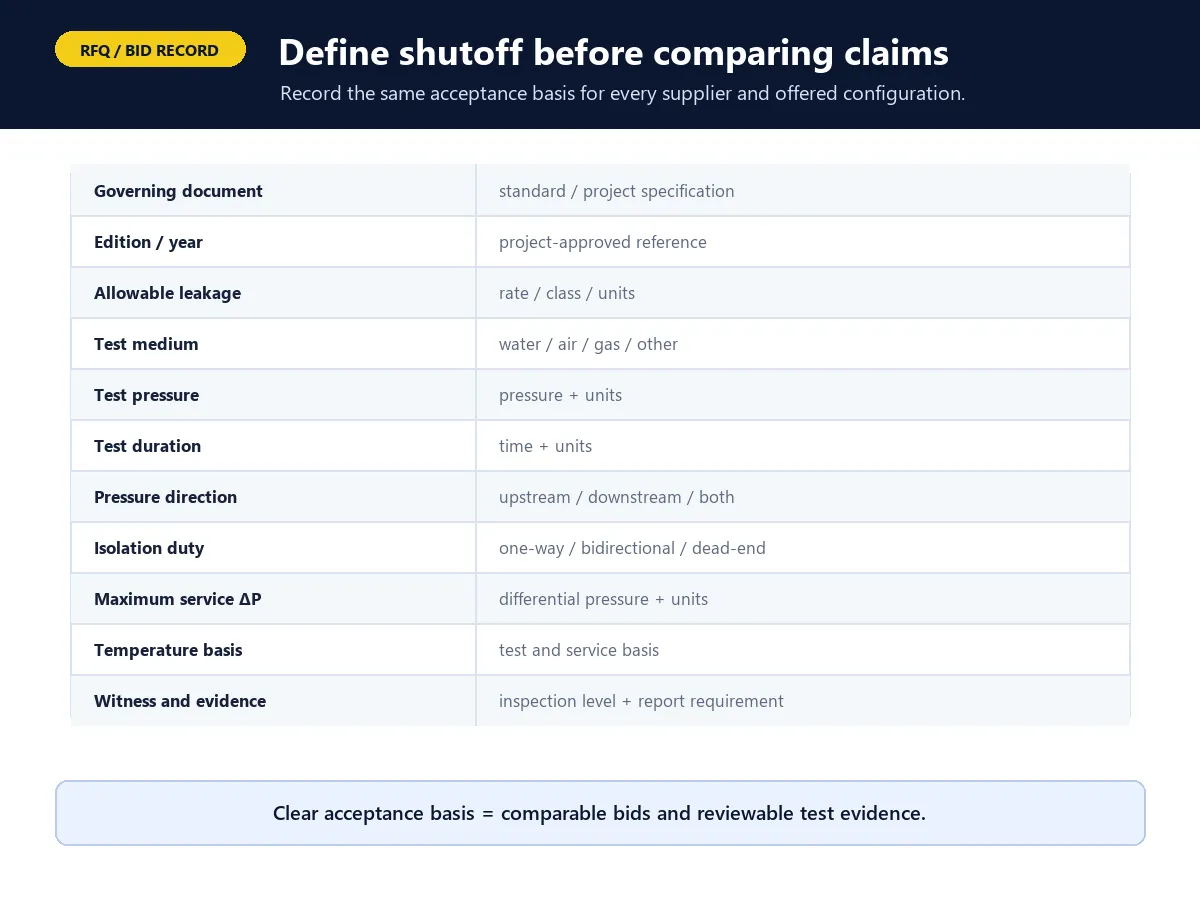
| Shutoff acceptance | Leakage criterion, test medium, pressure, direction and duration | Approved procedure and test record | “Tight shutoff” without an acceptance basis | Engineering / quality |
| Cycling and transients | Frequency, expected cycles, dwell and thermal changes | Cycle basis, operating limitations and maintenance plan | Life assumed from valve type | Reliability / operations |
| Torque and actuation | Valve torque cases, supply, fail action, time and accessories | Torque data and actuator calculation | Actuator selected from size alone | Mechanical / controls |
| Connection and installation | Wafer/lug/flanged interface, mating flange, face-to-face, clearance and access | Approved general arrangement and interface data | Disc clearance, dead-end rating or access unresolved | Piping / layout |
Seat and seal construction
Resilient, PTFE-based, laminated-metal and solid-metal routes behave differently, but the category name is only the start. Record the actual component, material designation, construction, backing or retainer, hardfacing or coating, and replacement method where relevant. The sealing system then has to be reviewed against pressure, temperature, medium, solids, cycling and leakage requirements.
Complete pressure-temperature rating
Do not combine the body pressure class with a temperature value from a separate seat-material chart and call it the valve rating. The approved boundary must apply to the exact model, size, pressure designation, material construction and seat/seal configuration. A lower-rated seat or directional sealing arrangement may control the usable boundary even when the body has a broader rating.
This article intentionally gives no universal numerical limits for the three offset families. Product-specific values may be published only when they are traceable to controlled data for the exact entity and configuration.
Medium, phase, composition and solids
A material name is not a compatibility guarantee. The review may need to consider corrosion, swelling, permeation, erosion, deposition, galling, contamination or cleaning exposure. These are possible mechanisms to evaluate—not predicted failures. The responsible reviewer needs composition, concentration, phase, temperature, pressure and solids information before approving the material and seat system.
Differential pressure and flow direction
Pipeline pressure designation and closing differential pressure are different inputs. The valve and actuator must be assessed for the actual differential pressure at the relevant operating cases. If bidirectional shutoff is required, the buyer should state the pressure direction and acceptance basis explicitly. Do not infer bidirectional capability from offset count or body style.
Shutoff and leakage acceptance
Terms such as “tight shutoff,” “bubble tight” and “zero leakage” are not complete specifications. A review needs the governing standard or project criterion, test medium, test pressure, pressure direction, duration, allowable leakage and required record or witness point. Soft seating does not prove one leakage rate, and metal seating does not prove another.
Cycle duty and thermal transients
Operating frequency, expected cycle count, dwell time and the rate and magnitude of temperature change can affect the seat system, bearing loads, packing, sealing contact and actuator requirement. Without a defined duty and supporting evidence, neither longer seat life nor a maintenance interval should be promised.
Torque, actuation and fail action
The actuator review may require breakaway, running, dynamic, seating and unseating torque under defined pressure and temperature cases. It also needs the actuator type, available air pressure or electrical supply, sizing factor, fail action, travel time, control signal, duty cycle, enclosure requirement, accessories and mounting interface. If torque or fail action remains open, the package is not ready for approval.
Connection, installation and maintenance
Confirm the wafer, lug or flanged interface; mating flange and bore; face-to-face requirement; disc clearance; orientation; actuator envelope; and access for removal or seat service. A lug body does not by itself establish a dead-end-service rating. That capability needs an exact pressure, direction and product-evidence basis.
Seat-System Evidence Matters More Than the Valve Label
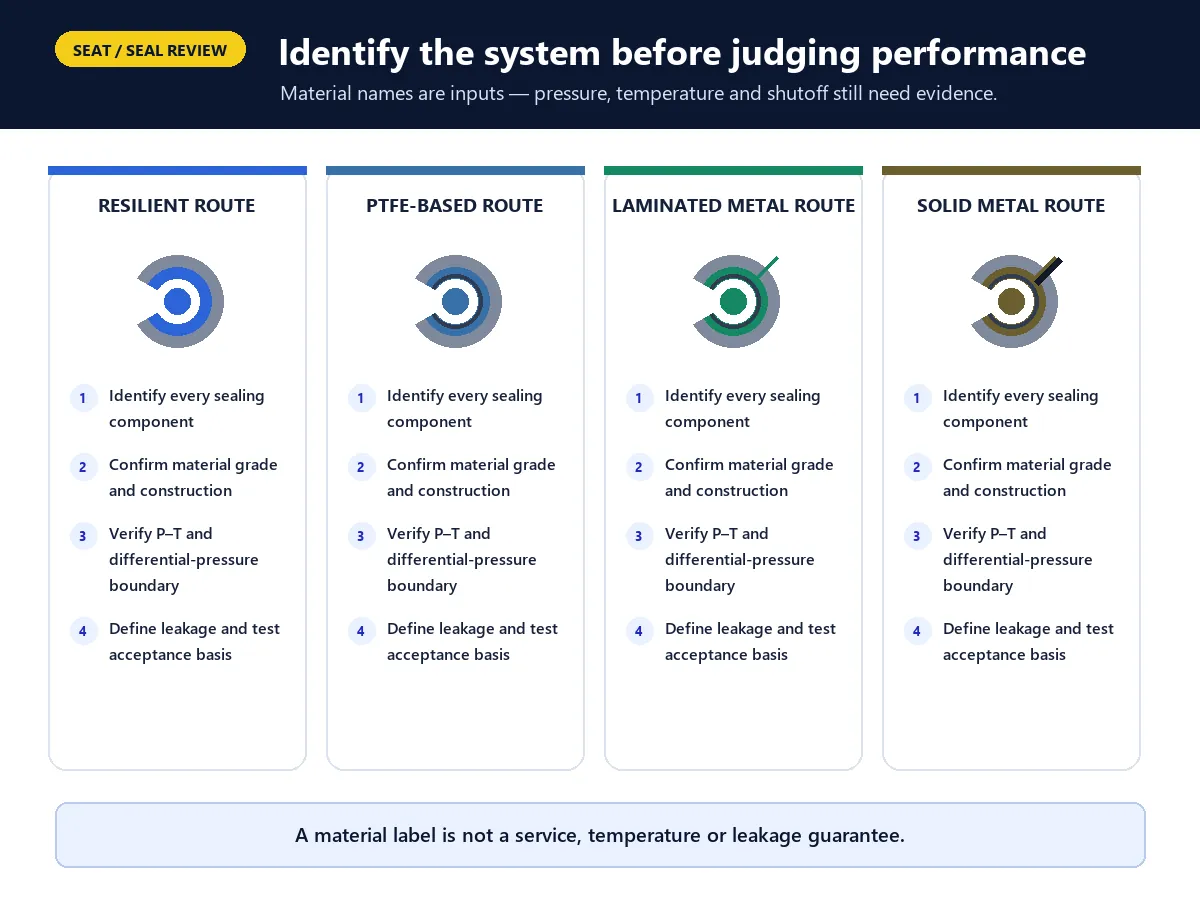
| Seat/seal route | Identity to record | Risks to review | Evidence required | Do not infer |
|---|---|---|---|---|
| Resilient | Component, compound/designation, construction and replacement method | Swelling, compression behavior, temperature, solids and cycling | Controlled configuration data, compatibility review, valve rating and test basis | Media suitability or leakage class from EPDM/NBR alone |
| PTFE-based | Exact grade or reinforcement, geometry, backing and retainer | Creep, cold flow, thermal expansion, chemical conditions and cycling | Configuration data and complete pressure-temperature boundary | Universal chemical or temperature suitability |
| Laminated metal | Layer materials, insert/filler, retainer and interfaces | Thermal cycling, erosion, replacement and directional behavior | Drawing/BOM, rating, test and qualification scope | Fire safety or zero leakage from “laminated metal” |
| Solid metal | Material pairing, hardfacing/coating, finish and contact geometry | Galling, corrosion, erosion, distortion and seating load | Controlled material/drawing data and leakage evidence | Tight shutoff from “metal seated” alone |
The industrial butterfly valve range may show available design routes. It does not replace the tag-specific datasheet, material review or acceptance documents for the valve being purchased.
Torque and Actuator Selection Cannot Be Derived from Offset Count
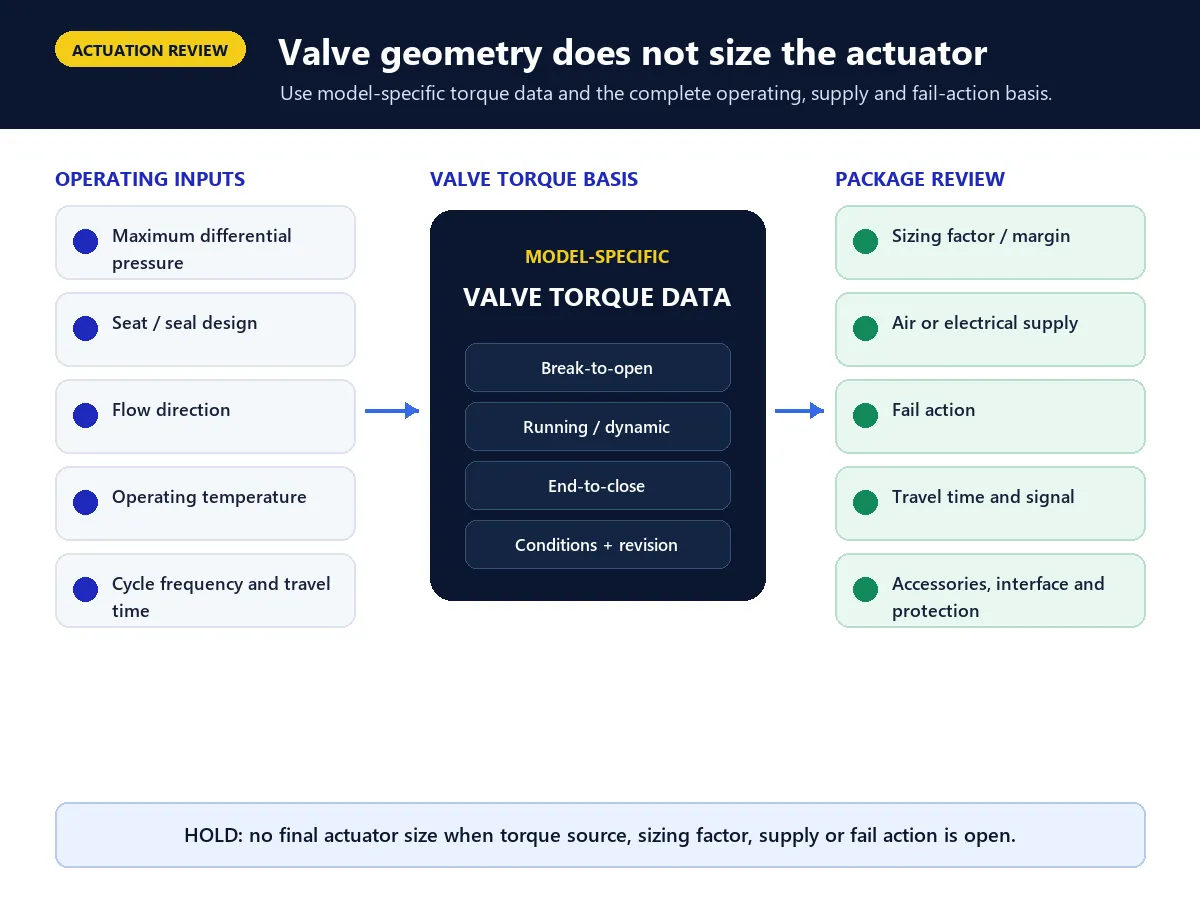
An offset design can change the torque profile, but it does not select the actuator. Ask the valve supplier for torque data tied to the exact model, size, seat construction, differential pressure, temperature, flow direction and operating case. The review may need breakaway, running, dynamic, seating and unseating values rather than one unlabeled number.
Then define the package inputs:
- actuator type and mounting/interface;
- available air pressure or electrical supply;
- sizing factor or margin required by the project;
- fail-open, fail-close, fail-in-place or other approved action;
- travel time and cycle frequency;
- on-off or modulating duty and control signal;
- solenoid, positioner, limit switches and other accessories;
- enclosure and environmental protection requirement.
An actuator shown in a photo or listed as available is not necessarily included or correctly sized. If valve torque, supply or fail action is open, the package decision must remain open.
RFQ Checklist for Concentric, Double-Offset and Triple-Offset Valves
Before requesting a final selection, provide:
- valve function: isolation or a defined throttling duty;
- preferred geometry, or
supplier to propose with evidence; - DN/NPS and pressure designation;
- operating and design pressure;
- maximum closing differential pressure;
- medium, composition, concentration, phase and solids;
- operating and design temperature, including thermal cycling or transients;
- body, disc, shaft and seat/seal requirements;
- wafer, lug or flanged connection and mating interface;
- flow direction and any bidirectional shutoff requirement;
- leakage criterion, test medium, pressure and direction;
- operating frequency, expected cycles and fail action;
- manual, gear, pneumatic or electric operation;
- actuator supply, control signal, travel time and accessories;
- applicable design, test, inspection and qualification requirements;
- quantity, destination, project reference, documents and witness points.
If these fields are incomplete, record assumptions and open items rather than forcing a valve-type conclusion.
 English
  German
  Arabic
  French
  Spanish
  Italian
  Portuguese
  Russian