
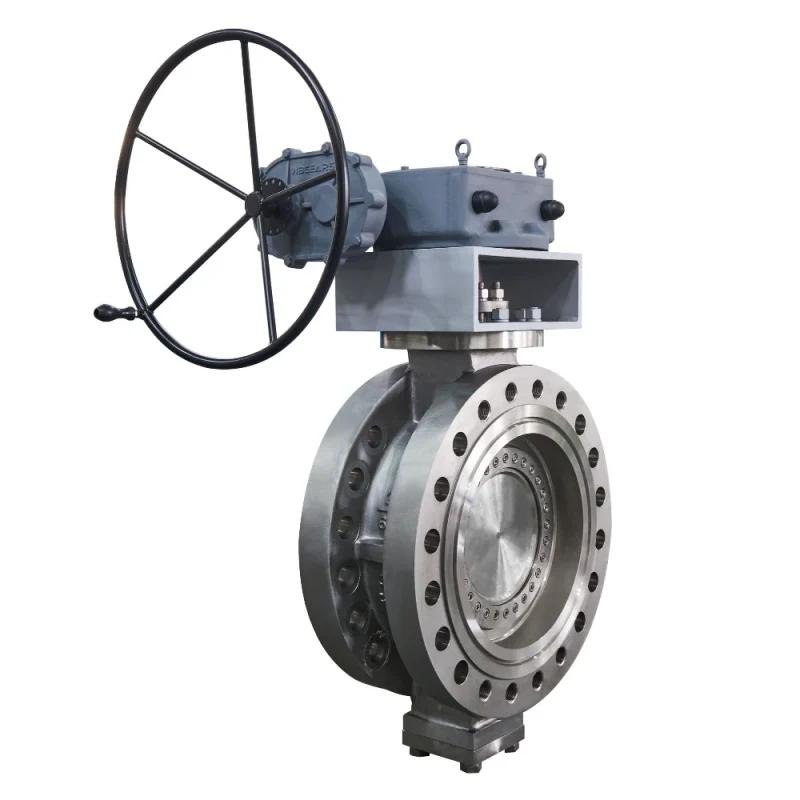
From product name to an engineered High Performance Butterfly Valve requirement
A High Performance Butterfly Valve is evaluated for compact quarter-turn isolation or regulation. A disc rotates within the body and piping bore. Offset geometry, seat construction, shaft support, flange interface and actuator torque determine sealing, wear and controllability.
Before quoting this configuration, close offset disc, pressure-assisted seating and higher-duty butterfly service and record all process, mechanical, operating and documentation assumptions.
Offset disc, pressure-assisted seating and higher-duty butterfly service. Clarify offset geometry, seat material, pressure direction, shutoff, cycling and applicable qualification.
Published information supports initial screening; final size, class, materials, trim, operation, tests and documents are fixed in approved order records.
Convert process conditions into an auditable valve specification
The table turns application inputs for High Performance Butterfly Valve into review points and tag-linked evidence.
| Review area | Engineering question | Required record |
|---|---|---|
| Disc and seat geometry | Concentric, double-offset or triple-offset construction must match shutoff and temperature duty. | Make this requirement auditable through the order datasheet, design review and inspection plan. |
| Piping interface | Wafer, lug, flanged or welded bodies require compatible flange dimensions, gaskets and disc clearance. | Make this requirement auditable through the order datasheet, design review and inspection plan. |
| Torque basis | Seating, bearing, packing and hydrodynamic torque must be checked at every operating case. | Make this requirement auditable through the order datasheet, design review and inspection plan. |
| Flow duty | On-off, throttling, minimum opening and velocity limits should be stated. | Capture the selection basis, approved deviation if any and the record used for acceptance. |
| High Performance | Clarify offset geometry, seat material, pressure direction, shutoff, cycling and applicable qualification. | Make this requirement auditable through the order datasheet, design review and inspection plan. |
A standard title alone is not acceptance. Map its scope, edition and required evidence to the valve tag.
Failure exposures behind the nominal configuration
Check disc clearance, installation orientation and transient loads; a nominal flange fit does not prove that the disc can open safely. Installed behavior can be governed by flow dynamics, deposits, operating frequency, maintenance access and the response to abnormal conditions.
Use order records—not generic certificates—for acceptance
Evidence should identify the supplied configuration, revision, heat or lot and applicable test procedure. Use the valve standards guide to separate product, rating, dimensional, end-connection and test scope.
Design basis
Controlled configuration, interface drawing, calculations and closed technical clarifications.
Material identity
Tag-to-component material mapping with certificates, processing records and identity checks.
Inspection and tests
Approved ITP, procedures, calibrated instruments, results, witness records and NCR closeout.
The term high performance is commercial; acceptance must be tied to measurable requirements.
Qualification, testing and material suitability are conditional on the approved scope and supplied records for the actual configuration.
Build a comparable inquiry for this valve configuration
A useful RFQ combines process data, piping class, construction and materials, operator/actuator requirements, acceptance criteria and delivery documents.
For a High Performance Butterfly Valve, also highlight offset disc, pressure-assisted seating and higher-duty butterfly service. Identify missing inputs and provisional selections so they can be closed before purchase order release.
Ask for a configuration tied to the real duty
Share the datasheet, line class and evidence scope so open points and deviations can be resolved before order release.
Follow the product, application and inspection route
High Performance Butterfly Valve questions
What information is required to select a High Performance Butterfly Valve?
Provide the medium and composition, all pressure and temperature cases, nominal size, flow or differential pressure where relevant, required function, end connections, materials, shutoff criterion, operation, standards, inspection and documentation. For this configuration, the review must specifically address offset disc, pressure-assisted seating and higher-duty butterfly service.
Which standards apply to a High Performance Butterfly Valve?
The answer depends on the product construction, project jurisdiction and purchaser specification. A product standard may cover design scope while separate standards govern pressure-temperature rating, dimensions, ends, pressure testing, fire safety, emissions or materials. The term high performance is commercial; acceptance must be tied to measurable requirements.
How should High Performance Butterfly Valve pressure and leakage testing be specified?
State the governing standard and approved edition, shell and closure basis, medium, pressure, duration, leakage acceptance, directionality, instruments, witness points and report format.
Can a High Performance Butterfly Valve be supplied with an actuator?
Where automation is feasible, size from the worst-case valve torque or thrust curve, project margin, fail action, travel time, minimum utility, duty, controls, mounting and package test.
When should a High Performance Butterfly Valve not be selected?
Do not select it when its qualified construction cannot satisfy the process, shutoff, materials, dynamics, maintenance or documentation requirements. Check disc clearance, installation orientation and transient loads; a nominal flange fit does not prove that the disc can open safely. The alternative should be chosen only after comparing the complete service duty.
 English
  German
  Arabic
  French
  Spanish
  Italian
  Portuguese
  Russian