
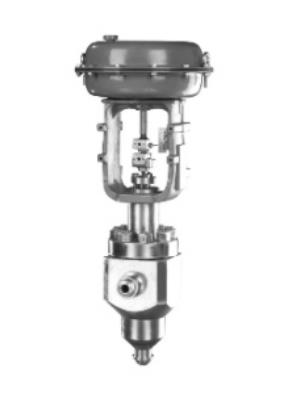
From product name to an engineered High-Pressure Angle Control Valve requirement
A High-Pressure Angle Control Valve is evaluated for modulating process control. A throttling element changes effective flow area in response to a control signal. Installed characteristic, Cv, pressure recovery, trim velocity and actuator resolution determine control quality.
Use the name as a starting point. Technical approval still depends on 90-degree body flow path, piping loads and erosion or flashing exposure, the complete service envelope, installed interfaces and measurable acceptance.
Angle
90-degree body flow path, piping loads and erosion or flashing exposure. Define flow direction, pressure drop, phase, velocity, piping loads, drainage and maintenance access.
Application envelope
Confirm every pressure, temperature, differential-pressure and cycling case for this High-Pressure Angle Control Valve.
Installed interface
Verify ends, bore, flow direction, orientation, operator envelope, loads and maintenance access.
Order-specific boundary
Published information supports initial screening; final size, class, materials, trim, operation, tests and documents are fixed in approved order records.
Published configuration data for High-Pressure Angle Control Valve—confirmation required
The values below are transcribed from the previous public product listing so useful model information is not lost during the quality rebuild. They are not a universal available range, certificate or order commitment. Confirm every value in the accepted quotation, tag datasheet and approved drawing.
| Parameter | Previous listing | Required order check |
|---|---|---|
| Product type | Not stated in the previous public listing. | Confirm the exact model, construction and supplied configuration. |
| Nominal size / DN | 20-50 | Confirm each ordered tag and available trim or bore combination. |
| Pressure rating | PN250-320 ANSI Class 900-2500 | Confirm governing rating standard, class and temperature basis. |
| Temperature | 17℃~+425℃ | Confirm design, operating, startup and upset metal temperatures. |
| End connection | RF, RJ, BW, lens pad | Confirm standard, facing, schedule, bore and mating interface. |
| Flow coefficient / characteristic | Linear | Confirm calculated cases, trim, travel and installed behavior. |
| Body / bonnet material | forged steel or forged stainless steel | Confirm component grade, product form, heat treatment and records. |
| Trim / closure material | 1Cr18Ni90Cr17Ni12Mo2 stainless steel – Surfacing Stellite Alloy Optional: none Features: -Venturi type forged angle body -Porous cage single seat design -The surface of the valve trim is nitrided and hardened -Multi-stage buck design -All trims can be quickly | Confirm every wetted component, hardness, coating and pairing. |
| Seat / seal material | Not stated in the previous public listing. | Confirm compatibility, leakage criterion and pressure-temperature limit. |
| Operation / actuator | Not stated in the previous public listing. | Confirm worst-case load, fail state, utilities, speed and accessories. |
| Leakage basis | IV class Material: | Confirm standard, edition, test direction, medium and measurable acceptance. |
Evidence boundary: where the previous listing was incomplete or awkwardly translated, this page does not guess a value. Raymon Valve should replace provisional web data with the controlled product datasheet when it is available.
Convert process conditions into an auditable valve specification
Record the question, accepted answer and proof so the High-Pressure Angle Control Valve proposal can be audited across disciplines.
| Review area | Engineering question | Required record |
|---|---|---|
| Sizing cases | Minimum, normal, maximum, startup and upset cases require verified fluid properties and pressures. | State the measurable requirement and connect it to a drawing, procedure or test result. |
| Trim duty | Cavitation, flashing, choked gas flow, noise, erosion and rangeability must be evaluated. | Freeze the accepted value in the tag datasheet and verify it on the approved drawing. |
| Actuator | Required thrust or torque, fail action, stroking speed and utility supply must be coordinated. | Resolve the open point before release and retain tag-specific evidence in the final dossier. |
| Accessories | Positioner, solenoids, limit switches, air set and hazardous-area requirements form one package. | State the measurable requirement and connect it to a drawing, procedure or test result. |
| Angle | Define flow direction, pressure drop, phase, velocity, piping loads, drainage and maintenance access. | Resolve the open point before release and retain tag-specific evidence in the final dossier. |
Check standards and acceptance criteria against the purchaser-approved edition before order release.
Where this configuration may fit—and what can make it fail
Do not size a control valve from pipe diameter alone; incorrect Cv can cause poor resolution, noise, cavitation or premature trim damage. The final decision must cover system interactions, end-of-life loads, degradation and how failure will be detected or contained.
Define the manufacturing and test proof before release
A certificate or report is useful only when its scope traces to the actual tag, materials and configuration. Use the valve standards guide to separate product, rating, dimensional, end-connection and test scope.
Design basis
Controlled configuration, interface drawing, calculations and closed technical clarifications.
Material identity
Tag-to-component material mapping with certificates, processing records and identity checks.
Inspection and tests
Approved ITP, procedures, calibrated instruments, results, witness records and NCR closeout.
The body turn can concentrate velocity and erosion; geometry must suit the process case.
Qualification, testing and material suitability are conditional on the approved scope and supplied records for the actual configuration.
RFQ inputs that remove avoidable assumptions
A useful RFQ combines process data, piping class, construction and materials, operator/actuator requirements, acceptance criteria and delivery documents.
For a High-Pressure Angle Control Valve, also highlight 90-degree body flow path, piping loads and erosion or flashing exposure. Identify missing inputs and provisional selections so they can be closed before purchase order release.
Send the service cases for engineering review
Provide the actual application; the response will separate confirmed requirements from assumptions and identify the checks still required.
Connect this configuration with family and quality guidance
Convert High-Pressure Angle Control Valve from a broad request into an auditable engineering decision
This section addresses the decision a visitor is likely trying to complete—not merely the meaning of the page title. Use it to identify required inputs, compare the proposal and specify the record that will prove acceptance.
| Decision | What to do | Evidence to retain |
|---|---|---|
| Problem statement | For High-Pressure Angle Control Valve, define the required system outcome, failure consequence and measurable acceptance before choosing hardware. | Functional requirement |
| Feasible routes | Compare at least the practical construction, material, sealing and actuation alternatives, including reasons for rejection. | Option and trade-off matrix |
| Boundary conditions | Check every normal, transient, startup, shutdown, maintenance and utility-loss case that can change the solution. | Approved application data |
| Validation | Connect each claimed benefit to a calculation, drawing, qualification, inspection or package-level test that applies to the order. | Verification and evidence plan |
How this High-Pressure Angle Control Valve guide should be used
This page does not claim that a named person, certificate, qualification, installed project or performance result applies to a future order. Product compliance is confirmed only when the accepted quotation, approved drawing, procedures and final manufacturing/test records identify the supplied configuration.
Technical requirements and standards can change. Verify the official source, contract edition, project precedence and purchaser options. See our technical content review and evidence policy, company information, inspection approach or submit a correction or application question.
High-Pressure Angle Control Valve questions
What information is required to select a High-Pressure Angle Control Valve?
Provide the medium and composition, all pressure and temperature cases, nominal size, flow or differential pressure where relevant, required function, end connections, materials, shutoff criterion, operation, standards, inspection and documentation. For this configuration, the review must specifically address 90-degree body flow path, piping loads and erosion or flashing exposure.
Which standards apply to a High-Pressure Angle Control Valve?
The answer depends on the product construction, project jurisdiction and purchaser specification. A product standard may cover design scope while separate standards govern pressure-temperature rating, dimensions, ends, pressure testing, fire safety, emissions or materials. The body turn can concentrate velocity and erosion; geometry must suit the process case.
How should High-Pressure Angle Control Valve pressure and leakage testing be specified?
Define the test configuration and measurable acceptance rather than requesting a generic factory test. Include calibrated instruments, valve position, pressure direction and tag-linked results.
Can a High-Pressure Angle Control Valve be supplied with an actuator?
Yes when the valve/actuator interface and load cases are engineered together. Define safe state, utility loss, speed, frequency, accessories, feedback, interlocks and assembly-level testing.
When should a High-Pressure Angle Control Valve not be selected?
Do not select it when its qualified construction cannot satisfy the process, shutoff, materials, dynamics, maintenance or documentation requirements. Do not size a control valve from pipe diameter alone; incorrect Cv can cause poor resolution, noise, cavitation or premature trim damage. The alternative should be chosen only after comparing the complete service duty.
 English
  German
  Arabic
  French
  Spanish
  Italian
  Portuguese
  Russian