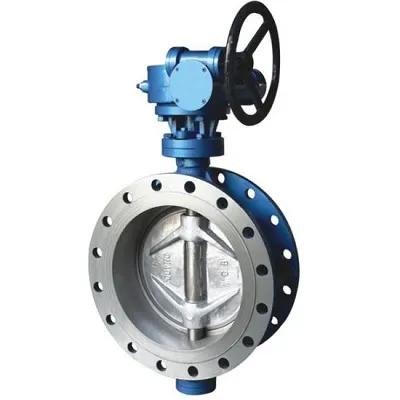
Butterfly valve manufacturers should be compared by the suitability and traceability of the exact valve offered—not by size, pressure class, or price alone. For industrial isolation or approved throttling duty, verify the service medium, design pressure and temperature, valve geometry, seat and wetted materials, actuator torque, leakage acceptance, and inspection evidence. This manufacturer-evaluation checklist helps EPC engineers and buyers screen designs, normalize technical bids, and prepare an RFQ without assuming that one model or supplier capability applies to every project.

Raymon Valve presents butterfly valve sourcing and technical coordination for industrial projects. The actual manufacturing entity, inspection responsibility and deliverable scope must be confirmed for each quoted valve. Use this page to compare butterfly valve designs, prepare a technical specification, and identify the evidence to request before placing an order.

Start with the datasheet: Define fluid composition, design pressure and temperature, nominal size, pressure class, end connection, shut-off requirements, operating method, and inspection scope. Final suitability must be confirmed for the selected valve model.

Explore Butterfly Valve Products and Configurations

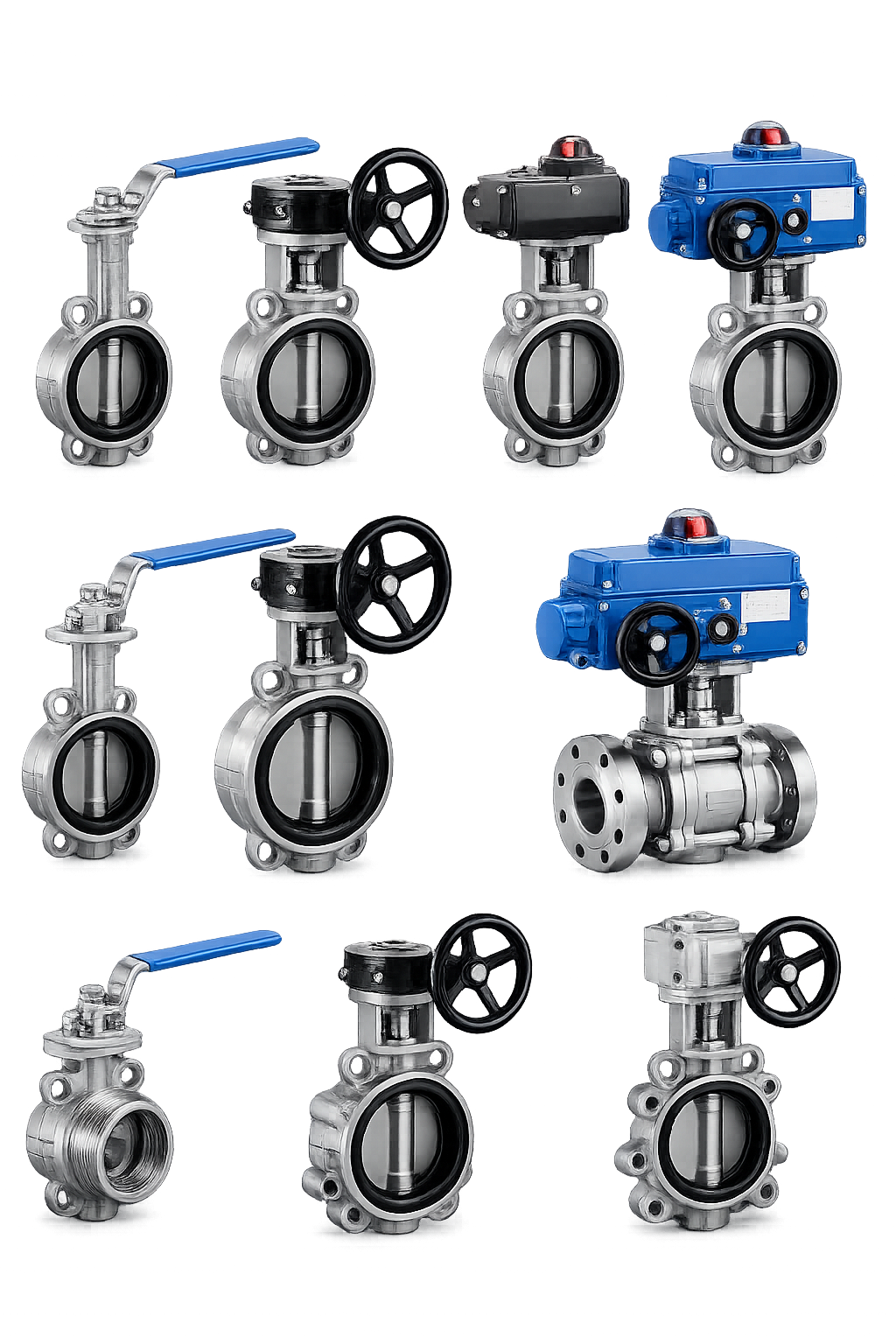
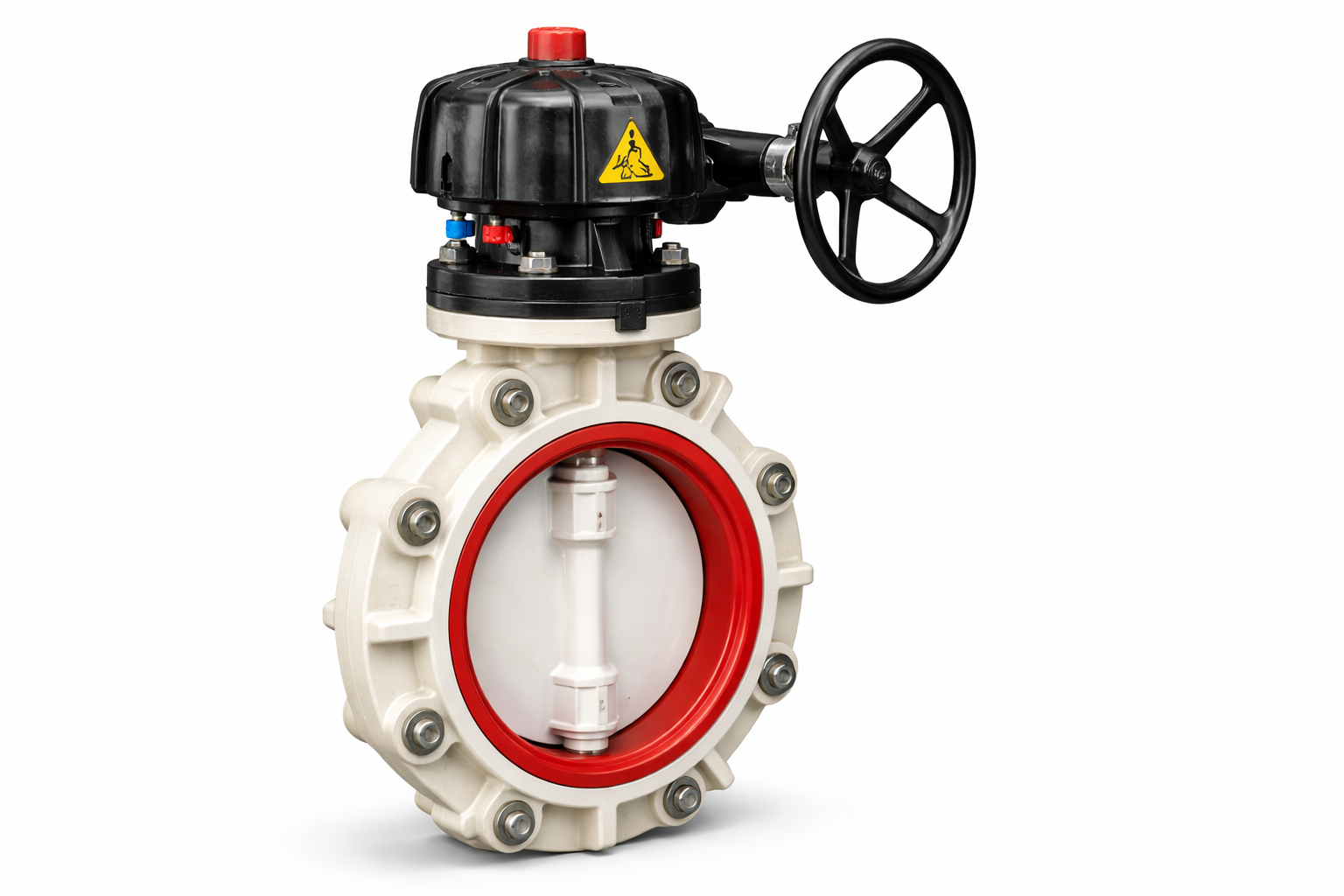
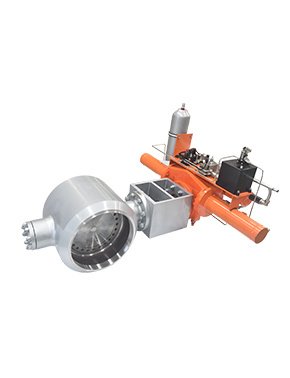
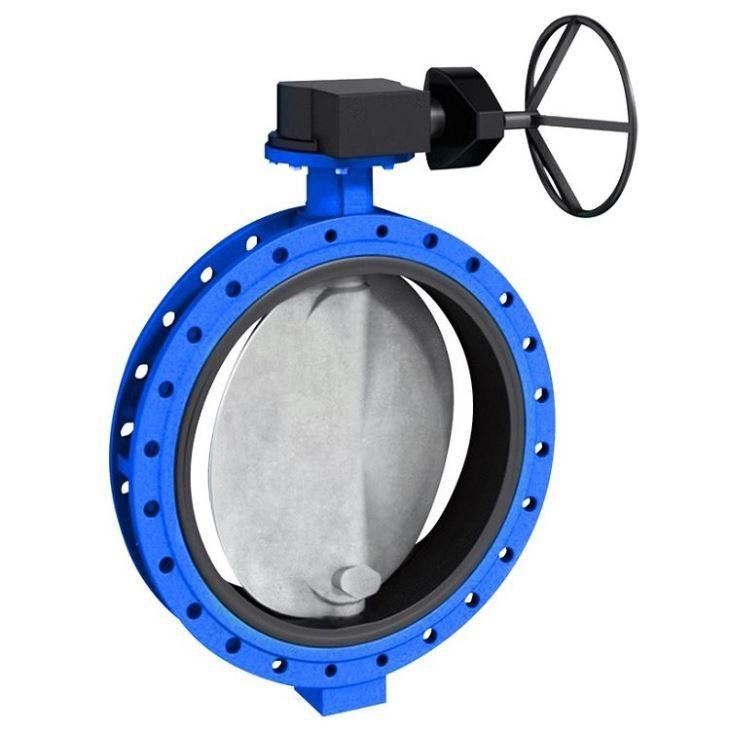
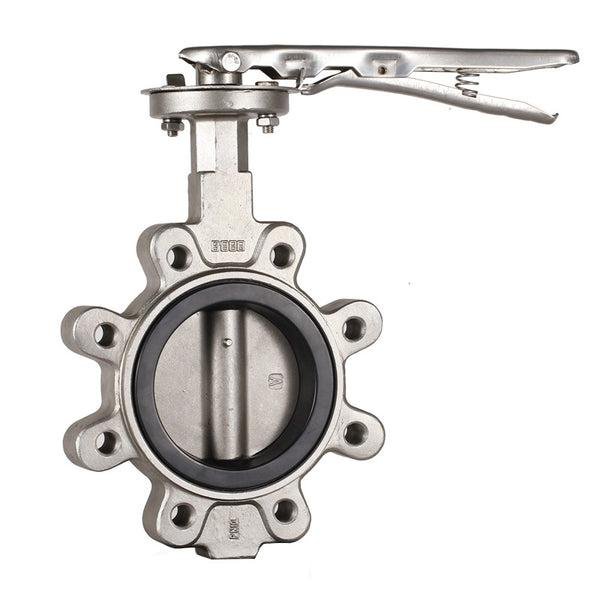
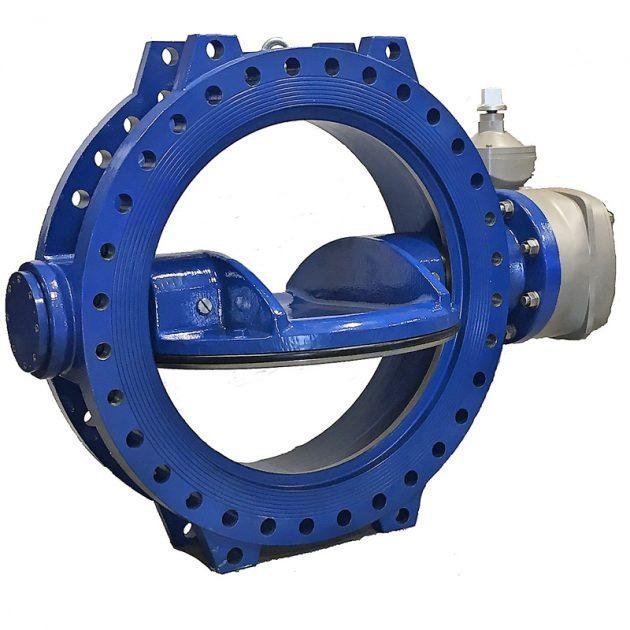
The existing butterfly valve category page includes product navigation for wafer, lug, flanged, soft-seated, metal-seated, high-performance, triple-offset and actuated configurations. Keep those original product cards and genuine product photographs on the published page. Use the engineering checks below to compare the relevant configurations; individual model availability and specifications require confirmation.

For detailed model-level evaluation, review the high-performance butterfly valve and butterfly control valve pages where relevant, or request a model-specific datasheet. These examples do not imply that all listed configurations share the same ratings or testing.

Scope of this module: Engineering selection, supplier comparison and RFQ preparation. Existing commercial product cards, images and quote tools remain authoritative only to the extent supported by approved model documents.

Industrial Butterfly Valves for Project Requirements

A butterfly valve uses a rotating disc for quarter-turn flow isolation and, where the valve design and operating conditions permit, throttling. Compact construction can be attractive for industrial piping, but a valve suitable for general water service cannot automatically be transferred to corrosive, abrasive, high-temperature, or high-differential-pressure duty.

Before requesting a quotation, the buyer should identify the process medium and phase; normal and design pressure and temperature; nominal size; pressure class; end connections; materials; required shut-off performance; differential pressure; operating frequency; and documentation requirements.

Quick Selection: Match the Valve to the Service

For a broader engineering overview of construction, materials and application considerations, see the butterfly valve selection guide. The checks below support preliminary screening and do not replace model-specific verification.

Use the following as a bid-preparation screen, not as an approval of a valve design. A proposed model must still be checked against its pressure-temperature rating, materials, leakage test basis, and installation conditions.

Project conditionInitial reviewRequired confirmation
Water or utility isolationConsider a compatible resilient-seated designWater chemistry, seat compatibility, differential pressure and rating
Elevated temperatureReview seat limitations and suitable offset constructionsModel-specific pressure-temperature envelope and leakage acceptance
Corrosive or abrasive mediumReview all wetted components and solids exposureFluid concentration, particle characteristics, corrosion/erosion assessment
Automated frequent cyclingReview actuator type and operating dutyBreakaway, running and seating torque, cycle rate and supply conditions
Maintenance or dead-end isolationReview lug or other suitable connection arrangementsManufacturer-approved dead-end pressure and installation instructions
Specified tight shut-offEvaluate seat design and testing requirementsTest medium, direction, pressure, standard and leakage criterion

Butterfly Valve Types and Construction Options

Wafer, Lug, and Flanged Butterfly Valves

For a model-level example of wafer construction, review the high-performance wafer shut-off butterfly valve. Confirm the quoted model’s connection dimensions, pressure rating, materials and seat-test requirements before selection.

Wafer butterfly valves are fitted between mating pipeline flanges. Their compact construction can reduce installation space, but flange compatibility, bolting, and maintenance arrangements must be checked.

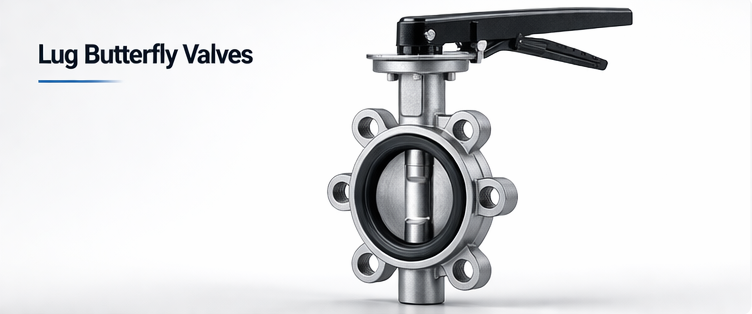
Lug butterfly valves use lugged body connections. They can be considered for piping arrangements with particular maintenance needs, but dead-end service is permitted only when the specific product design and rating support it.

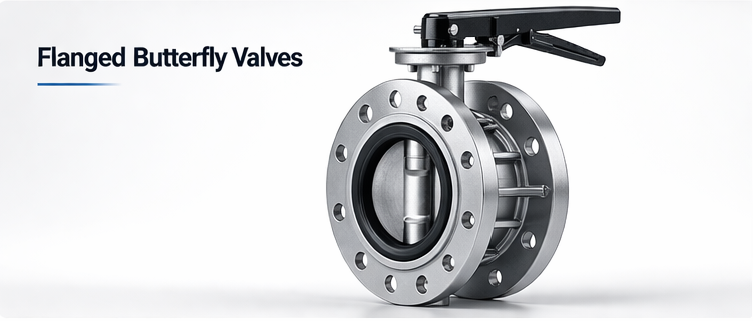
Flanged butterfly valves incorporate flanged ends. Confirm flange standards, drilling, face-to-face dimensions, gasket arrangement, and pressure rating against the piping specification.
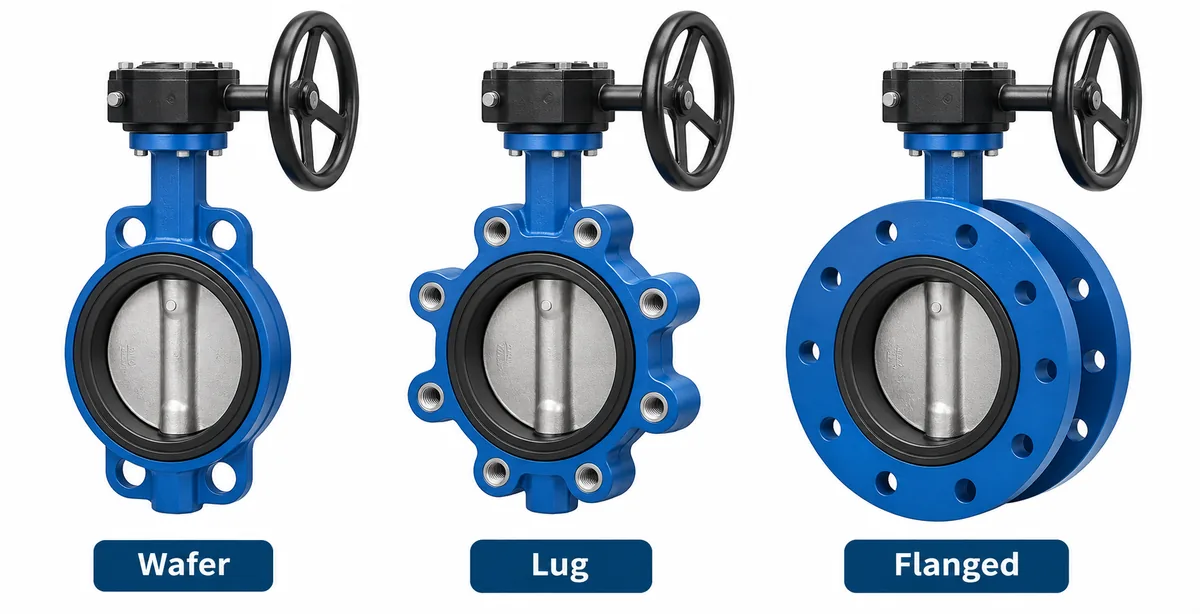
Butterfly valve manufacturers: wafer, lug and flanged industrial valve end connection comparison
Conceptual illustration of common butterfly valve end connections; not a product dimensional drawing.

Concentric, Double Offset, and Triple Offset Designs

Concentric butterfly valves commonly use resilient seating and are evaluated for compatible utility and process duties within the manufacturer’s verified limits.

Double offset butterfly valves use eccentric geometry that can reduce certain seat-contact effects during operation. Seat construction, differential pressure, and shut-off requirements remain design-specific.

Triple offset butterfly valves use additional sealing geometry and may be considered for selected demanding isolation services. Triple offset construction alone does not establish a particular leakage class, fire-test qualification, or service rating.
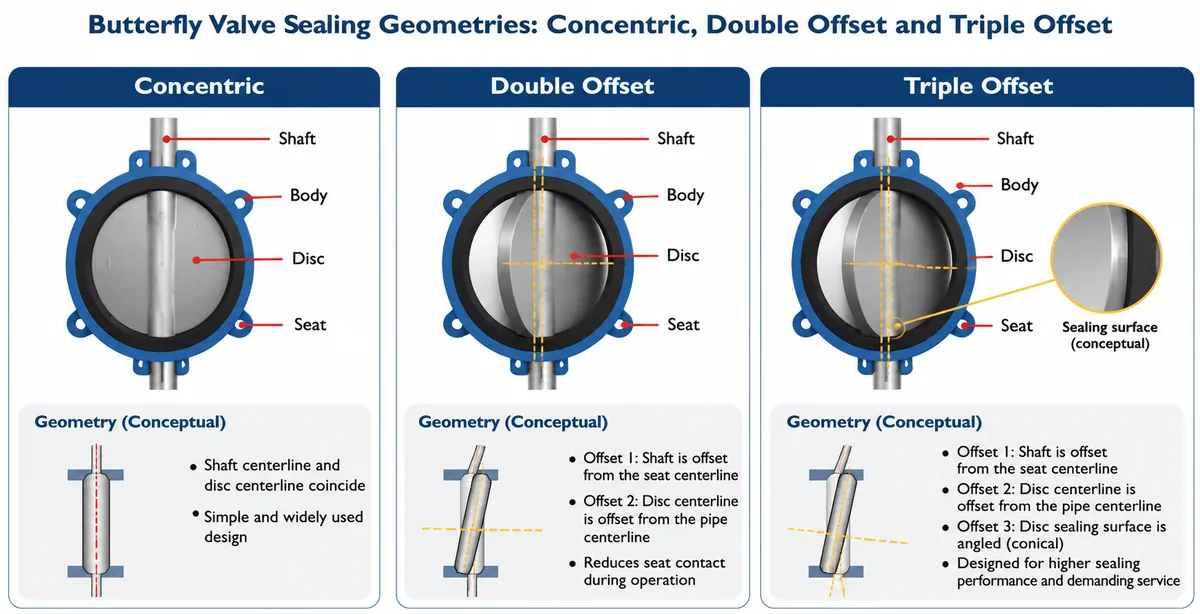
Concentric, double offset and triple offset butterfly valve sealing geometry comparison
Conceptual illustration only, not an exact shaft-offset or seat-contact geometry. A qualified engineer must approve the depiction before publication.
DesignInitial evaluation directionConfirm before purchase
WaferCompact installation between flangesFlange compatibility and installation limits
LugMaintenance-oriented piping layoutsDead-end rating and bolting
FlangedIntegral flanged connectionFlange standard and face-to-face dimensions
ConcentricCompatible utility and process servicesSeat material and pressure-temperature limits
Double offsetEccentric sealing designSeat construction and leakage performance
Triple offsetSelected demanding isolation dutiesSealing qualification and service limits

Butterfly Valve Materials and Seat Selection

RFQ scenario — seat compatibility: A quotation may list an EPDM seat without stating the cleaning chemicals or maximum process temperature. The material name alone does not establish compatibility: request the fluid composition, concentration, normal and upset temperatures, cleaning cycle, and the exact seat compound approval. If those inputs are unavailable, mark seat suitability Not Confirmed rather than approving the quotation.

Material selection starts with the process medium and the full operating envelope. Review the body, disc, stem, seat, and other wetted components as an assembly, rather than selecting one preferred alloy in isolation.

Body

Review pressure-temperature rating, corrosion exposure, mechanical requirements, and applicable design rules. Potential material families include iron, carbon steel, stainless steel, and project-specific alloys, subject to the actual product offering.

Disc and Stem

Check corrosion, erosion, mechanical loads, torque transmission, and seat-contact conditions. Verify the exact material and construction from the proposed datasheet.

Soft Seats

EPDM, NBR, PTFE-based, and other seat constructions have different chemical and temperature limitations. Compatibility must be confirmed for the medium and concentration.

Metal Seats

Metal seating may be considered where soft-seat limitations apply. A metal seat does not by itself guarantee a particular shut-off leakage class.
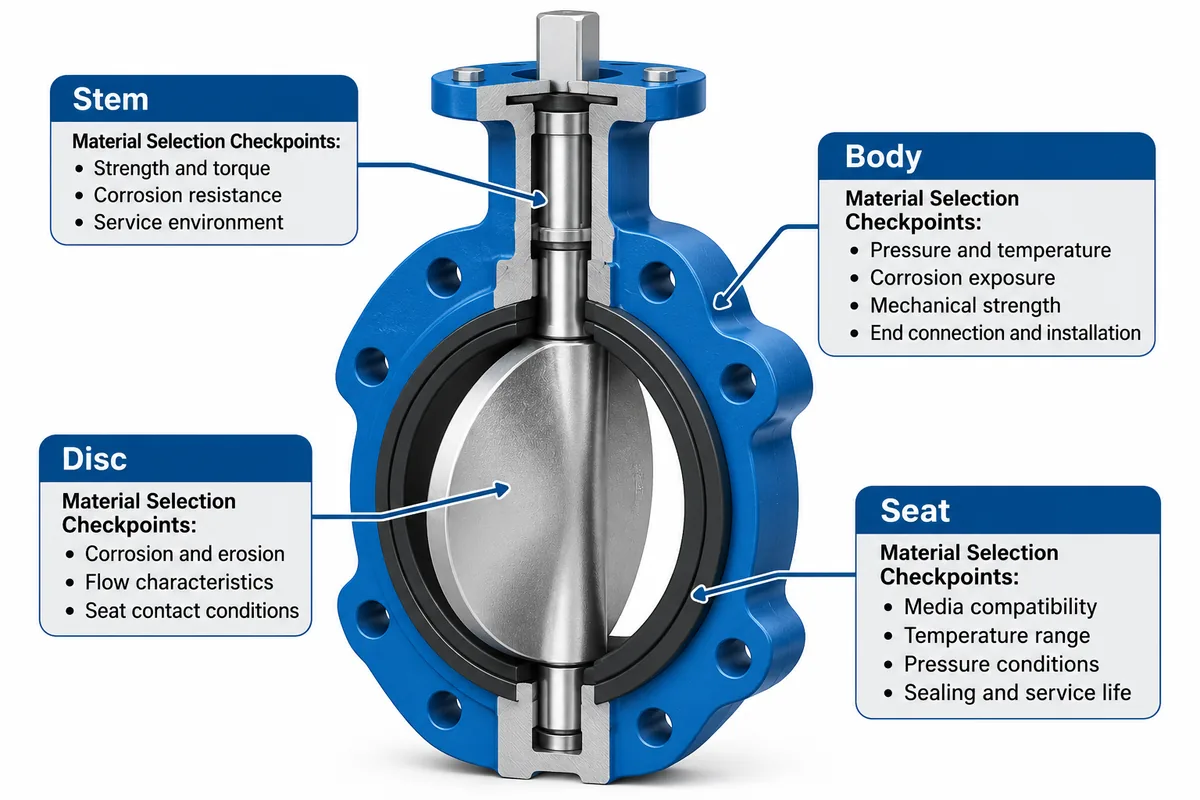
Butterfly valve body disc stem and seat material selection checkpoints
Conceptual component diagram showing material and service-condition review points.

Manual, Pneumatic, and Electric Butterfly Valve Actuation

Actuator review scenario: An actuator selected only from valve size may operate during a shop test yet fail to seat against the maximum specified differential pressure. Request breakaway, running and seating torque for the offered seat and service, then check the actuator output at minimum available air pressure or voltage and the required fail action. Do not infer a suitable actuator size from nominal diameter.

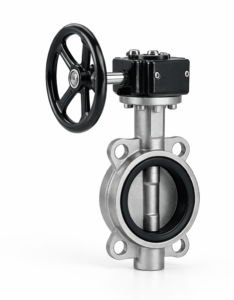
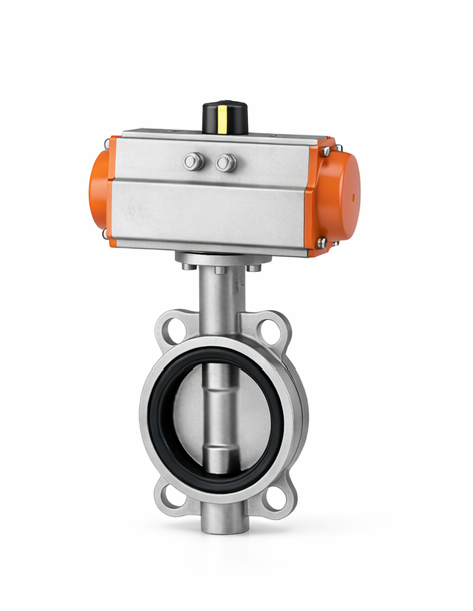
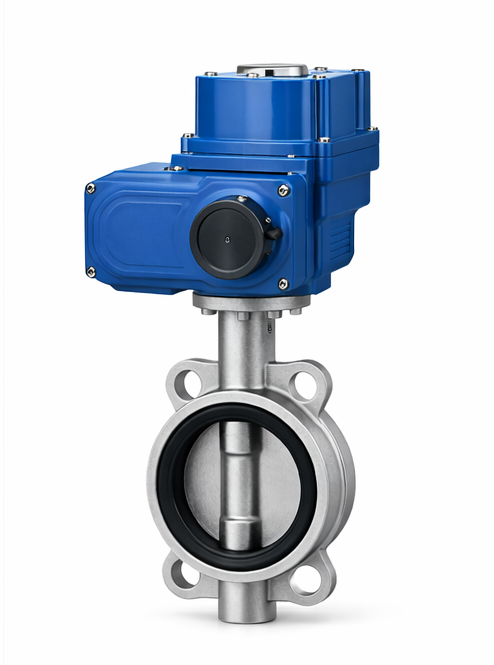
Operation may be manual or automated. A lever may be appropriate where torque and access permit; a gearbox provides mechanical advantage. Pneumatic and electric actuators can support remote or automated operation when matched to the valve and control system.

Actuator selection requires manufacturer-confirmed breakaway, running, and seating torque under the specified differential pressure and temperature. Also define operating time, frequency, supply conditions, accessories, and the required failure position.
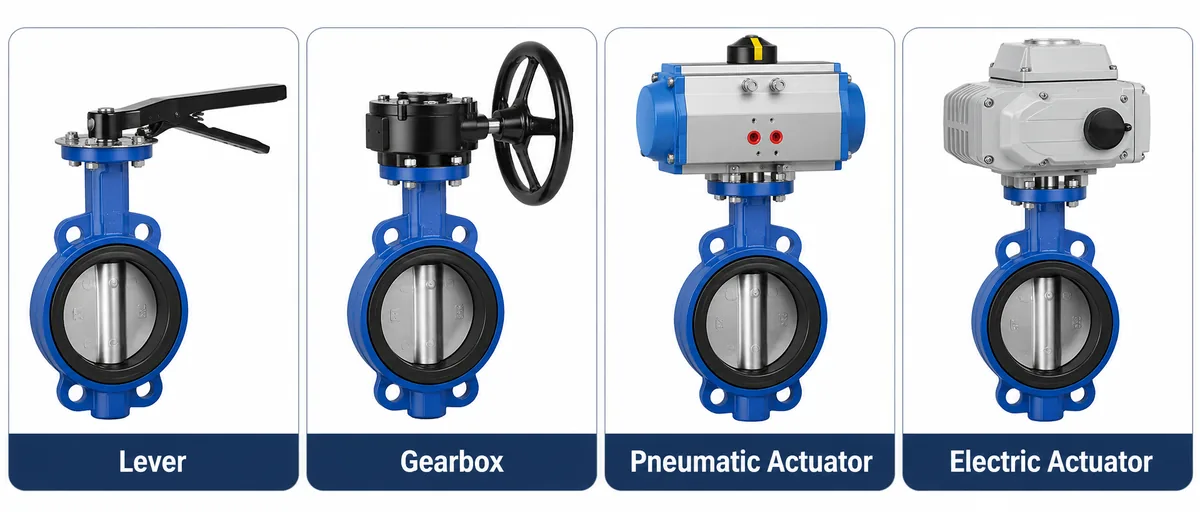
Manual lever gearbox pneumatic and electric butterfly valve actuation options
Concept illustration — Illustrative operation configurations; actuator sizing must use verified valve torque data.

Installation and Operating Risks to Review

Installation review scenario: A valve may match the mating flange standard but its rotating disc can extend into a pipe liner, reducer or adjacent spool. Before approval, compare the manufacturer disc-sweep drawing with the actual pipe bore and installation clearance; verify the permitted gasket and bolting arrangement rather than relying on flange size alone.

Even a correctly specified butterfly valve can perform poorly if the installation and operating envelope are overlooked. Flag the following items during design review and technical bid clarification.

Potential issueWhy it mattersVerification before release
Disc interference with adjacent pipingThe disc may project beyond the valve body during rotationCheck actual disc sweep, pipe bore, flange and adjacent equipment clearances
Unsupported dead-end operationConnection and bolting loads may differ from normal installationRequest explicit dead-end approval and rating for the selected model
Wrong gasket or flange arrangementSealing and clamping loads depend on the valve-end designFollow the manufacturer installation drawing and flange/bolting instructions
Excessive differential pressure or throttling dutyMay cause vibration, cavitation, noise, erosion or operating difficultyReview flow conditions, operating opening range and valve suitability
Insufficient actuator torqueValve may fail to open, close or seat reliablyConfirm torque at worst-case differential pressure and supply conditions
Seat exposure outside its limitsCan compromise sealing and service lifeVerify temperature, chemical compatibility and cleaning/sterilization conditions

Confirm Manufacturer, Supplier and Inspection Responsibilities

When comparing butterfly valve manufacturers, distinguish the company issuing the quotation from the entity responsible for the offered valve. A commercial butterfly valve supplier may manufacture, assemble, source or coordinate production through different entities. Before technical bid acceptance, request the legal manufacturing entity and production location for the proposed model, identify who controls final assembly and pressure testing, and agree who signs inspection records. Do not infer these details from a website category description alone.

ResponsibilityEvidence to requestAcceptance status
Manufacturing entity and locationNamed entity, production location and agreed scopePending project confirmation
Product model and ratingApproved datasheet, drawing and pressure-temperature limitsPending model documents
Material traceabilitySpecified material certificates and identification recordsPer purchase specification
Testing and inspectionAgreed ITP, test procedures, witness points and signed reportsPer purchase specification
Documentation releaseDeviation list, as-built documents and final document indexPer purchase specification

Raymon Valve’s company overview describes wider manufacturing and quality activities, but this page does not independently establish that every activity applies to the specific butterfly valve offered. Request evidence against the quotation and purchase order.

Manufacturing Quality, Inspection, and Documentation

Receiving inspection scenario: A material test certificate can be complete while a component identification or heat-number transfer is missing. Where the project requires positive material identification (PMI), agree the component coverage and acceptance procedure; PMI is an alloy-verification check, not a replacement for the material certificate, heat-treatment record or traceability chain.

When evaluating butterfly valve manufacturers, request documented evidence suited to the project risk and purchase specification. General marketing descriptions do not replace model-specific technical records.

Material Traceability

Where specified, define which components require material certificates, heat-number identification, and traceability records. Request the relevant material specifications and document format before purchase.

Manufacturing and Assembly Controls

Relevant controls may include dimensional checks, component identification, assembly verification, and functional testing. For critical projects, agree the inspection and test plan (ITP), hold points, and witness points in advance.

Shell and Seat Testing

Shell testing addresses pressure-boundary integrity under defined test conditions. Seat testing addresses closure leakage under a specified test procedure and acceptance criterion. Neither test alone proves fitness for every operating environment. See the valve pressure testing guide for additional background.

A functional test checks specified operation, not pressure-boundary integrity or seat tightness. NDT methods such as RT, UT, MT and PT address different discontinuity types and coverage; a successful hydrostatic test does not exclude every internal defect. Fire-safe and fugitive-emission qualification, where specified, require their own applicable evidence and cannot be inferred from routine shell or closure testing.

Third-Party Inspection

Specify any third-party witness requirements, inspection milestones, reports, and acceptance criteria at RFQ stage. Ask the supplier to confirm the available evidence and identify deviations.

For broader context, review the valve manufacturing process resource. This link provides background, not proof that every capability applies to the quoted product.

Butterfly Valve Standards and Testing Requirements

Different standards govern different aspects of a valve purchase. The buyer must identify the applicable scope, edition, project requirements, and documented conformity of the proposed model. For primary references, consult the International Organization for Standardization (ISO) and the American Petroleum Institute (API); these organizations publish standards information, but referencing a standard does not establish certification or model-specific compliance.

StandardGeneral reference areaProcurement check
API 609Butterfly valve product requirements within its scopeConfirm applicability and specified edition
EN 593Industrial metallic butterfly valves within its scopeConfirm product scope and edition
API 598Valve inspection and pressure testingSpecify relevant tests and acceptance criteria
ASME B16.5Pipe flanges and flanged fittings within its scopeVerify flange dimensions and pressure class
ISO 5208Pressure testing of metallic valvesDefine applicable leakage acceptance criteria

Refer to the valve standards resource for related terminology. The standards listed above are general references; they do not constitute a claim that every Raymon Valve product has been tested or certified to them. Confirm the latest ISO 5208 edition and its applicability with the official standards publisher and the controlling project specification before purchase.

How to Evaluate Butterfly Valve Manufacturers

A technical bid evaluation of butterfly valve manufacturers should compare suppliers on the same documented requirements. Ask each supplier for model-specific drawings, material details, pressure-temperature ratings, testing scope, actuator data when applicable, and an explicit deviation list.

Evaluation areaEvidence to requestRisk controlled
Valve constructionDatasheet and dimensional drawingsWrong configuration or connection
MaterialsMaterial specifications and certificatesUnverified compatibility
Pressure ratingModel-specific rating informationIncorrect service envelope
Seat performanceTest basis and results where requiredUnacceptable leakage
ActuationValve torque and actuator specificationInadequate operating capability
InspectionITP and inspection recordsMissing acceptance evidence
Commercial scopeQuotation and technical deviation listUnclear exclusions

Verify whether the quoted company performs manufacturing activities, supplies third-party products, or offers both. Manufacturing responsibility, traceability, inspection arrangements, and warranty scope should be established from documents rather than inferred from the word “manufacturer.”

Normalize Technical Bids Before Comparing Price

Two quotations may use the same nominal size and pressure class while offering different seats, end connections, leakage acceptance, test records or actuator accessories. Record each proposed exception as Compliant, Deviation or Not Confirmed; request a written clarification before treating the bids as equivalent.

Example clarification: “Please confirm whether the offered lug butterfly valve is rated for the specified dead-end service at the design differential pressure, and provide the model-specific supporting document.”

Documentation by Procurement Milestone

MilestoneDocuments or decisions to agree
RFQ / technical bidDatasheet, GA drawing, material list, pressure-temperature rating, exceptions and testing proposal
Before manufacture or inspectionApproved drawings, ITP, hold/witness points, traceability and inspection scope
Before dispatchAgreed test reports, material records, inspection release, marking, packing and O&M documents

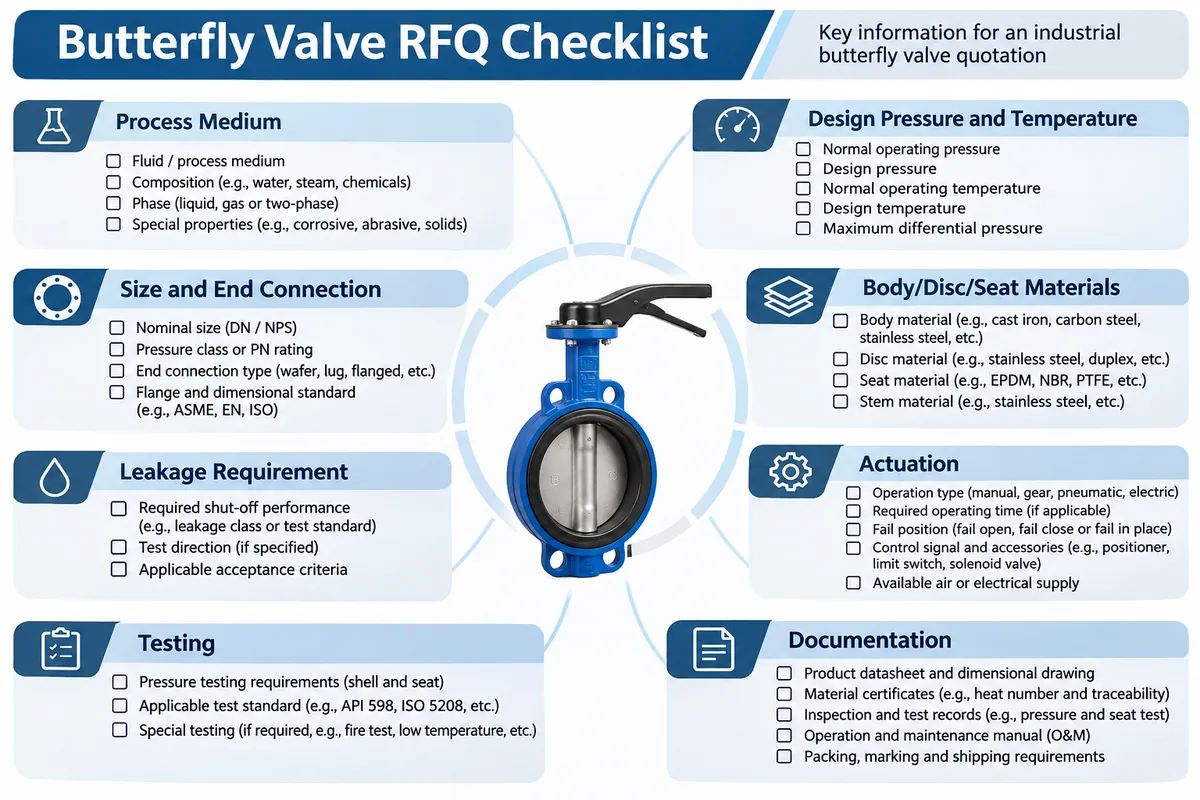
Butterfly Valve RFQ Checklist

Provide the following information when requesting quotations from butterfly valve manufacturers, so technical offers can be compared on the same basis:

Process Conditions

  • Medium, composition, and phase
  • Normal and design pressure
  • Normal and design temperature
  • Maximum differential pressure
  • Isolation or throttling duty

Valve Configuration

  • DN/NPS and PN/Class
  • End connection and flange standard
  • Body, disc, stem, and seat materials
  • Required leakage acceptance
  • Design and testing standards

Operation

  • Lever, gearbox, pneumatic, or electric
  • Operating time and duty cycle
  • Air/electric supply
  • Fail position and control accessories

Inspection and Delivery

  • Shell and seat testing
  • Material certificates and traceability
  • ITP and witness points
  • Drawings, manuals, and records
  • Marking, packing, and shipping scope
Industrial butterfly valve RFQ checklist for process materials pressure actuation testing and documentation
RFQ checklist illustration for engineering and procurement teams.

Frequently Asked Questions

What should buyers look for in butterfly valve manufacturers?

Evaluate product suitability, material compatibility, pressure-temperature ratings, testing, traceability, documentation, technical deviations, and the supplier’s ability to support the specified project.What is the difference between a butterfly valve manufacturer and a supplier?

A manufacturer performs defined manufacturing activities, while a supplier may provide products made by another organization. Confirm actual manufacturing responsibilities and documentation rather than relying on the company description alone.Which butterfly valve type is best for industrial applications?

No single design suits every service. Concentric, double offset, and triple offset valves have different characteristics. Final selection depends on verified process conditions and product data.Can butterfly valves be used for throttling?

Some designs can be used for throttling where approved. Check flow characteristics, differential pressure, cavitation, erosion, vibration, and actuator requirements with the manufacturer.What testing documents should a butterfly valve manufacturer provide?

The purchase specification may require shell and seat test records, material certificates, dimensional inspection reports, functional test records, and an ITP. Exact requirements depend on the project.Can butterfly valves use pneumatic or electric actuators?

Many designs can be configured for pneumatic or electric operation. Actuator selection must be based on confirmed valve torque and operating conditions.

Request a Butterfly Valve Quote

Send your datasheet or project specification for a technical and quotation discussion. Include the medium and composition, normal/design pressure and temperature, maximum differential pressure, size, pressure class, end connection, materials, leakage acceptance, operating method, required inspection documents, and requested delivery scope. If any field is not yet known, identify it as to be confirmed so the technical review can address the gap.Submit Your Butterfly Valve Datasheet

Final valve suitability and any applicable ratings, qualification, or testing scope must be confirmed for the proposed model.

Engineering note: Prepared by Raymon Valve Technical Content Team for preliminary engineering and procurement review. The selection tables are screening tools, not approval of a particular product. Confirm current standards, project requirements, manufacturer-approved datasheets, service ratings, test evidence and actuator torque before ordering. Named individual technical reviewer and product-specific evidence have not yet been supplied.

Leave a Comment

Your email address will not be published. Required fields are marked *

Butterfly valves

Industrial Valve Solutions

Industrial Butterfly Valves Manufacturer & Supplier

Raymon Valve supplies wafer, lug, flanged, soft seated, metal seated, high performance and triple offset butterfly valves for water treatment, oil & gas, chemical processing, power generation, HVAC and general industrial applications.

Browse butterfly valves by design, sealing type, end connection, actuation method and working condition.

Wide Size Range
Soft & Metal Seated Options
Manual, Pneumatic & Electric Actuation
Custom Valve Solutions Available
Size Range
DN40–DN2000+
Pressure Rating
PN10 / PN16 / PN25 / Class 150 / Class 300
Seat Options
EPDM / NBR / PTFE / Metal Seat
Standards
API / ANSI / DIN / BS / JIS / GB
BUTTERFLY VALVES category
Quick Valve Finder

Find the Right Butterfly Valve for Your Application

Use the quick links below to explore butterfly valves by sealing design, connection type, actuation method or service condition.

Sealing Type

Reliable shut-off performance for water, HVAC, air and general utility service.

Severe Service

Metal Seated Butterfly Valves

Designed for high temperature, abrasive media and demanding industrial conditions.

Connection Type

Compact and economical valves for installation between flanges in space-saving systems.

Maintenance Friendly

Suitable for dead-end service and easier downstream maintenance in industrial pipelines.

Robust Installation

A stronger connection option for larger sizes and more demanding pipeline systems.

Automation

Actuated Butterfly Valves

Available with pneumatic and electric actuators for automated process and control systems.

Butterfly Valve Categories

Browse Our Industrial Butterfly Valve Range

Raymon Valve offers a full range of butterfly valves for shut-off, throttling and automated flow control across general, corrosive, high temperature and project-specific applications.

Explore butterfly valve categories by application scope, sealing type, automation requirement and custom project demand.

01

General Service
General Purpose Butterfly Valves

Cost-effective butterfly valves for water, HVAC, building services and general industrial pipelines.

02

Tight Shut-Off

Excellent sealing performance with resilient seat materials for clean and mildly corrosive media.

03

Severe Duty
Metal Seated Butterfly Valves

Engineered for higher temperatures, higher pressures and more severe service conditions.

04

Municipal & Pipeline
Large Diameter Butterfly Valves

Designed for municipal water supply, drainage, water conservancy and large-scale pipeline projects.

05

Automation
Actuated Butterfly Valves

Pneumatic and electric butterfly valves for remote control, automated lines and process systems.

06

Project Customization
Custom Butterfly Valve Solutions

Custom materials, seat options, end connections, actuation packages and project-based specifications.

By Structure & Sealing Design

Choose the Right Butterfly Valve by Sealing Performance and Service Requirement

Different butterfly valve designs offer different levels of shut-off performance, wear resistance, torque demand and temperature capability. Explore the main structure and sealing categories below to identify the most suitable solution for your operating conditions.

Selection Logic

Match Valve Design to Media, Temperature and Duty Level

From economical centerline designs to high performance and triple offset solutions, the right butterfly valve structure depends on sealing demand, cycle frequency, system pressure and service severity.

General Utility                        Centerline / Soft Seated
Higher Pressure                                 High Performance
High Temperature                                       Triple Offset
Low Torque Need                         Soft Seated Options
Economical Design
Centerline Butterfly Valves

For butterfly-valve water or utility duty, verify liner compatibility, pressure class, disc material and installation clearances.

Typical Use
Water, Utility, HVAC

01

Tight Shut-Off

Ideal for clean water, air and mild service conditions where reliable sealing and low torque are required.

Typical Use
Clean Media, Low Torque Duty

02

Higher Pressure Capability
High Performance Butterfly Valves

Double offset butterfly valves with improved sealing performance, reduced seat wear and higher pressure capability.

Typical Use
Process Systems, Higher Duty Service

03

Severe Service

Metal seated butterfly valves for high temperature, severe service, refinery, power and process applications.

Typical Use
High Temperature, Frequent Cycling

04

By End Connection Type

Select Butterfly Valves by Installation Method

Choose an end connection compatible with the pipeline layout, maintenance plan and project standard. Installation method affects access, piping loads and system compatibility.

Compact Systems
Wafer Type
Maintenance Access
Lug Type
Heavy Duty Pipelines
Flanged Type
Project Customization
Special End Designs
微信图片 20260414160531 173 46

Designed for compact installation between flanges. A common option for space-saving systems and general industrial service where economical layout and installation efficiency are priorities.

Typical Use
微信图片 20260414160600 174 46

Suitable for dead-end service and easier line isolation during maintenance or downstream equipment replacement.

Typical Use
Industrial Pipelines, Process Systems
微信图片 20260414160619 175 46

A stronger and more robust connection style often selected for larger sizes and more demanding municipal or industrial applications.

Typical Use
Municipal Water, Large Pipelines
微信图片 20260414160643 176 46
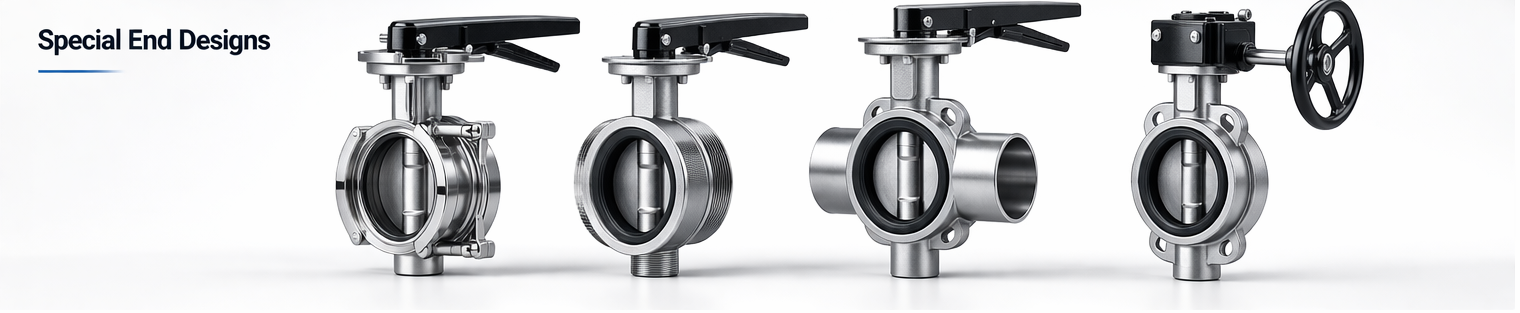
Special End Designs

Custom end connections are available for project-specific requirements, international standards and special installations across export and industrial valve applications.

Availability
Options Available on Request
By Operation & Actuation.

Manual and Automated Butterfly Valve Solutions.

Butterfly valves can use manual, pneumatic or electric operation. Confirm torque, cycle frequency, control signal, environment and fail position before actuator selection.

Basic Shut-Off
Manual Operation
Fast Automation
Pneumatic Actuation
Remote Control
Electric Actuation
Project Integration
Custom Packages
微信图片 20260414165724 178 46
Manual Butterfly Valves

Available with lever handle or worm gear operation for reliable on-off service, simple field control and economical installation in general industrial pipelines and utility systems.

Typical Use
Water, HVAC, Utility and General Shut-Off Duty
微信图片 20260414165746 180 46

Fast-response butterfly valves for automated process lines, remote shut-off and integration with industrial air-powered control systems.

Typical Use
Process Systems, Fast Cycling, Remote Shut-Off
微信图片 20260414165802 181 46
Electric Butterfly Valves

Electric actuation for butterfly valves should be sized from seating and unseating torque, duty cycle, power supply, enclosure and control requirements.

Typical Use
Building Automation, Utility Control, Process Lines
Custom Actuation Packages

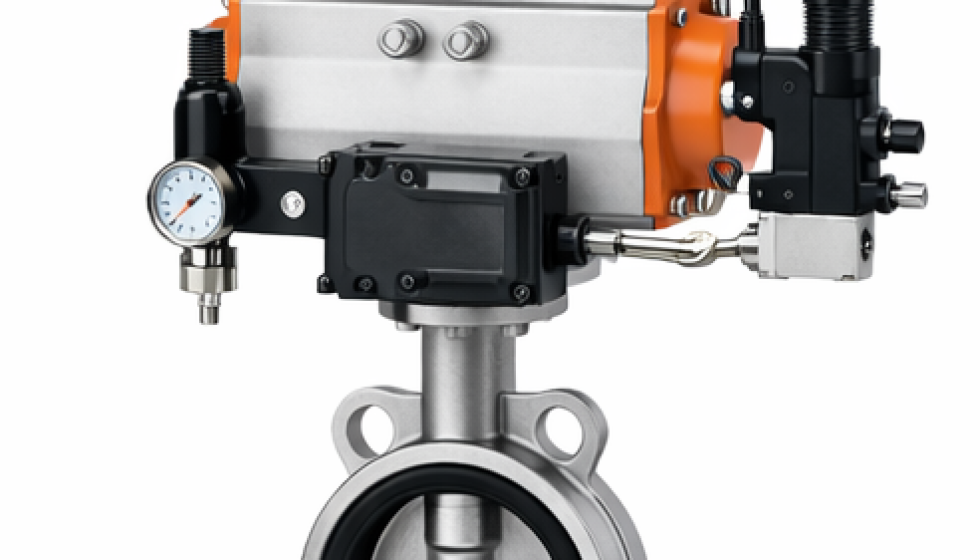
Actuator, positioner, limit switch, solenoid valve and control accessories are available according to project requirements, control logic and installation conditions.

Available Options
Pneumatic Actuator, Electric Actuator, Positioner, Limit Switch, Solenoid Valve
微信图片_20260414165822_183_46
Solutions by Working Condition

Butterfly Valve Options for Challenging Service Conditions

We help customers select the appropriate butterfly valve design, material and seat configuration according to medium, temperature, pressure and operating environment.

Selection Focus

Choose the Right Valve by Media, Temperature and Duty Level

Working condition has a direct impact on valve structure, seat design, torque demand, material choice and expected service life. Evaluate the conditions below before selecting a butterfly valve for your project.
Media Chemistry          Corrosive / Abrasive / Clean
Temperature Range Ambient to High Temperature
Operation Need       Low Torque / Frequent Cycling
System Scale     Utility to Large Diameter Pipelines
High Temperature Service

Metal seated and offset butterfly valve designs for elevated temperature applications where resilient seats may not provide adequate durability or sealing stability.

Recommended Design Direction
Metal Seated, High Performance, Triple Offset
4554
58498 1
Corrosive Media

PTFE lined, stainless steel and corrosion-resistant material options for aggressive service environments and chemical handling systems.

Typical Focus
PTFE Lining, Stainless Steel, Anti-Corrosion Materials
123
Abrasive Media

Durable valve structures and seat options for wear-prone applications, suspended solids and media that can damage standard sealing surfaces.

Typical Focus
Wear Resistance, Reinforced Sealing, Stronger Structure
8998
Large Diameter Water Service

Butterfly valves for municipal water supply, water treatment, irrigation and long-distance distribution systems with large pipeline diameters.

Typical Focus
Large Diameter, Flanged Design, Municipal Water Duty
shopping
Low Torque Operation

Seat and disc designs that reduce operating torque for easier manual operation or smoother actuator-driven performance in daily shut-off and control duty.

Typical Focus
Lower Operating Force, Easier Manual Control, Better Actuation Match
Severe Service Applications
Special designs for high pressure, frequent cycling and more demanding industrial operating conditions where durability and sealing reliability are critical.
Typical Focus
High Pressure, Frequent Cycling, Severe Duty Design
2eccb31a 1caa 4c58 a7fe b39644fbc971
Industry Applications

Butterfly Valves for Key Industrial Sectors

Our butterfly valves are used across a wide range of industries where dependable shut-off, flow control and long service life are required. Explore the main application sectors below to identify suitable valve solutions for your system.

Utility Systems
Water / HVAC / Municipal
Process Industry
Chemical / Power
Heavy Duty Service
Mining / General Industry
Water Treatment
Butterfly valves for filtration systems, transfer lines, treatment units and water distribution networks requiring dependable shut-off, corrosion resistance and easy maintenance.
Typical Need
Reliable Sealing, Corrosion Resistance, Easy Maintenance
Municipal Water Supply

Large diameter and flanged butterfly valves for city water supply, drainage and infrastructure-related pipeline systems.

Typical Need
Large Diameter, Stable Connection, Long Service Life
HVAC & Building Services

Compact and easy-to-operate butterfly valves for chilled water, cooling water and building utility systems.

Typical Need
Compact Design, Low Torque, Easy Daily Operation
Chemical Processing

Corrosion-resistant and lined butterfly valves for chemical media, controlled process environments and aggressive service duty.

Typical Need
PTFE Lining, Stainless Steel, Corrosion Protection
Power Generation

Butterfly valve solutions for cooling water, auxiliary systems and selected power plant services requiring dependable performance and stable operation.

Typical Need
Operational Stability, Temperature Resistance, System Reliability
Mining & General Industry

Heavy-duty butterfly valves for industrial pipelines, utility distribution systems and selected abrasive or demanding service environments.

Typical Need
Durability, Wear Resistance, Stronger Valve Structure

Need help matching industry conditions with the right butterfly valve design?

Technical Overview

Butterfly Valve Specifications and Manufacturing Capability

Our butterfly valve range is available in multiple materials, standards and configurations to meet international project requirements. Review the core technical parameters and manufacturing scope below.

Technical Data Matrix
BV / Industrial Range
Size Range
DN40–DN2000+
Pressure Rating
PN10 / PN16 / PN25 / Class 150 / Class 300
Body Materials
Cast Iron, Ductile Iron, Carbon Steel, Stainless Steel
Disc Materials
Ductile Iron, Stainless Steel, Bronze, Special Alloys
Seat Materials
EPDM, NBR, PTFE, Metal Seat
Connection Standards
ANSI, DIN, BS, JIS, GB
Design & Testing
API, ISO, EN and customer-specified standards
Operation Options
Lever, Worm Gear, Pneumatic, Electric
Engineered for Diverse Service Conditions
From general-purpose soft seated butterfly valves to high performance and triple offset designs, Raymon Valve provides technical support for material selection, seat design, actuation matching and project-standard compliance.
Product Scope                            General, Automated and Severe Service Designs
Technical Support                        Selection, Material Advice, Actuation Matching
Standards Coverage  ANSI, DIN, JIS, BS, GB and project-specific requirements
Supply Support          Documentation, testing records and export coordination
Material Flexibility
Body, disc and seat combinations for water, chemical, utility and industrial service.
Multi-Standard Production
Support for international connection, design and testing requirements.
Actuation Compatibility
Manual, pneumatic and electric solutions matched to real project conditions.
Project Customization
Customized structure, materials and accessories for industrial applications.

Need help matching industry conditions with the right butterfly valve design?

Why Raymon Valve

Why Customers Source Butterfly Valves from Raymon Valve

We support industrial customers, distributors, contractors and project buyers with a broad butterfly valve range, flexible manufacturing capability and responsive technical service for international supply requirements.

Product Coverage

General, Automated & Severe Service

Standards

ANSI / DIN / JIS / BS / GB

Support Scope

Selection, Testing, Export Coordination

Raymon Advantage
Built for Industrial Procurement and Project Supply
Raymon Valve supports customers who need practical butterfly valve solutions, stable production capability, flexible standards coverage and clear technical communication across industrial and export projects.
Core Value
Reliable Supply, Broader Range, Stronger Technical Coordination
Product Breadth

Wide Product Range

From wafer and lug types to flanged, high performance and triple offset butterfly valves for utility, industrial and severe service applications.

Flexible Manufacturing

Custom Manufacturing Support

Custom sizes, materials, seat options, actuator packages and project-based specifications are available for application-focused sourcing needs.

International Requirements

Multi-Standard Production

Support for ANSI, DIN, JIS, BS and GB standards to match international project requirements and regional procurement preferences.

Verification Support

Inspection & Testing Support.

State butterfly-valve material traceability, pressure-test records and witness requirements in the inspection and test plan.

Export Coordination

Export Experience

Butterfly-valve packing, document release and shipment marking are confirmed from the order and destination requirements.

Technical Response

Fast Technical Response

Our team helps evaluate working conditions and recommend suitable butterfly valve solutions for actual service environments and application targets.

 
Need application-based sourcing support?

Tell us your valve size, pressure, medium, standard and actuation requirements.

Application Experience

Butterfly Valve Solutions for Real Industrial Projects

Our butterfly valves are applied in municipal, industrial and utility projects where reliable shut-off, easy operation and long-term service performance are required.

111
444
EGJeiuF3ZWr0nPzc6UUWTOwB34QSK1d2qQJq4euHuAN9aaegLyo2KR6ZJU68acE a6FYYvtEMr15ktk5ggwetCeriVDyVdDI6qCwNHUotHS2x1JIpJyrhPXD dGF4t EgsjHdSQDGjrTJgxJahJgJ mZPweJW6kRBzIFpG6nlSHT9lwskAbQqh11PcWShm65
222
333
Need application-based sourcing support?

Tell us your valve size, pressure, medium, standard and actuation requirements.

Why Raymon Valve

Why Customers Source Butterfly Valves from Raymon Valve

International enquiries are reviewed against the stated service conditions, documentation list, inspection plan and delivery requirements before quotation.

Practical Valve Supply Experience for Utility, Building and Industrial Systems

Raymon Valve supports customers across infrastructure, building utility and industrial pipeline projects where butterfly valves must match installation method, service conditions, operating frequency and procurement requirements.

  • Application Scope
  • Water, Utility, Industrial and Severe Service
  • Supply Focus
  • Shut-Off, Control, Automation and Customization
  • Project Support
  • Selection, Standard Matching, Export Coordination
  • Buyer Types
  • Contractors, Distributors, EPC and End Users
Tell us the medium, line size, pressure rating, end connection and actuation requirement, and we will recommend a suitable butterfly valve solution.
Municipal Water Pipeline Systems
Large diameter butterfly valves for water transmission, supply networks and infrastructure-related distribution projects where stable connection, simple maintenance and reliable shut-off performance are required.
Typical Project Focus
Large Diameter, Flanged Design, Municipal Water Distribution
HVAC and Utility Distribution Lines

Soft seated butterfly valves for chilled water, cooling systems and building service pipelines where compact design, low torque and easy operation are important for routine use.

Typical Project Focus
Compact Design, Low Torque, Daily Shut-Off and Control
Industrial Process and Severe Service Applications

Metal seated and offset butterfly valves for higher temperature and more demanding process environments where sealing durability, material suitability and service reliability are critical.

Typical Project Focus
High Temperature, Severe Duty, Higher Pressure and Frequent Cycling
Need project-based valve selection support?

Share your project conditions and our team will help match the right butterfly valve solution.

Butterfly Valves: Ultimate Guide​

Wafer butterfly valves are installed between flanges and are often selected for compact, cost-effective systems. Lug butterfly valves feature threaded lugs that allow easier maintenance and can support certain dead-end service conditions. Flanged butterfly valves provide a stronger connection and are commonly used in larger sizes or more demanding pipeline systems.

Soft seated butterfly valves are commonly chosen for water, air, HVAC and other general industrial services where tight shut-off, low torque and cost-effective performance are required. They are especially suitable for clean or mildly corrosive media.

Metal seated butterfly valves are typically used for higher temperature service, abrasive media, frequent operation or more severe industrial conditions where resilient seats may not provide adequate durability.

Butterfly valves are widely used in water treatment, municipal water systems, HVAC, chemical processing, power generation, mining, marine service and general industrial pipelines.

Yes. Raymon Valve supplies butterfly valves with pneumatic or electric actuators, along with accessories such as limit switches, solenoid valves, positioners and control components according to project requirements.
What materials are available for butterfly valve body, disc and seat?
 
What standards do your butterfly valves comply with?
Can you provide customized butterfly valves?

Available body materials include cast iron, ductile iron, carbon steel and stainless steel. Disc materials can include ductile iron, stainless steel, bronze and special alloys. Seat options include EPDM, NBR, PTFE and metal seats.

Our butterfly valves can be manufactured according to ANSI, DIN, BS, JIS and GB standards, with design, testing and inspection support based on project requirements and applicable international standards.

Yes. We support customized butterfly valve solutions including special materials, large sizes, end connections, actuation packages and application-based valve selection for industrial projects.

Priority commercial page

Match offset geometry, seat architecture and installation restraint to the actual system

A compact body is not the selection basis. Disc clearance, seat loading, directionality, temperature, line forces and end-of-life torque must be resolved.

Who this page is for

Water, process, energy and infrastructure valve buyers.

Primary search task

Butterfly-valve type comparison and selection. Search-volume data is not asserted without connected GSC or keyword-tool evidence.

DecisionWhy it changes the offerRecommended review routeEvidence to request
GeometryConcentric, double-offset and triple-offset designs load seats differently.Match architecture to shutoff, cycling and temperature.Section drawing and seat engagement
Body connectionWafer, lug, flanged and welded bodies carry different piping constraints.Confirm end restraint, dead-end duty and removal plan.Installation drawing and flange standard
Disc and seatVelocity, particles and chemistry affect edge and liner wear.Treat the complete wetted system as one compatibility decision.Disc/shaft/seat materials
Torque and surgeDeposits and closure speed can alter actuator load and water hammer.Use worst credible service torque and system limits.Torque data and closure-time requirement
Application decision patterns

Three realistic contexts to test the specification

These are illustrative engineering decision scenarios—not named customer projects, installed-performance claims or promises of suitability.

Municipal-water header

Decision pressure: Low head loss, coating, seat life and surge govern the package.
Engineering route: Compare concentric or high-performance routes using water quality and velocity.

Local water approvals are project-specific.
Hot hydrocarbon isolation

Decision pressure: Seat temperature, fire expectations and leakage direction can control design.
Engineering route: Screen offset metal-seat construction with verified qualification.

Do not infer fire-safe scope from appearance.
Automated cooling circuit

Decision pressure: Frequent movement and deposits raise end-of-life torque.
Engineering route: Coordinate valve, actuator, feedback and maintenance access.

Actuator margin requires project utilities and cycling data.
E-E-A-T and approval evidence

Evidence that should exist before technical approval

Disc/shaft/seat constructionFace-to-face and flange interfaceDirectionality and dead-end ratingTorque curveCoating/lining recordsShutoff and qualification evidence
Content responsibility and limits. This page supports early technical and commercial evaluation. Raymon Valve’s content team maintains the public guidance; the responsible project engineer, purchaser and quality reviewers must approve order-specific construction, calculations, standards/editions, materials, tests and deviations. Application patterns above are not customer case studies. Review the technical content and evidence policy. Updated 29 July 2026.
Next decision

Provide line velocity, shutoff and installation constraints

Mark confirmed inputs, preliminary assumptions and open questions separately so the first review can focus on risk.

en_USEnglish
Scroll to Top