Knowledge Center · Engineering Selection Guide
Soft Seated vs Metal Seated Ball Valve: An Engineering Selection Framework
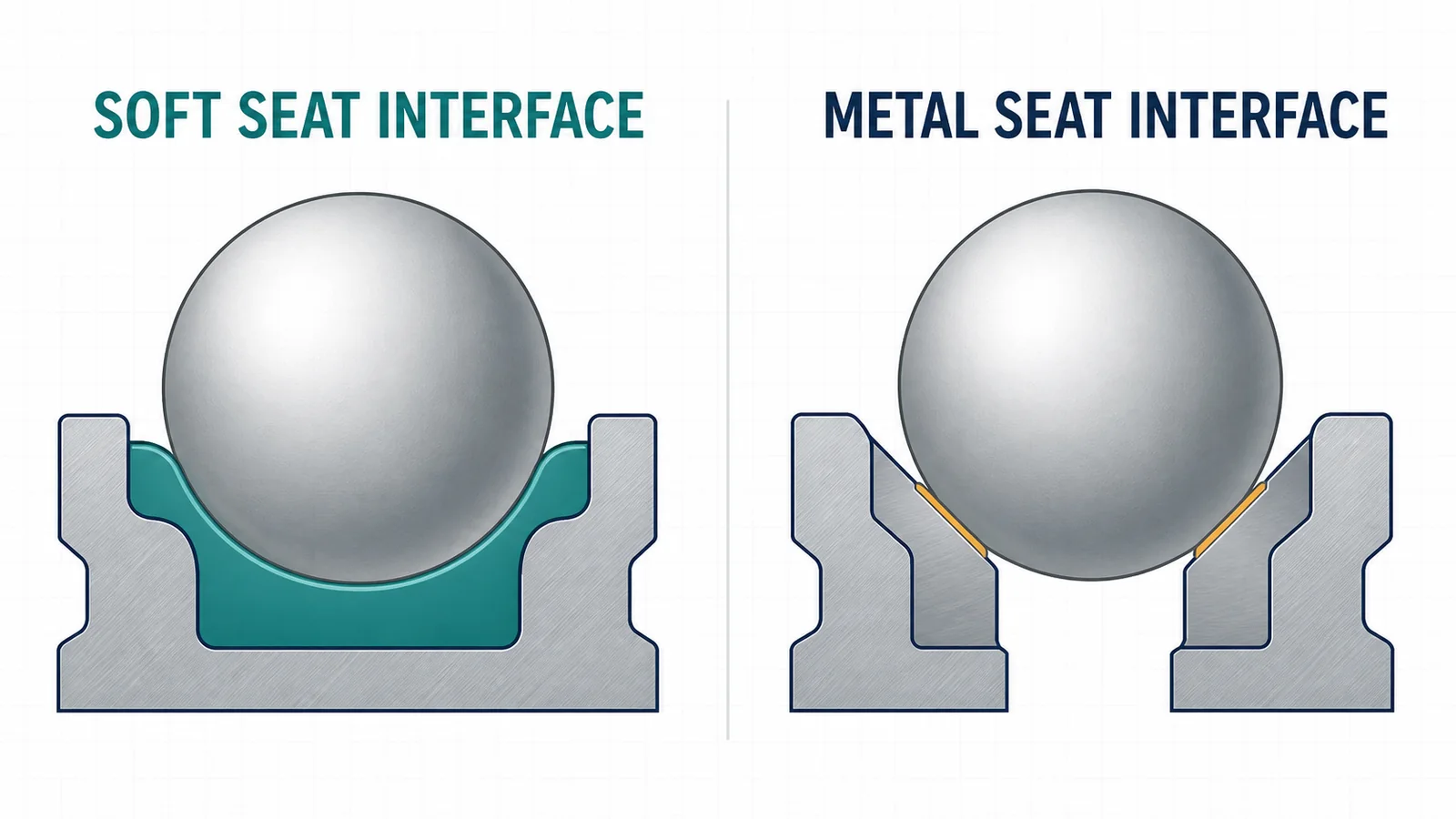
A soft seated ball valve uses a nonmetallic seat at the primary ball-to-seat interface, while a metal seated ball valve uses metallic contact surfaces. Neither construction is universally better. The decision changes with fluid composition, solids, pressure, temperature, differential pressure, shutoff requirement, cycling, possible damage mechanisms, torque, and required evidence.
Use the seat label as the beginning of the review—not the final selection criterion.
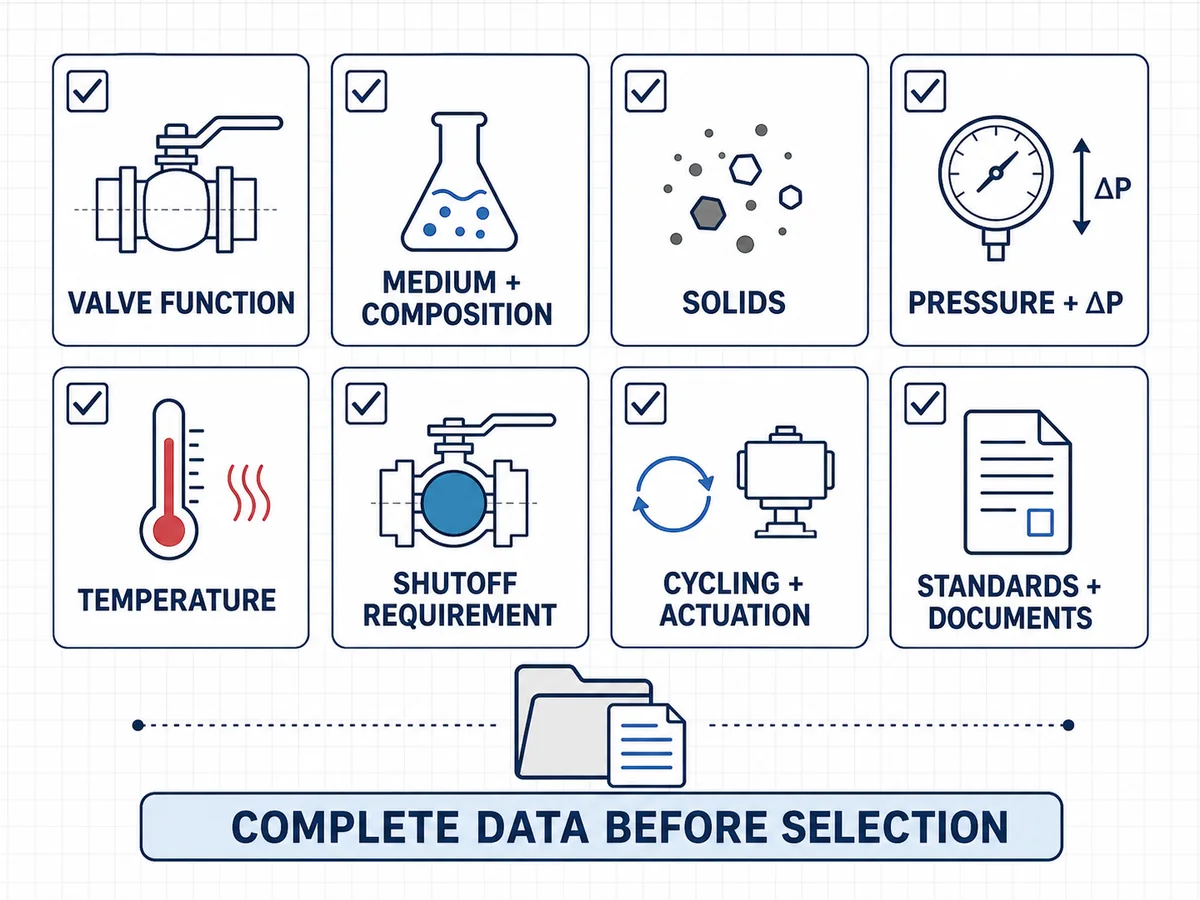
Pre-Shortlist Decision Gate
Do not shortlist a seat direction until these questions have defensible answers:
- What function must the valve perform?
- What are the fluid composition, phase and solids?
- What are the normal, design and differential-pressure conditions?
- What shutoff acceptance must be demonstrated?
- What damage mechanisms could control the decision?
- What product data, torque basis and documents will verify the proposal?
Open item If any answer is missing, keep the seat decision open rather than assuming a supplier commitment.
What Actually Changes?
A soft seat normally uses a polymeric or composite seat. Its behavior depends on the exact compound, geometry, support, pressure, temperature, fluid exposure, cycling and time under load.
A metal seat uses a metallic sealing pair. The result depends on the substrates, geometry, finish, material pairing, lapping and any coating or hardfacing—not simply the words “metal seated.”
The designation describes the primary ball-to-seat interface, not the entire valve. Stem packing, body seals, gaskets, bearings and other components can impose separate limits.
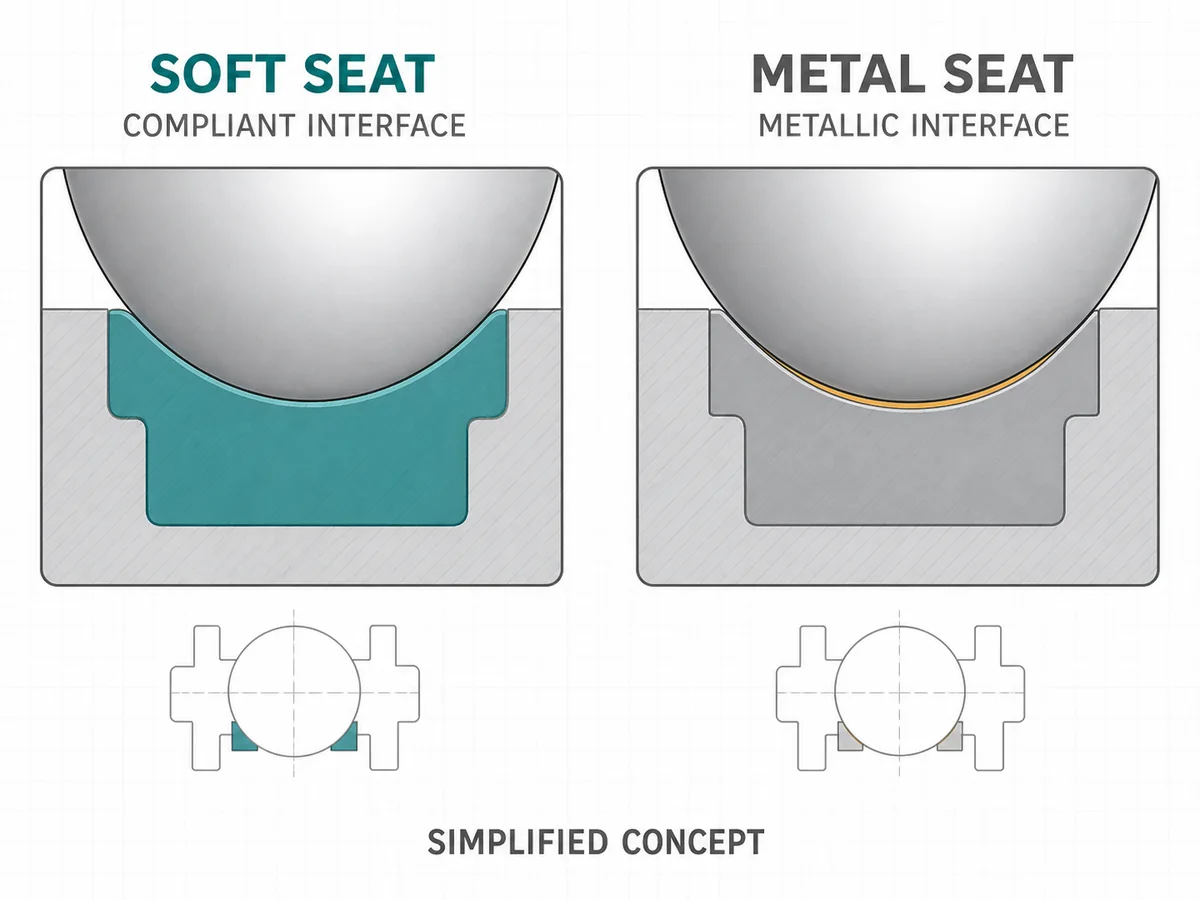
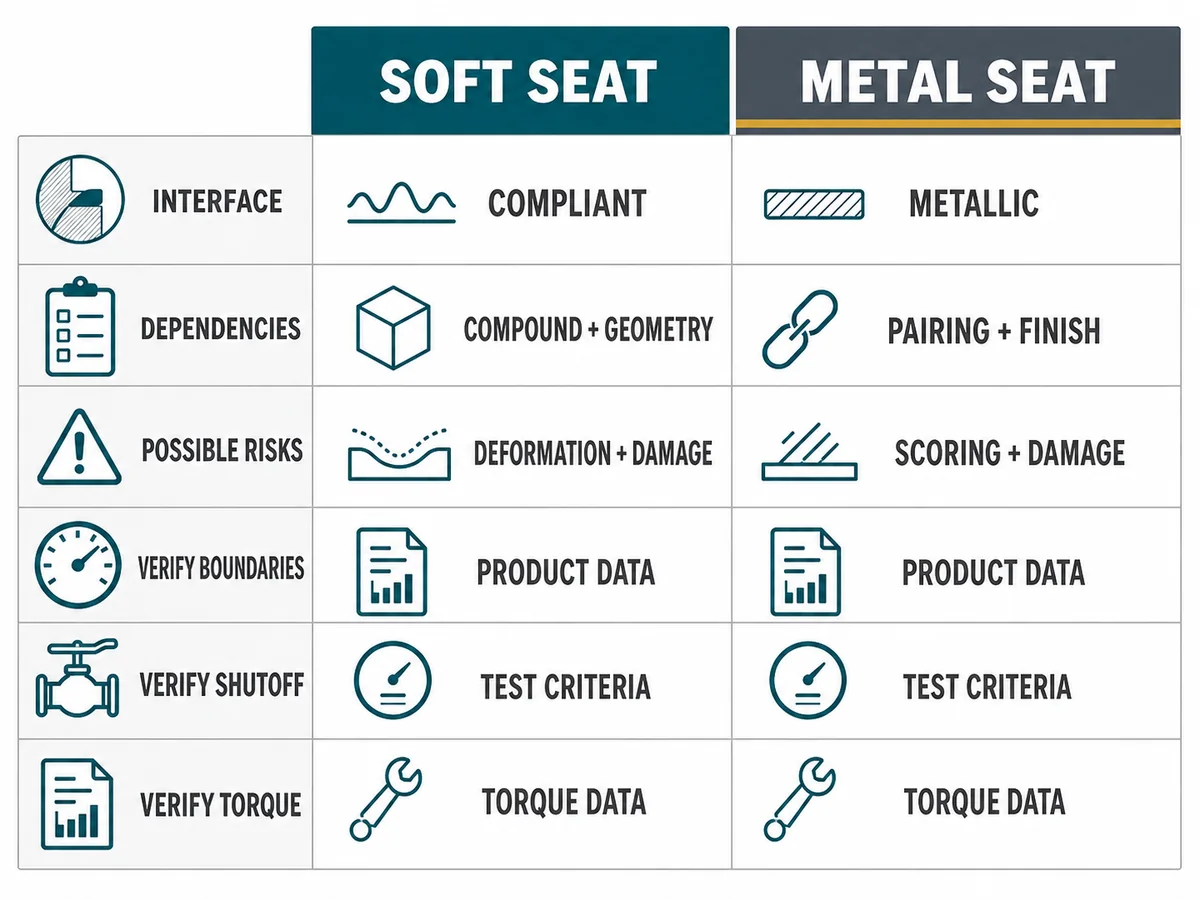
Soft Seat vs Metal Seat Comparison
| Decision field | Soft-seat direction | Metal-seat direction | Verification required |
|---|---|---|---|
| Primary interface | Nonmetallic seat against the ball | Metallic seat against the ball | Exact materials and construction |
| Leading dependencies | Compound, support, geometry and exposure | Substrates, pairing, finish and surface treatment | Controlled product data |
| Possible damage | Deformation, extrusion, cutting, chemical change or wear | Scoring, galling, erosion, coating damage or distortion | Complete service conditions |
| Solids | Particles may cut, embed in or deform the seat | Particles may trap between or damage contact surfaces | Size, hardness, shape, concentration and velocity |
| Shutoff | Not determined by seat label | Not determined by seat label | Defined criteria and valve-level evidence |
| Torque | Depends on load, friction, pressure, temperature and condition | Depends on contact, finish, pressure, temperature and condition | Controlled torque source and revision |
Engineering Selection Framework
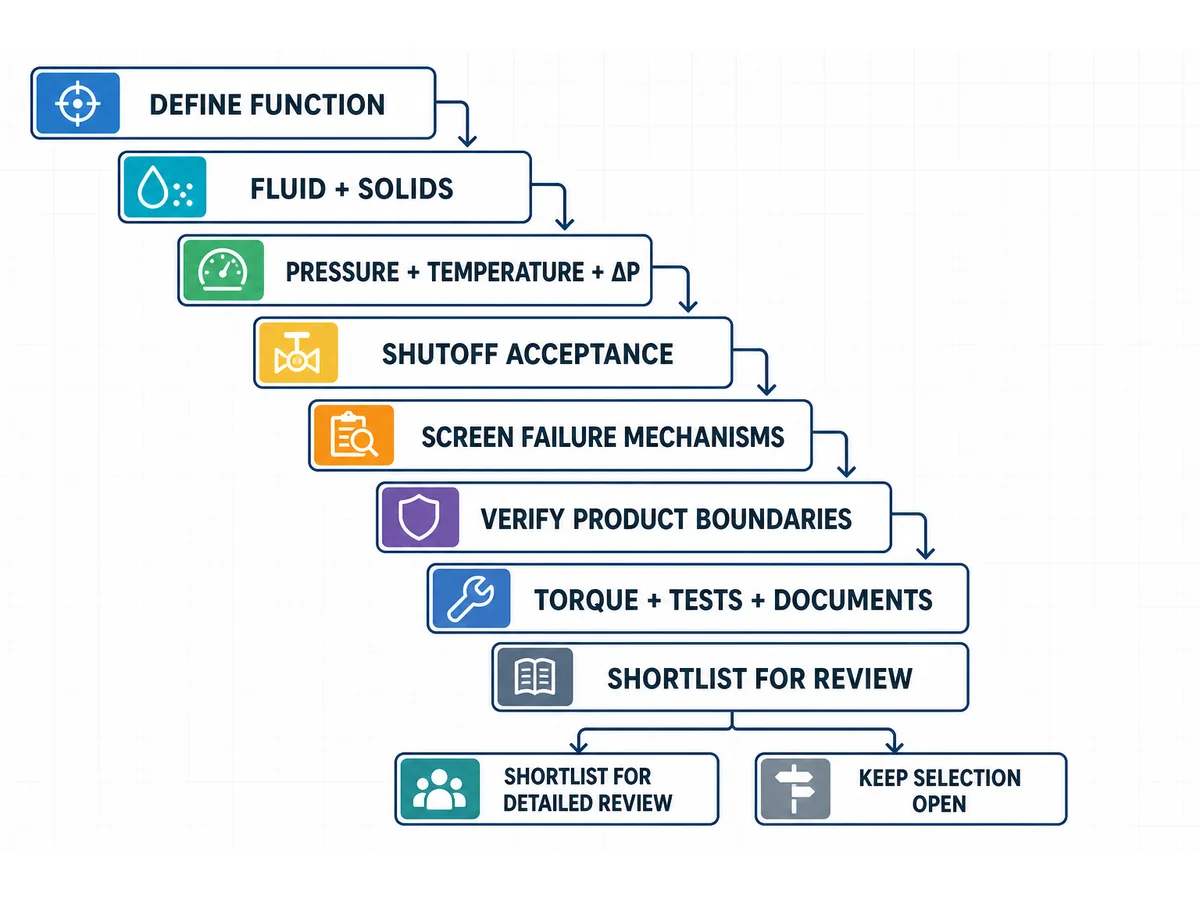
Define the valve function
Identify isolation, emergency isolation, frequent on-off, infrequent line isolation, diversion, venting, draining or another defined duty. Continuous throttling requires a separate sizing and operating review.
Define the fluid and solids
Record composition, concentration, phase, contaminants, solids, possible crystallization or fouling, cleaning media, and corrosion or erosion concerns.
Establish the operating envelope
Provide normal and design pressure and temperature, differential pressure during operation, opening and closing conditions, cycling and installation constraints. Pressure class alone is not a complete pressure-temperature boundary.
Define shutoff acceptance
Specify the test reference, project edition, medium, pressure, duration, direction and permitted leakage or other acceptance criterion. Avoid undefined expressions such as “zero leakage.”
Screen damage mechanisms
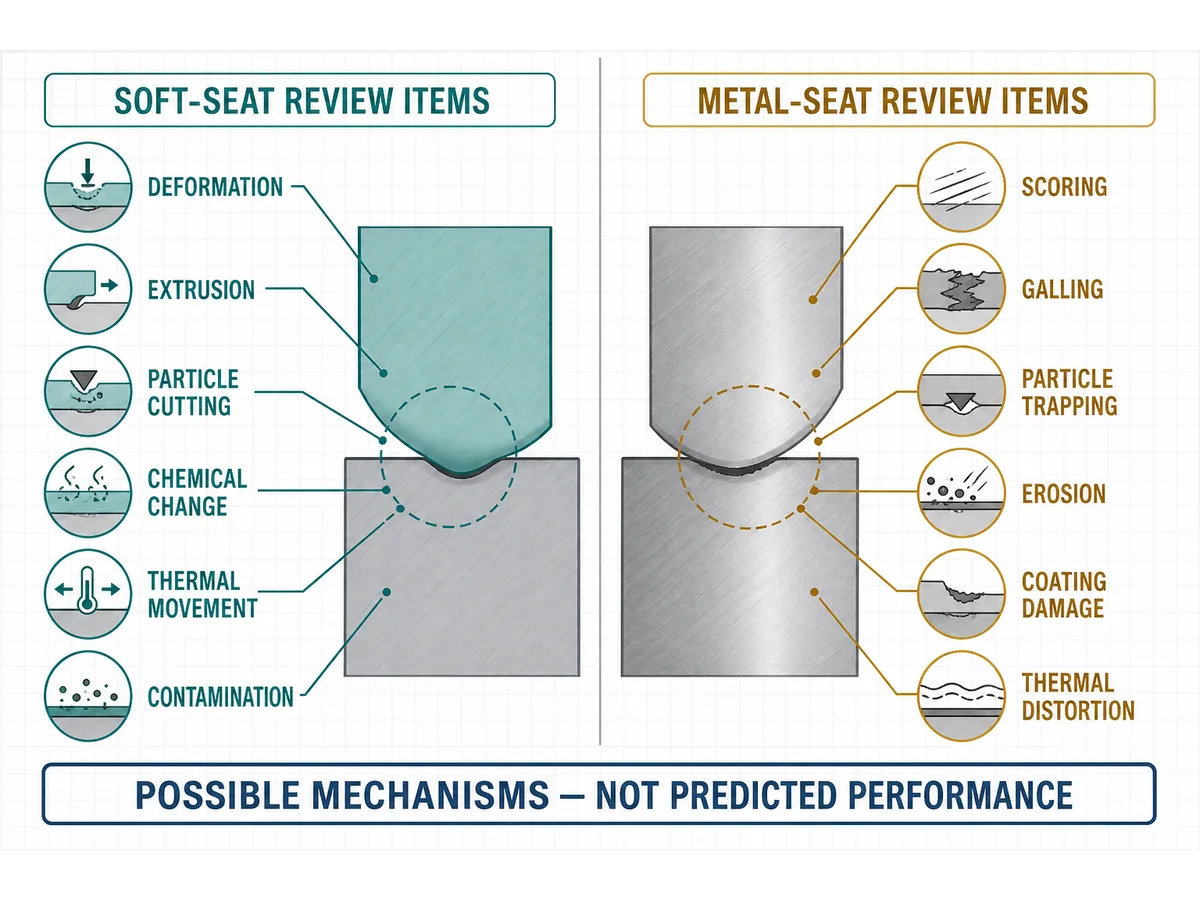
Compare deformation, extrusion, chemical change and particle cutting with scoring, galling, erosion, coating damage, thermal movement and contamination.
Verify the proposed construction
Request product-specific seat, ball, packing and gasket data, pressure-temperature boundaries, torque basis, tests, inspection points and document requirements.
Failure Mechanisms and Verification
Soft-seat review
- Creep or permanent deformation
- Extrusion into available clearances
- Particle cutting or embedded contamination
- Chemical swelling, softening or other change
- Thermal movement or loss of load
- Permeation or rapid-decompression effects
Metal-seat review
- Scoring or scratching
- Galling between contact surfaces
- Particle trapping or erosion
- Coating or hardfacing damage
- Corrosion or oxidation
- Thermal distortion or changing torque

| Review risk | Service data needed | Supplier evidence to request | Decision boundary |
|---|---|---|---|
| Soft-seat deformation or extrusion | Pressure, differential pressure, temperature, dwell time and cycling | Exact compound, geometry, support and product boundary | Do not infer the limit from the material family name |
| Chemical change | Composition, concentration, phase, contaminants and cleaning media | Component-specific compatibility review | Material name alone is not a service guarantee |
| Particle damage | Size, hardness, shape, concentration, velocity and settling | Construction review and stated inspection/maintenance basis | Neither seat direction is automatically suitable |
| Metal-surface scoring or galling | Material pairing, load, cycling, temperature and contamination | Substrates, finish, treatment process and controlled properties | A coating name alone is insufficient |
| Loss of shutoff | Required acceptance, direction, test conditions and consequences | Applicable procedure and valve/order evidence | Seat label does not establish leakage performance |
Pressure, Temperature, Differential Pressure and Solids
Temperature should not be used as a one-line rule that automatically separates soft and metal seats. For a soft-seat direction, verify the exact compound, geometry, support, time at temperature, pressure, differential pressure, cycling and chemical exposure. For a metal-seat direction, verify the full valve because packing, body seals, bearings, gaskets, coatings and clearances can remain limiting.
For solids-bearing media, record particle distribution, hardness, shape, concentration, settling, velocity, valve orientation, flushing and cycling. Particles can cut or embed in a soft seat, or score and separate metal contact surfaces. Depending on the duty, another valve construction may require evaluation.
Torque and Actuator Selection
Do not assume every soft seated valve has lower torque or every metal seated valve has higher torque. Review seat preload, friction, maximum operating differential pressure, size, construction, temperature, fluid properties, surface treatment, contamination, cycling, packing friction and required operating time.
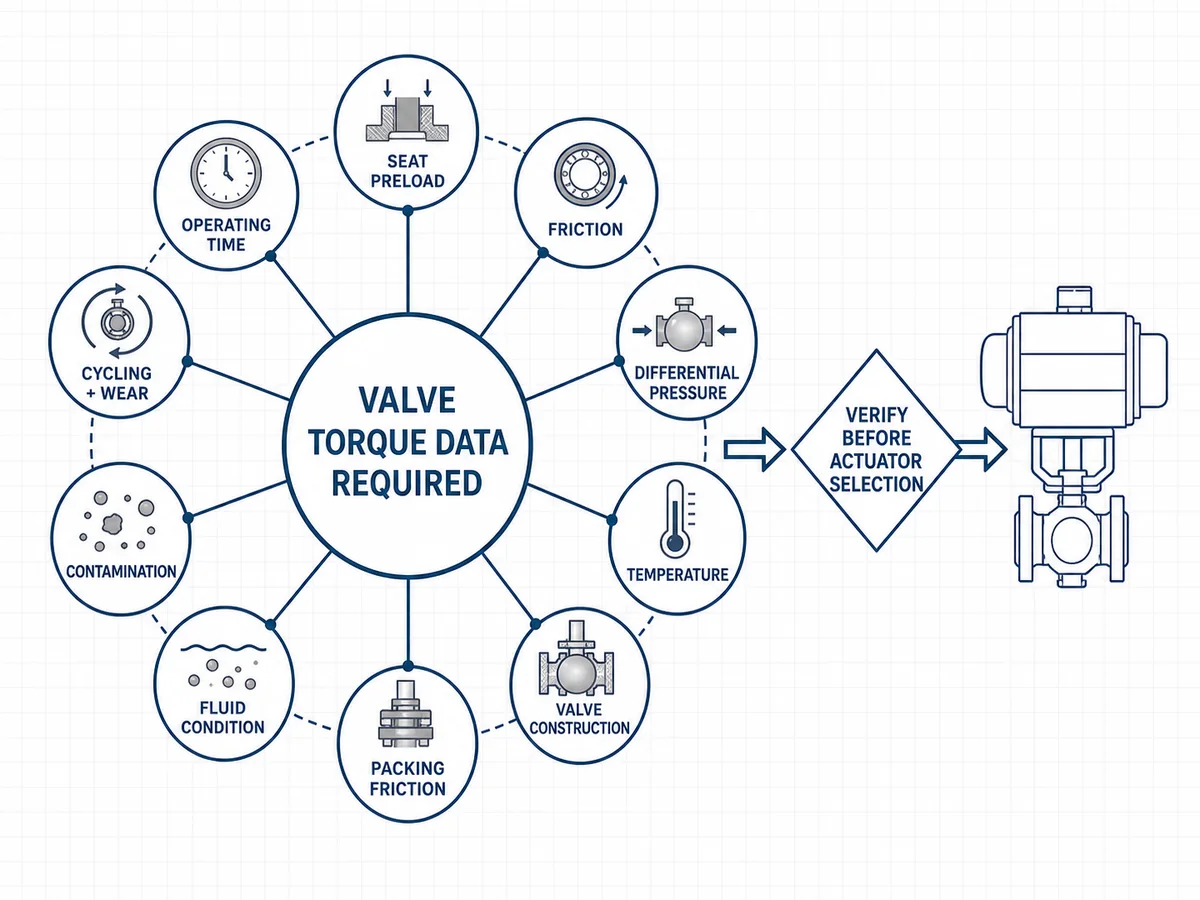
For automation, request the valve torque source and revision, maximum operating differential pressure, sizing factor, supply pressure or voltage, fail action, operating time, control mode, mounting interface and accessories. ISO 5211 addresses part-turn actuator attachment interfaces; it does not replace valve torque data or actuator sizing.
Standards Are References, Not Product Claims
| Reference | General role | Does not establish here |
|---|---|---|
| API 608 | Metal ball valve product-standard reference within defined scope | Compliance of a particular valve |
| ASME B16.34 | Construction and rating reference for valves within scope | Seat compatibility or application suitability |
| API 598 / ISO 5208 | Pressure-testing references | A result for the proposed product or order |
| ISO 10497 | Fire type-testing reference within scope | Fire qualification from a metal-seat or soft-seat label |
Supplier Evidence Request Matrix
Request evidence according to the decision being made. A document should not be used to prove a field outside its scope.
| Evidence requested | What it can support | What it does not prove by itself |
|---|---|---|
| Controlled product datasheet | Proposed configuration and declared product fields | Order-specific acceptance or test completion |
| General arrangement drawing | Configuration, connections and controlled dimensions within its revision | Material identity or service suitability unless stated and controlled |
| BOM or component material schedule | Body, ball, stem, seat, packing and gasket identities | Compatibility with an undefined medium |
| Seat-material specification | Exact grade, fillers and component identity | A complete valve pressure-temperature boundary |
| Pressure-temperature data | Declared boundary for the identified construction | Suitability outside the stated configuration and conditions |
| Valve torque source | Torque basis for the identified valve and conditions | Actuator sizing without supply, fail action and sizing inputs |
| Test procedure and report | Test method and result for the stated scope | Other tests, qualifications or service performance |
| Qualification or certificate | Only the exact design, edition and extension scope shown | Universal compliance or every supplied configuration |
RFQ Checklist

| Field | Required information |
|---|---|
| Function | Isolation, emergency isolation, operating frequency and required direction |
| Construction | Floating or trunnion if known; body construction; full or reduced bore; end connection |
| Process | Medium, composition, concentration, phase, contaminants and solids |
| Pressure | Normal, design and maximum operating differential pressure |
| Temperature | Normal, design, upset and cycling conditions |
| Materials | Body, ball, stem, seat, packing, gasket and treatment requirements |
| Shutoff | Reference, edition, test medium, direction and acceptance criterion |
| Actuation | Manual/gear/pneumatic/electric/hydraulic; fail action; supply; operating time; accessories |
| Project requirements | Applicable standards, inspection, witness, documents, marking and spares |
Technical Bid Normalization
| Status | Minimum condition | Buyer action |
|---|---|---|
| Comparable | Same service basis, defined seat construction, matching acceptance criteria, torque basis and document scope | Proceed to detailed technical and commercial comparison |
| Clarify | Proposal is plausible but one or more decision fields or deviations remain open | Issue a technical clarification list and keep the decision open |
| Not comparable | Seat label is generic, operating boundary is absent, shutoff basis differs, or required evidence cannot be tied to the proposal | Do not normalize price or performance until the technical basis is aligned |
Final Selection Rule
Keep a soft-seat direction only when the exact nonmetallic construction can be shown to remain within the required process, pressure, temperature, solids, cycling and shutoff boundaries. Keep a metal-seat direction only when the complete sealing pair, surface engineering, other valve components, torque and acceptance criteria can be verified.
If neither proposal has sufficient data, keep the selection open and request the missing evidence.
Submit Project Data for a Seat-Selection Enquiry
Provide the valve function, fluid composition, solids, normal and design pressure and temperature, maximum operating differential pressure, size, pressure class, end connection, shutoff requirement, operating frequency, actuation, project standards and document requirements.
Final selection remains subject to confirmation against the complete datasheet and purchase specification.
Submit Project InformationFrequently Asked Questions
Which leaks less: a soft seated or metal seated ball valve?
The seat label cannot determine leakage. Compare the acceptance criterion, construction, test conditions, sealing surfaces and applicable valve-level evidence.
Is a metal seated ball valve automatically fire safe?
No. A metallic primary seat does not establish fire-test performance. Fire qualification is a separate design-specific requirement with its own scope and evidence.
Is a soft seated valve always the lower-torque option?
No. Torque depends on seat load, friction, differential pressure, temperature, construction, packing, fluid condition, cycling and contamination.
Can seat material be selected from temperature alone?
No. Pressure, fluid composition, solids, differential pressure, construction, exposure time, cycling, shutoff and other valve components also require review.
Is a metal seat always suitable for abrasive media?
No. Particles can also score metallic surfaces, damage treatments, increase torque or prevent complete closure.
Can a standard determine the seat type?
A standard may define product scope, construction, tests, interfaces or acceptance criteria. It does not replace process data, material review and product-specific engineering.
Engineering Note: Assumptions and Limits
Purpose: preliminary engineering and procurement decision support.
Assumption: the comparison concerns ball valves intended primarily for isolation unless the project states otherwise.
Limits: no product-specific pressure-temperature, leakage, torque, service, certification or qualification conclusion is made.
Authorship: Raymon Valve is identified as the Organization author. No individual engineering credential or named technical reviewer is asserted.
Project gate: the selected construction must be confirmed against the complete datasheet, purchase specification and applicable responsible-engineer review.